
Commentary
Universities, once centres of critical thought, are now the front line of a new kind of conflict. This is no typical battlefield, but one waged with research grants instead of tanks and ideology in place of ammunition. The contest is not just over ideas; it is over who gets to define truth itself.
Adversarial regimes such as China and Russia understand that the West’s strength lies in its open institutions. Today, campuses, research labs, and think tanks carry as much strategic weight as pipelines, data centres, and ports. The adversaries come quietly, wrapped in the language of cooperation, sustainability, or cultural exchange. Meanwhile, the desired end state is to control the narrative, influence innovation, and cause widespread social division.
These regimes use cyberattacks to go after critical infrastructure. They do this to not only test defences but to unsettle public confidence. Cyberattacks and information campaigns are now conducted in tandem. One disrupts systems while the other dissolves trust. The main objective goes beyond data theft to force society to question its institutions, leaders, and one another.
In Canada, the United States, and across NATO, we have seen coordinated online campaigns designed to amplify domestic divisions. Russian and Chinese influence operations adapt easily to local politics, pushing both extremes at once to erode the centre. This is not random trolling; it is calculated manipulation where academia often becomes the unwitting amplifier. This is where foreign-funded research, exchange programs or think-tank fellowships quietly promote narratives aligned with these nefarious states’ interests.
The hypocrisy is striking. Beijing and Moscow sponsor “environmental cooperation” initiatives while being among the world’s largest polluters. They fund Western climate research and green initiatives, not out of environmental commitment, but to secure influence over industries essential to our economies, such as mining, clean technology, rare earths, and energy transition policy. It is alarming that Western universities and NGOs accept these funds with minimal scrutiny or vetting. Instead, they praise the collaboration while overlooking who their partners are—the same actors driving wars, spreading disinformation, and conducting cyber sabotage.
Documented Cases of Interference and Enforcement
United States: Five Chinese nationals charged in espionage at University of Michigan
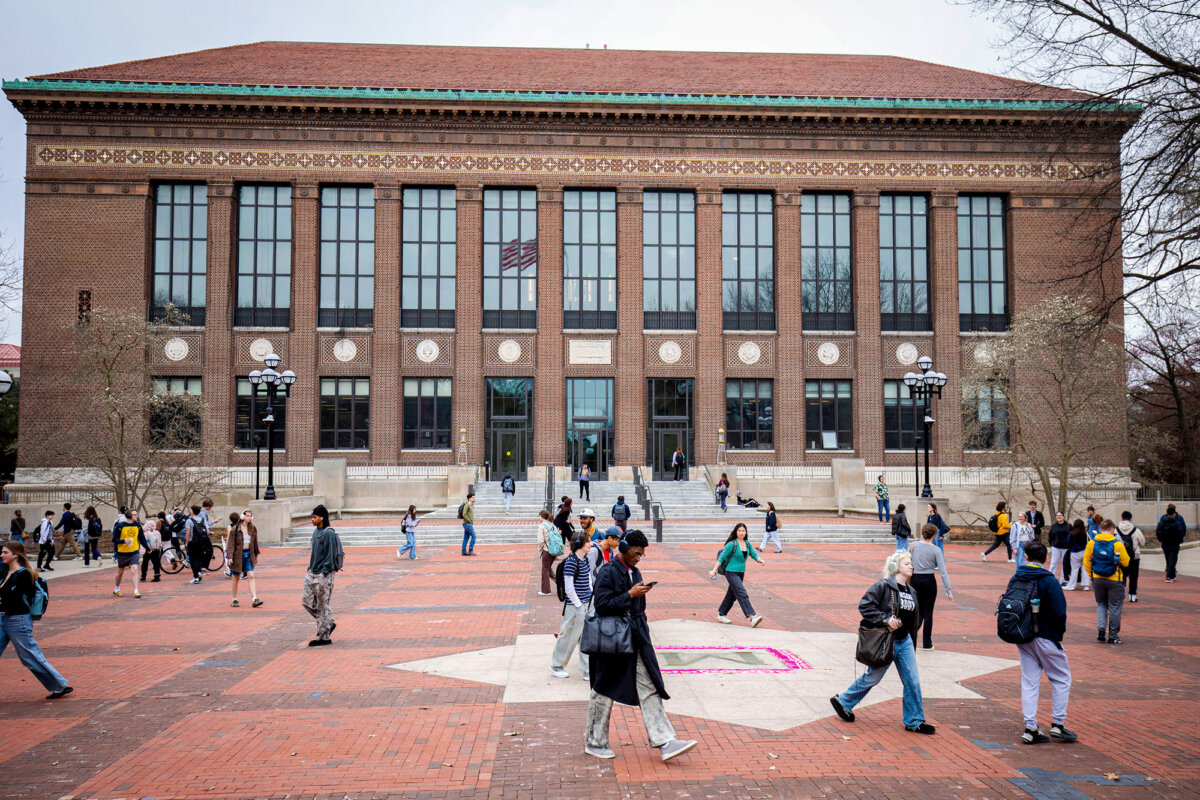
In October 2024, the FBI charged five Chinese nationals, who had studied at the University of Michigan via a joint program with Shanghai Jiao Tong University in China, with spying. They were accused of photographing U.S. Army National Guard equipment during training at Camp Grayling in Michigan. The program stemmed from an academic‑partnership arrangement, showing how cooperative research can become a conduit for intelligence collection. In response, the University of Michigan ended the partnership, citing national security concerns.
United States: The ‘China Initiative’ and its impact on research disclosure
Washington launched the China Initiative in 2018 to confront economic espionage tied to the People’s Republic of China, with a focus on universities and national labs. It ended in 2022 amid concerns about bias, but scrutiny of undisclosed foreign ties did not stop. The standout case was Harvard chemist Charles Lieber, convicted for false statements and tax offences related to undisclosed payments and affiliations in China. The signal to campuses is simple. Openness is valued, but undisclosed funding, outside affiliations, and dual-use research will draw national security attention.
Germany: Warning over espionage risks from Chinese students and partnerships
In 2023, German officials sounded the alarm about espionage vulnerabilities in higher education. The domestic intelligence service, the BfV, cautioned that many universities were not sufficiently alert to espionage risks and could lose valuable know-how. In July 2023, the education minister further warned that students arriving from China on full state scholarships may present a risk of scientific espionage.
Australia: Espionage and interference directed at the research sector
Australian intelligence services have revealed ongoing attempts by foreign governments to infiltrate and influence the country’s research institutions. The Australian Security Intelligence Organisation has identified multiple efforts at espionage and foreign interference targeting universities. ASIO reports suggest that Chinese authorities recruit students studying in Australia to monitor and report on individuals critical of Beijing.
United Kingdom: Chinese academic partnerships and influence in UK universities
In the United Kingdom, concerns about UK‑China academic partnerships focus on potential links between Chinese university partners, the Chinese Communist Party (CCP) and the Chinese state. British universities are reportedly receiving millions from CCP‑linked entities. A 2025 report noted that every British university campus in China reportedly has a branch of the CCP embedded, with party members on administrative committees.
United Kingdom: Collaborations with Chinese military‑linked institutions
Academics at Imperial College London worked with researchers from Chinese institutions linked to Beijing’s defence sector on studies with potential military applications. These included co‑authoring research on advanced high‑strength steel and high‑powered batteries with the Chinese state‑owned groups tied to the military‑industrial complex.
Policy Recommendations
Start with sunlight. Universities should publish every dollar of foreign funding and list each partnership with any entity tied to a foreign government, then raise the bar where the stakes are highest. Research with dual-use potential, especially in national security and advanced technology, needs tighter oversight and clear guardrails. Be careful about who comes through the door. Visiting scholars and exchange programs linked to high-risk states require real vetting and documented due diligence, not a box tick. Treat networks and research data like critical infrastructure.
Build and test cyber resilience plans so an intrusion is detected early and contained fast. At the same time, stand firm on academic freedom. Do not trade independence for access or money. Finally, create a standing channel with national security agencies to share timely threat intelligence and practical guidance. That cooperation protects research, protects people, and keeps the mission honest.
Not Diplomacy, but Infiltration
The front line is no longer highways, ports, or trading floors. It is the lecture hall and the laboratory. Authoritarian states are using cyber tools and coordinated influence to target open universities, not only to steal technology but to shape how people think, which narratives prevail, and which policies follow. When governments use campuses to launder their messaging, suppress unwelcome research, or pressure dissenting scholars, that is not diplomacy. It is infiltration.
Universities must reclaim their independence, and free societies must defend the institutions that sustain honest inquiry.
Views expressed in this article are the opinions of the author and do not necessarily reflect the views of The Epoch Times.
 Friends Read Free
Copy
Facebook
Tweet
Friends Read Free
Copy
Facebook
Tweet