Commentary
“Keep your mouth shut” was the blunt order given to Canadian soldiers taking part in French Marshal Ferdinand Foch’s big push towards Amiens in 1918, during the Hundred Days Offensive. The point was to say nothing that might give away your intentions.
In war (peace, too, for that matter), you want to gather information about the enemy’s intentions, not give it away so that the enemy can kill more of your troops. One exception to imposed silence, though, was the Canadian Mounted Rifles. They, together with the 27th Battalion and other radio operators, were tasked with creating an endless stream of false wireless traffic near the front to mislead and confuse the Germans about what the Allies were thinking.
Today’s military intelligence operators work with mapping software, cyber communications, signals and imagery, and a whole range of sources including geospatial intelligence (GEOINT). Wisely, they still train with table-top “map and talc” overlays, protractors, sharpies, and sticky icons as well, in case online systems fail and they need to fall back on old-school methods to carry on the fight. All sorts of “sensors” now collect information and do reconnaissance: traditional armoured and on-foot patrol “recce” remain, now with aerial systems (drones) and emerging unmanned ground-based vehicles added to the toolkit.
Intelligence analysis and briefing still require extensive background study of articles, books, and reports in order to “know thy enemy.” Intelligence does not mean predicting what the enemy will do, but evaluating and re-evaluating his forces, identifying targets, and weighing the most likely and most dangerous enemy course of action.
It’s all a far cry from the gritty beginnings, a cavalry unit called the 4th Troop of Volunteer Cavalry of Montreal, or the Montreal Guides, formed in 1862. “Guides” was a throwback to the Duke of Wellington’s irregulars during his campaigns in India and Spain: light horsemen locally recruited to collect information by observation, conversation, and study.
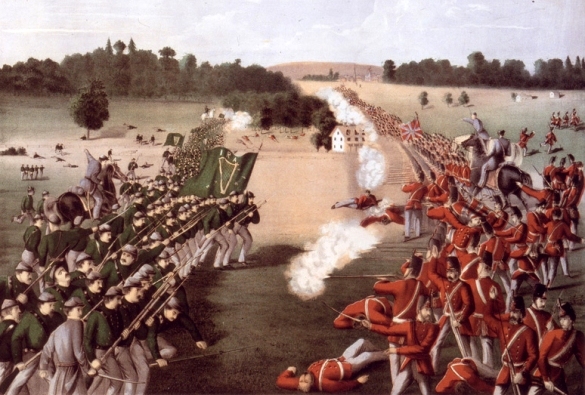
Upgraded to Royal Guides in 1863, their first engagement occurred during the Fenian Raids of 1866 when 30 men under Capt. Donald MacDougall, integrated with a column of 450 infantry operating near the Vermont border, took 16 Fenians as prisoners with no losses to themselves.
The Guides were never large. In 1868, they had two officers and 31 men. In a typical military move, when higher authority could not figure out what to do with them, they were disbanded in 1869. Of course, within a few years, mounted cavalry and scouts were needed again for patrolling, intelligence-gathering, and, in some cases, fighting.
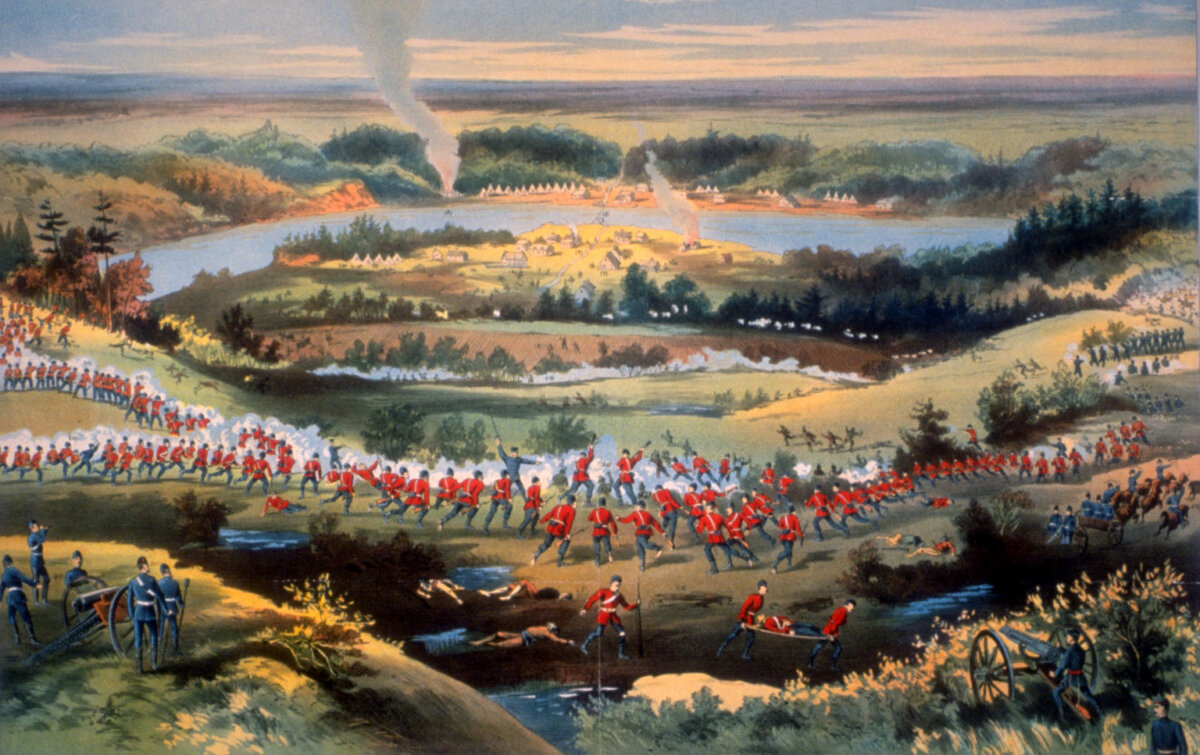
Maj. Gen. Frederick Middleton’s force that marched against the Second Riel Rebellion in 1885 included scouts. One unit had three officers and 30 men from the Dominion Land Survey, civil servants doubling as militiamen. They were called an Intelligence Corps, the first use of that term in the British Empire, according to Maj. S. Robert Elliot’s history of intelligence in the Canadian Army. They were informally called Land Surveyor’s Scouts or Dennis’s Scouts after their commanding officer, Capt. John Stoughton Dennis. Another unit was “Boulton’s Scouts,” after Maj. Charles Boulton, today the Fort Garry Horse.
It was a detachment of Middleton’s Scouts who found and arrested Louis Riel on May 15, 1885, after the collapse of the North-West Resistance, or Second Riel Rebellion. It seems that three Scouts happened upon Riel and two companions “sauntering along a trail” two kilometres from Batoche, Sask., where the last battle had ended on May 12. One of them recognized Riel and said, “I am surprised to see you here.” Riel reportedly replied, “I was coming to give myself up.” Fearing mob justice, possibly by lynching, Riel asked to be escorted to Middleton’s camp.
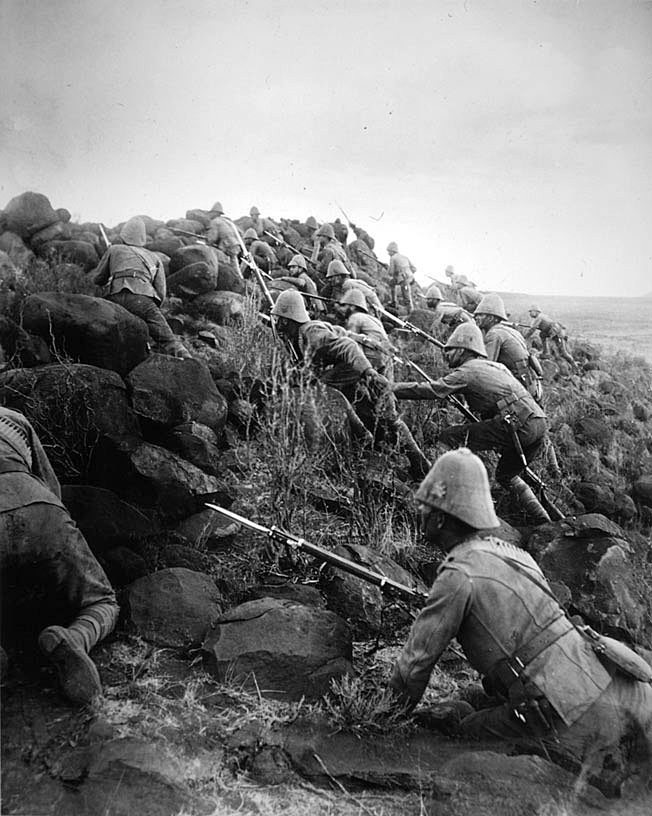
Once again the Scouts Corps were disbanded towards the end of 1885—only to again reappear when a recce and intelligence capacity was needed as Canadian militiamen served in the Boer War in South Africa from 1899 to 1902. Canadians gained experience, too, with British units such as Robert’s Light Horse, Kitchener’s Horse, and Rimington’s Guides. Clyde Caldwell, wounded in Canada’s first overseas victory at Paardeberg, was later attached to the mapping element of Britain’s Field Intelligence Staff in Cape Town. Most famous was Canada’s brand new regiment, Lord Strathcona’s Horse, raised in 1901 with 500 roughriders, “fighters and not only intelligence men” led by the ex-Mountie Sam Steele, described as “an ideal scout and leader of scouts.”
It was during the Boer War that Canada’s Militia (the army) decided to create an official intelligence capacity. They appointed Lt. Col. Victor Brereton Rivers of the Royal Canadian Artillery, one of the “Old Eighteen,” the first students at the Royal Military College in Kingston, in its first year, 1876. He had seen action at Fish Creek and Batoche (1885). Lt. Col. Rivers brought the Intelligence Corps into existence in 1903. Its role was the “collection, compilation, and distribution of intelligence” and its official name was the Corps of Guides.
As Canada’s first intelligence staff officer, Rivers assisted the first director, Lt. Col. William C. Denny, who had seen plenty of action in South Africa. Members studied reconnaissance and military sketching and mapping. By 1906, they had read “a number of foreign newspapers and professional magazines as well as British Service papers and magazines.” By 1907, they had studied Canadian manufacturing capacity in anticipation of national and imperial needs in time of war. The Foreign Information Branch built a library, collected news clippings, and studied all aspects of potential adversaries’ military, engineering, agriculture, transportation, economics, and any “other reports.” The key concept of analysis, which is sorting, clarifying, and interpretation of information for use by higher command, evolved later.
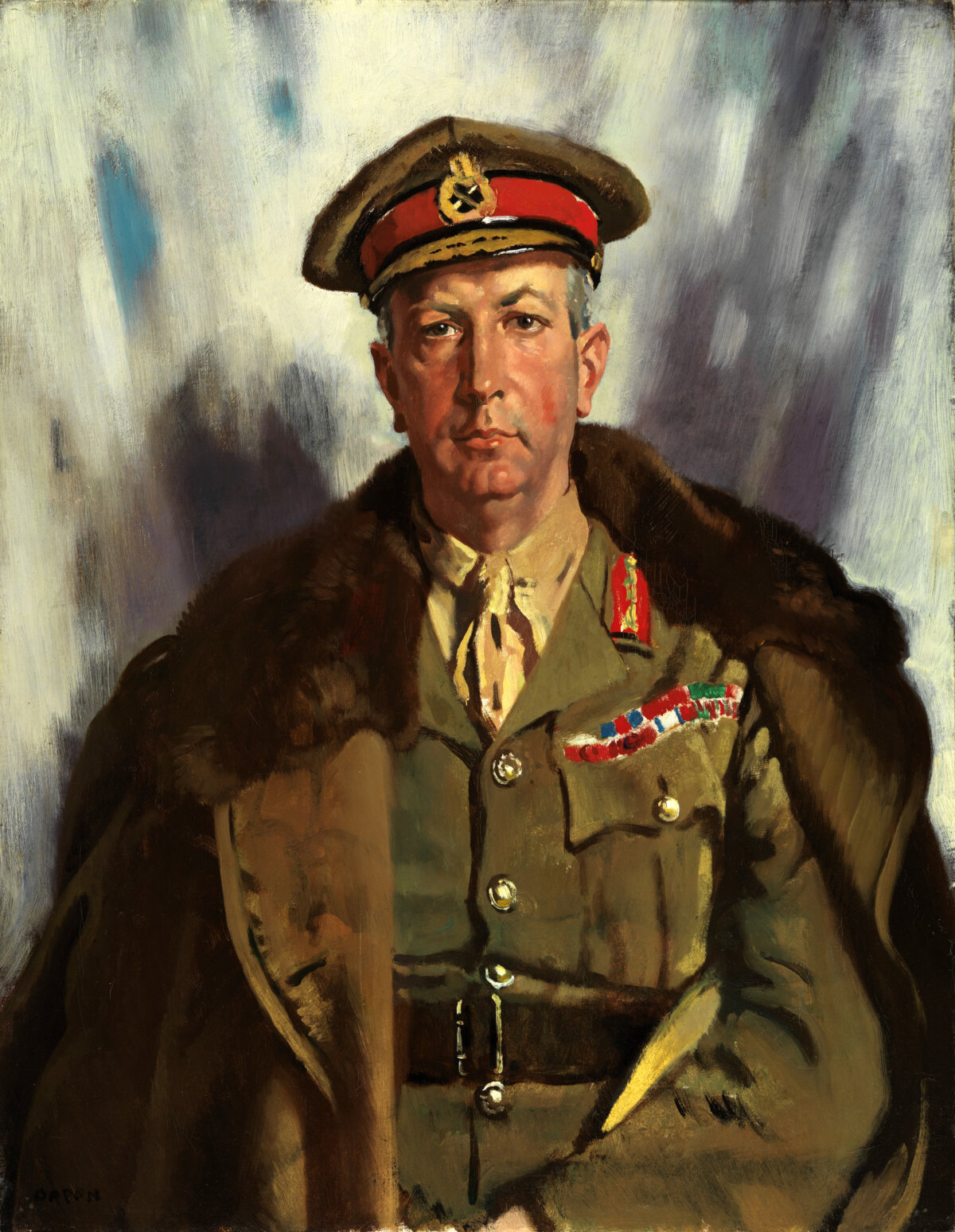
With the outbreak of World War I, it took some time to decide what to do with Royal Guides trained for Queen Victoria’s little wars, and Guides were dispersed across various units. In 1915, each infantry battalion got an extra officer to handle intelligence. According to Gen. Sir Arthur Currie, commander of the Canadian Corps in 1917–18, it was Canadians who produced the first division-level “regular, daily Intelligence Summary” in the Imperial Army.
Many types of units engaged in intelligence gathering using recce patrols, night-time trench raids, observing and sketching, interrogating German prisoners, studying captured maps and documents, and sometimes by listening for “telltale subterranean noises” from enemy digging. (Aerial photography was no good at first.) Every soldier is still trained today to sketch what he observes on the ground: enemy position, strength, morale, movements, intent, and so on.
A high point in the early years was the formation of the Canadian Corps Cyclist Battalion in 1916. The British had used cyclists since 1885, and the First Canadian Division included a cycle company in 1914. Most of their leadership came from former Guides. Their role was message-carrying, protection by patrolling away from the main body of troops and preventing surprise attack, and recce.
In 1918, Gen. Currie placed the Cyclist Battalion to the right of the cavalry to cover their flank during the attack at Amiens. They deployed again with Brig. Gen. Raymond Brutinel’s brilliant Automobile Machine Gun Brigade, officered by former Guides, in smashing through the Hindenburg Line and in the triumphant rout of the Germans in the Pursuit to Mons.
The Canadian Intelligence Corps was formed and got its present name in 1942 during World War II, but that’s another long story.
In April 2025, one Intelligence Corps officer, Maj. Casey Anderson, received the King’s Coronation Medal personally from King Charles III during a ceremony commemorating the Allied liberation of Italy. Anderson was recognized in part for his research and for making the Cyclist Battalion’s 1918 service better known.
The Corps’ motto, “Action from Knowledge,” encapsulates its mission to gather and analyze as much information as possible about enemy forces and intentions before Canadian troops are put in harm’s way. Today, there are small reserve intelligence companies located across Canada, a good place for students to earn income and enjoy an interesting part-time (or full-time) career.
Views expressed in this article are the opinions of the author and do not necessarily reflect the views of The Epoch Times.