
Commentary
In response to U.S. tariffs over the past several administrations, China’s exports have been forced into new markets, including Europe. Brussels calls this an “existential” threat and second “China shock” after the first shock when China joined the World Trade Organization in 2001. The European Union is following the U.S. lead with its own tariffs focused on China, which will send Chinese exports to other regions in a cascading domino effect.
At risk in Europe are strategic industries such as chemicals, metals, autos, and machine tools, as well as 29 million European jobs, according to Stéphane Séjourné, chief of industrial strategy at the European Commission.
The EU trade deficit with China was 359.8 billion euros in 2025 (about $418 billion). Last year, EU imports from China rose by 6.4 percent while exports fell by 6.5 percent. This could, over time, lead to irreversible European deindustrialization, which would put the entire European single market at risk as nations become disillusioned with the EU’s ability to protect them.
But, Séjourné said, fracturing the single market would make these countries even weaker in their international negotiations. After the UK voted to withdraw from the EU in 2016, it tried to compensate for Brexit by opening to other countries, including China. Britain became more British, but the planned “golden era” of a “global Britain” did not materialize. The country’s gross domestic product per capita was lower, as were international business investment and trade, compared with what they would have been.
Europe should not fall into the same trap of breaking with its democratic partners and seeking—and failing—to negotiate with Beijing and Moscow as individual nations rather than a unified military-economic alliance of democracies. To do this, the EU needs a strong industrial ecosystem upon which to build its defense industrial base. Russia’s partnership with China, invasion of Ukraine, and threats against other European democracies make this abundantly clear.
To avoid this and a second China shock, many European diplomats want a “more assertive and effective trade defense policy” against China. France, Italy, Lithuania, and the Netherlands are leading the charge in Brussels against “the rise of unfair trade practices,” including China’s dumping of goods at below market prices to drive out competitors. Once the competitors are gone, prices would rise to monopolistic levels, and goods such as rare earths and legacy semiconductors can be used as strategic levers against Brussels.
These four countries and Spain wrote a research paper on potential tools to improve European trade defenses. The paper notes that some countries are “imposing new trade barriers or contributing to systemic and structural industrial overcapacity,” which “has had a direct impact on the European industry, which lost 1 million jobs between 2019 and 2025.” France’s trade minister mentioned that China’s export overcapacities are driven by regime subsidies, which is a “big problem.”
However, Spain and Germany are two of the most reluctant to rock the trade boat with China. Germany, which is Europe’s largest economy and has the EU’s biggest trade exposure to China, is stalling. Despite the country’s 89 billion euro (about $103.5 billion) trade deficit last year, the influence of Germany’s export industries, including the automotive, machinery, and electronics sectors, supports a supposedly “balanced” approach to China that promotes exports while protecting markets.
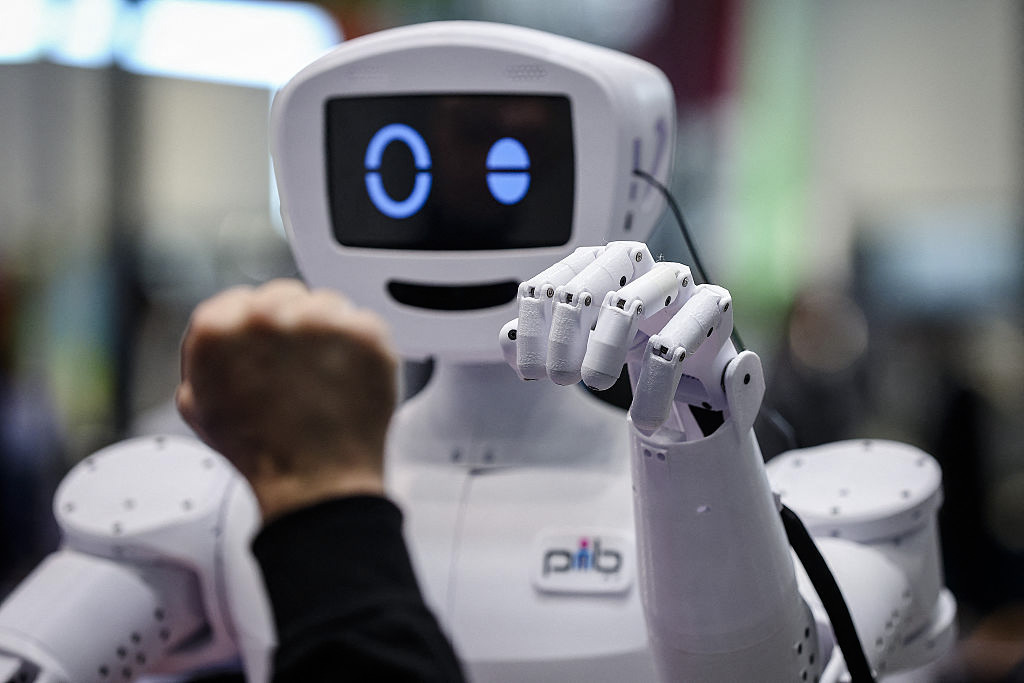
This will be hard to achieve when Beijing is bargaining for the opposite. German industries in particular depend on rare earths and industrial robot imports from China. In 2016, Chinese investors purchased 95 percent of publicly listed Kuka, Germany’s global leader in industrial robotics. Now Germany is dependent on China for exactly this.
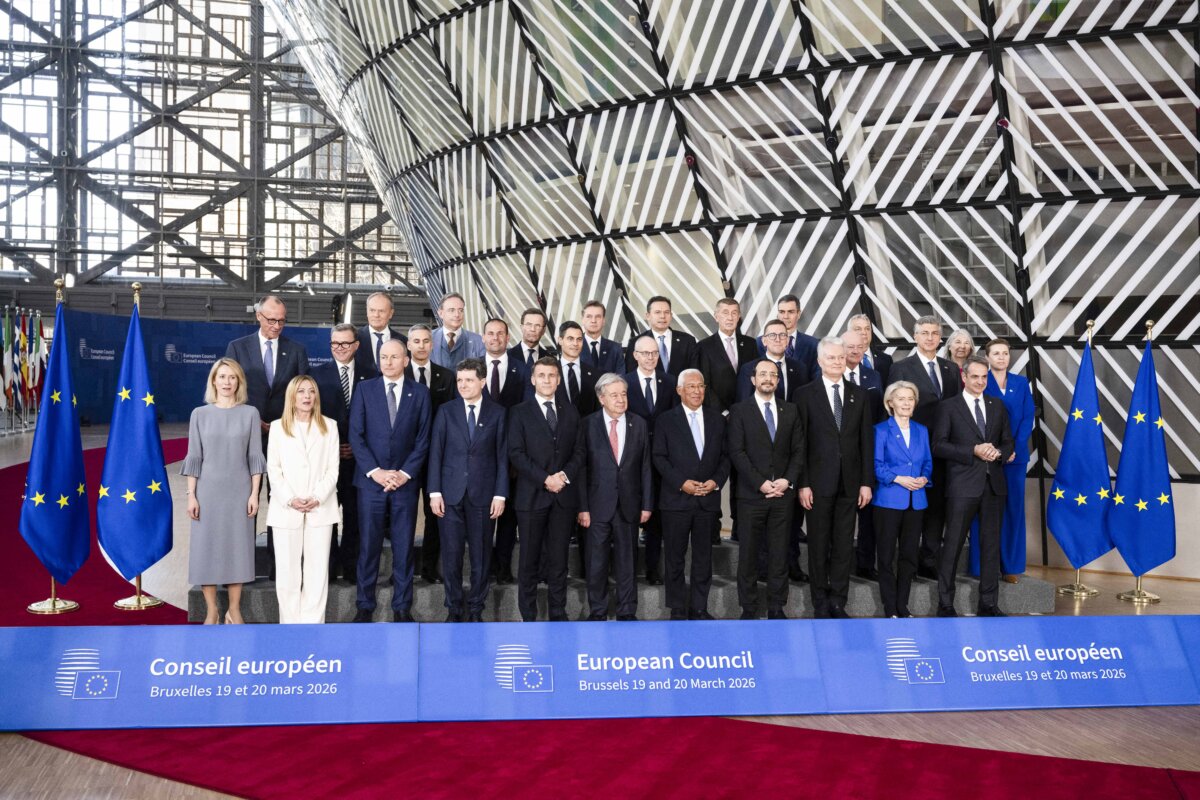
On May 29, European commissioners will hold an “orientation debate” on tools to protect the EU’s market from China. Then, starting on June 15, EU leaders will likely discuss the Chinese Communist Party’s (CCP’s) critical raw material export controls at a summit of the G7 group of leading industrial nations in France. On June 18, European heads of state will address these issues at a meeting in Brussels. According to a draft agenda reported by Politico, the leaders will “push forward EU competitiveness and strategic autonomy in the challenging geoeconomic context” and tackle “global macroeconomic imbalances.”
Under consideration to fix these problems will be quicker means of imposing import quotas, tariffs, anti-dumping duties, anti-subsidy duties, and a resilience duty that would apply to suppliers that captured too great a share of the EU’s market.
In the case of rare-earth elements (REEs), for example, the European Parliament research service has noted that “the EU sources all of its heavy REEs and 85 percent of its light REEs from China, as well as 98 percent of its rare-earth magnets.” Europe gets 97 percent of its magnesium from China. Given that REEs are used in many major industrial and military applications, Europe’s rare-earth dependence on China gives Beijing immense leverage over Brussels.
The EU has already taken small steps against its China dependence, including rules against spending EU funds to buy China’s solar inverters, proposed new regulations to screen China’s investments in Europe, and a draft revision of a cybersecurity law to limit technology from the likes of Huawei and ZTE, both of which are Chinese information technology companies, in Europe’s information infrastructure. Both companies have been implicated in scandals in the past, including alleged espionage and corruption. Germany and Spain oppose the cybersecurity measure.
Beijing has warned Brussels of retaliation against its trade defenses, but the CCP’s countermeasures cannot hurt Europe as much as vice versa. China exports more to Europe than Europe exports to China, making European tariffs more impactful than those of China on their mutual trade relations.
Proponents of the tougher measures argue that current EU processes, such as nine-month inquiries, take too long to complete, much less implement, and are easily circumvented. China can transship exports through or assemble them in third countries and establish its companies within the EU. The tougher measures could apply to Chinese exports of the strategic industries listed above, as well as electric vehicles, solar panels, wind turbines, and legacy semiconductors.
The exports of other countries may also be affected, including U.S. biofuels and steel from Indonesia, Ukraine, and the UK. The EU paper recommends the application of tougher measures against not only countries, but also companies, so the latter cannot simply change location to circumvent tariffs.
The CCP argues that such measures violate World Trade Organization rules and are a form of protectionism. However, if the major democracies treat dictatorships as they do their own allies, then authoritarians can use their unprecedented control and coordination of entire national economies to outcompete the democracies economically and then militarily.
They could do this one major economy at a time, until all of the democracies are weak relative to China. That is a recipe for growing international and potentially hegemonic power centered in Beijing. The legitimate defense against such rising authoritarianism is what ought to now be seen as positive: defensible supply chains, friendshoring, and democratic protectionism.
Views expressed in this article are the opinions of the author and do not necessarily reflect the views of The Epoch Times.
 Friends Read Free
Copy
Facebook
Tweet
Friends Read Free
Copy
Facebook
Tweet