Commentary
The d’Irumberry de Salaberry family and their descendants cover the pageant of Canada’s history, going all the way back to the War of 1812.
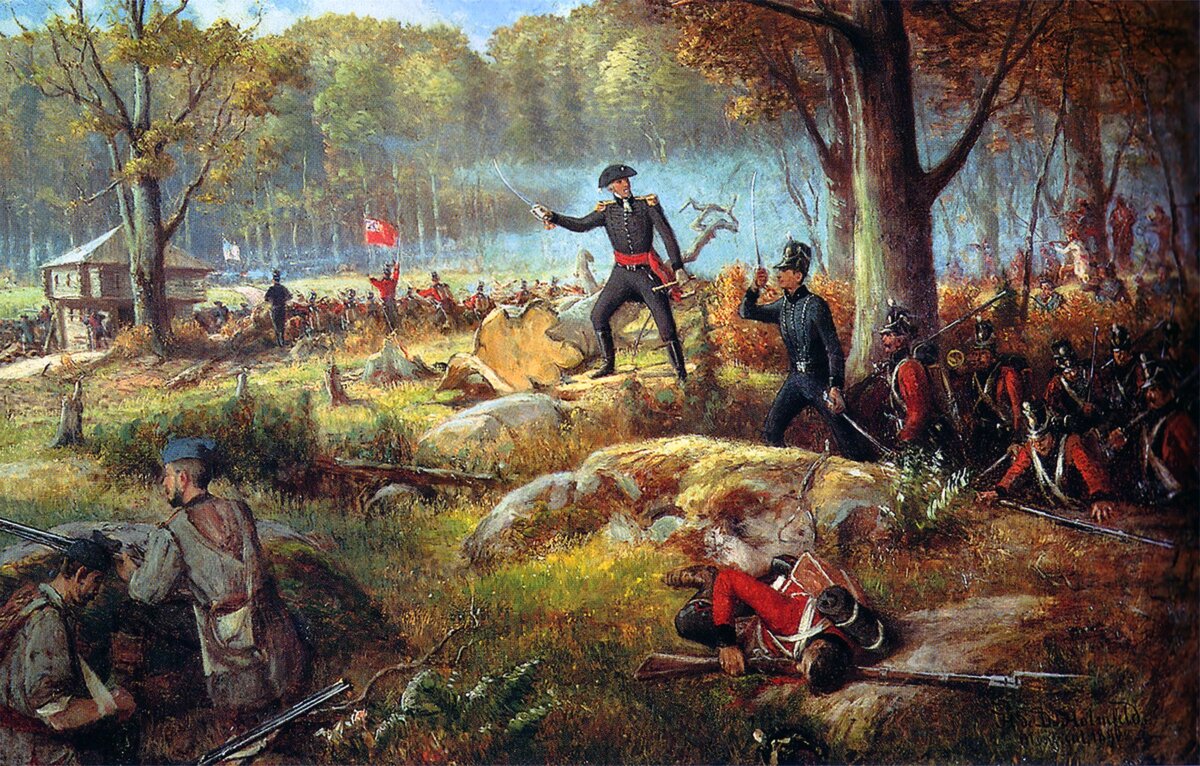
Charles-Michel d’Irumberry de Salaberry, born in Quebec in 1778, won his place in history in 1813 as the hero of Chateauguay and saviour of Montreal. He wasn’t the first: that honour belongs to Adam Dollard des Ormeaux, killed with most of his Canadien and native comrades at Long-Sault while blocking an Iroquois attack on Ville-Marie in 1660.
In 1813, de Salaberry commanded the Voltigeurs Canadiens, a reserve provincial corps of light infantry that he himself raised in 1812 and which still exists today as Les Voltigeurs de Quebec, part of Canada’s Army Reserve. Dollard and de Salaberry have been compared to Leonidas and the Spartans as they fought to hold the narrow pass of Thermopylae against King Xerxes’ massive Persian army: a few brave men fighting against the odds.
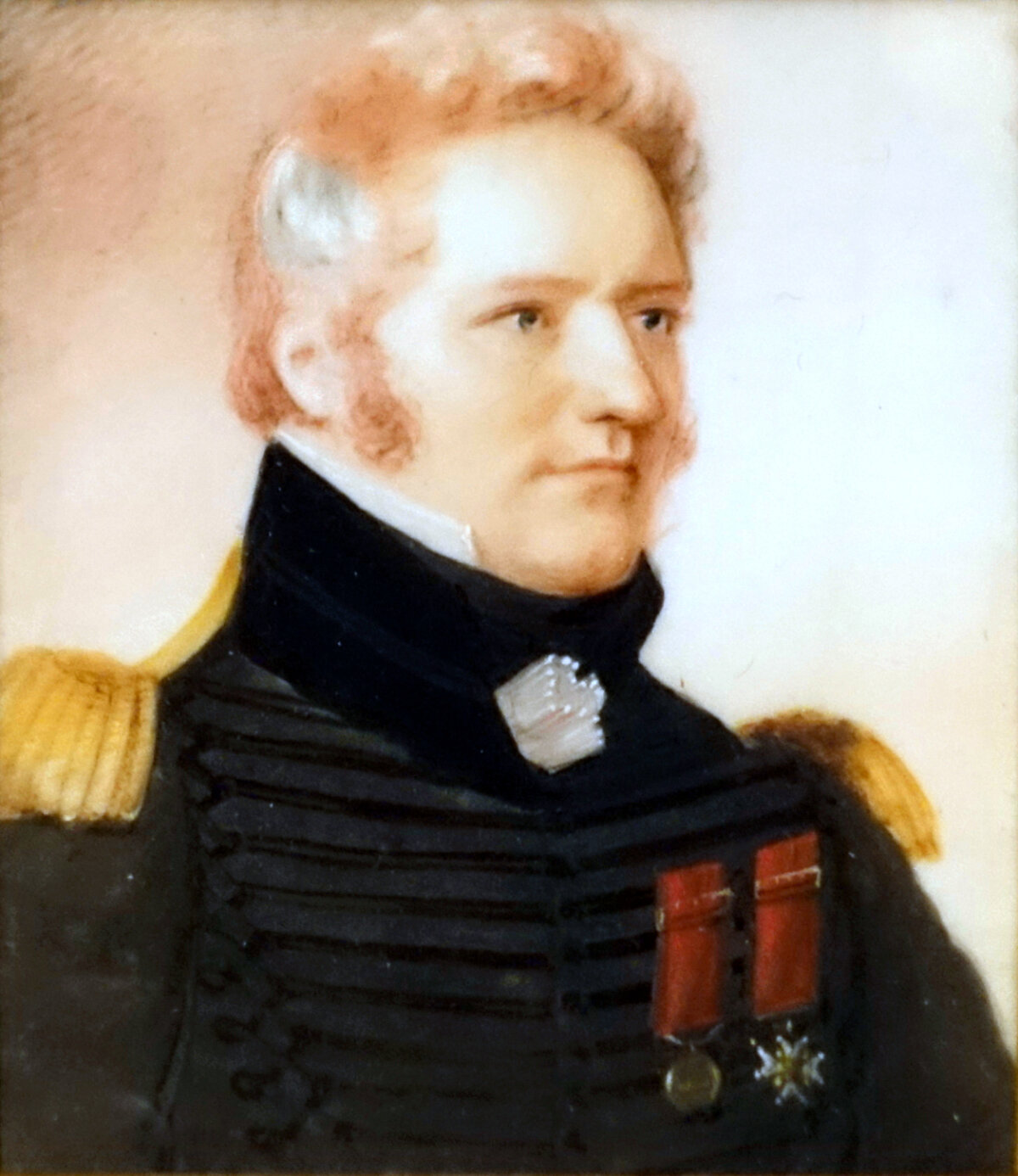
Charles-Michel was the scion of an old family that today only occasionally makes news, like Nicolas de Salaberry (born c. 1971). The founding patriarch was Michel de Salaberry (1704–1768), from a branch of the noble Irumberry family of Lower Navarre, France. He served with the French Navy in New France and married Madeleine-Louise Juchereau Duchesnay from Beauport, Quebec, though they retired to France at the end of the Seven Years’ War.
Their son, Ignace-Michel-Louis-Antoine d’Irumberry de Salaberry, was educated at Quebec, twice wounded in the defence of Fort Saint Jean (now Saint-Jean-sur-Richelieu) in the American attack of 1775, and fought on the British side under General Burgoyne against the Revolutionary Army at Saratoga, N.Y. Later, at age 60, Ignace-Michel got a lieutenant-colonelcy and commanded a militia battalion, but retired after a heart attack. Later still, he joined the fight against the proposed 1822 Union of Upper and Lower Canada—one of the successive attempts by Anglo-Canadians to control and stifle French Canada, which seemed to succeed with the Union of 1841 following the Durham Report.
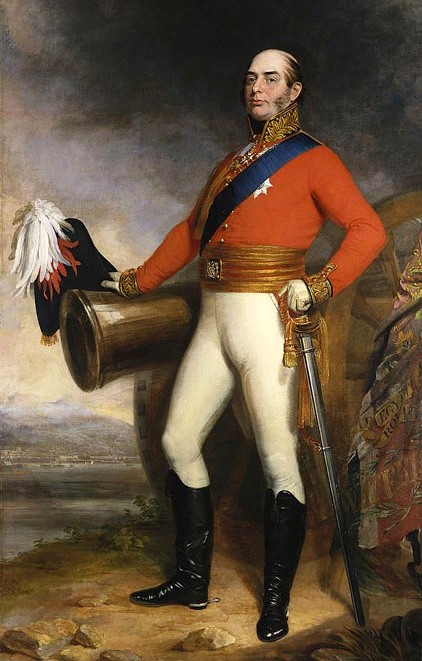
Important to the family’s future was Ignace-Michel’s friendship with Prince Edward Augustus, Duke of Kent (1767–1820), the fourth son of King George III and Queen Charlotte—and, it would later transpire, Queen Victoria’s father. A career army officer, Prince Edward commanded the 7th Foot when they moved from Gibraltar to the “little Gibraltar” of Quebec. (It was said that the rock bluff of Quebec City resembles the Rock of Gibraltar.) As a prince of the realm, he naturally became the centre of Quebec social life, including local militia officers.
When the allies’ war to contain Revolutionary France resumed, Prince Edward commanded a brigade in the 1794 siege and capture of the Caribbean islands of Martinique (returned to the French in 1802 and which France still controls) and St. Lucia (which the British kept and which gained its independence in 1979).
With the prince’s patronage, four of Ignace-Michel’s sons served in the British Army overseas. Maurice-Roch served in India and died of fever in 1809 at Tomboodra, India, age 26. François-Louis died in 1811 of illness, age 26, in service with the Royal Scots at Secunderabad. The youngest, Édouard-Alphonse, was killed campaigning in Spain. He fell before the Santa Maria bastion in Wellington’s third siege of Badajoz on April 6, 1812.
No one could gainsay this adventurous Quebecois family’s sacrifices for King and Empire, and in defence of the Crown in the Canadas.
The War of 1812 hero was the eldest son, Charles-Michel, who enlisted in the 44th Foot at the age of 14. Leaving Quebec, he served 15 years abroad in the Antilles under Prince Edward. He then served in Sicily and Ireland, returning to Quebec in 1810. Raising the Voltigeurs, he led them in the great Battle of the Chateauguay south of Montreal, in which they and other units like the Canadian Fencibles, plus native allies, blocked the U.S. Army’s most important attack on Canada—its 1813 attempt to take the key metropolis. He inherited the family estate at Chambly.
The de Salaberrys also had important ties to indigenous groups. Ignace-Michel served as deputy superintendent of the Saint-François Abenakis, Catholics and longtime allies of the French whose home base was at Pierreville and Becancour, north of Montreal on the south shore. The Abenakis, as well as the Mohawk and Algonquin, served alongside the Canadian forces at the Chateauguay River in 1813.
Charles-Michel married Marie-Anne-Julie Hertel de Rouville, whose father fought at Saint-Jean and became a prisoner of war in America for 20 months in 1775–1776. Their son, Charles-René-Léonidas, joined the Canadian Militia in the family tradition. He became part of Henry Youle Hind’s famous scientific expedition into the land between Lake Superior and Red River in 1857.
Charles-René was later chosen, together with Father Jean-Baptiste Thibeault, who had studied Cree and Chippewa, to represent Ottawa in the 1869 failed attempt to negotiate with Louis Riel. Their presence at Fort Garry had a calming effect, and de Salaberry helped local veterans of the War of 1812 to obtain their pensions, then accompanied Father Noël-Joseph Ritchot to Ottawa to meet with cabinet minister George Cartier.
His older brother, Melchior-Alphonse, in 1837 fended off Patriote attacks on Fort Chambly, in the family seigneury. One of his daughters, Hermine de Salaberry, met Queen Victoria. Some descendants even bore the name of the famous battle. One, born 1857, was baptized “Chateauguay George Hypolite Guy,” Another, born 1854, was baptized “Robert Charles Chateauguay,” but died as a baby.
Thereafter, the de Salaberry surname mostly died out as the family had a lot of daughters and few sons bearing the name.
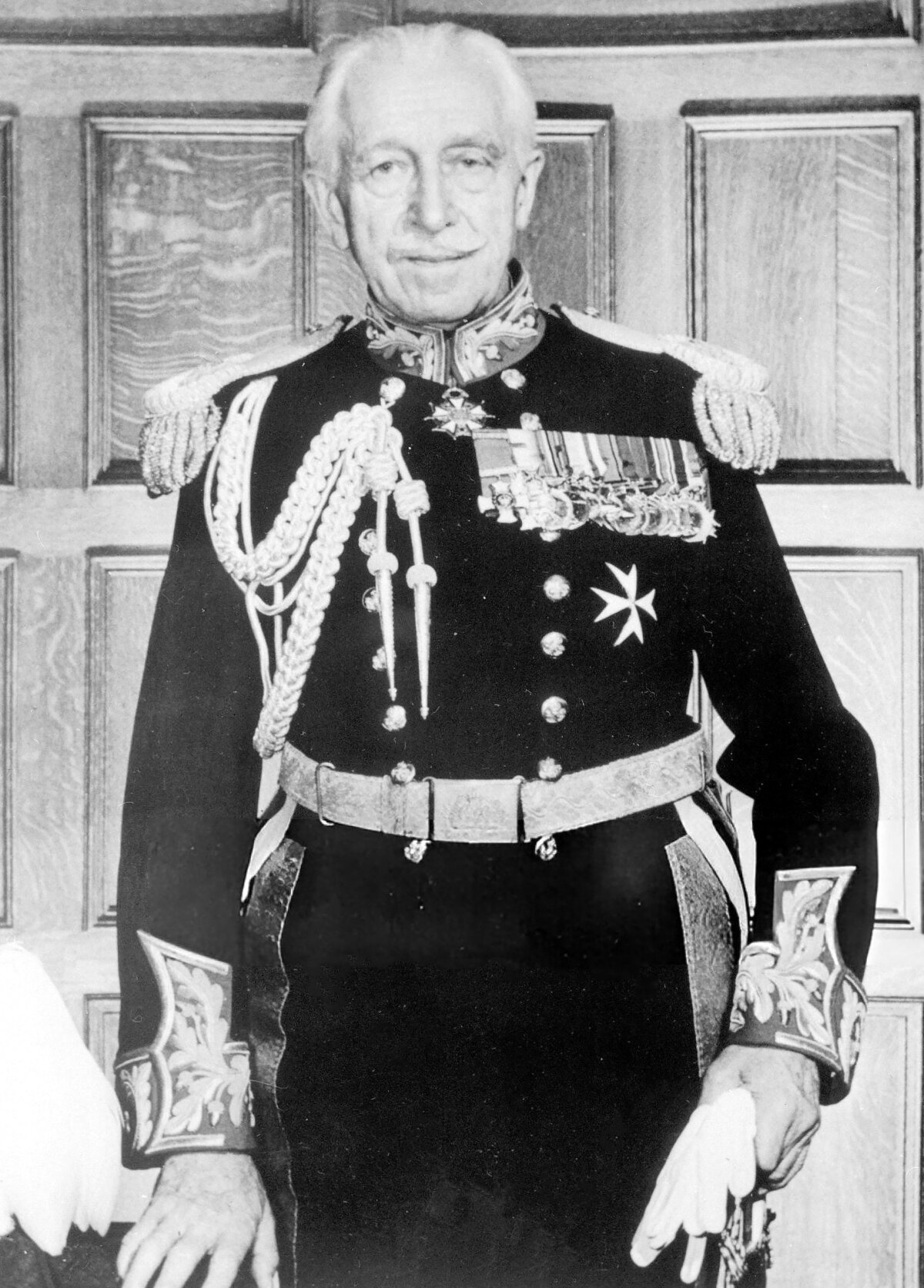
However, Charles-René’s daughter, Thérese Josephine d’Irumberry de Salaberry, married Charles H. Archer K.C., a Quebec Superior Court judge. Their daughter, Eugénie Pauline Archer, married Georges P. Vanier, the governor general of Canada from 1959 to 1967.
Georges and Pauline Vanier’s son, Georges Charles Julien André Vanier (nicknamed “Byngsie” after his father’s commander and hero, Viscount Byng of Vimy) became a Trappist monk and priest at the famous Oka monastery, taking the name of Benedict, and died in 2014 at age 88. A second son, Jean Vanier, served in Britain’s Royal Navy and later founded L’Arche, devoting his life to helping persons with developmental disabilities. The organization was headquartered in Paris, and he was joined there by his mother after the death of the governor general in office in 1967.
A daughter, Dr. Thérèse Marie Chérisy Vanier, born in 1923 in England, served in the Canadian Women’s Auxiliary Corps during World War II, when she got the top score in the exams and was “voted the officer under whom the cadets most wanted to serve.” Afterwards she became a hematologist at a leading London hospital, was a pioneer in hospice and palliative care, and opened and served in the British branch of L’Arche until her death in 2014 at age 91.
The historic service of such distinguished Quebecers shows how comfortable they were with the British Empire and the British world, more recently also maintaining ties to France. Their excellence was limited not at all by being also good Canadians.
Views expressed in this article are the opinions of the author and do not necessarily reflect the views of The Epoch Times.