
Commentary
Bombs are scary. Bombs laced with radioactive materials—so-called dirty bombs—seem even scarier. But the fear is misplaced. Exaggerated dread of dirty bombs and low-level radiation in general only magnifies terrorists’ power to sow panic while needlessly constraining U.S. military and homeland security options.
Hiroshima and Nagasaki proved the notion that what doesn’t kill you makes you stronger. Those at Ground Zero were incinerated. Those near Ground Zero who absorbed very high doses of radiation died at a high rate. But the tens of thousands downwind of the blasts who received lower levels of radiation outlived the general population, according to the Atomic Bomb Disease Institute of the Nagasaki University School of Medicine.
“Among about 100,000 A-bomb survivors registered at Nagasaki University School of Medicine, male subjects exposed to 31-40 cGy [centigrays] showed significantly lower mortality from non-cancerous diseases than age-matched unexposed males,” the Nagasaki researchers found. “And the death rate for exposed male and female was smaller than that for unexposed.”
The study’s bottom line—“the low doses of A-bomb radiation increased lifespan of A-bomb survivors” relative to those who received no excess radiation—aligns with literally hundreds of studies refuting the conventional wisdom that all levels of radiation are harmful.
Ethical constraints prevent deliberate human experiments with high radiation levels. But an accidental real-world test occurred in Taiwan in the early 1980s through late 1990s. More than 180 apartment buildings were discovered to have been constructed with recycled steel contaminated by cobalt-60. Over nine to 20 years, roughly 10,000 residents received elevated radiation doses. Standard risk models predicted 70 extra cancer deaths from that exposure, plus 232 “normal” cancer deaths—a total of 302. To the researchers’ surprise, only seven cancer deaths occurred among the residents—97 percent lower than what was expected.
The idea that there is no safe level of radiation was aggressively promoted after World War II by the United Nations and the “Ban the Bomb” movement, which opposed nuclear-weapons testing. It was cemented in the public mind by Hermann J. Muller, a leading anti-nuclear activist and winner of the 1946 Nobel Prize in Physiology or Medicine. In his Nobel lecture in Stockholm, Muller fraudulently claimed that the science was settled, that no dose of radiation is safe.
Muller’s claim—he not only knew of contrary evidence but worked to suppress its publication—was exposed in 2012 in a forensic review entitled “Muller’s Nobel Prize Lecture: When Ideology Prevailed Over Science,” published by the Society of Toxicology in Oxford University Press’s journal Toxicological Sciences.
That flawed premise persists today, largely because of entrenched regulatory interests. The result is unnecessarily strict rules governing nuclear power, medical imaging, and many other industries—rules that drive up costs without improving safety.
The same misplaced fear distorts defense policy. Overseas, it has discouraged U.S. strikes on Iran’s uranium-enrichment sites out of concern over releasing low-level radiation. At home, the Department of Homeland Security has spent decades planning for “dirty bomb” attacks as if they posed a unique radiological catastrophe. In truth, a dirty bomb whose radioactive plume scatters radioactive material over a wide area would be a mass-disruption event, not a mass-casualty one.
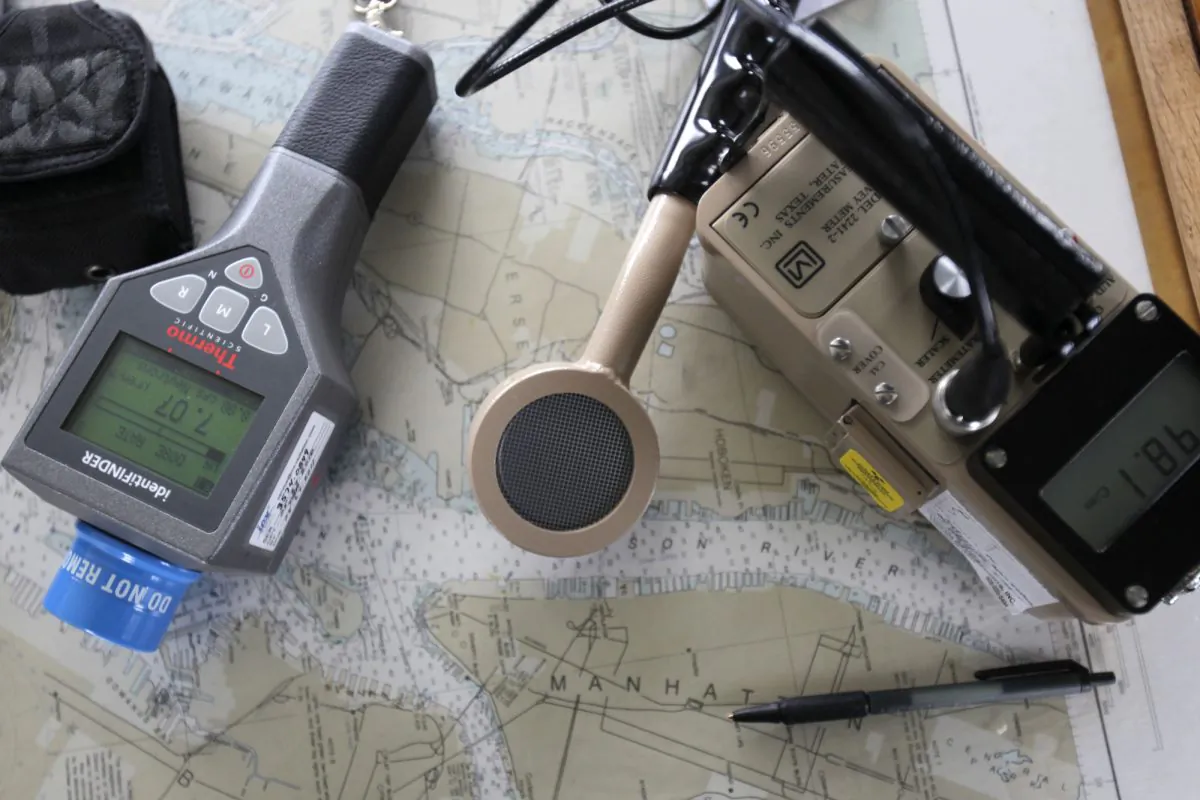
Public panic and over-cautious cleanup could needlessly render valuable real estate uninhabitable. A 2007 study at the University of Southern California estimated that a single dirty-bomb attack at the Port of Los Angeles could generate losses as high as $252 billion from a year-long port closure and decontamination effort. A 2004 Federation of American Scientists analysis estimated that an attack in central Manhattan using one pound of TNT and americium (a radioactive source used in oil-well drilling) could contaminate an area two kilometers long, covering about 60 city blocks.
Removing radioactivity from cracks and crevices in buildings could close the area for years.
The radiation dose in that Manhattan scenario, measured against Environmental Protection Agency standards, corresponds to an increased cancer risk of one death per 10,000 people over a 40-year period. This level is negligible compared with the exposures experienced by downwind survivors of Hiroshima and Nagasaki or residents of the Taiwan apartment buildings—exposures that the data show were associated with longer lifespans rather than harm.
Past terrorist plots involving dirty bombs in the United States have failed. Future ones may not. Given the presence of Iranian sleeper cells, the easy availability of radioactive sources in hospitals and research facilities, and Tehran’s history of targeting civilians, American emergency planners should treat a dirty bomb for what it is: no more fearsome than a conventional explosive.
Views expressed in this article are the opinions of the author and do not necessarily reflect the views of The Epoch Times.
 Friends Read Free
Copy
Facebook
Tweet
Friends Read Free
Copy
Facebook
Tweet