
Commentary
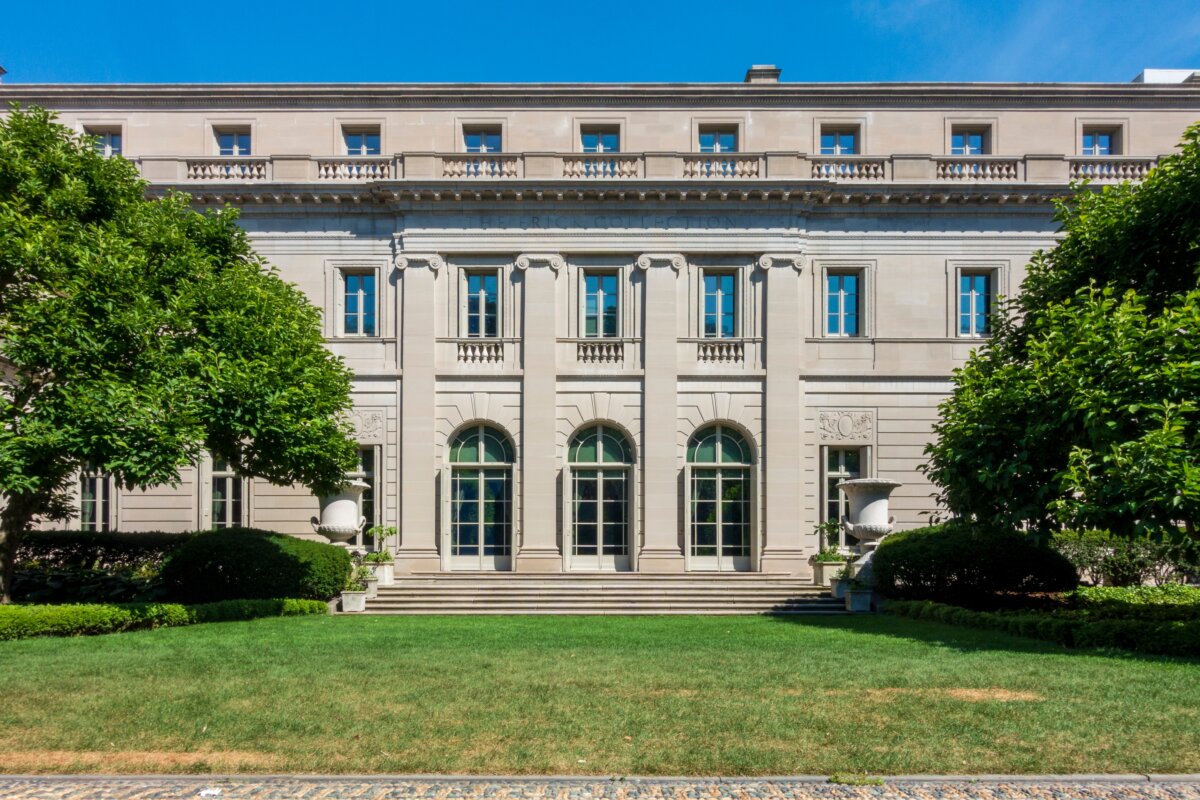
In the shadowed heart of New York’s Upper East Side, where Fifth Avenue meets 70th Street, stands a limestone palace that feels more like a private home than a public museum. Its rooms are filled with Old Master paintings, gleaming sculptures, and exquisite furnishings arranged exactly as a wealthy family might have left them.
Here we have Rembrandts glowing under soft light, Vermeers capturing intimate moments, and a bronze by Houdon standing sentinel. We have Titian’s portraits of powerful men, El Greco’s elongated saints burning with mystical fire, and Anthony van Dyck’s elegant English aristocrats in velvet and lace.
It’s all here, without ropes, pressing crowds, or white-washed walls.
This is the Frick Collection, one of the world’s most intimate and beloved art museums, a place that justifies including Manhattan as an art center of the world. It’s very much worth the trip, especially since the remarkably successful renovation.
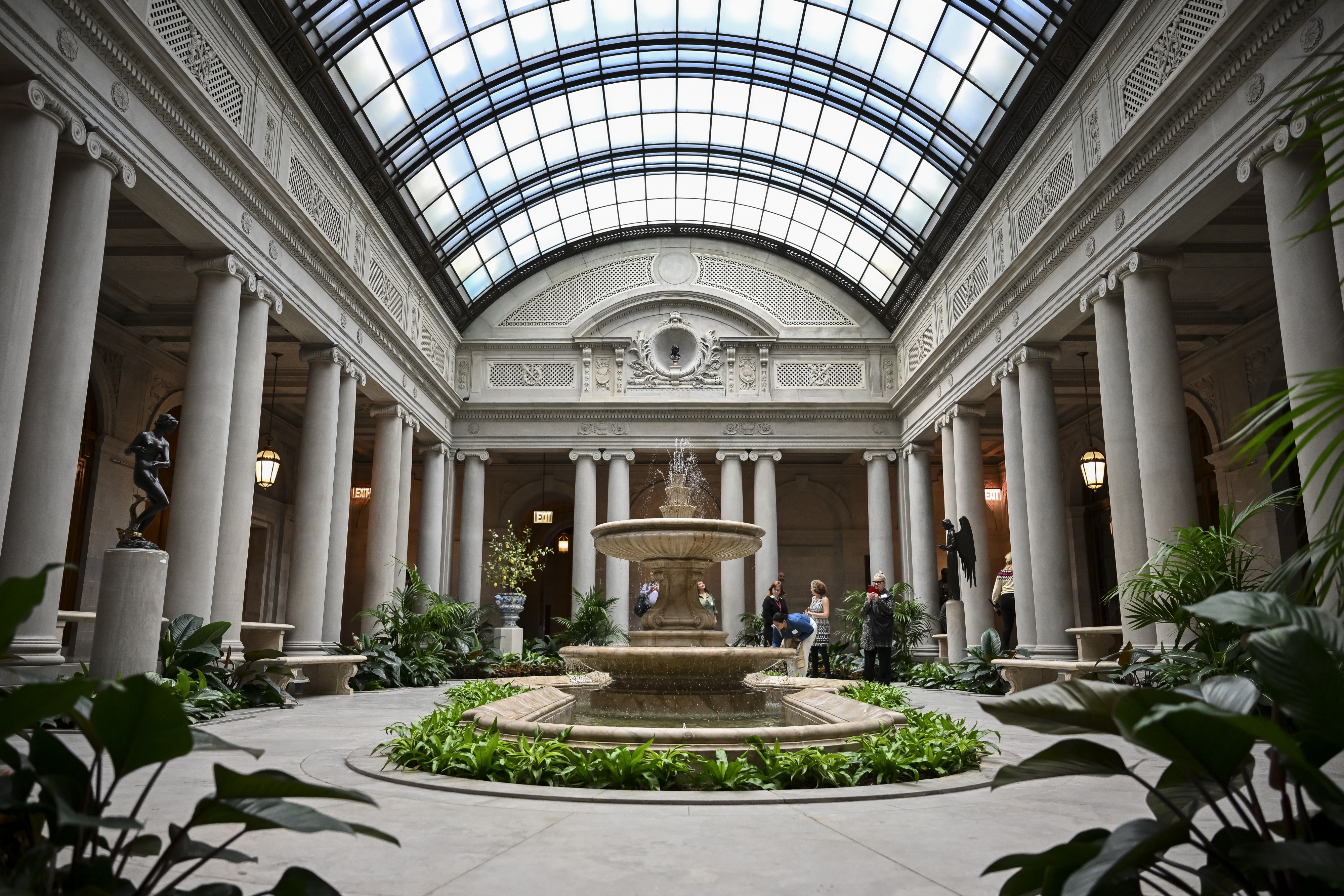 View of the garden Court at The Frick Collection press preview in New York City on March 25, 2025. (Angela Weiss/AFP via Getty Images)
Just entering into the home, you cannot help but be overwhelmed at the ethos. The light is warm and inviting and you are immediately greeted by two priceless paintings by Vermeer. They cause the jaw to drop and the heart to race. You think: it surely doesn’t get better than this and yet this is just the beginning.
This is not like one of those giant big-city galleries that strip art of context and reduce you to a mere spectator of stuff housed in viewing stations. Here you see the art in its proper context, like hearing music as part of a movie or opera or seeing a play on stage rather than just reading it. It’s art like you probably have never experienced because here is—unfailingly and throughout—the best of the best of the best, all in one home.
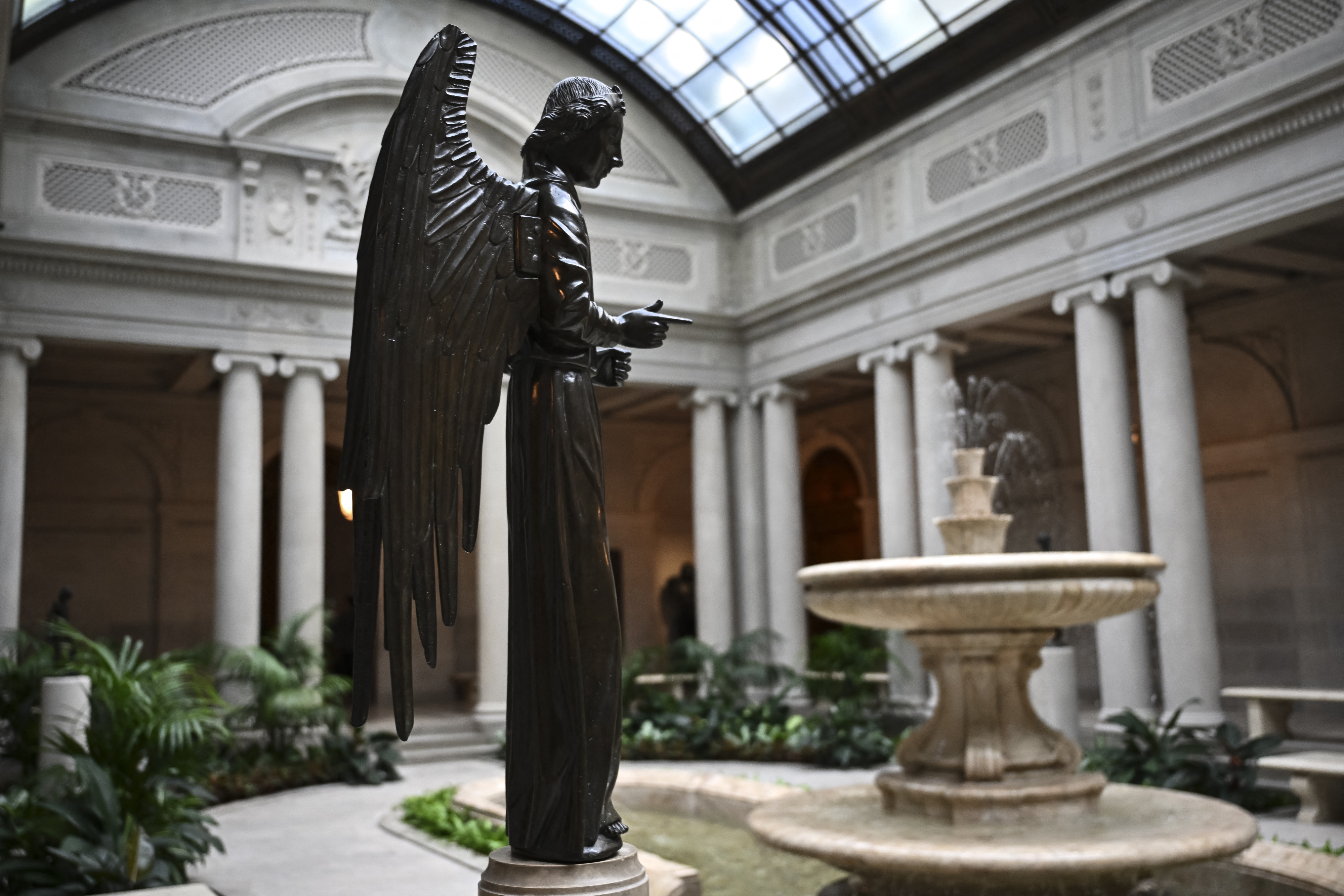 A view of Jean Barbet’s “Angel” seen in the garden court at The Frick Collection press preview in New York City on March 25, 2025. (Angela Weiss/AFP via Getty Images)
The story of the Frick begins not with curators or crowds, but with one driven, despised, and ultimately visionary industrialist: Henry Clay Frick. Born in 1849 to a modest farming family in rural West Overton, Pennsylvania, Frick had little formal education and started as a bookkeeper in his family’s whiskey distillery. Yet by his early thirties, he had built a coke-producing empire that fueled Pittsburgh’s steel boom.
Through ruthless efficiency, strategic partnerships (notably with Andrew Carnegie), and a willingness to weather fierce labor battles—including the notorious 1892 Homestead Strike—he became one of America’s wealthiest men.
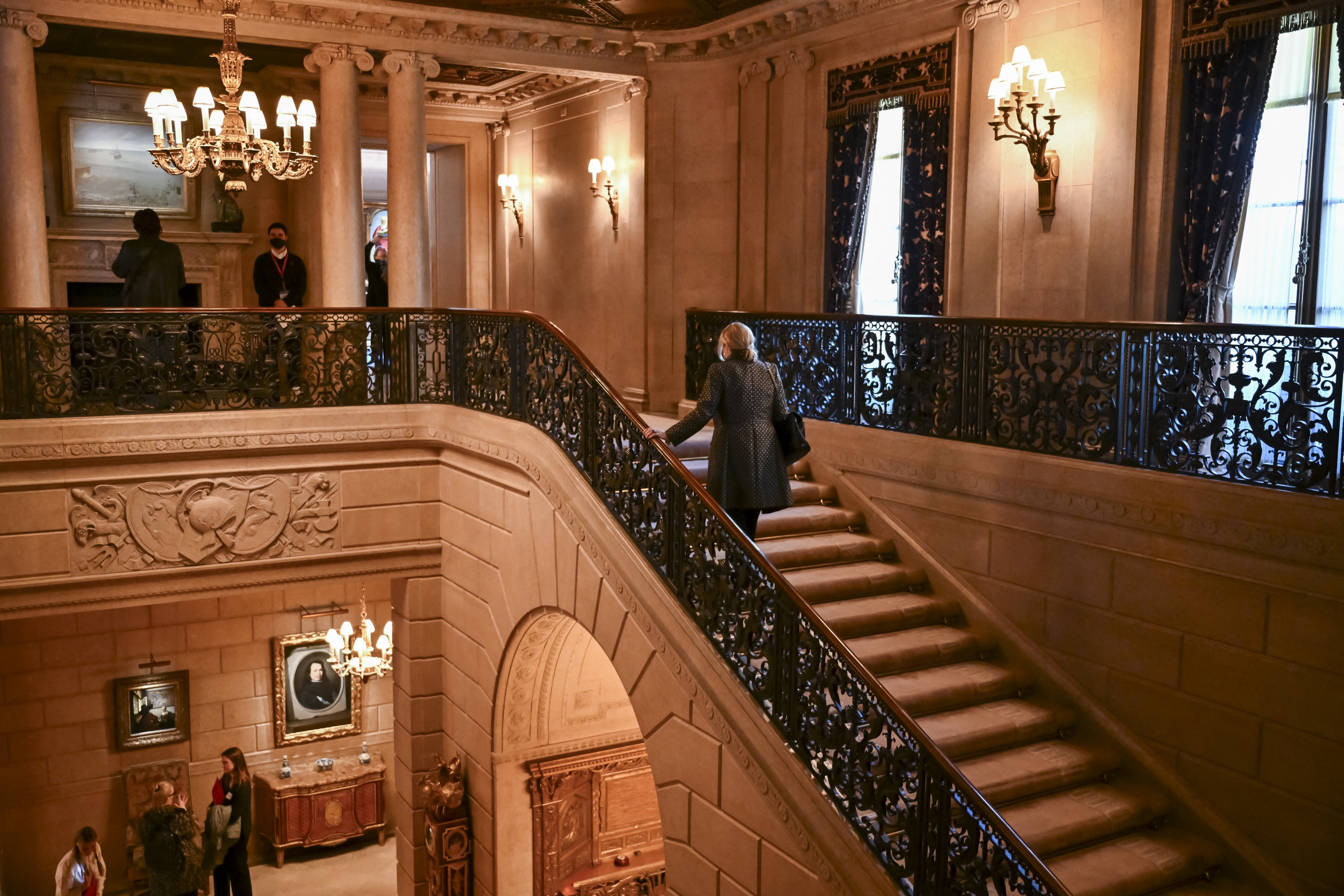 People attend The Frick Collection press preview in New York City on March 25, 2025. (Angela Weiss/AFP via Getty Images)
Steel became an enormous business. The production structure required vast geography from the coal mines of West Virginia to the processing plants of Pittsburgh to the high finance of New York City. Gigantic fortunes were made, among them Frick’s own.
His passion for art developed early and deepened with his fortune. He began collecting in the 1880s, initially favoring American landscapes, then turning aggressively to European Old Masters. He competed with titans like J.P. Morgan and Isabella Stewart Gardner, buying masterpieces with the same determination he applied to business.
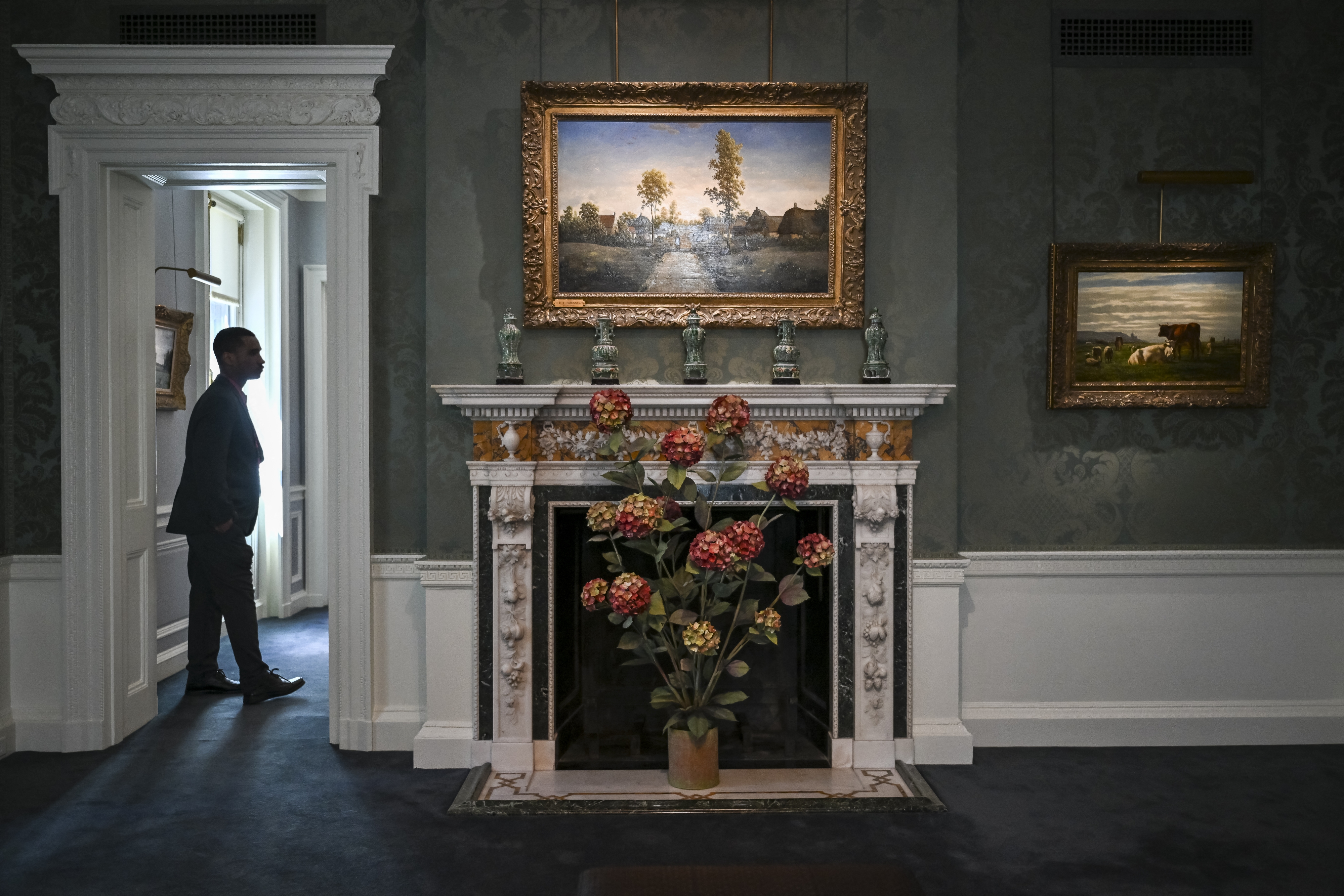 A man attends The Frick Collection press preview in New York City on March 25, 2025. (Angela Weiss/AFP via Getty Images)
When Frick died in 1919 at age 69, his will made that vision concrete. He bequeathed the mansion, his outstanding artworks, furnishings, and a substantial $15 million endowment to create “The Frick Collection”—a gallery dedicated to “encouraging and developing the study of the fine arts, and of advancing the general knowledge of kindred subjects.”
His wife, Adelaide, lived in the house until her death in 1931. Afterward, architect John Russell Pope expanded and adapted the residence, and the museum opened to the public in December 1935.
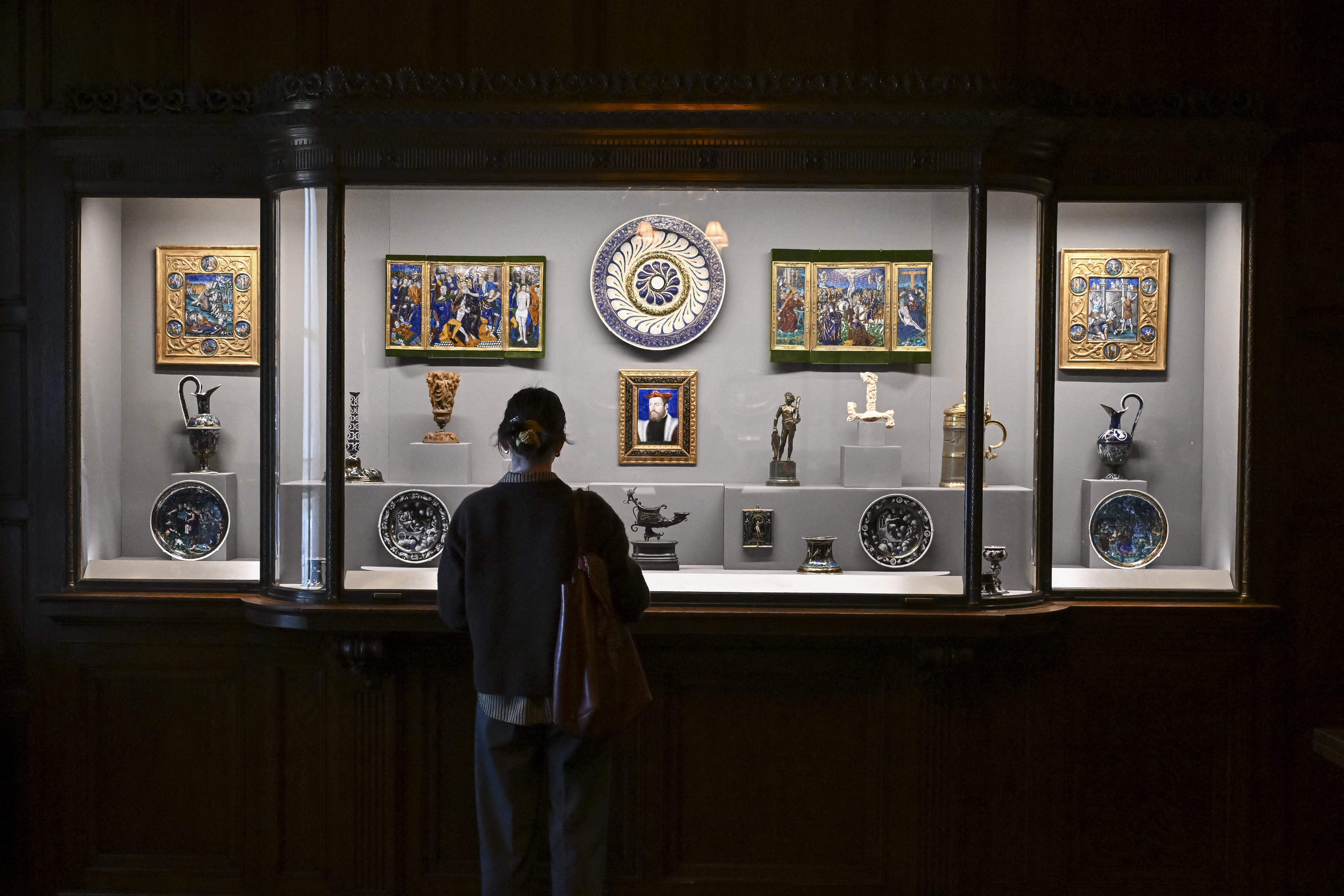 A woman looks at art in the Enamels Room during The Frick Collection press preview in New York City on March 25, 2025. (Angela Weiss/AFP via Getty Images)
The restoration and expansion has only been open one year. My impression was that most visitors on the day I went were there for the first time.
I was there with a group of friends: a person in finance, a language and cultural historian, an architectural student, and a world-travelling cosmopolitan journalist from Down Under. You cannot be in a place like this with such a group and not have the most electrifying conversations.
They were all over the map as we shared knowledge of places, wars, revolutions, great men and women of history, distortions and lies in the orthodox renderings of history, revelations about fashion and technology, and the regional differences in taste and presentation.
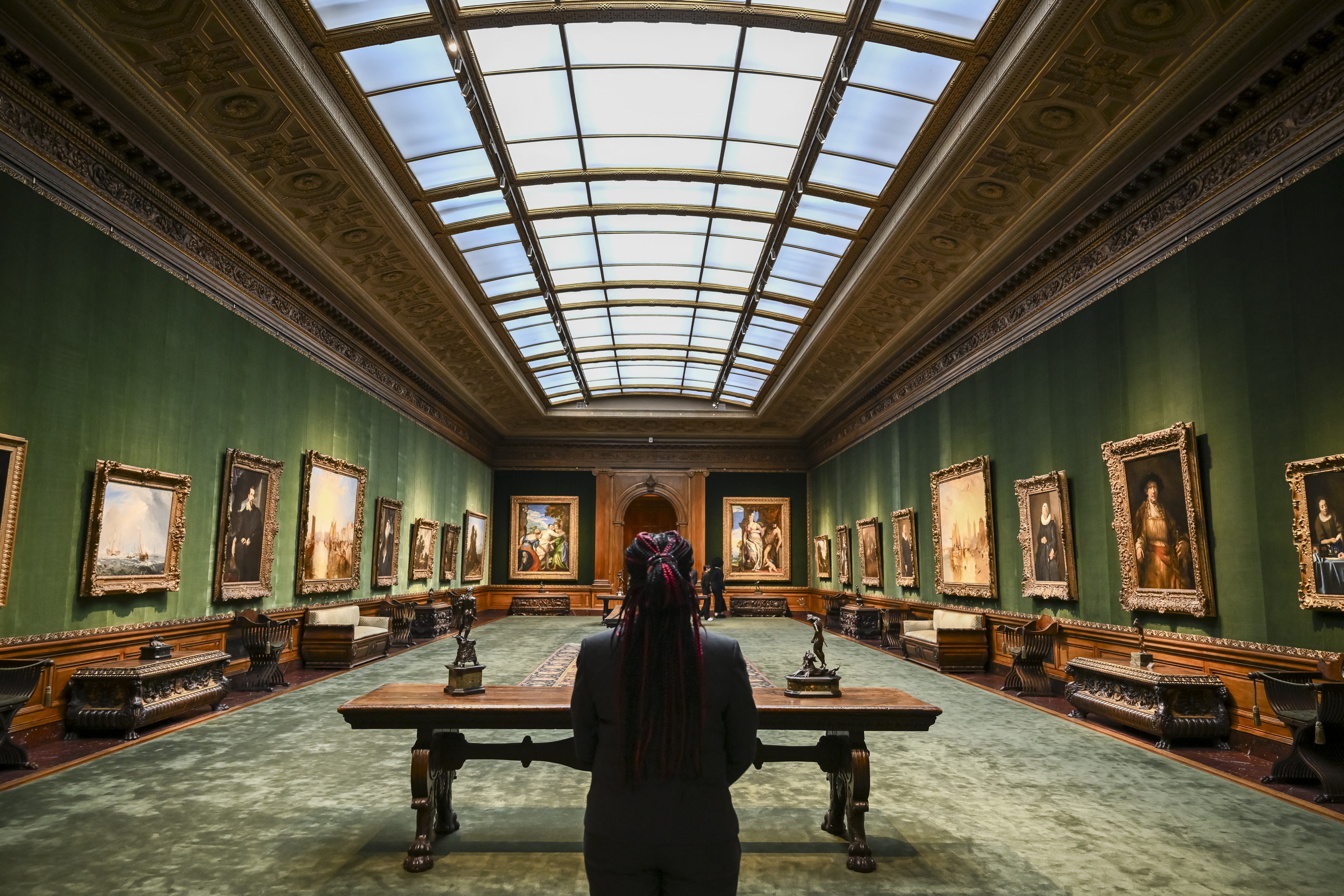 A woman stands in the West Gallery during The Frick Collection press preview in New York City on March 25, 2025. (Angela Weiss/AFP via Getty Images)
There is so much to experience. A room packed with treasures from the French Rococo seems to fill the silence with imaginary music. I could nearly hear the music of Marin Marais and Jean-Philippe Rameau. The synesthetic integration of the senses in the mind, sound created from visuals, illustrates the magic that art in proper context can create.
So I go through a place like this with a sense of awe, ultimate confusion, and deep respect. These artists—all endowed with God-given talent birthed by deep discipline—gave all this to the world hundreds of years ago and yet here I am enjoying it all, being edified by it, inspired by it. And then there is the man, Henry Clay Frick, at once a ruthless businessman and an artistic dreamer of the highest order.
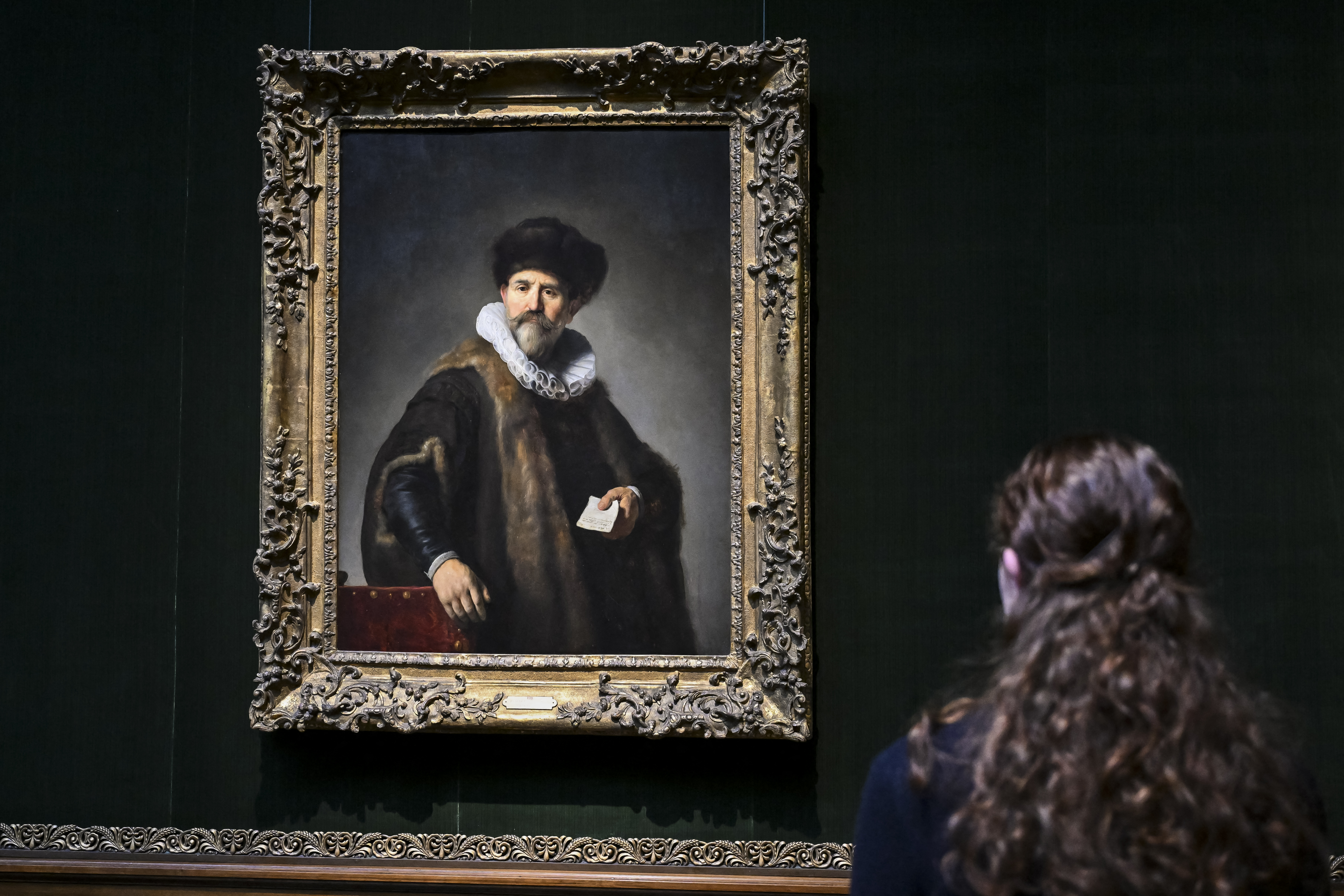 A woman looks at Rembrandt’s “Portrait of Nicolaes Ruts” at The Frick Collection press preview in New York City on March 25, 2025. (Angela Weiss/AFP via Getty Images)
What roiling, pained, and imaginative world rattled around in that brain of his? We will never know. But we know what we have here. He gifted it to us all, not just the skyscrapers of this city and the means of travel that brought us here but also the opportunity to gaze deeply into the eyes of some of the most wonderful people in history, implausibly rendered on canvas by some of history’s most gifted artists.
It’s all here for us. We should take every opportunity to bathe in the warmth of such a place and be grateful that we can do so.
Views expressed in this article are the opinions of the author and do not necessarily reflect the views of The Epoch Times.
 Friends Read Free
Copy
Facebook
Tweet
Friends Read Free
Copy
Facebook
Tweet