Commentary
This weekend, I taught a fire cider-making class at our ranch in Texas. The class sold out almost immediately. Some people drove two and a half hours just to take it. Others had traveled from California for others reasons, but had arranged their trips so they could be at the ranch when I was teaching the class.
I found myself wondering what was happening in our culture that would make people travel so far to spend an afternoon stuffing herbs, roots, and vegetables into glass jars and covering them with vinegar.
Because that’s essentially what we were doing.
We weren’t learning some complicated procedure or working with expensive equipment. We were making something that, in one form or another, our grandmothers and great-grandmothers might have kept in their cupboards.
The vast majority of our ingredients came directly from the ranch. We had grown turmeric, onions, garlic, lemongrass, oregano, mint, rosemary, hot peppers of many varieties, and calamondin, a small citrus fruit. We had even made our own persimmon vinegar. We supplemented what we grew with lemons, oranges, cinnamon sticks, ginger, and horseradish from the grocery store, along with local honey from our friends at Priceless Honey.
The women collected their trays, and we walked together through the herb garden. They stooped down to harvest herbs, gathering them directly from the earth before carrying them to the restaurant patio.
It was such a simple act, and yet one that most people in our modern society rarely perform anymore. How often do we bend down to gather something growing in the soil that we intend to use to care for ourselves and our families?
On the open-air patio of our restaurant, long tables were decorated with pumpkins, glass jars, and bottles of vinegar. We had done most of the chopping before everyone arrived, so the afternoon was spent filling jars with colorful ingredients and submerging everything in vinegar.
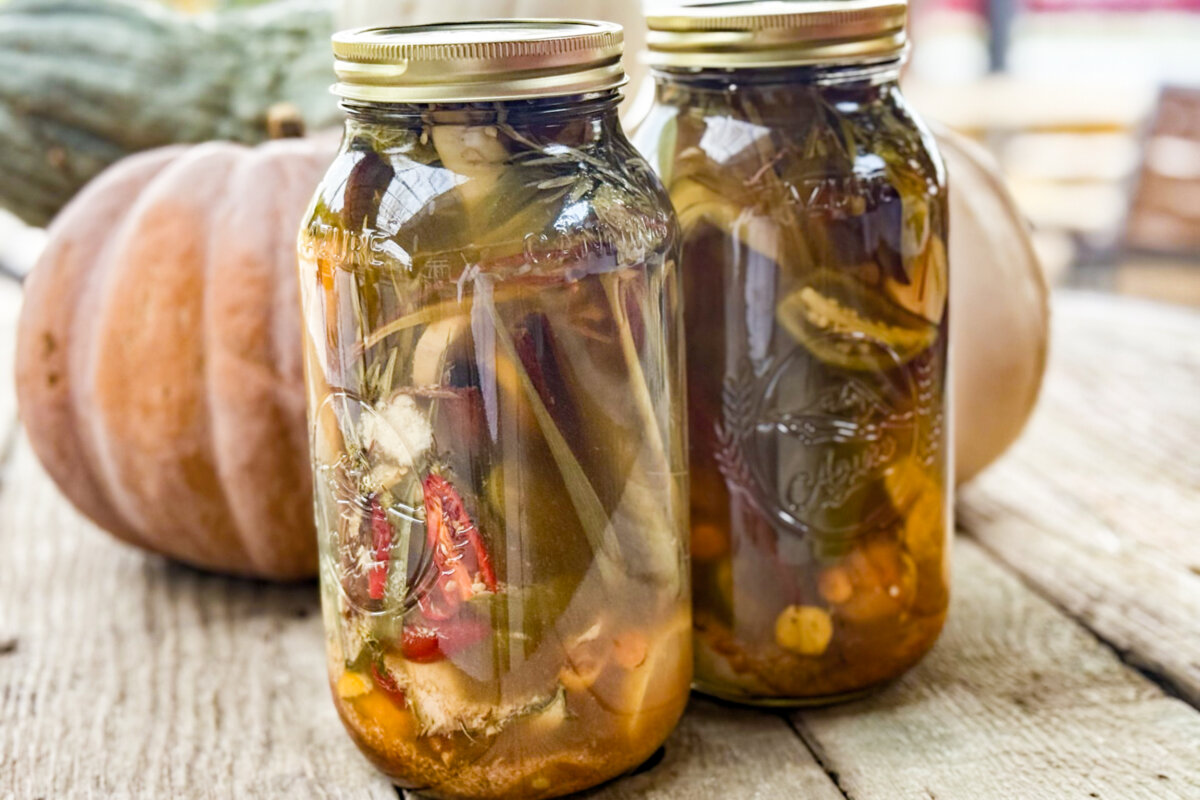
Fire cider is an herbal preparation made by steeping pungent roots, vegetables, herbs, and spices in vinegar. The modern name and popular recipe are associated with herbalist Rosemary Gladstar, but the practice of preparing herbs and foods in vinegar has much older roots.
Fire cider has become a staple in many herbalists’ winter medicine cabinets. Made with warming ingredients like garlic, ginger, horseradish, onions, and hot peppers, it is traditionally used during cold and flu season. I believe there is wisdom in these old preparations, and as the weather changes, this is the time of year when I want jars of fire cider steeping in my pantry, ready for the colder months ahead.
A Common Thread
As we gathered around the tables, I asked everyone to introduce themselves and share what had brought them to the class.
What followed was far more interesting than anything I could have taught about making fire cider.
One woman after another shared a story of something that had changed her relationship with health. For some, it was losing a loved one. For others, it was the experience of COVID and the years that followed. Some spoke about becoming more interested in what they put into their bodies. Others shared personal milestones, including being medication-free for a year or pharmaceutical-free for three years.
The common thread was unmistakable. Something had happened that made them want to participate more actively in their own health. They wanted to understand ingredients, make things themselves, and recover knowledge they felt had been lost.
What struck me was that the gathering was almost entirely women. The exception was a husband and wife who brought their six children. There were little girls as young as one and women in their 80s, all gathered around the same tables.
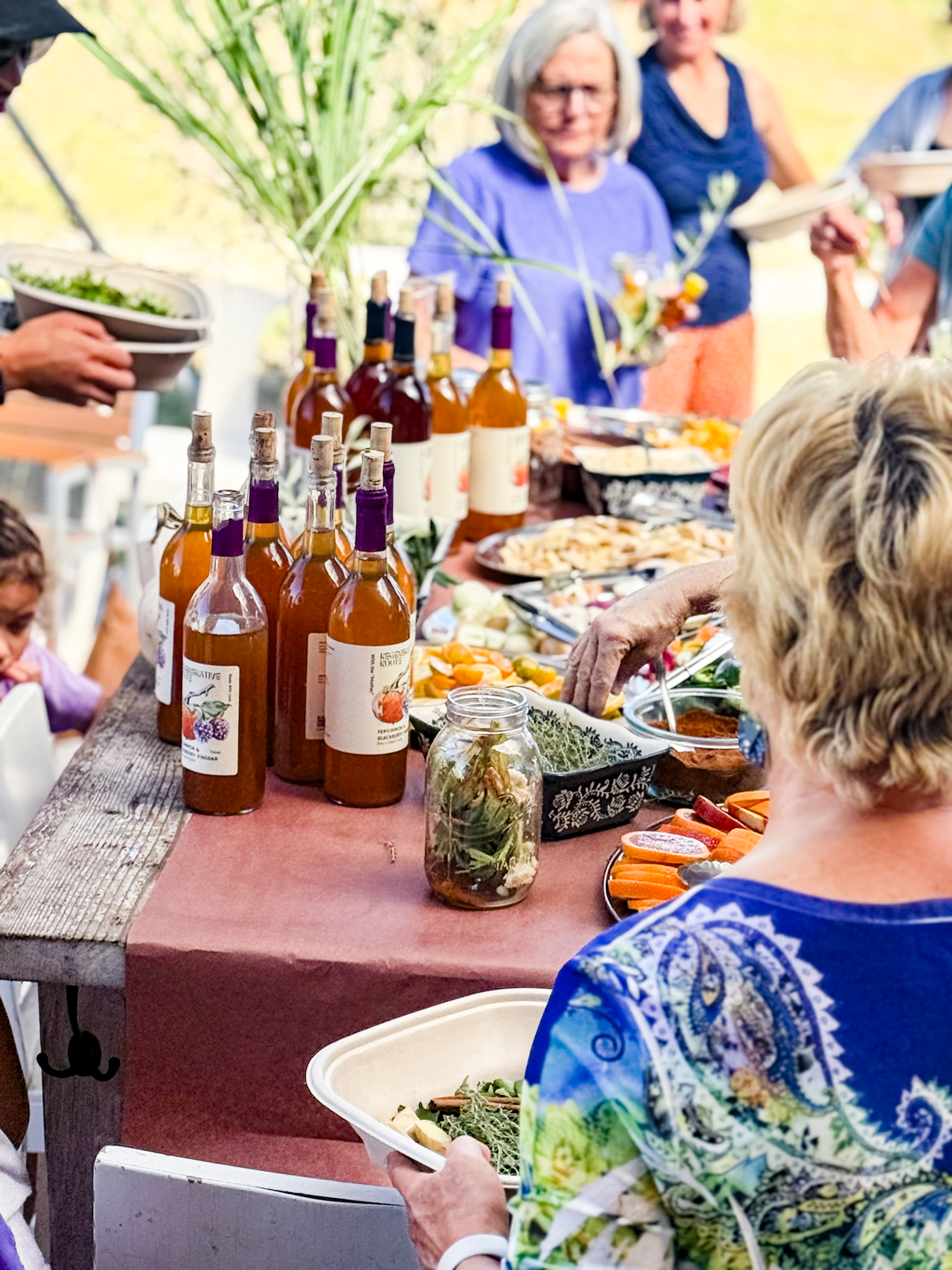 Participants make jars of fire cider at a class hosted by Mollie Engelhart at her ranch in Bandera, Texas, on Oct. 10, 2026. (Courtesy of Mollie Engelhart)
Something about this subject is resonating with people right now. People are hungry for knowledge about their own health, and perhaps even hungrier for the freedom to make decisions about it.
I kept thinking about what a scene like this might have looked like a hundred years ago. A grandmother teaching her daughter how to preserve herbs. A mother showing her children how to prepare something from the garden. Children watching, smelling, tasting, asking questions, and absorbing knowledge without anyone calling it a class.
It was simply life.
I suspect that in many households, something like honey-preserved garlic, fermented vegetables, herbal teas, or homemade salves would have been a familiar part of the kitchen. The knowledge of how to prepare things from the plants growing around us was once much more common.
Somewhere along the way, we outsourced much of that knowledge. We outsourced growing our food, preparing our food, and understanding the plants around us. Increasingly, we began to think of health as something that happened somewhere else, in a building, with a professional, rather than something we also participated in through our daily lives.
I spend a great deal of my life talking about food sovereignty. I believe people should know where their food comes from, how it was grown, and how to produce at least some of it themselves. But that afternoon reminded me that growing food and growing medicine were never entirely separate ideas.
We had just harvested herbs from the land. We were using vinegar made from persimmons. We could see where the ingredients came from because we had gathered some of them ourselves.
That’s part of what people are hungry for. Not just the finished product, but understanding how something goes from the earth to the jar. How a plant becomes an ingredient, how fruit becomes vinegar, and how knowledge becomes something we can pass to our children.
A Quiet Rebellion
October is an especially meaningful time to have this conversation. The weather is changing, and families are preparing for the months when colds and other respiratory illnesses become more common. Historically, autumn was a time for preparing. Food was preserved, herbs were dried, roots were harvested, and pantries were filled.
Today, we can walk into a store at almost any hour and purchase an astonishing variety of products. That convenience has also allowed us to forget how much we once knew how to do.
I think there is a quiet rebellion happening against that forgetting.
I see it in the growing interest in sourdough bread, home gardens, raw milk, fermentation, canning, herbalism, and raising backyard chickens. People are questioning whether convenience should require surrendering competence.
For generations, women were often the keepers of household knowledge. They knew which foods could be preserved, which plants grew in which seasons, and which preparations their families traditionally used. That knowledge was passed down through observation, practice, and relationships.
Today, we organize classes, buy books, watch videos, and travel hours to learn skills that might once have been taught by the woman living next door.
There is something sad about that loss, but something beautiful about the desire to recover it.
I looked around my class at women from different generations, all with different reasons for being there. Some had experienced grief. Some had experienced fear. Some had experienced a personal transformation in how they approached their health.
Yet there they were, sharing stories while filling jars with herbs and vinegar.
And the children were watching.
Those little girls may not remember every ingredient we used or how long the mixture needs to steep. But perhaps they will remember that food and traditional medicine can begin with plants, that their hands can make useful things, and that knowledge is worth sharing.
Maybe someday, one of those little girls will be standing in her own home with her children or grandchildren, making fire cider and telling them about the afternoon she spent at a ranch in Texas.
And maybe she won’t need to sign up for a class to pass that knowledge along, because it will simply be something she knows.
I believe growing our own food is important. But I am becoming increasingly convinced that learning to grow and prepare our own medicine is just as important. The plants that nourish us and the plants that have traditionally supported our health often grow in the same garden.
The jars we made will sit in cupboards for the next several weeks while the ingredients steep in vinegar. Eventually, they will be strained and bottled.
But I suspect the most valuable thing those women took home wasn’t in the jars.
It was the knowledge that they could make them.
And perhaps the realization that they were not alone in wanting to remember how.
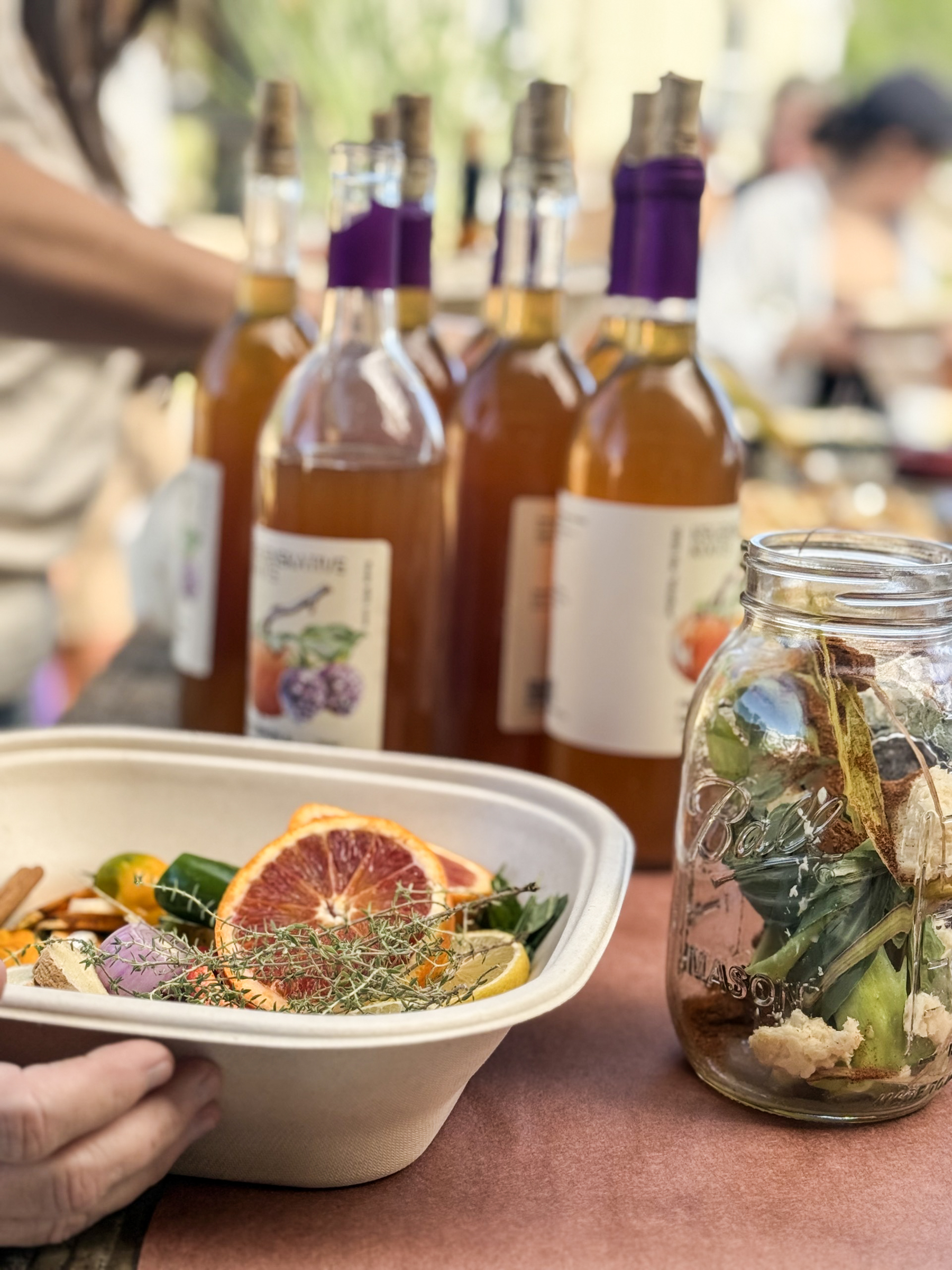 Epoch Times’ columnist Mollie Engelhart hosted a fire cider making class at her ranch in Bandera, Texas, on Oct. 10, 2026. (Courtesy of Mollie Engelhart)
Sovereignty Ranch Fire Cider
Fire cider is a traditional herbal vinegar infusion made with roots, herbs, vegetables, and spices. There is no single perfect recipe. Use what grows in your garden, what you have available, and what appeals to you.
Ingredients
● ¼ cup fresh turmeric, chopped
● ½ small onion, chopped
● 4–5 cloves garlic, crushed
● ½ stalk fresh lemongrass, chopped
● 1–2 sprigs fresh oregano
● 1–2 sprigs fresh mint
● 1–2 sprigs fresh rosemary
● 1–2 hot peppers, sliced
● ½ lemon or orange, sliced, or 2–3 calamondins
● 2 tablespoons fresh ginger, chopped
● 2 tablespoons fresh horseradish, grated
● 1 small cinnamon stick
● Approximately 1½–2 cups apple cider vinegar or homemade fruit vinegar, enough to cover
● Local honey to taste (we use Priceless Honey)
Instructions
1. Place the vegetables, roots, herbs, citrus, and spices into a clean, quart-size glass jar.
2. Pour vinegar over the ingredients until they are completely submerged.
3. Cover with a nonmetallic lid, or place parchment paper between the vinegar and a metal lid.
4. Store in a cool, dark place for 3–4 weeks, checking periodically to ensure the ingredients remain submerged.
5. Strain through a fine-mesh strainer, pressing the solids to extract the infused vinegar.
6. Stir in local honey to taste, transfer to clean glass bottles, and refrigerate.
Yield: One quart jar of ingredients, producing approximately 1½–2 cups of infused vinegar before adding honey.
Make It Your Own
Fresh herbs are wonderful, but dried herbs work too. Feel free to experiment with different peppers, herbs, roots, and citrus fruits. If you don’t have turmeric or horseradish, leave them out. Fire cider is about working with what you have, rather than following an exact formula.
At Sovereignty Ranch, we used herbs and vegetables grown on the farm, lemons, oranges, our own calamondins, homemade persimmon vinegar, and local honey from our friends at Priceless Honey.
If using homemade vinegar, verify that it has at least 5 percent acidity. Use commercially prepared 5 percent vinegar if the acidity of your homemade vinegar is unknown.
Views expressed in this article are the opinions of the author and do not necessarily reflect the views of The Epoch Times.
 Friends Read Free
Copy
Facebook
Tweet
Friends Read Free
Copy
Facebook
Tweet