
Commentary
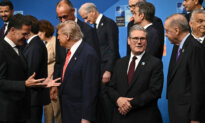
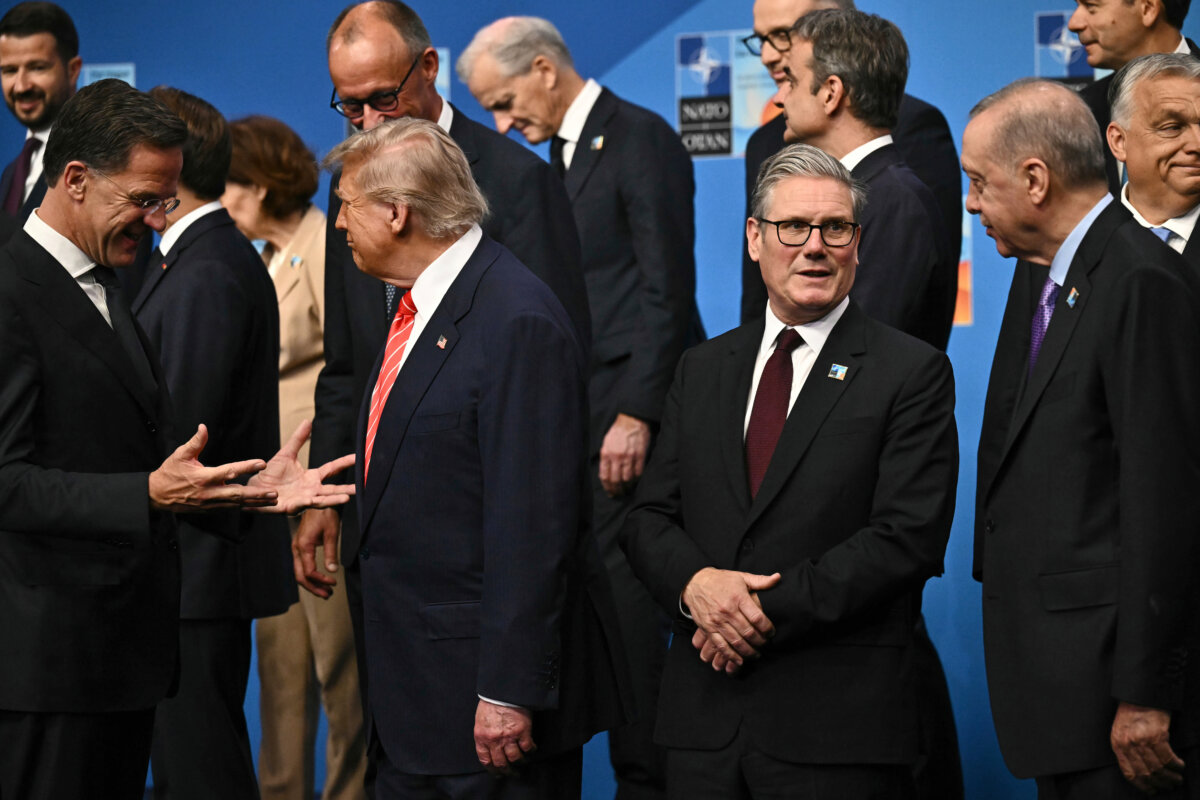
NATO, the North Atlantic Treaty Alliance, meets annually, with some occasions more memorable than others. This year’s iteration, held in The Hague and chaired by new Secretary-General Mark Rutte, drew unusual attention because it seemed that the very future of the alliance was at stake.
Founded as a counter to Soviet expansion after World War II, some believed NATO had lost its reason for existence after the disintegration of the Soviet empire. An exception was those Eastern European countries that had been part of that empire: They feared that Russia meant to reassert its control over them. Many applied for and were admitted to NATO, prompting Russian leader Vladimir Putin to accuse the organization of sinister plans against his country.
NATO’s tepid reaction to Moscow’s forcible detachment of Crimea from Ukraine in 2014 confirmed the fears of the Eastern European states and did not lead to any noticeable enhancement of its capabilities. The United States quietly sent advisers to the Ukrainian government and added a special line item in its defense budget called the European Deterrence Initiative to bolster the defense capabilities of the Eastern European states, but NATO itself did little.
Apart from the United States at 3.6 percent, only four states—Poland, Estonia, Latvia, and Greece—met their commitments to devote 2 percent of their gross domestic product (GPD) to defense, to the annoyance of 2016 presidential candidate and eventual victor Donald Trump, who threatened to pull the United States out of NATO if members did not live up to their comments. Due to the dominant size of the U.S. economy and military, the alliance could not counter a threat from Russia without it. Trump repeated the threat on returning to office in 2024, this time proposing a new benchmark of 5 percent in light of changing circumstances: Putin’s 2022 Russian invasion of Ukraine had impressed most European countries with the seriousness of the Russian threat and even prompted two new countries—Finland and Sweden, both of them located in close proximity to Russia—to join NATO.
Against this backdrop, as well as a rising perception of a threat from an expansionist China tacitly partnered with Russia, four Indo-Pacific states—Australia, New Zealand, Japan, and South Korea, the IP-4—were invited to participate in the summit. As Rutte pointed out, China could use Russia to divide NATO’s attention and resources in Europe if it moved on Taiwan. Ukrainian President Volodymyr Zelenskyy did not receive an official invitation, reportedly at the insistence of the Trump administration, but was received with full honors by high-ranking Dutch officials, addressed a joint session of parliament, and was included in a banquet hosted for all delegates by the Dutch king and queen.
Security was tight, with the major thoroughfare facing the meeting venue closed to traffic beginning in April. Drivers were diverted to other streets or advised to bicycle. In the end, all went well. Noisy but peaceful demonstrators protested against NATO and military spending, although they did not disrupt the proceedings.
Rutte softened the blow of 5 percent by distinguishing between a 3.5 percent commitment on arms and a 1.5 percent allocation for infrastructure improvements, meaning cybersecurity, crisis response capabilities, and adapting roads, rail lines, bridges, and ports, to military needs. Unsurprisingly, the nearer countries are to Russia, the more amenable they are to increasing their defense budgets. Lithuania, for example, is to spend 5.5 percent of its GDP in 2026 and Latvia between 5 percent and 6 percent. However reluctantly, other members concurred, with the exception of Spanish Prime Minister Pedro Sánchez, who flatly rejected the levy.
Several other caveats must be noted. Germany and France committed to the 3.5 percent defense equipment total by 2030, but that is four to five years away and at least one election apiece that could alter their willingness to meet the targets. Spain received a carveout from Rutte that dented the call for strength through unity and received scorn from Trump, who declared that he would make Spain pay in other ways.
Still, Trump pronounced himself pleased with the result and, as opposed to his earlier statement that Article 5 of the NATO treaty, which requires all members to defend against an attack against one of them, was capable of different interpretations, now pronounced himself wholly committed to it.
“I stand with it, that’s why I’m here,” he said.
Trump also said he felt different about NATO as a result of the meeting.
Even Sánchez’s dispensation may not have the results he was hoping for. One European member pointed out that other countries too faced difficulties—the German economy, for example, has actually been contracting, and the UK economy is struggling as well—and described Sánchez’s actions as “reckless” and “selfish.” Others wondered if his act of bravado was designed to divert domestic attention from corruption charges involving his family and top officials and calls from his critics to call a general election.
In an unequivocal victory for Trump, UK Prime Minister Keir Starmer announced at the summit that Britain would buy at least 12 new F-35s to join NATO’s airborne nuclear mission. Importantly, the planes will add a second leg to the UK’s nuclear posture: Its military currently has only submarines that are capable of launching ballistic missiles armed with nuclear warheads. The new planes will also enhance the interoperability of NATO defense. And a private session between Zelenskyy and Trump apparently smoothed over the unpleasantness of their meeting at the White House in February. Heretofore against continued U.S. aid to Ukraine, Trump said he would look into making Patriot missiles available to it.
In the end, the proceedings justified Rutte’s closing remarks that NATO is now a stronger, fairer, more lethal organization. He declared, counter to earlier statements from the Trump administration, that Ukraine had the alliance’s continued support and was on an “irreversible path to NATO membership.”
In sum, the United States has committed to stay, and the members, excluding Spain, have agreed to do more. For now. To paraphrase Benjamin Franklin, “an alliance, gentlefolk, if you can keep it.”
Views expressed in this article are the opinions of the author and do not necessarily reflect the views of The Epoch Times.
 Friends Read Free
Copy
Facebook
Tweet
Friends Read Free
Copy
Facebook
Tweet