Commentary
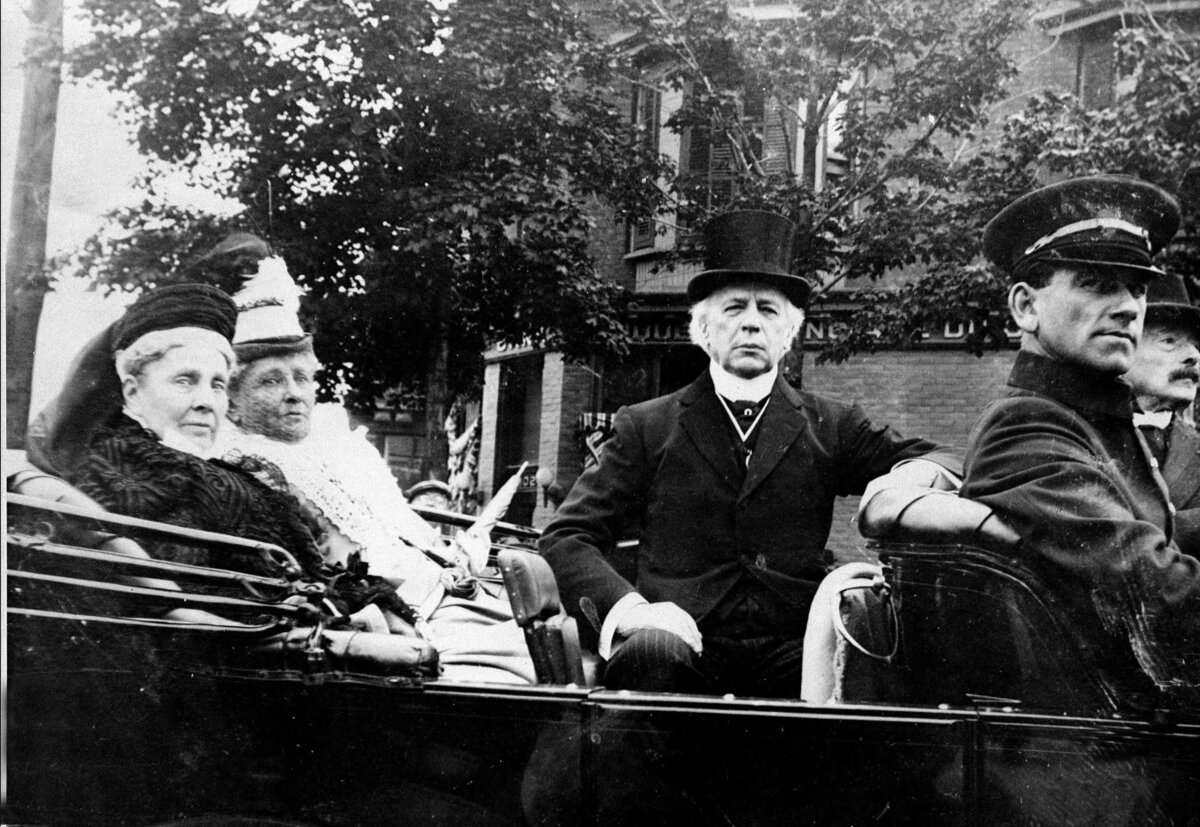
Sir Wilfrid Laurier was one of Canada’s most successful political operators and served as the national Liberal leader from 1887 to 1919 (32 years), and about half that time as prime minister. He eventually took up the old Cartier-Macdonald mantle of Confederation, adding two new provinces, and even managed to play the imperial statesman, attending Queen Victoria’s Diamond Jubilee in 1897, where he was knighted. In 1899, he reluctantly sent volunteers to participate in Canada’s first overseas expeditionary force, winning our first overseas military victory at Paardeberg in the Boer War in February 1900.
But in his younger years, Laurier was a bitter opponent of Confederation and Empire. A liberal nationalist in the tradition born of the French Revolution, he believed fervently that French Canadians should break free of English Canada and the Polyglot Empire. He was a “Rouge and a separatist,” according to an official biography, elevating race above religion and disdaining the non-racial Canadian political “new nationality” posited by the Founding Fathers.
Laurier caught the political bug around the family hearth. His father, Carolus, or Charles, was a surveyor, justice of the peace, lieutenant in the 3rd Battalion of Militia, and small-town mayor. He spoke English well, and named his son Henry Charles Wilfrid after Walter Scott’s protagonist Wilfred of Ivanhoe. Laurier père loathed the Catholic faith and didn’t even go to confession and communion once a year, the absolute minimum. Wilfrid was a chip off the old block; it’s well-attested that if the father in a family does not go to church, even if the mother does, the children are more likely to give it up. And so he too attacked Catholicism, becoming a “revolutionary, godless fellow, blasphemer, joker, monster, hypocrite,” according to Bishop Louis-François Laflèche’s newspaper, Le Journal des Trois-Rivières.
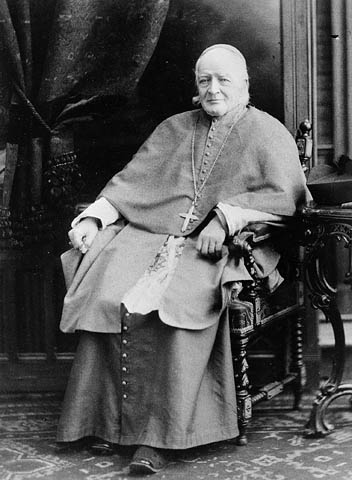
From age 11, Laurier lived for two years with the family of a Scots Presbyterian shopkeeper, then with an Irish family. All his life he spoke English with a Scottish lilt. Then, at 13 his father enrolled him in the College de l’Assomption, run by the Jesuits, who had recently been invited back into the city when the Bishop of Montreal, Msgr. Ignace Bourget, was making great efforts to strengthen Catholic intellectual and moral education—with mixed success.
Laurier’s teachers said he devoured all the anti-clerical “newspapers and books on doctrinal liberalism condemned by the Church.” What were those Jesuits up to? It’s not clear that anyone ever tried to teach Laurier what might be wrong with liberal ideas or what the unintended consequences might be. Thus, “Throughout his life, Laurier never considered the position of the Church in his decision making,” according to the online Musée Laurier. Instead, he “always sought what was best for his country and his citizens, all equal in Canada irrespective of origin, language and religion.” (They mean “equal” and “what was best” as long as you are not actually Catholic.)
Laurier and the Rouge Party (which promoted liberalism in Canada East in opposition to George-Étienne Cartier’s conservative Bleu Party) demonized the Catholic Church as the enemy of liberty and nationality. They founded a debating club, the “Institut Canadien,” called a “hot-bed of Rougism” by biographer Joseph Schull. Further radicalized by the February Revolution in Paris in 1848, Louis-Joseph Papineau and the Rouges strongly backed the Annexation Manifesto in 1849, which proposed Canada would be better off joining the United States. The institute’s public presence faded in the 1860s, though its ideas never went away.
Looking at Quebec today, it appears that the Rouges won hands down. Post-Quiet Revolution Quebec is the product of all the nationalist ideas considered radical in the 19th century. A cynical view would be that the fruits are: state usurpation and monopolization of schools and hospitals in the 1960s, record-low church attendance in the post-Vatican II era, cultural Americanization, and the low marriage rate and high cohabitation, divorce, abortion, assisted death, and suicide rates for which Quebec is notorious.
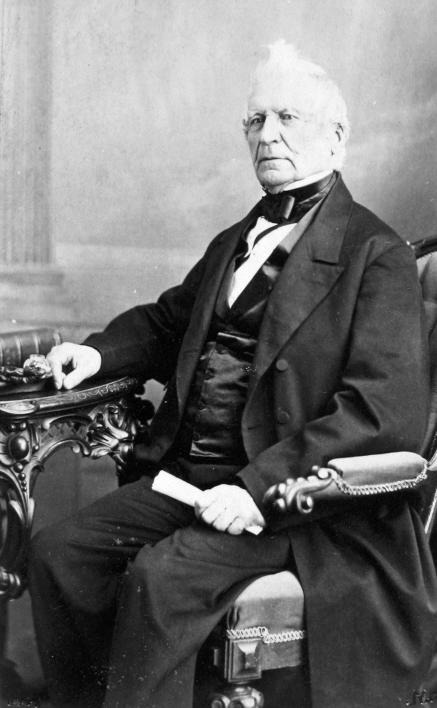
Perhaps Quebec’s late bishops were vindicated. Msgr. Bourget echoed Pope Gregory XVI’s 1832 warning to the world, “Mirari Vos (On Liberalism and Religious Indifferentism),” that unrest, chaos, loss of faith, and their moral consequences flowed from deep-seated liberal errors about human nature: chiefly, the error that man is an autonomous, self-creating being, when in reality, to flourish humanly, he must operate to a proven blueprint in a family and community that upholds it. Bourget wanted French Canadians “to escape the calamities that are besetting so many great and powerful nations.” He advised: “Be faithful to God and respect all legitimately constituted authorities. … Do not listen to those who address seditious remarks to you, for they cannot be your true friends.” He warned them against bad books, which he called “vehicles of pestilential doctrines.”
Rebel Wilfrid read the bad books. He worked for the influential Rouge lawyer, Rodolphe Laflamme, former editor of L’Avenir, who also ushered him into the Institut Canadien. Laurier was regularly featured in Rouge Party newspapers.
The Rouges opposed the Confederation plan because the provinces would be too weak in “a legislative union in disguise.” The scheme came from the same “discredited” pro-business Bleu coalition, “in bed with the railway companies” and the arch-francophobe George Brown. Geographically, according to Laurier’s biography, the proposed country “resembles an eel, its length would be everything, its breadth nothing,” an image of slippery flimsiness.
“We are being handed over to the English majority,” Laurier said. Confederation would be “the tomb of the French race and the ruin of Lower Canada.” The French Canadians would be “straw under the foot of a giant,” and should “use whatever influence we have left to demand and obtain a free and separate government.”
But as he battled bronchitis and loneliness, Laurier’s views were maturing. While his Rouge colleagues revelled in ineffectual activism, he dragged himself daily to the office and the courts. He was “ill and sad” and “passing through the midst of it like a shadow,” his friends said. His face seemed to say, “Brother, we must all die.” But heck, there were bills to be paid.
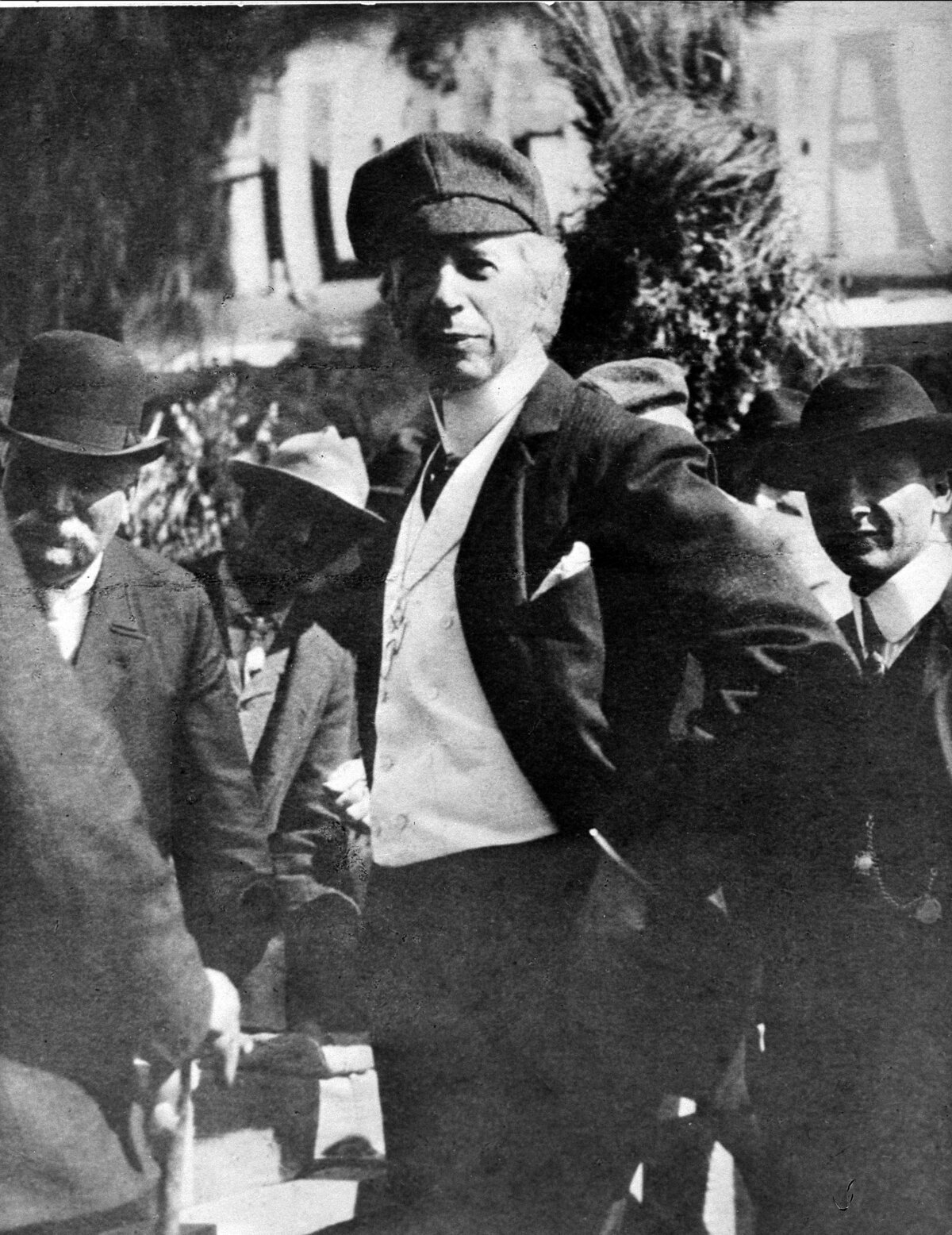
Laurier was becoming a realist. With the Dominion a fait accompli, he was elected for the first time in 1871 to the Quebec Assembly, and to the House of Commons in 1874. But fundamentally he remained a convinced liberal anti-clerical. On June 26, 1877, he gave his most famous speech as a new MP—one of the key texts of all Canadian public rhetoric.
The question was: Do Catholics have the right to participate in public life? Msgr. Laflèche wrote in 1865: “It is an error condemned by reason, by history, and by revelation to say that politics is a field in which religion has no entry and in which the Church has no concern.”
In his famous speech, Laurier explained that as a Liberal (and liberal), he believed the Catholic priest must stay out of politics and must not advise his flock as to how to vote. While he repeatedly claimed to uphold “the priest’s right to free speech,” as Professor Nathan Pinkoski has explained in The Dorchester Review, in fact, Laurier “attacks the way ‘the clergy’ (notice the shift back into the plural) intervene in politics.”
Pinkoski adds: “This kind of position, if followed through to its logical conclusion, calls into question the corporate nature of religious freedom and religious freedom itself.” It actually bars those who practise their religion from public advocacy. Laurier liberalism, Pinkoski says, “produces the naked public square that emerged in the latter half of the twentieth century, in Canada as in the other societies governed by late liberalism.” In October 2025, Quebec passed Bill 9, “respecting the reinforcement of laicity” and secularism.
All of this is the logical outcome of the doctrine taught by the Institut Canadien, the Rouge, and Laurier. How he put these and other ideas into practice as prime minister, and how he added two new provinces to Canada, will be covered in Part 2 of this article.
Views expressed in this article are the opinions of the author and do not necessarily reflect the views of The Epoch Times.