
Commentary
When I first started farming, I didn’t know the difference between a herding dog and a livestock guardian dog. All I knew was that predators were killing my animals, and I needed help. So I did what many new farmers might do with limited knowledge: I bought an Australian shepherd, a sweet male named Puffin, hoping he would stop the attacks.
Puffin was smart, energetic, and loyal—but he was the wrong dog for the job. Herding dogs move animals. Guardian dogs protect them. Those are two entirely different instincts, and I learned that truth the hard way.
It wasn’t the first time in my life I had watched someone choose the wrong dog for the wrong task.
I grew up in upstate New York, where our family had a small apple orchard. Every winter, deer would strip the bark off the trees, killing them overnight. My father, convinced he just needed “the right dogs,” came home one day with two Samoyed huskies. They were stunning—bright white coats, blue eyes, full of personality. And they were absolutely useless for chasing off deer.
During blizzards, while deer gnawed the bark off the apple trees, those Samoyeds would be lying belly-up in the snow, paws in the air, mouths open, catching snowflakes on their tongues. They adored winter so much that guarding the orchard never crossed their minds.
The dog who actually saved the orchard was Buffy—a fancy little puffy dog from Staten Island that my Uncle Billy’s ex-girlfriend, Pattsie, left behind after their breakup. Buffy arrived with immaculate grooming, the kind of dog that clearly lived among city sidewalks and designer shampoos. But once that grooming grew out, my mother took over with homemade haircuts that left Buffy looking blocky, lopsided, and unmistakably loved.
Despite her appearance, Buffy was the best deer chaser we ever had.
The Samoyeds became pampered pets.
Buffy became the orchard’s guardian.
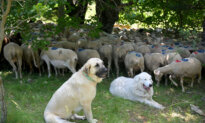
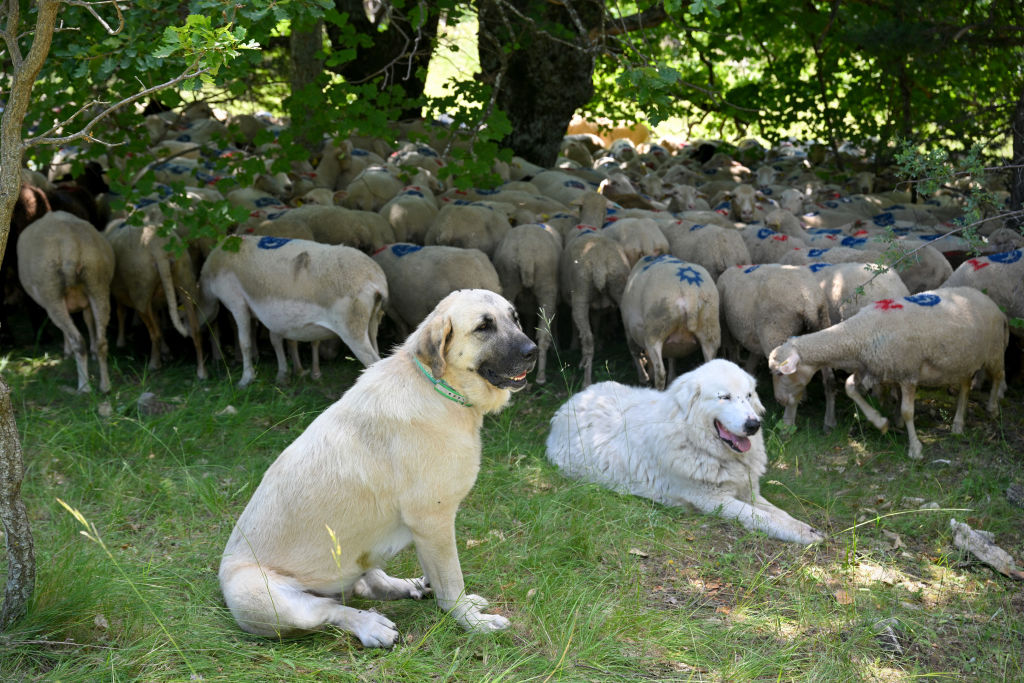
Years later, I repeated the family pattern. Puffin couldn’t protect my livestock any more than those Samoyeds protected the orchard. We needed a true guardian. So we brought home Kaya, a Great Pyrenees–Anatolian shepherd mix who quickly became what I call the Queen of the Night.
While the rest of us slept, Kaya worked. She patrolled the perimeter tirelessly, barking into the darkness and keeping coyotes—which are plentiful in Texas—well away from the animals. At dawn, she would collapse in the shade, exhausted but satisfied, like a monarch whose night shift had ended.
As Kaya aged, her role changed. Today, she mostly sleeps on the patio of our restaurant, The Barn, greeting guests between naps. Yet even now, none of the younger female dogs challenges her authority. It is as though they have all agreed that she will die the queen, never dethroned.
Over the years, I’ve had purebred Great Pyrenees–Anatolian crosses and Armenian Gampr mixes. Each has its strengths, but Kaya has always had something extra—an almost supernatural intuition. She could sense when livestock anywhere in the neighborhood were giving birth. I would get calls from neighbors saying, “My goat kidded last night, and Kaya sat outside my fence the entire time.” She wasn’t just guarding animals. She was guarding life as it entered the world.
For all their gifts, Great Pyrenees have one great flaw: They wander. They don’t care about fences or property lines. Their idea of territory is based on potential threats rather than legal boundaries. Every other dog on my ranch understands where it belongs. But my Pyrenees dogs roam with the certainty of ancient mountain dogs carrying invisible passports.
Because of this tendency, two of them are currently in a dog pen for their own safety. They’re excellent guardians—tested with sheep, chickens, and every kind of livestock—but if they roam off-property, a neighbor could easily mistake them for strays. One of these dogs will soon go to my friend, Marc, who has been losing chickens despite serious efforts to reinforce fencing. His fencing may finally be strong enough to hold a Great Pyrenees, although time will tell.
While Marc and I were talking about these dogs, he asked me, “How long have people been using dogs to protect livestock?” The answer surprised him. Livestock guardian dogs have been working alongside humans for 5,000 to 7,000 years. It’s extraordinary that two apex predators, humans and dogs, formed a bond so deep and cooperative that together they reshaped the future of agriculture.
On our farm today, that bond continues. We run three Great Pyrenees, a German shepherd, Puffin the Australian shepherd, a couple of pit bulls, and one mutt from the pound. Every single dog has a job—they protect the land, the livestock, the orchards, and our children.
People understand why we need dogs to guard against predators, but they rarely consider the other side of the equation: prey animals. Deer can destroy fruit trees overnight. Visitors always ask how we grow fruit trees without fencing, and I tell them, “You don’t have enough dogs.” On our land, dogs keep both predators and hungry prey in check. They maintain balance.
Ranchers with far more acreage than I have often say the same thing: A good cattle dog is worth more than a good cowboy. One dog can do the work of two cowboys—without a paycheck or workers’ compensation.
Dogs may be man’s best friend, but on a farm, they are a farmer’s best friend. They have been since the dawn of domesticated life. This bond between humans, land, and dogs is not folklore or nostalgia. It is as old as agriculture itself, and it’s still playing out every day in rural communities across the United States.
Out here, partnership is not optional.
It is life.
Views expressed in this article are the opinions of the author and do not necessarily reflect the views of The Epoch Times.
 Friends Read Free
Copy
Facebook
Tweet
Friends Read Free
Copy
Facebook
Tweet