Commentary
The early years of the 20th century were years of astonishing breakthroughs. The first dirigible airship appeared in 1900, and the Wright brothers pioneered engine-powered, heavier-than-air flight in 1903. Marconi sent a radio message across the Atlantic in 1901, and Canadian Reginald Fessenden broadcast the first radio program in 1906. The first decade of the century also saw Max Planck’s quantum theory and Albert Einstein’s theory of relativity.
In the realm of global exploration, the eyes of the world were fixed on the polar regions where the Northwest Passage was sailed for the first time and where men from a variety of nations vied to be first to reach the North and South Poles. The period was known as the Heroic Age of Antarctic Exploration.
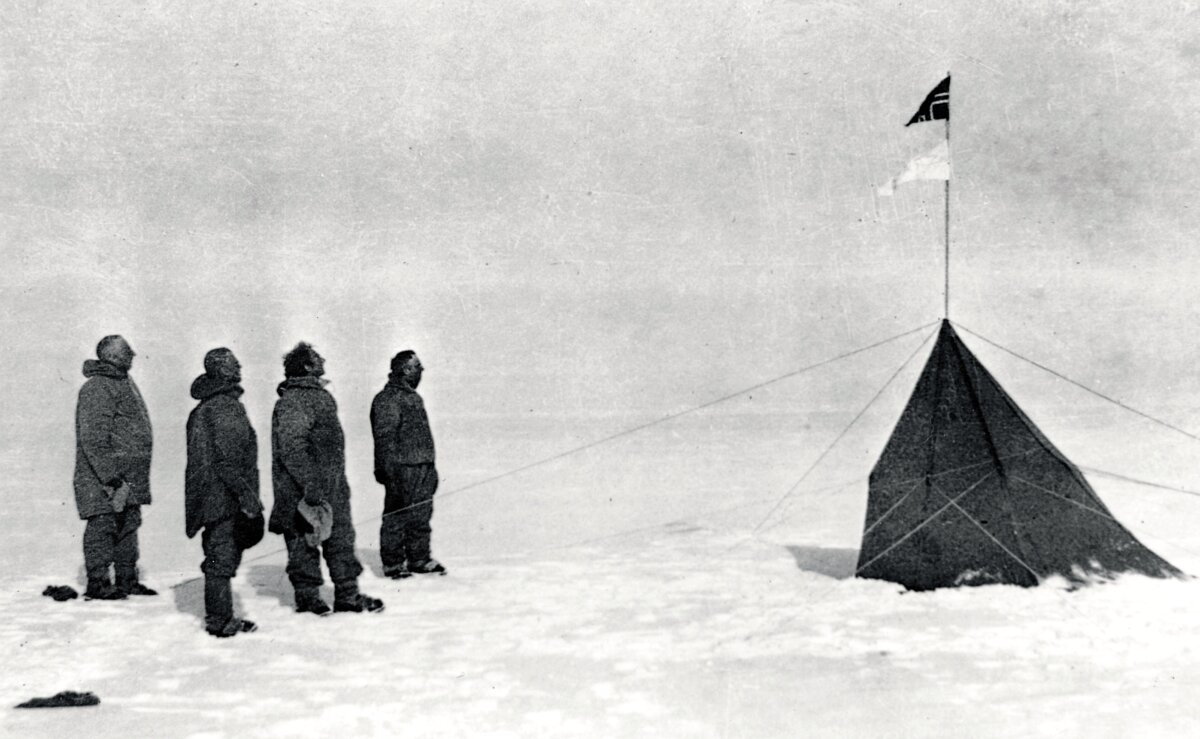
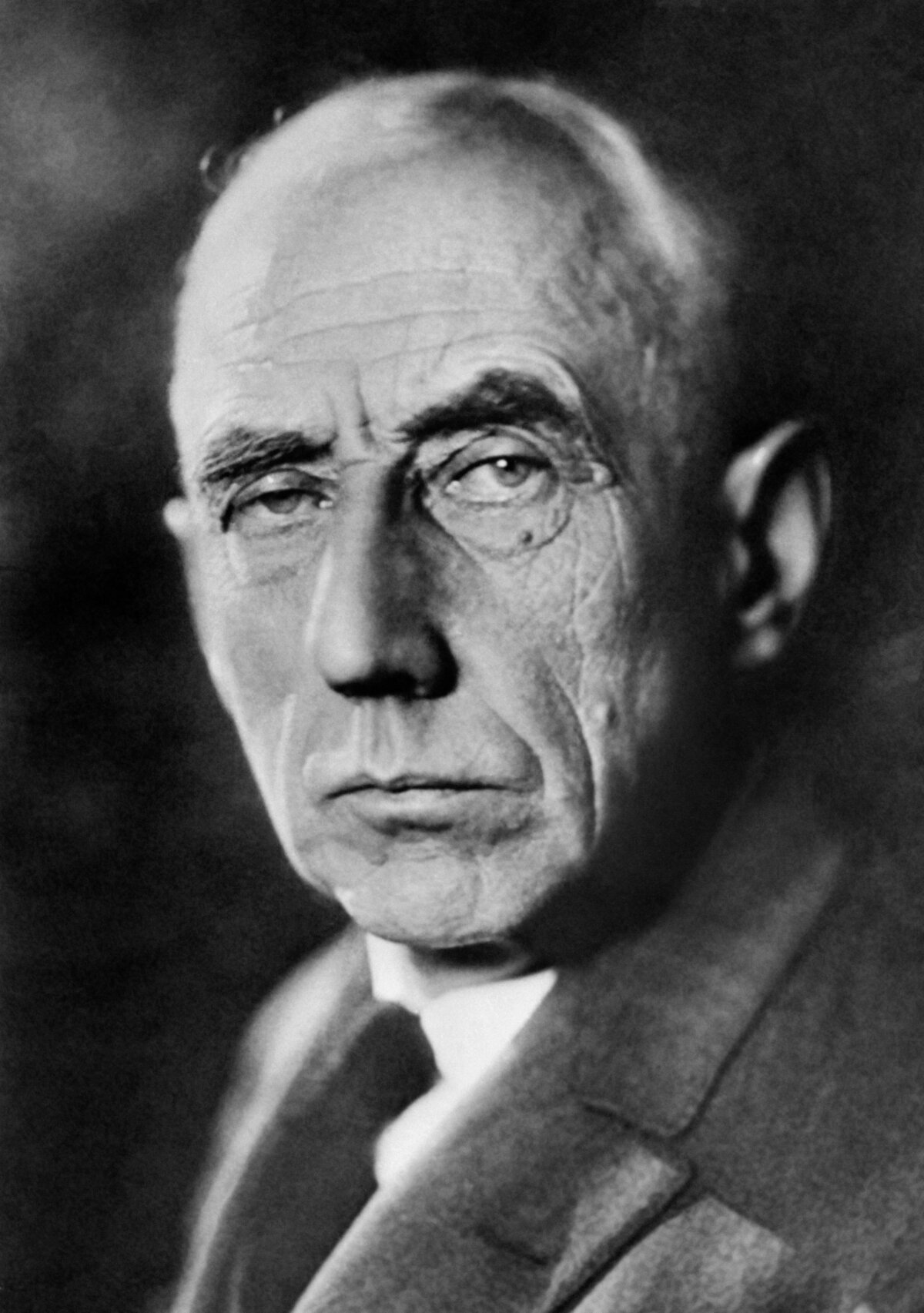
Roald Amundsen was one of those men. Born in Norway in 1872, he was fascinated from an early age with the polar regions, having helped explore both the Antarctic and the Arctic (where he learned Inuit survival skills). He had raised funds for an expedition to the North Pole when he learned that two Americans claimed to have accomplished that feat. Without telling his team, Amundsen decided to take on a different challenge by going to the bottom of the world instead.
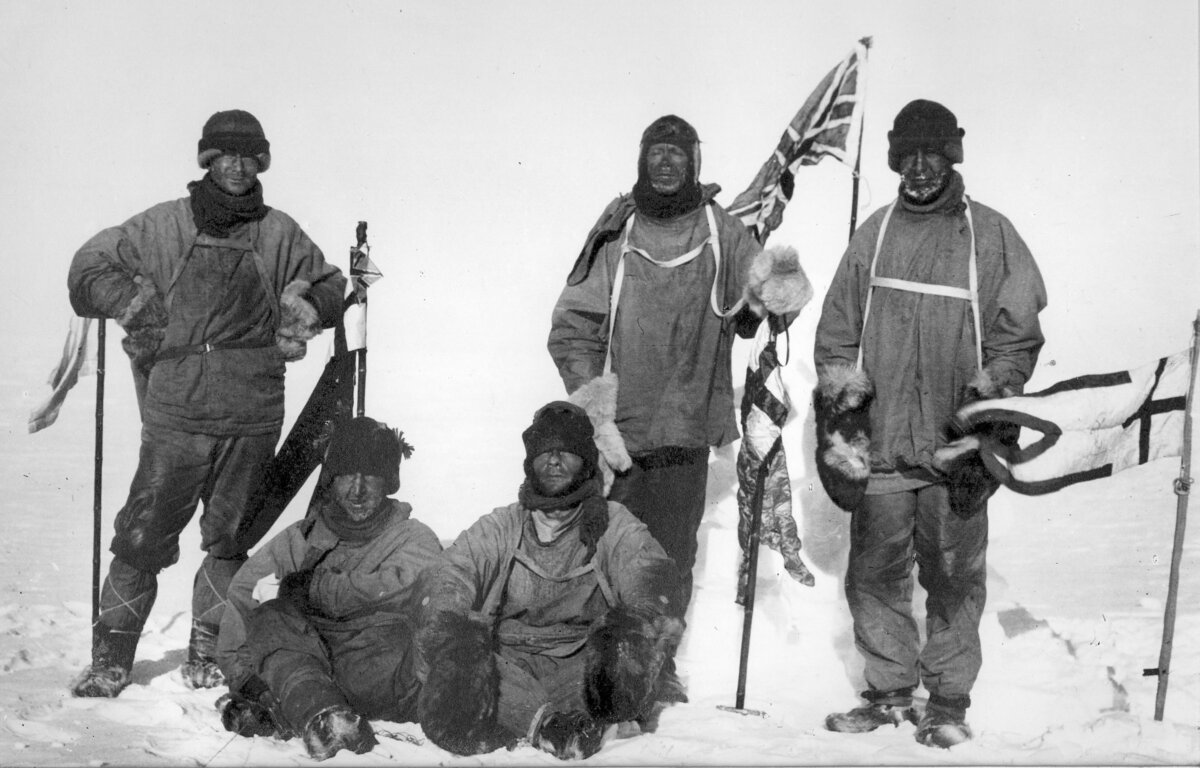
But others had that goal in mind, too. A brave attempt by Irishman Ernest Shackleton of the Nimrod Expedition had recently failed, but there was also a Japanese Antarctic enterprise in the works, and a well-publicized British plan dubbed the Terra Nova Expedition led by Capt. Robert Falcon Scott of the Royal Navy.
Scott was the best-financed challenge, while Amundsen faced money problems and had to mortgage his house to pay for part of his equipment. Scott and Amundsen both had experience in cold and barren environments, but they had learned different lessons which would influence their decisions about how to best undertake their journeys toward the pole.
Amundsen had taken from his time in the Canadian Arctic the importance of sled dogs and skin clothing; his Nordic background led him to favour long skis. Scott had had bad experiences with dogs and decided to trust mules, ponies, and sledges powered either by sail or by motor; he and his men would wear woollen parkas with a wind-proof covering, These differences would prove critical right from the beginning. Dogs could eat frozen seal meat and permit an earlier start to Amundsen’s trek, while Scott’s mules and ponies needed fodder shipped from Britain and special shoes for the snow.
In September 1911, Amundsen set out first from his coastal base on the Bay of Whales but found the going surprisingly hard and returned to restock, and set off again in mid-October. Scott, whose base was more distant from the pole, started out on Nov. 1. His plan was to advance as far as he could with an eight-man team supplied with motorized sleighs and ponies and then to select five men for the final dash, pulling their loads themselves.
On skis and dog-pulled sleighs, Amundsen’s five-man second try was a success. His team reached the South Pole on Dec. 14, having survived the cold, dangerous crevasses, and a steep climb over a major glacier. He returned safely to base on Jan. 25, 1911. The only casualties were the 41 dogs that had died from accidents or had been killed for food.
Scott and his men were not so fortunate. One of his men died in a fall. The winds that were supposed to fill the sails on his sleighs and speed them along failed to materialize and they arrived at the pole on Jan. 17, brokenhearted to discover Amundsen’s tent and a letter.
On the return journey, the relief team that was to have met them with supplies was not encountered. Their heating fuel had run out, their nutrition had proven insufficient, frostbite had set in, and they were confined to their tent by a nine-day blizzard. One of their number, Capt. Lawrence Oates, deliberately left their shelter to give the others a chance to survive on the remaining food but his sacrifice was in vain. Scott and the other two men perished from hunger and cold sometime in late March. In his final letter, which was later found with the bodies, he wrote: “Had we lived, I should have had a tale to tell of the hardihood, endurance, and courage of my companions which would have stirred the heart of every Englishman.”
Amundsen lived to continue his polar explorations but died in 1928 in a failed attempt to rescue the crew of a downed Italian airship. Though he had been first to the South Pole, it was Scott’s failure and martyrdom that achieved greater fame.
Correction: A previous version of this article misstated the year in which Roald Amundsen was born. It was 1872. The Epoch Times regrets the error.
Views expressed in this article are the opinions of the author and do not necessarily reflect the views of The Epoch Times.