
Commentary
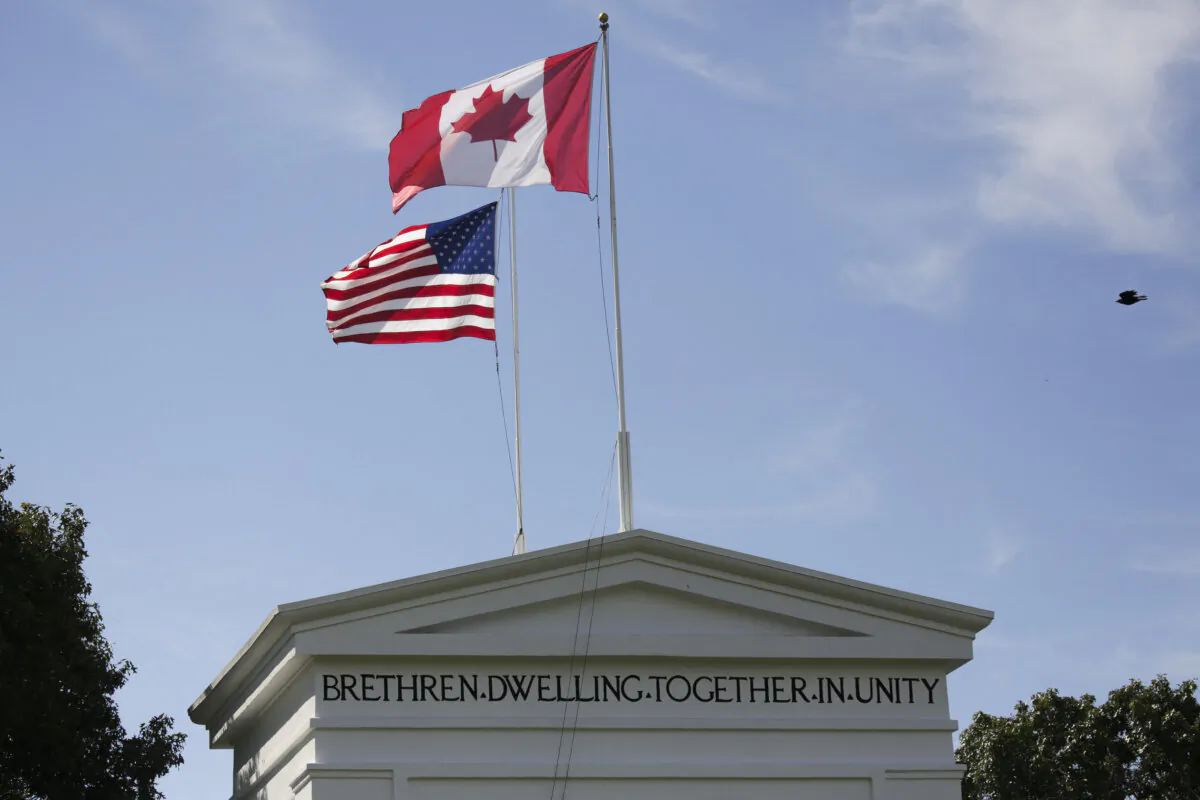
Over the past year, Canadians and Americans have begun to regard one another as adversaries. Trade disputes and political rhetoric have sharpened cross-border hostility, and polls suggest that trust between our peoples is eroding.
For a Canadian who looks back on a lifetime of fellowship with American relatives, friends, and colleagues, the present strife weighs heavily on the heart. All the more so because the actual disconnect is not between Canadians and Americans—it is ideological. For decades, we have been trapped in a conflict of left versus right, progressive versus conservative, globalist versus nationalist—and the discord runs through both nations alike.
Amid geopolitical uncertainties, Russian military aggression, war with the Islamic regime in Iran, and ongoing suspicion of Beijing, Canada and the United States face dangers that neither should confront alone. We are at a pivotal moment in history—one in which we need to renew the Anglo-American partnership that served our peoples for generations.
The Canadian–American entente is rooted in history. From colonial beginnings to the early 1960s, we shared a broadly similar way of life. In the post-World War II order, both nations experienced expanding working-class prosperity, rising home ownership, and confidence in our institutions.
Military cooperation deepened through NATO and NORAD. The Baby Boom reshaped neighborhoods and schools in both countries. Church attendance reached historic highs. Network television, professional sports, and popular entertainment generated a common cultural vocabulary. Free enterprise, freedom of speech, representative democracy, and the rule of law were widely affirmed. Even when bilateral policy differences emerged, a shared moral grammar underpinned public life on both sides of the border.
This consensus did not imply total uniformity or perfection. But our lives unfolded within a generally accepted framework of traditional norms. The primary danger to our security came from abroad—most notably from the communist regimes that emerged after 1945. This common external threat reinforced our continental unity.
By the late 1960s, however, cultural landscapes began to shift. The Vietnam War and the activism opposed to it eroded confidence in U.S. leadership. Large numbers of anti-American protesters spread distrust in the United States, and many immigrated to Canada. Radical student movements challenged traditional authority. The sexual revolution, second-wave feminism, and increasingly progressive media accelerated cultural change. In Canada, the 1982 Charter of Rights and Freedoms elevated identity-based rights and transferred many social questions from elected legislatures to progressive-dominated courts. In both nations, schools and universities embraced Marxist theories that interpreted events through the lenses of power and oppression.
The result was not just policy change but a transformation in tone. Academics became more ideological. Journalists were influenced by critical theory. Politicians focused increasingly on competing claims of rights and identity. Conservative observers described this as the left’s “long march” through the institutions, while progressives viewed it as an overdue social revolution. Whatever one’s assessment, the unity of mid-20th-century North America gave way to a fiercely polarized environment.
The end of the Cold War intensified this trend. With the collapse of the USSR, the external enemy disappeared and division turned inward. Discord over sexuality, family formation, national identity, immigration, and free-market economics moved to the center of public life. Deindustrialization and globalization unsettled working people across the continent. The financial crisis of 2008 deepened distrust of corporate elites. Social media amplified outrage, and ideological tribes invented national stereotypes. Progressive Canadian elites portrayed America as “far-right,” while neo-conservative Americans perceived Canada as “far-left.”
These caricatures obscure a striking reality. In both Canada and the United States, substantial minorities—and in some regions majorities—continue to share traditions that are rooted in Anglo-American history. Today, the real fault line does not run north–south. Instead, it separates progressive urban centers from traditional communities in both nations. Toronto and San Francisco share more in common than either city does with its own hinterland.
In a recent National Post column by Canadian Conservative Party Leader Pierre Poilievre, the headline declared: “Adam Smith was right. Free markets are moral.” Canada’s opposition leader went on to argue for bottom-up competition, higher wages through business competition, lower taxes, expanded energy production, controlled immigration, private investment, and home ownership—all to foster a well-ordered, virtuous nation. The point is, Canadian conservative priorities echo those of their American counterparts. Meanwhile, the progressive–green alliance in both countries advances a shared counter-agenda: higher taxes on productive people, expanded government spending, aggressive “net-zero” policies, porous borders, and woke culture.
Can our nations reconcile around the merits of a common North American inheritance? Here, the thought of British philosopher G.K. Chesterton offers some insight. Chesterton asserted that conservatism is not blind obstruction of change, but the “democracy of the dead”—the recognition that the past deserves a vote in present-day deliberations. He contended that cultural renewal does not mean regression. It means a sensible return to durable principles: human dignity, ordered liberty, and moral limits. The restoration of our historical values should not be regarded as impossible. From the 18th century to the 20th century, Christian great awakenings and major human rights movements reshaped public morality without dissolving our national frameworks.
Sadly, North American solidarity is unlikely to be produced by a treaty between Ottawa and Washington. But it can be achieved through the shared will of common people. Bilateral reunion will require rebuilding trust through the old cross-border relationships that transcended government: partnerships among churches, think tanks, businesses, sports organizations, cultural institutions, like-minded civic groups, and engaged youth movements. Citizens must restore institutions that cultivate habits of dialogue and fellowship. They must insist that schools, universities, and media organizations return to intellectual pluralism and free inquiry. Both nations must strengthen civic literacy so citizens can understand not only their interests but also their responsibilities.
Grassroots alliances will not erase every disagreement, but it’s worth remembering that colonial Anglo-American nation-builders—alongside French, Spanish, African, indigenous, and immigrant contributors—created two of the most prosperous and free societies in human history.
The challenge today is significant, but history suggests Canadians and Americans are up to the task. Our post-World War II alliance emerged from the ashes of global conflict. By the mid-1980s, the conservative Mulroney government and the Reagan administration shared an affection for liberty that was deep and personal.
Pluralistic nations will inevitably clash over difficult questions. Nevertheless, we should resist the temptation to treat one another with derision and contempt. Instead, we need to support the kind of free societies that hard-working North Americans want to sustain. If this inclination takes root, a renewed partnership grounded in sovereignty and mutual respect may yet arise.
Views expressed in this article are the opinions of the author and do not necessarily reflect the views of The Epoch Times.
 Friends Read Free
Copy
Facebook
Tweet
Friends Read Free
Copy
Facebook
Tweet