
Commentary
Is the West in increasing danger of being attacked with nuclear weapons, whether from a nuclear armed state or a terrorist organization? And if the nuclear threat has accelerated, is the current U.S. deterrent strategy cost-effective and adequate to prevent any such attack? And does an alternative strategy seeking abolition make sense?
Nuclear dangers have indeed increased. And nuclear weapons have become key elements of state strategy, particularly with respect to Russia, China, North Korea, and potentially Iran. Most important has been the adoption of an “escalate to win” option in which nuclear weapons are introduced into a conventional conflict.
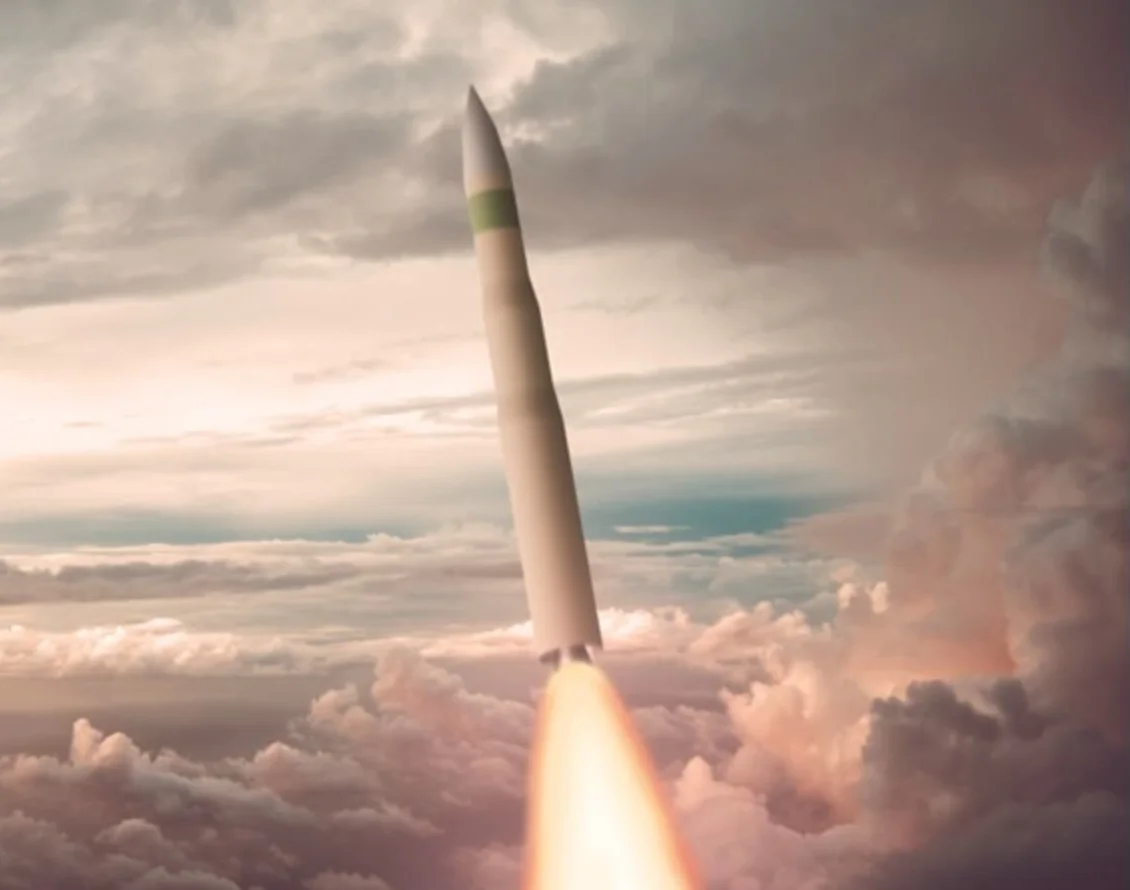
To counter these threats, U.S. deterrence strategy is in transition along multiple paths. Legacy deterrent forces represented by the U.S. nuclear triad are being both significantly upgraded and replaced. The Trump administration and Congress understand that the country is lacking in theater nuclear forces and is seeking to remedy that shortfall with the development of such technologies as nuclear-capable sea- and air-based medium-range cruise missiles. The nation’s nuclear command, control, and communication system is also being upgraded to overcome cyberthreats and other dangers. And the nation’s nuclear legacy warheads are being replaced, as service life extensions have run their course.
This effort has been moving forward since roughly the middle of the second Bush administration and the beginning of the Obama administration, but without the urgency required to move quickly. The good news is that the current administration has repeatedly made the case that such modernization is of the highest national priority and will be accelerated.
Most importantly, the United States is not initiating any kind of arms race. Far from it. The U.S. program of record, which includes upgrading the entirety of the U.S. nuclear triad, is consistent with the 2010 New Strategic Arms Reduction Treaty, even though it expires within the next year. The modernized force as currently planned is even smaller than the current legacy force—two fewer submarines (12 versus 14) and 48 fewer sea-launched ballistic missiles (192 versus 240).
The United States has not modernized its nuclear deterrent for three decades and will not complete the task until somewhere between 2042 and 2050. A little more than half of the current cost of U.S. nuclear deterrent investment is for sustaining and maintaining the current legacy systems. As modernization accelerates, that will change as the legacy systems are retired and the modernized systems come into the force. These legacy systems include 400 Minuteman III intercontinental ballistic missiles (1970), 14 Ohio-class submarines (1982), 20 B2 strategic bombers (1997), 40 B52 strategic bombers (1962), and 240 D-5 submarine-launched ballistic missiles (1990) or long-range standoff missiles (1982).
Unfortunately, the United States went on an extended procurement holiday and simply stopped upgrading its nuclear deterrent after the collapse of the USSR, except for a service life extension for the Minuteman missile and most of the triad’s warheads. Thus, extending the life of the current nuclear deterrent will still be required for some decades, probably through 2042 to 2050.
Can We Afford Survival?
Former Defense Secretary James Mattis answered this question in the affirmative. He got the numbers right. However, popular narratives claim that the United States is spending $1.7 trillion to $2 trillion over the next 30 years on nuclear modernization and are routinely cited by congressional opponents of nuclear modernization and their global zero accomplices. Such estimates are bogus.
Modernization spending is actually a smaller part of the nuclear expenditures than the support spending needed for our legacy system. According to Sen. John Hoeven (R-N.D.), a senior member of the Defense Subcommittee of the Senate Committee on Appropriations, the new Sentinel intercontinental ballistic missiles, Columbia-class submarines, B21 Raider bombers, long-range standoff or cruise missiles, and upgraded D-5 submarine-launched ballistic missiles will collectively cost $17.1 billion in fiscal year 2025. Shortly after 2030, the cost will peak and begin to decline as modernization moves forward.
The research, development, and acquisition costs of the new intercontinental ballistic missiles; the submarines and their missiles; the nuclear portion of the new bomber; as well as new warhead and nuclear command, control, and communication system work are $350 billion over the next decade. That comes to 3.5 percent of a 10-year flat Department of Defense budget, and less than one-tenth of 1 percent of the projected 10-year federal budget, or one out of every $257,000 spent by Uncle Sam.
This modernization is not “nice to have.” It is “have to have.” The only other choice is to rust to obsolescence, as Clark Murdock once quipped, as the current legacy forces are aging out. The choice is between recapitalization of the force or going out of the nuclear deterrent business. Our legacy force is between 28 to 63 years old and will be 45 to 80 years old when fully replaced. If this qualifies as “arms racing,” every tortoise in the United States could qualify for the Olympic 100-meter dash!
Deterrence Strategy
A plethora of global zero enthusiasts—including the Arms Control Association, the Union of Concerned Scientists, Ploughshares, Global Zero, and the Carnegie Endowment for International Peace—have embraced Annie Jacobsen’s thesis in her book “Nuclear War: A Scenario.” Jacobsen writes that current U.S. deterrent strategy is “mad” and no longer viable.
Her thesis, long also held by those who support abolition, is that any initial use of nuclear weapons, however limited, will quickly escalate to an all-out nuclear war, which in turn will trigger “nuclear winter,” and that billions of people around the globe will die. Part of her thesis is that the U.S. military has a built-in bias toward using nuclear weapons, and that they will collectively “jam up” the president to unleash the entire U.S. nuclear arsenal no matter how limited an initial attack is on the United States.
For abolitionists, nuclear weapons are only good to “show deterrence” but cannot ever be used in retaliation should deterrence break down. That this essentially reduces our deterrent to a “bluff” seems to have been missed by the abolition folks. They have also missed that a “no use” strategy, if adopted, would mean that no U.S. adversary would take our nuclear “deterrent” seriously. The corollary is that numbers also don’t matter, because for the United States, nuclear weapons won’t ever be used first or in a retaliatory manner.
However, as numerous U.S. military officers have testified to Congress, every war game concludes that “nothing holds” when our enemies introduce nuclear weapons into a conventional military conflict. “Nothing holds” means that all the assumed advantages the United States holds on the conventional battlefield disappear. This is the rationale behind the adoption of “escalate to win” strategies by Russia and China. They believe that the threat of introducing nuclear force into a conventional conflict will drive the United States out of the conflict and force it to stand down.
Conclusion
As the United States searches for the right strategy to secure deterrence in this troubling new nuclear age, there are five principles we should keep in mind.
First, without nuclear modernization we are out of the nuclear business—and facing unilateral disarmament.
Second, deterrence fails and the United States loses if enemy nuclear weapons are introduced into a conventional conflict. The nation thus needs better deterrence at every level of conflict, especially involving theater nuclear forces.
Third, discarding a nuclear retaliatory option reduces nuclear deterrence to bluff.
Fourth, the United States is modernizing but only “racing” to get to where it already is—the level of warheads allowed by the 2010 New Strategic Arms Reduction Treaty.
And fifth, abolition doesn’t make sense—particularly the daunting task of all nuclear powers abolishing their nuclear arsenals simultaneously. As the leader of North Korea reportedly said when asked by a U.S. representative to join an effort to abolish nuclear weapons, “Sure, you first.”
But unilaterally eliminating U.S. nuclear weapons as a deterrent force—as abolitionists are proposing—only invites more war, as such weakness is provocative.
From RealClearWire
Views expressed in this article are the opinions of the author and do not necessarily reflect the views of The Epoch Times.
 Friends Read Free
Copy
Facebook
Tweet
Friends Read Free
Copy
Facebook
Tweet