
Commentary
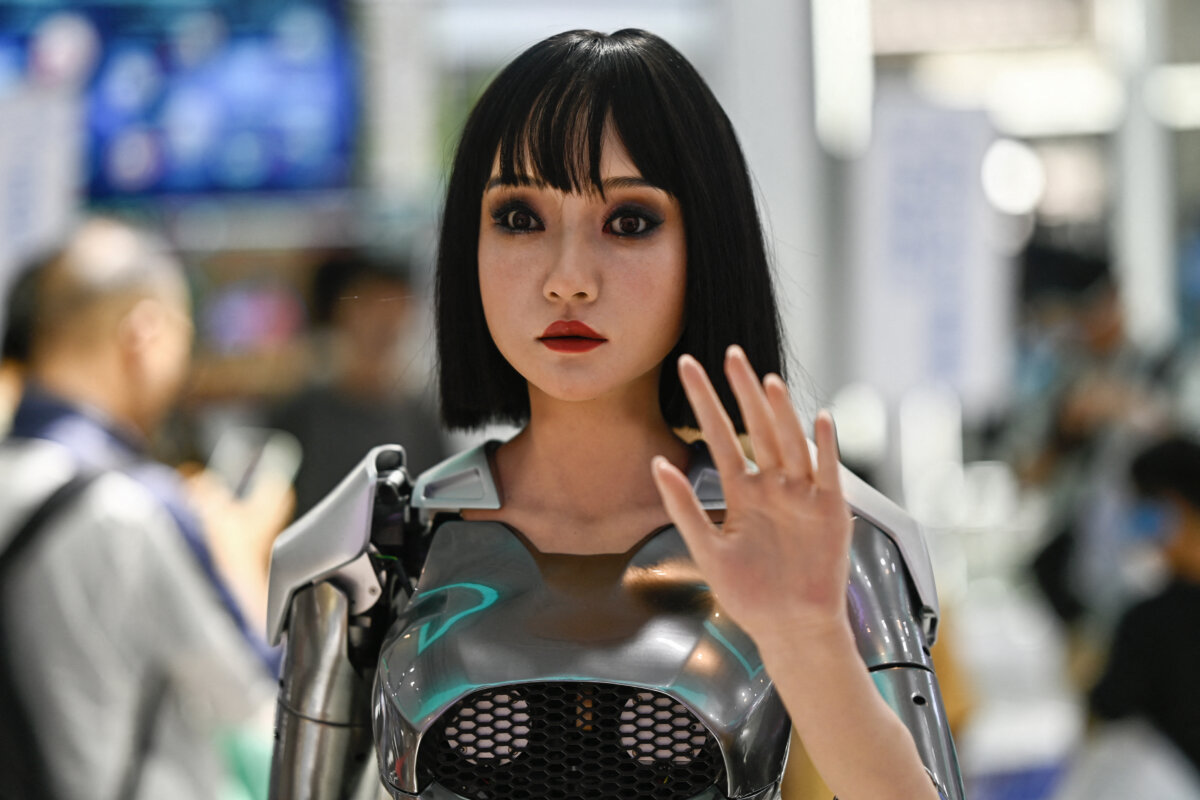
Humanoid robots, long a staple of science fiction, are today a reality. Before this decade closes, they will have become a visible feature of American society. It is hard to fathom the comprehensive impact that artificial intelligence (AI), combined with advanced robotics in all forms, will have in transforming manufacturing, health care, logistics, and nearly every other aspect of our economy and lives.
The best historical analogue might be the transformation that occurred with the widespread adoption of electrical power following the industrial revolution. But even that may underestimate the magnitude of change our society is going to experience as a result of the combination of AI and robotics.
Very few people, sitting in their homes in 1900, could imagine how different their lives would look less than a generation later. The result included massive gains in productivity, material wealth, comfort, health, and overall quality of life, but also substantial disruption and pain along the way. American society was pushed to the breaking point, with labor unrest at the highest level in our history. Somehow the nation managed to adapt and hold together through this period. Only time with tell whether today’s equally (or more) disruptive technological revolution will end as successfully.
Today, the large tech companies, including Google, Meta, Amazon, and others, are already moving to integrate their AI and LLMs (large-language models, the learning tools for AI) into robotics, either developing their own machines or entering into strategic partnerships with third-party robotics companies. These projects seek to develop advanced machines, humanoid or otherwise, that can “see” objects and images in two- or three-dimensional space, process written or spoken language, plan and dexterously perform complex actions based on the designed use. Obvious uses include warehouse automation and repetitive manufacturing processes, applications that are no longer a novelty. But robots are already performing complex surgeries with more accuracy, and thus better outcomes, than human surgeons. These robots learn to respond to unpredictable responses from the patient or environment. Robo taxis and fully automated fast food restaurants are being tested across the world.
In such a world, who needs Uber drivers? Who needs a human to serve up a Big Mac and fries when a friendly-looking android with a sense of humor can do it at a fraction of the cost? Who needs a doctor prone toward misdiagnosis and having marriage trouble? Why have an army of TSA agents standing around the airport when robo-cops don’t take sick days and don’t demand wage hikes? And robo-bankers don’t steal from the cash box unless programmed to do so (not that cash will be permitted to be used much longer).
These are only a handful of examples of the potential for near apocalyptic disruption to labor markets and employment. Blue-collar and white-collar jobs are equally at risk. Much of the debate in recent years around illegal immigration has been centered on the potential displacement of native-born workers for entry-level and working class jobs. While those concerns are valid, perhaps the greater risk to our labor markets lies not on our southern border but in Silicon Valley.
Humans still have important roles to play in this new economy. While AI-enabled robots will be able to perform advanced tasks, they will need to be supervised. They will need to be monitored, controlled, and channeled so that they don’t go out of bounds. We are a long way off from a time when AI-enabled machines can replace human empathy, judgment, compassion, and understanding. Humans are hard-wired for creativity, productivity, and meaningful work, and this will lead us in novel directions that machines will be unable to take.
While these looming changes can appear frightening, they must be confronted and understood. It behooves each of us to ask ourselves the question, how will AI-robotics likely change how I work and provide for my family? What can I do to ensure relevance in this brave new world? Burying my head in the sand, ostrich-like, and pretending that the predator isn’t there, that technology won’t affect me, is a foolish strategy.
Younger generations will adapt more quickly, while boomers, Gen Xers, and millennials may struggle to change their embedded conceptual framework. Either way, the best way to future-proof yourself is to understand the risks and take steps now to develop skills that are not readily replaceable in such a world. Perhaps easier said than done, but don’t say you didn’t have the warning and the chance.
Views expressed in this article are the opinions of the author and do not necessarily reflect the views of The Epoch Times.
 Friends Read Free
Copy
Facebook
Tweet
Friends Read Free
Copy
Facebook
Tweet