
Commentary
Over the past several days, U.S. and Iranian negotiators have wrapped up what mediators described as one of the most serious and intense rounds of indirect nuclear talks in Geneva to date. The discussions did not collapse, and both sides agreed to resume them soon, with technical follow-ups expected in Vienna.
However, Iran continues to insist that uranium enrichment is its sovereign right. The United States continues to insist that any agreement must include strict limits, intrusive verification, and compliance tied to sanctions relief. The gaps are narrower than before, but still real.
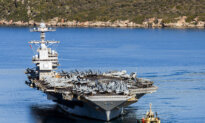
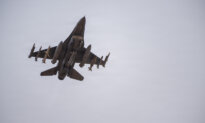
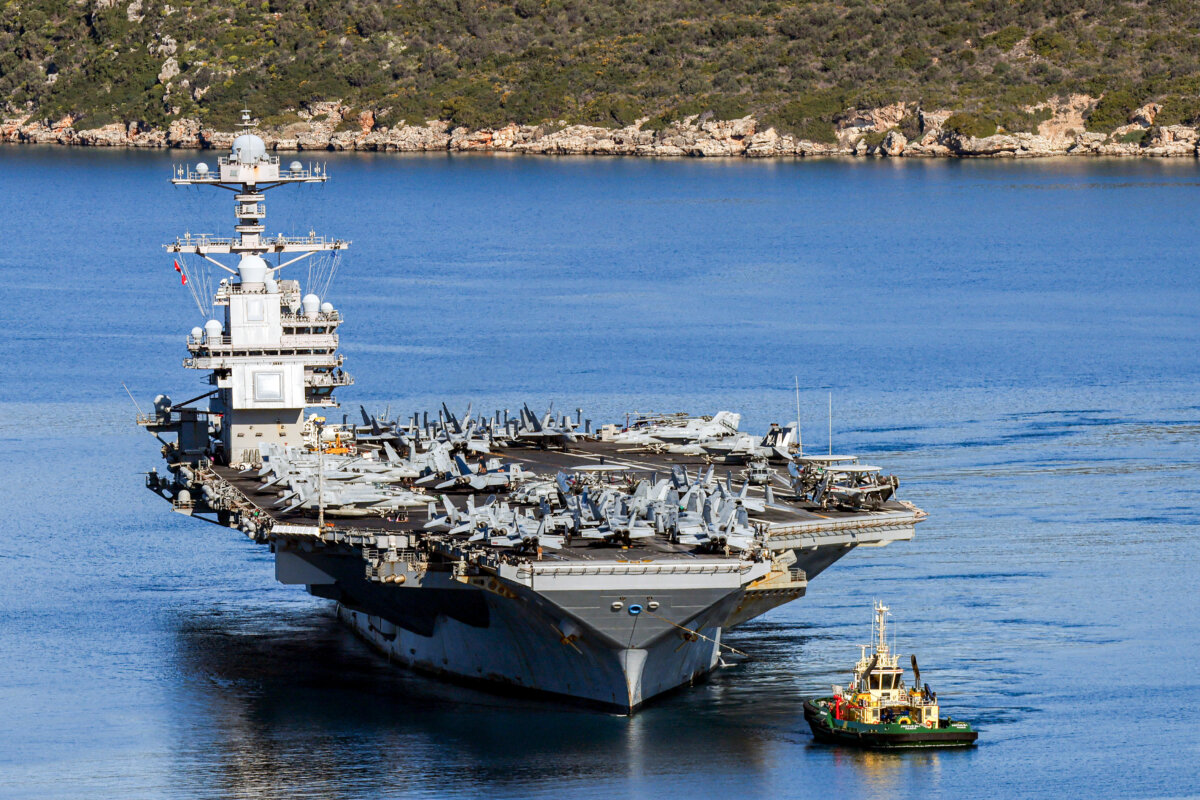
And all of this is happening against a dramatically different backdrop than past negotiation cycles. While diplomats meet in European conference rooms, the United States has assembled its largest military posture in the Middle East in decades: two carrier strike groups, over a hundred fighter aircraft, stealth platforms, and supporting naval and air assets.
In his latest State of the Union, President Donald Trump reiterated that Iran will not be allowed to develop a nuclear weapon. He has expressed support for negotiations—but he has also floated deadlines and warned that “bad things will happen” if an agreement is not reached.
Which leaves us with the question now hovering over Washington, Tehran, Jerusalem, and every regional capital: What is Trump going to do next?
The Undecided Actor Problem
It is inherently difficult to predict the behavior of someone who has not yet made up their mind. That sounds almost trivial. But in intelligence analysis, it’s a structural problem.
Most forecasting works best when intentions are stable, by identifying several things: Capability—what someone can do. Incentives—what they want to do. Constraints—what they cannot afford to do. Then analysts can map likely outcomes. If a leader has already decided on a course of action—even secretly—analysts can search for indicators: logistics movement, targeting preparation, diplomatic clearing, force sequencing. Hidden intent can be uncovered, patterns can be detected, and timelines can be inferred.
But when the decision itself has not crystallized, analysts are not trying to uncover a concealed plan. They are trying to forecast the formation of intent under pressure, which is much harder.
Intelligence professionals distinguish between two kinds of uncertainty. The first is epistemic, or “reducible uncertainty”: we simply don’t have enough information. The second is ontological, or “aleatory/irreducible uncertainty”: the decision has not been made yet.
In the first case, more data may solve the problem. In the second case, no amount of data can reveal a choice that hasn’t formed.
When a leader is genuinely undecided, the system becomes highly sensitive to triggers. What might look like a marginal development from the outside, could suddenly become decisive inside the decision-maker’s calculus.
Competing incentives also become more visible. Strength versus restraint. Credibility versus escalation risk. Domestic politics versus long-term strategic priorities. Ally expectations versus global theater constraints. When those pressures are real and roughly balanced, the outcome depends on which force dominates at a particular moment.
Public rhetoric complicates things further. Once a leader has declared red lines or issued deadlines, backing down may appear weak. But acting may appear reckless. Audience costs and reputational stakes compress the space for maneuver—yet they don’t eliminate it. The leader remains in a narrowing corridor, still weighing the consequences.
This is the “decision plateau,” or what intelligence analysts call “pre-decisional phase,” or “ambiguous warning posture.” No irreversible commitment has occurred, signals are mixed. Force posture may be leverage rather than prelude, while diplomacy may be genuine or tactical.
Prediction becomes unstable because multiple outcomes remain structurally plausible. Observers may project certainty onto ambiguity, markets might overreact. Allies could hedge, while adversaries might probe. The media usually oscillates.
The right question, in such moments, is not,“What will he do?” but rather, “What event would push him off the plateau?”
Until that trigger appears—or intent hardens internally—the most honest analytic posture is conditional. We can only outline scenarios, identify pressures, and map incentives.
Trump’s Decision Calculus
If we apply the “undecided actor” framework directly to Trump, the picture becomes more nuanced than either his critics or supporters usually admit, as the historical record does not point in one direction.
In 2019, after Iran shot down a U.S. drone, Trump approved retaliatory strikes and then reportedly canceled them shortly before execution. That episode reinforced an image of brinkmanship combined with restraint—high rhetoric, visible force posture, but a last-minute recalculation when escalation risks appeared disproportionate.
It suggested sensitivity to casualties, aversion to open-ended war, and comfort operating at the edge without necessarily crossing it.
In the summer of 2025, Trump approved a limited strike against Iranian targets in coordination with Israel. That decision demonstrated that he is not categorically reluctant to use force. When he believes an operation can be contained, objectives clearly defined, escalation controlled, and success declared quickly, he is willing to authorize action.
Taken together, those two moments reveal a pattern that is conditional rather than ideological. Trump is neither instinctively restrained nor reflexively hawkish. He appears willing to escalate—but only when he calculates that the escalation can be bounded.
If Trump had fully committed to a strike, we would expect clearer signs—irreversible sequencing of assets, narrowing rhetoric, visible diplomatic clearing with allies, evacuation advisories, target signaling.
Right now, several incentives are pulling in different directions. On one hand, he has publicly declared that Iran cannot obtain a nuclear weapon. He has floated deadlines. He has even described regime change as a desirable outcome. Those statements raise credibility stakes. Backing down without visible gains risks reputational cost.
On the other hand, Trump has consistently signaled skepticism toward prolonged Middle East entanglements. A sustained regional war would consume military assets, distract from China—which U.S. strategy documents frame as the primary arena—and create unpredictable economic consequences at home. That pushes in the opposite direction.
Domestic politics complicate it further. A decisive, contained strike could project strength. But a messy escalation that rattles markets or spirals regionally could impose political cost in the Midterms.
Under this model, the tipping point is not ideology. It might very well be trigger events. A direct American casualty. Credible intelligence of imminent nuclear breakout. An Israeli unilateral move forcing alignment. Too many breakdowns of negotiations with Iran leading to complete loss of their credibility. Or, alternatively, a visible diplomatic concession that allows him to declare success without firing a shot.
Observers could cite evidence for either direction. But a deeper pattern seems to be conditional escalation—force used selectively when the decision-maker believes control can be maintained, and a clear, desirable end-state is achievable.
“We’ll see what happens,” as the president is wont to say.
Views expressed in this article are the opinions of the author and do not necessarily reflect the views of The Epoch Times.
 Friends Read Free
Copy
Facebook
Tweet
Friends Read Free
Copy
Facebook
Tweet