
Commentary
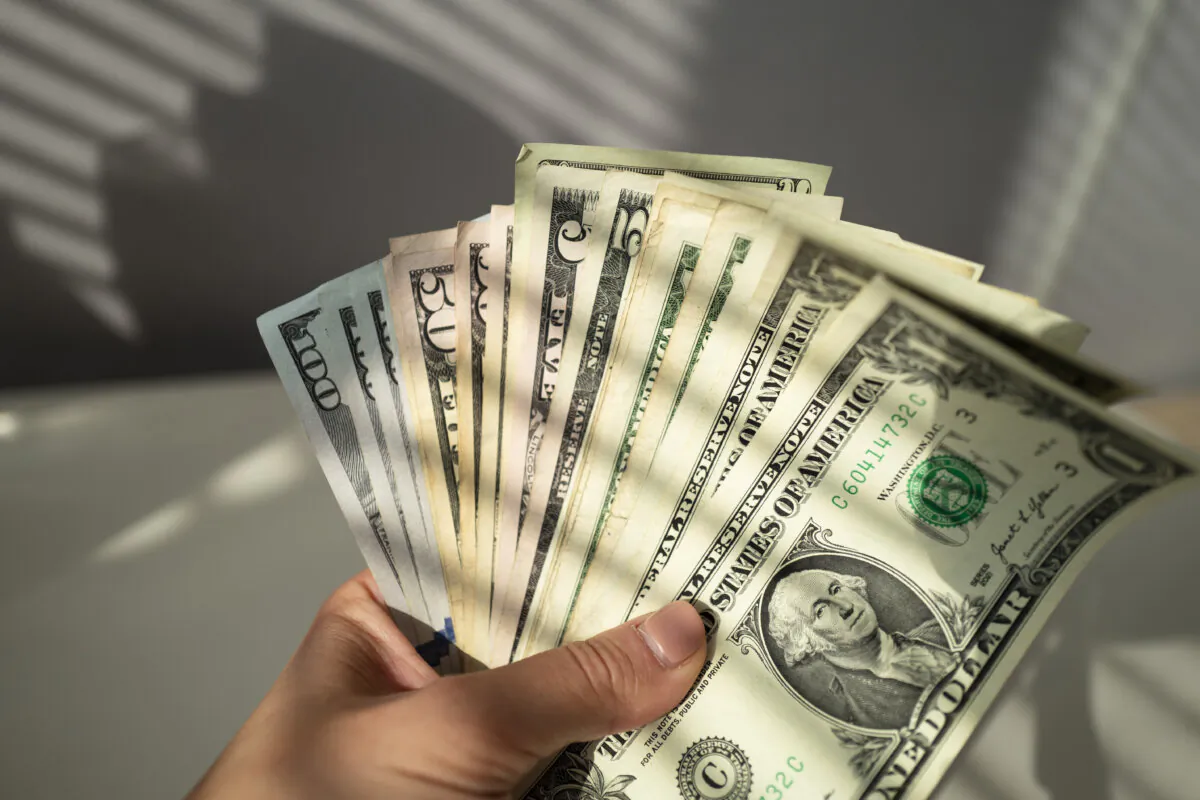
There are plenty of comments about the death of the U.S. dollar as the world’s reserve currency. These tend to appear when the dollar index declines. However, these “dollar death” reports are greatly exaggerated and fail to answer a simple question: What is the alternative?
If you want to bet on the euro as a global reserve currency ahead of the imposition of the digital euro, which will obliterate all limits to central bank surveillance and excess, be my guest. Furthermore, the enormous military spending and public expenditure plans that have been announced in 2025 add to the giant committed unfunded liabilities of member states, moving from 350 percent of gross domestic product (GDP) in the case of Germany to 500 percent of GDP in the case of Spain.
The Chinese yuan is used in only 4.5 percent of global transactions. With capital controls, exchange rate fixing, and significant legal and investor insecurity due to government control of institutions, it is difficult to believe that China’s yuan will be an alternative to the U.S. dollar. Additionally, I do not believe that the Chinese regime wants to eliminate those barriers and, as such, has no desire to be a world reserve currency. There is a similar problem with the currencies of Brazil, Russia, India, and South Africa. Would you accept your salary and savings in a currency issued by countries with capital controls as well as significant legal and investor security challenges?
Gold and bitcoin are reserve-value alternatives to fiat currencies for investors but cannot replace the U.S. dollar because of the low liquidity and supply.
Currently, we are observing a decline in the value of the dollar as investors take on more risk, following the euro’s collapse to nearly parity in 2024 and the yen’s drop to 40-year lows against the U.S. dollar. This is driven by the Federal Reserve’s stubborn rate policy.
How is the Fed responsible for a weaker dollar?
For international investors, buying U.S. Treasurys can be uneconomical because of the large hedging costs created by elevated U.S. rates. At the same time, rates are plummeting in Europe, making it more reasonable to purchase European assets and debt despite the weak fundamentals and solvency. Fearing a nonexistent inflation burst, the Fed is engineering a dollar decline by maintaining high rates.
One can criticize tariffs for a variety of reasons, but they don’t trigger inflation. Tariffs do not create more units of currency in the system and do not drive higher monetary velocity. What causes inflation is government spending and money printing. Furthermore, those who fear tariff impacts on prices never consider the elevated levels of overcapacity in the export world, the complexity of supply chains, or the working capital challenges created by not exporting to the United States.
Even with all the negative headlines and the Fed’s negative impact, the U.S. dollar index is significantly above where it was in 2009–2018 and is only reflecting a short bounce of the euro and yen (73 percent of the index).
The dollar index (DXY) was at 98.5 at the close of July 18. The DXY averaged approximately 93.15 during Obama’s presidency and 100.0 through Biden’s tenure. Furthermore, the broad trade-weighted dollar index is at 120.35. It averaged 98 during Obama’s time and 118 with Biden. It is hard to call the current level “a collapse.”
Higher U.S. rates and carry trade bets are driving a typical risk-on bounce.
A set of structural, institutional, and market realities support the dollar’s dominance, despite frequent calls for de-dollarization or speculation about emerging alternatives.
1. Deep and Liquid Financial Markets
- The United States boasts the largest, most transparent, and most liquid capital market in the world.
- U.S. Treasurys continue to be the main reserve asset for central banks worldwide, followed by gold. If there is anything we have seen, it is the decline of the euro as a central bank reserve asset, according to the latest Bloomberg figures.
- In 2025, nearly 90 percent of all global foreign exchange transactions involved the U.S. dollar, according to the Bank for International Settlements.
2. Trusted Legal and Institutional Frameworks
- A transparent legal system, strong property rights, and independent institutions attract global investors and underpin confidence in the dollar.
- The dollar’s supremacy requires more than economic size; it depends on the trust that legal and political checks and balances will endure.
3. Global Trade and the Network Effect
- The dollar is used in about 54 percent of global export invoicing—far ahead of other major currencies. The euro stands at about 30 percent, while the Chinese yuan is at just 4 percent.
- Entire commodity markets—including oil—are dollarized, and more than 48 percent of global SWIFT payments settle in dollars, compared with the yuan’s 4.5 percent. Think about this: Not even the Chinese or Russian oil companies use local currency for all their activities.
To be a world reserve currency, alternatives must have open markets, full capital account convertibility, legal transparency, and sizable, investable assets. There is no alternative to the U.S. dollar with these criteria. The euro faces redenomination risk and the imposition of the central bank digital euro and lacks a truly unified fiscal policy. The Chinese yuan is constricted by capital controls, state intervention, and a less open legal system.
The U.S. dollar’s status as a world reserve currency remains because there is no fiat alternative. Gold and bitcoin may be investment options, but they do not fulfill the functions or trust needed at a global level.
The only risk for the United States is that all the benefits of having the world reserve currency become enormous liabilities if confidence is lost because of fiscal indiscipline. However, the fiat world is not about who wins, but about who loses first.
No fiat currency can be an alternative to the U.S. dollar if the government is more fiscally imprudent, institutions are less independent, and capital markets are less open than in the United States.
What saves the U.S. dollar from losing its status as a world reserve currency is that the fiscal, legal, and economic situation of the alleged alternatives is even worse.
The U.S. dollar remains the world reserve currency because it has no contenders. This is not because the government and Federal Reserve policies are always sound, but because others are much worse. The greatest threat to the dollar’s dominance is internal: fiscal and trade deficits and political dysfunction. Yet unless and until another currency can match the dollar’s unparalleled combination of depth, trust, liquidity, and legal robustness, its primacy endures. You cannot dethrone the U.S. dollar by being worse than the king.
It is sad but true. The dollar’s biggest strength is the atrocious monetary, legal, and fiscal irresponsibility of its alternatives.
Views expressed in this article are the opinions of the author and do not necessarily reflect the views of The Epoch Times.
 Friends Read Free
Copy
Facebook
Tweet
Friends Read Free
Copy
Facebook
Tweet