
Commentary
The Trump administration has condemned the Chinese regime’s escalating persecution of Christians amid intensified raids, arrests, and efforts to bring all religious practice under the control of the Chinese Communist Party (CCP).
The Trump administration has condemned the CCP’s latest attack on underground Christian churches, following the arrest of Pastor Jin Mingri, also known as Ezra Jin, and 30 leaders of Beijing’s unregistered Zion Church.
Founded in 2007, Zion Church grew to more than 10,000 members nationwide before being banned in 2018 for refusing to comply with Chinese authorities’ orders to install surveillance cameras. Despite the ban, worshippers continued to meet secretly, rotating locations to avoid detection.
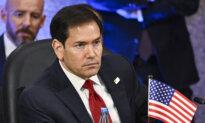
U.S. Secretary of State Marco Rubio on Oct. 12 denounced the arrests as further proof of the CCP’s “hostility” toward Christians who refuse state control over their faith. Rubio called on Beijing to release the detainees and respect religious freedom, while former Vice President Mike Pence warned that “this attack on Christianity will not prevail.”
Pence urged Rubio to emulate the firm stance taken during the first Trump administration, recalling how, in 2018, the Trump–Pence team secured relief for Zion Church and other persecuted Christians in China by leveraging the full power of the U.S. government.
The Chinese Foreign Ministry dismissed the criticism, insisting that religion in China is managed “in accordance with the law” and rejecting what it called foreign interference.
In September, a massive police operation targeted Christian communities in eastern China. Nearly 400 officers and 200 vehicles were mobilized to raid house churches and Bible study groups, arresting and interrogating more than 70 people. Detainees, including pastors, believers, and new converts, were questioned about their finances and denominational ties, and more than 20 were fined thousands of yuan for participating in so-called illegal religious activities.
Earlier this year, Chinese authorities raided Xinyi Village Church in Huainan, Anhui Province, during the session of the National People’s Congress, China’s rubber-stamp legislature, in Beijing. Nine members, including Pastor Zhao Hongliang, were detained: Four were placed under criminal detention and five were released on bail. Officials from the local religious affairs bureau seized control of the church premises and continue to harass congregants.
Although Xinyi Village Church was officially registered under the state-approved Three-Self Patriotic Association, which oversees all Protestant churches, it was targeted for resisting the CCP’s demands. A Feb. 26 directive from the Panji District Religious Affairs Bureau ordered a task force to “standardize management” of the church, warning of severe punishment for violations.
The raid on Xinyi Village Church reflects the CCP’s broader campaign to tighten state control over religion. Since 2017, authorities have imposed sweeping restrictions on Christians, Muslims, and Tibetan Buddhists, enforcing loyalty to the CCP and even banning minors from attending worship.
Pastors across Guangxi, Henan, Guangdong, and Yunnan report similar raids, often launched by new officials eager to prove their political loyalty. In Yunnan, gatherings are capped at eight people, and surveillance cameras monitor entrances. This climate of hostility has led to widespread persecution.
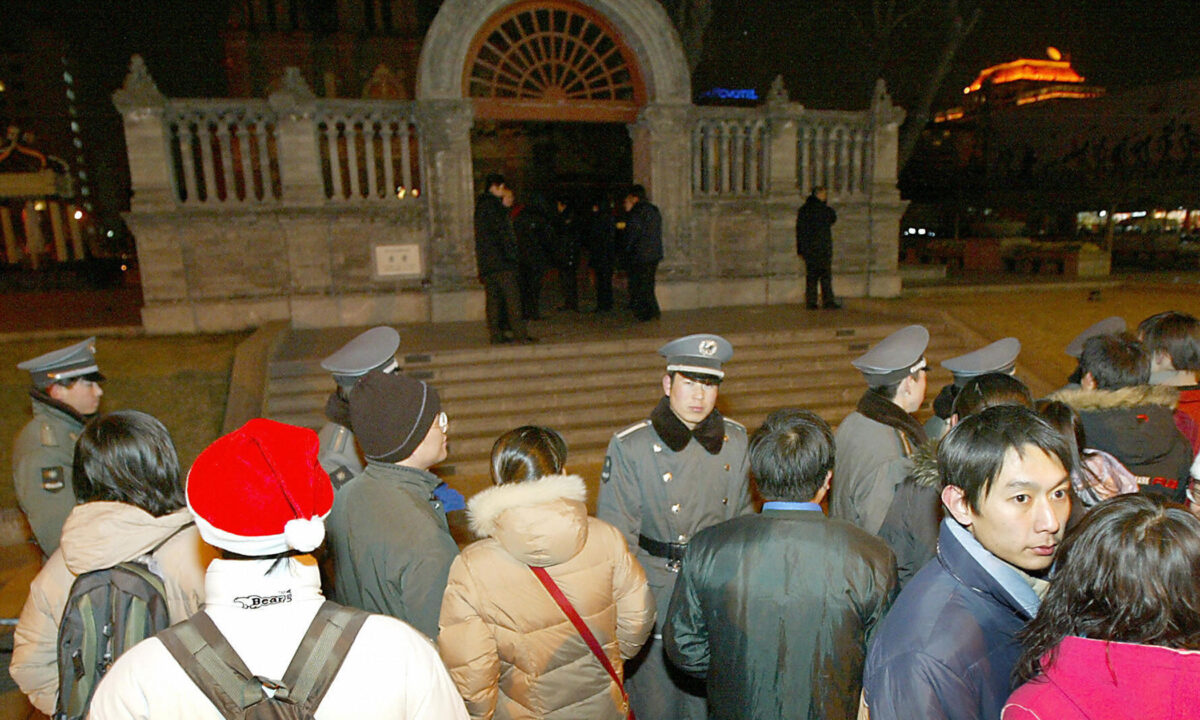
Local Christians described the campaign as the harshest in years. Churches have been forced to close, ministry workers have resigned, and more than 80 house groups have stopped meeting. Some believers believe that the renewed crackdown was triggered by accusations of heresy, internal betrayal, or suspected foreign ties, although the exact motive remains unclear. The Xinyi raid underscores that even state-recognized churches in China are no longer safe from harassment, surveillance, or forced subordination to CCP ideology.
The growing repression of Christians in China has drawn sharp criticism from the Trump administration. In its 2025 Annual Report, the U.S. Commission on International Religious Freedom urged the State Department to redesignate China as a Country of Particular Concern, citing the regime’s ongoing and severe violations of religious freedom throughout 2024. The report found that under Chinese leader Xi Jinping, the CCP has intensified its “sinicization of religion” policy, demanding absolute loyalty from all faith groups and reshaping religious practice to serve Party ideology.
Open Doors International’s World Watch List 2025 ranked China 15th globally in terms of Christian persecution, with a score of 78 out of 100. The report describes China as an officially atheist state where the regime promotes communist doctrine and suppresses competing belief systems. Texts such as “The Principles of Scientific Atheism” are distributed in universities and among Party cadres to reinforce the state’s secular worldview. While an estimated 96.7 million Christians live in China, most citizens identify as agnostic or follow philosophies such as Confucianism, praised by the CCP as “truly Chinese” because it easily integrates with communist values.
The CCP under Xi has consolidated power to levels unseen since Mao Zedong, growing increasingly authoritarian and obsessed with ideological conformity. Christianity, as the largest organized social body outside Party control, is viewed as a potential political threat because of its perceived ties to the West. CCP regulations even stipulate that Party members who retain religious beliefs after “strengthened thought education” must be “encouraged to leave the Party.”
Xi’s campaign to “sinicize” religion has effectively merged faith with politics, turning China’s religious landscape into another instrument of Party control. The Trump administration, however, has made religious freedom a core priority, and within the broader context of the U.S.–China trade war and ongoing decoupling, the CCP’s record of religious persecution has become yet another major point of contention between Washington and Beijing.
Views expressed in this article are the opinions of the author and do not necessarily reflect the views of The Epoch Times.
 Friends Read Free
Copy
Facebook
Tweet
Friends Read Free
Copy
Facebook
Tweet