
Commentary
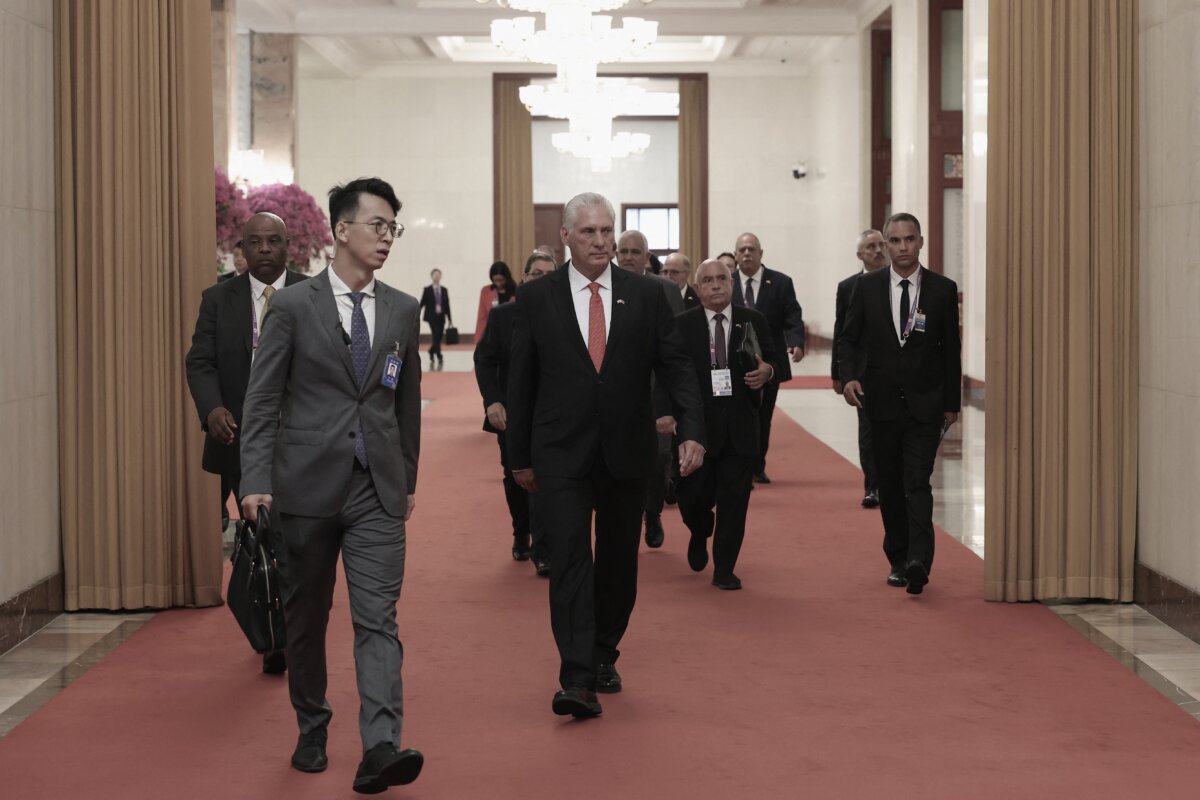
On May 26, Cuba received an aid package of 60,000 tons of rice from the Chinese Communist Party (CCP). The following day, the CCP issued a statement condemning the U.S. blockade and what it described as increasing military threats against the communist nation. At the same time, Washington warned that the CCP is expanding its Cuba-based espionage operations.
The alliance between the CCP and the Cuban regime is troubling for Washington. U.S. Secretary of State Marco Rubio, speaking from Florida, has identified Cuba as a direct and growing national security threat.
“Cuba not only has weapons that they’ve acquired from Russia and China over the years, but they also host Russian and Chinese intelligence presence in their country, not far from where we’re standing right now,” Rubio said. “The other thing that poses a threat to the national security of the United States is to have a failed state 90 miles from our shores run by friends of our adversaries.”
Satellite imagery confirms that China is actively expanding its signals intelligence infrastructure in Cuba. The Center for Strategic and International Studies identified four facilities as highly likely sites supporting Chinese intelligence operations against the United States: Bejucal, Wajay, and Calabazar near Havana, along with El Salao, located roughly 70 miles from Guantanamo Bay.
Last year, a Center for Strategic and International Studies update documented major construction at Bejucal, where excavation crews removed six existing pole antennas and began building a circularly disposed antenna array with an outer ring nearly 574 feet in diameter. Satellite imagery showed dishes at the site repositioning, confirming that the facility is operational. These kinds of arrays are used for high-frequency direction finding and can pinpoint radio signal origins from 3,000 to 8,000 miles away. China has deployed similar systems at Mischief Reef and Subi Reef in the South China Sea to monitor U.S. naval activity.
Collectively, the four Cuban facilities provide coverage of approximately 20 U.S. military installations in Florida, including U.S. Southern Command and U.S. Central Command headquarters, Kennedy Space Center, Cape Canaveral Space Force Station, and multiple submarine bases.
A May 2025 congressional letter to then-Homeland Security Secretary Kristi Noem warned that by fusing telemetry interception, geospatial intelligence, and electromagnetic surveillance, China is positioning itself to “systematically erode U.S. strategic advantages without ever firing a shot.” The U.S. Southern Command Posture Statement 2025 states that Cuba “serves as a proximate location for intelligence gathering and force projection by [U.S.] adversaries.”
The CCP has provided nearly $8 billion in financing to Cuba since 2000, and in 2023 The Wall Street Journal reported that the CCP agreed to pay Cuba several billion dollars for rights to establish electronic eavesdropping facilities on the island. China also built Cuba’s telecommunications infrastructure and supplies Huawei telecommunications equipment. That equipment includes filtering software used to monitor and block Cuban citizens’ communications. The regime demonstrated this capability in July 2021 when it shut down internet and phone services to suppress anti-government protests.
Cuba’s intelligence cooperation with China extends into the realm of human intelligence gathering. In December 2023, former U.S. Ambassador to Bolivia Manuel Rocha was arrested and charged with espionage after allegedly serving as a Cuban intelligence asset inside the U.S. government for 15 years. Prosecutors said he helped shape Washington’s foreign policy toward the Western Hemisphere. Former Attorney General Merrick Garland described the case as one of the “highest-reaching and longest-lasting infiltrations” of the U.S. government by a foreign agent.
Because Cuba and China routinely share collected intelligence, classified information stolen by Cuban assets inside the U.S. government likely made its way to Beijing. Severing the Cuba–China intelligence relationship would close a significant window of vulnerability and reduce the CCP’s ability to exploit Cuban spy networks as a conduit into the U.S. government.
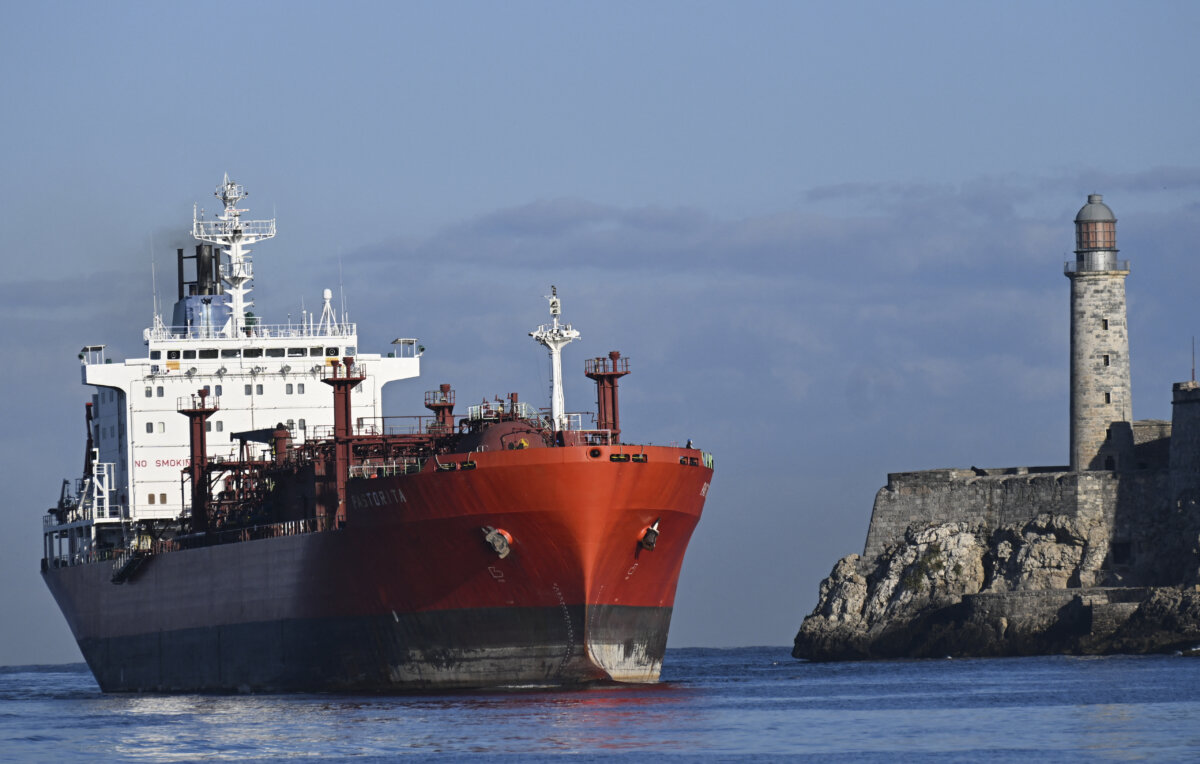
On Jan. 29, 2026, U.S. President Donald Trump declared Cuba an “unusual and extraordinary threat” under executive order 14380, invoking the International Emergency Economic Powers Act and imposing tariffs on any country supplying oil to Havana. In February 2026, the U.S. Air Force deployed RC-135V Rivet Joint signals intelligence aircraft to patrol the Cuban coastline under Operation Southern Spear.
On May 1, Trump signed executive order 14404, extending secondary sanctions to all foreign entities providing material support to the Cuban government. On May 7, Rubio sanctioned GAESA, the military-run conglomerate controlling Cuba’s hotels, ports, banking, and retail sectors. On May 20, the U.S. Department of Justice unsealed an indictment against former Cuban President Raúl Castro on charges of conspiracy to kill U.S. nationals and four counts of murder related to the 1996 shooting down of two Brothers to the Rescue aircraft.
The Trump administration’s actions to counter the CCP in the Caribbean have extended beyond Cuba. Following a meeting with Rubio, Panama withdrew from China’s Belt and Road Initiative in February 2025 and moved to restore Panamanian control over canal port operations previously dominated by Chinese state-linked companies. Operation Absolute Resolve, the U.S. military operation that captured former Venezuelan leader Nicolás Maduro in January 2026, disrupted China’s access to subsidized Venezuelan oil and weakened Beijing’s strategic foothold in the country.
Honduras ordered a review of its agreements with China, with expectations of restoring diplomatic recognition of Taiwan. Mexico imposed tariffs of up to 50 percent on Chinese imports, closing the back door Chinese goods had used to enter the U.S. market. Chile canceled a China Mobile submarine cable concession connecting Valparaíso to Hong Kong after a U.S. warning. Peru withdrew congressional authorization that would have permitted a Chinese military hospital ship to dock, part of a broader regional rejection that saw only six of 33 Latin American and Caribbean nations receive the vessel.
The fiscal year 2026 National Defense Authorization Act mandates the Pentagon to deliver a classified report to Congress on Chinese and Russian intelligence capabilities in Cuba by June 2026. The requirement covers the four identified signals intelligence facilities, personnel levels, equipment upgrades, and the combined threat to U.S. military installations across Florida and the Caribbean.
CIA Director John Ratcliffe traveled to Havana in May 2026 and issued a direct ultimatum: structural political changes in exchange for sanctions relief, with an explicit warning that the offer would not remain open indefinitely.
Views expressed in this article are the opinions of the author and do not necessarily reflect the views of The Epoch Times.
 Friends Read Free
Copy
Facebook
Tweet
Friends Read Free
Copy
Facebook
Tweet