
Commentary
Since the end of the U.S.–China summit, which ran from May 13 to May 15, commentators have speculated that U.S. President Donald Trump was preparing to give up Taiwan in order to appease the Chinese Communist Party (CCP). Apart from speculation, the main evidence cited for this claim appears to be a delayed arms sale, confirmation that Chinese leader Xi Jinping warned Trump about Taiwan, and Trump’s warning that Taiwan should not declare independence.
The arms sale was already delayed before the meeting. Xi warned Trump that Taiwan is “the most important issue” in U.S.–China relations and must be “handled properly” or risk “clashes and even conflicts.” The language was consistent with the warnings Xi regularly gives U.S. and Taiwanese officials. He used nearly identical wording during his November 2023 Woodside summit with then-U.S. President Joe Biden and at meetings during Trump’s first term.
The earlier $11 billion tranche approved in December had already prompted Xi to warn Trump against further arms deliveries to Taiwan during a February call. Taiwan’s parliament only approved funding for that package earlier this month.
The $14 billion Taiwan arms package has reportedly been placed on hold because of strain on U.S. munitions stockpiles after the Iran war and Trump’s reconciliation with Beijing. Acting U.S. Navy Secretary Hung Cao told lawmakers that conserving munitions for the ongoing conflict was one reason for the delay.
Trump told Fox News he remains undecided about the arms sale: “I may do it. I may not do it. We’re not looking to have wars.”
He also described Taiwan as “a very good negotiating chip.”
However, Trump’s position remains consistent with long-standing U.S. policy toward Taiwan, known as strategic ambiguity. Under the Taiwan Relations Act, which has governed U.S.–Taiwan relations since 1979, the United States does not formally commit itself to war but considers any non-peaceful resolution of Taiwan’s status a matter of “grave concern.” Washington’s position is that Taiwan should not declare independence unilaterally and that its status must be resolved peacefully by Beijing and Taipei. The United States provides Taiwan with defensive weapons to ensure the issue is not decided by force.
Trump has twice suggested he may speak with Taiwanese President Lai Ching-te. On May 20, when asked directly, Trump said: “Well, I’ll speak to him. I speak to everybody.”
If carried out, it would be the first direct contact between a sitting U.S. president and a Taiwanese leader since 1979. Even Trump’s prior contact with Taiwan, a December 2016 call with then-President Tsai Ing-wen, came before he took office, as president-elect. That call was itself the first known contact between a U.S. president or president-elect and a Taiwanese leader since 1979, underscoring Trump’s long-standing willingness to engage with the island nation.
Some analysts believe Trump delayed the arms sale not as a genuine concession to China but as a tactical move to keep trade talks with Xi on track. Under that interpretation, Trump’s comments casting doubt on the sale were deliberately low-key and intended to de-escalate tensions with Beijing. A call with Lai would signal an escalation of U.S. engagement with Taiwan and could undermine that effect, angering Beijing at a time when Trump wants negotiations to continue.
That could also explain why Trump has remained vague about whether and when he will speak with Lai.
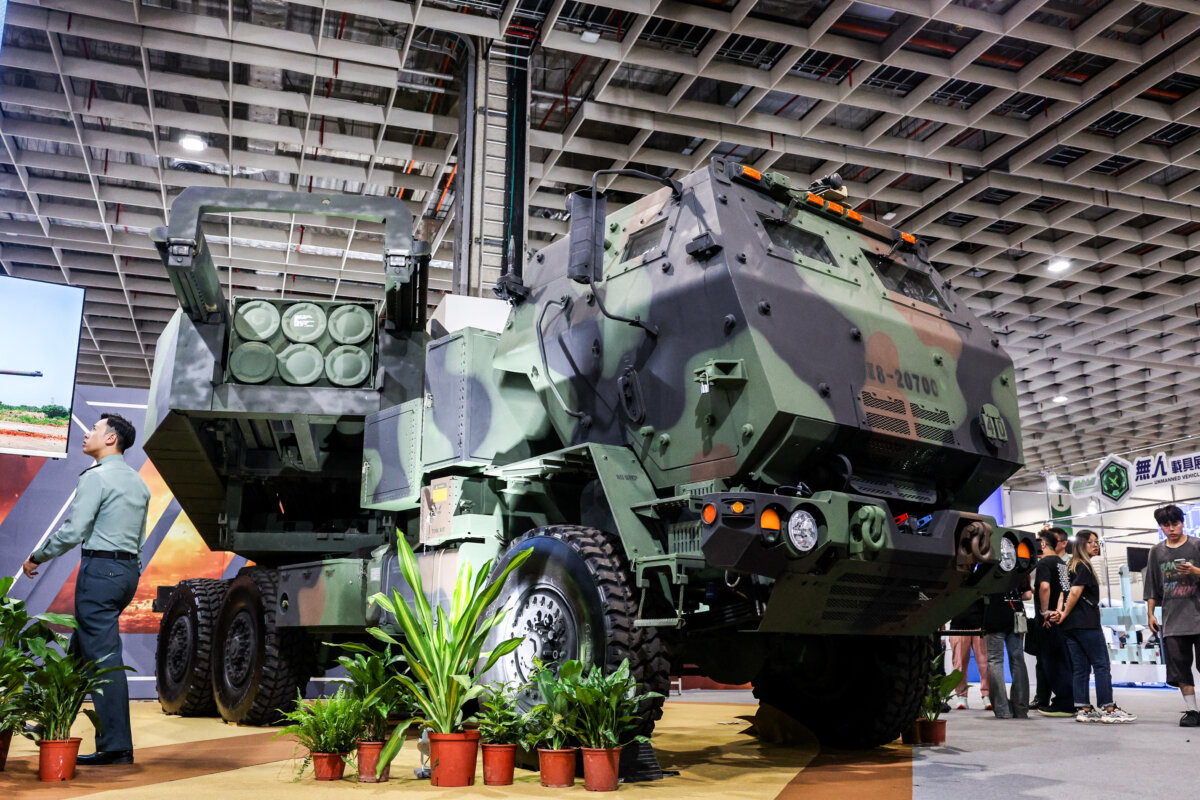
Across both terms, Trump’s record on Taiwan has been one of sustained material support. During his first term, he authorized approximately $18.3 billion in arms sales, roughly equivalent to the Obama administration’s two-term total and more than double Biden’s $8.4 billion over four years. In Trump’s second term, approvals have already surpassed Biden’s four-year total, including an $11 billion package in December 2025 covering 82 high-mobility artillery rocket systems, 420 army tactical missile systems, 60 self-propelled howitzers, drones, Javelin and TOW missiles, and military software. The pending $14 billion package would be the largest in history.
On the ground, approximately 500 U.S. military personnel are rotating through Taiwan on training missions, up from roughly 30 a year before 2023, according to Rear Adm. Mark Montgomery’s May 2025 congressional testimony. Montgomery called for doubling that number to 1,000. Trump also signed the Taiwan Assurance Implementation Act on Dec. 2, 2025, the first pro-Taiwan legislation of his second term, requiring the State Department to review its Taiwan interaction guidelines at least once every five years. The bill passed both chambers unanimously.
Trump has applied the same burden-sharing pressure to Taiwan that he has directed at NATO allies, demanding Taipei raise its defense budget to 10 percent of gross domestic product. During his March 2025 Senate confirmation hearing, Trump’s nominee for undersecretary of defense for policy, Elbridge Colby, reaffirmed the demand, stating that Taiwan’s spending “should be more like 10 percent, or at least something in that ballpark.”
Taiwan’s premier called the 10 percent figure impossible, but Taipei has responded with the largest defense budget increase in history, committing to 3.3 percent of gross domestic product by 2026 and 5 percent by 2030. The pressure reflects Trump’s broader strategic logic, that Taiwan must be capable of defending itself, rather than any intention to withdraw U.S. support.
In terms of interdependence, Taiwan remains crucial to U.S. foreign-policy objectives because freedom of navigation through the Taiwan Strait is vital to global shipping. Approximately half of the world’s container fleet and 88 percent of the world’s largest ships by tonnage pass through the strait annually, and Washington does not want the CCP to control it.
At the same time, the United States has become Taiwan’s largest trading partner. Bilateral goods trade reached $246.43 billion in 2025, with Taiwan ranking as America’s fourth-largest trading partner. U.S. imports from Taiwan totaled $201.4 billion in 2025, up 73.3 percent from 2024.
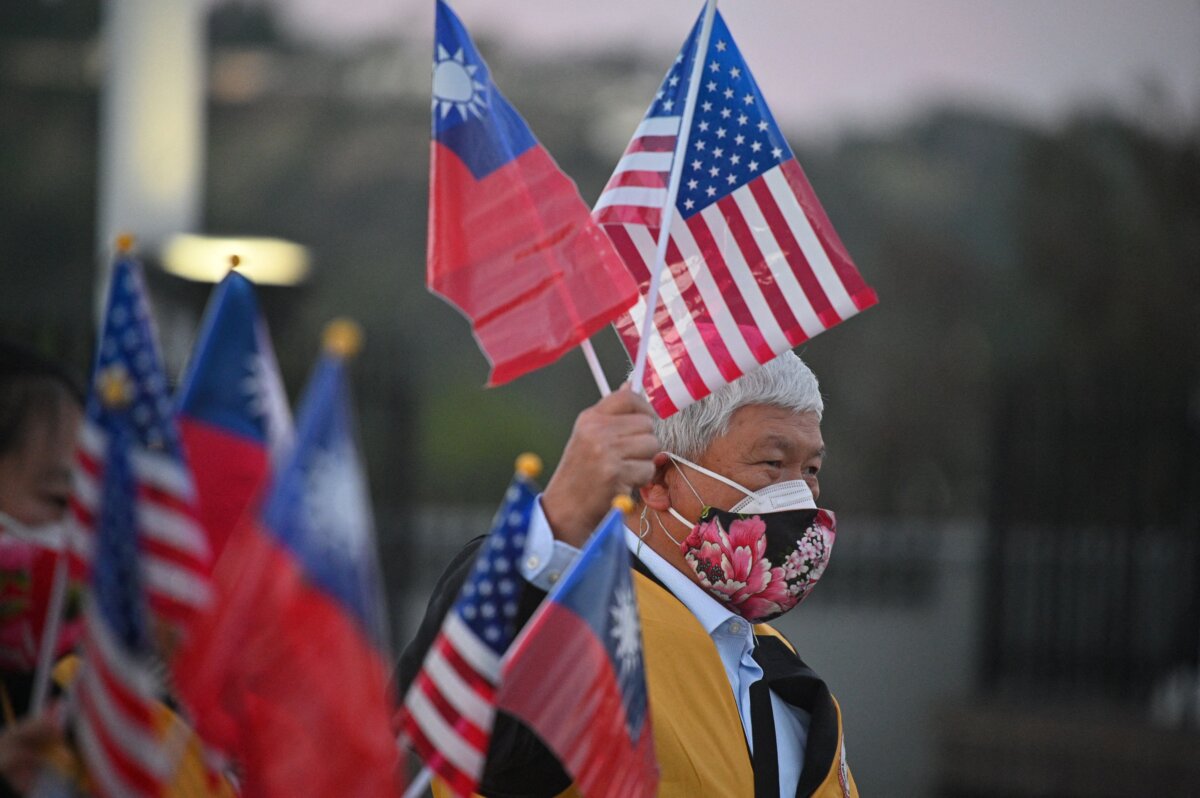
Contrary to commentators who claim the opposite, current signals point to continued support for Taiwan while balancing broader U.S. relations with the CCP.
Views expressed in this article are the opinions of the author and do not necessarily reflect the views of The Epoch Times.
 Friends Read Free
Copy
Facebook
Tweet
Friends Read Free
Copy
Facebook
Tweet