
Commentary
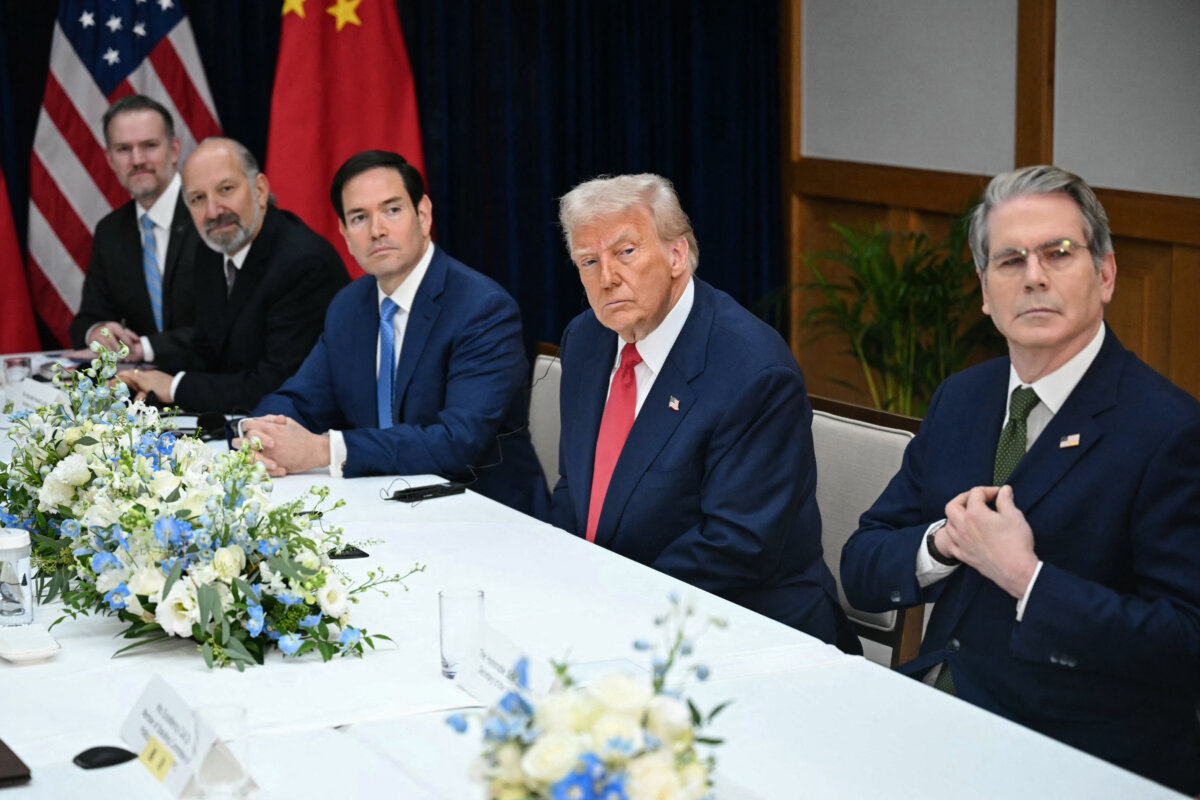
When U.S. President Donald Trump meets Chinese leader Xi Jinping in Beijing on May 14–15, a critical question in the room will likely be the one neither side wants to answer plainly.
It is not only whether China has provided military support to Iran, although the allegation will hang over the summit. It is whether Beijing has built something even more useful than a covert pipeline: a global commercial system that can make sensitive support hard to prove, easy to deny, and politically exhausting to confront.
Trump says Xi has agreed not to send weapons to Iran. Beijing says the accusation itself is fabricated. That alone tells us what kind of summit this will be. The argument isn’t just about what happened. It is about what China might hide inside normal trade.
This ongoing capability is now a consideration Washington has to wrestle with. Publicly, the record is still incomplete. There is reporting that U.S. intelligence believed China was planning to send air-defense systems to Iran, but there is not a fully declassified, courtroom-style evidentiary chain showing overt state-to-state Chinese weapons deliveries. Beijing has denied the claim, and Trump’s own recent comments suggest the administration has chosen, at least for now, to lean on Xi’s assurances rather than publish a full case.
However, China possesses the kind of maritime reach, port access, and logistics visibility that could make support to Iran—especially indirect or dual-use support—far easier to obscure than most governments could manage.
That matters because covert aid no longer needs secret airstrips or crates stamped with military markings. In modern trade systems, sensitive support can move as components, electronics, machine parts, industrial inputs, software, or other dual-use goods routed through intermediaries and folded into legitimate commercial traffic. In that world, deniability becomes a key operating principle. It is not about hiding shipments. It is about whether they can be made ordinary enough that proving intent becomes almost as hard as tracking movement.
This is where China’s role in global ports becomes more than a story about infrastructure finance.
A recent study by the Center for Strategic and International Studies warns that deep Chinese involvement in overseas port projects can create privileged access to maritime logistics data and, in some cases, opportunities to influence access or operations during crises.
That does not mean every Chinese-built or Chinese-operated port is a smuggling node. It means China sits unusually close to the pipeline of global commerce. And in the logistics age, proximity to the pipe stream matters. A state that can see cargo flows, vessel movement, transshipment patterns, and port rhythms at scale does not need perfect control to gain a strategic advantage. It only needs enough visibility to know where scrutiny is thin, where congestion offers cover, and where commercial complexity can do the hiding for it.
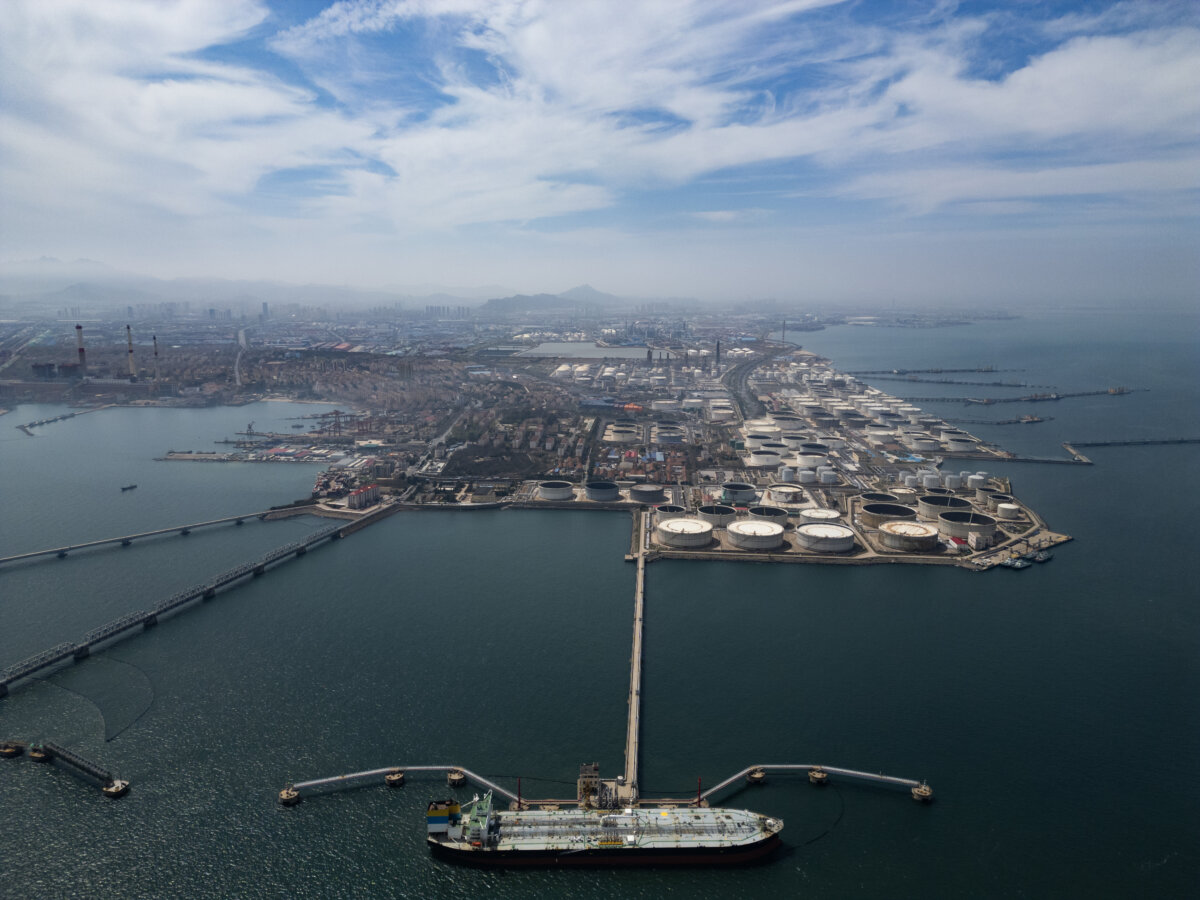
Ports, after all, are now a software environment and no longer rely just on cranes, berths, and customs sheds. They run on terminal operating systems, container-management tools, cargo dashboards, scheduling platforms, and customs interfaces. This infrastructure connects carriers, shippers, freight forwarders, and port authorities.
The U.S.-China Economic and Security Review Commission has warned that China’s LOGINK platform, which helps manage logistics information across a network of global ports, creates strategic risk precisely because it centralizes visibility into shipment tracking and supply-chain data. In plain terms, it gives Beijing the upper hand in understanding where things are, when they move, and how they can be routed.
That is how the “needle in a haystack” problem becomes real. A government with enough logistics data does not have to make sensitive cargo vanish. It only has to break it into pieces, spread it across transactions, route it through secondary nodes, and pair it with licit trade dense enough to overwhelm outside scrutiny. A shipment can be relabeled, commingled, transshipped, or shifted through ports where data access is better than enforcement access.
The effect is not invisibility—it is plausible ambiguity. Investigators may see movement without being able to prove purpose. Policymakers may have suspicion without public-grade attribution. And Beijing, if challenged, can fall back on the simplest defense available: show us the whole chain.
There is also a harder, less comfortable layer to this problem.
A 2024 congressional investigation found that Chinese-made ship-to-shore cranes used in U.S. ports contained cellular modems not required for normal port operations, and investigators concluded that the Chinese manufacturer, ZPMC, had at times requested remote access to those systems.
The House committees involved did not claim that China was using those footholds to hide military aid to Iran. Their point was broader and, in some ways, more troubling: Chinese-linked companies had secured technical access points inside critical maritime infrastructure, raising concerns about surveillance, data access, and operational vulnerability. Once that kind of access exists, the strategic question is not whether a single modem reroutes a single shipment. It is whether a larger ecosystem of software, hardware, and remote-service channels gives Beijing unusual insight into the movement of goods through the world’s ports.
Iran makes this especially consequential because Iranian trade already operates within a culture of sanctions evasion, front companies, relabeling, and deceptive shipping practices. In that environment, the most plausible Chinese support would not necessarily come in the form of an obvious state transfer. It would more likely come through intermediaries, dual-use items, procurement networks, and logistics arrangements that are materially useful while remaining politically deniable.
That is exactly why the issue will be so difficult for Trump to press in Beijing. Unless Washington can expose networks rather than merely allege intent, Xi can keep shifting the burden back to proof, and proof in a system this dense is always hard to produce cleanly in public.
That, in the end, is what makes this summit more consequential than it first appears. The real issue is not whether ports are commercial or strategic. In today’s world, they are both at once. A state that helps build, digitize, equip, and manage pieces of the global maritime system gains more than revenue or diplomatic influence. It gains the ability to hide activity inside scale, to turn data into cover, and to make denial more persuasive simply by making proof harder.
U.S. analysts are right to worry about Chinese military support to Iran, and the most important asset Beijing may possess is not any single shipment. It is the infrastructure that allows sensitive support to dissolve into the noise of globalization itself.
Views expressed in this article are the opinions of the author and do not necessarily reflect the views of The Epoch Times.
 Friends Read Free
Copy
Facebook
Tweet
Friends Read Free
Copy
Facebook
Tweet