
Commentary
On Jan. 3, the United States did something it almost never does in the modern era: It removed a sitting leader from power by force—directly, personally, and decisively.
U.S. forces executed Operation Absolute Resolve, a meticulously planned raid that captured Venezuelan leader Nicolás Maduro and his wife. They were flown to the USS Iwo Jima, then to New York City, where they were arraigned in federal court in the borough of Manhattan on charges that include narco-terrorism, cocaine conspiracy, and weapons trafficking.
International reaction split quickly. Beijing called the operation deeply shocking and a blatant use of force against a sovereign state, accusing Washington of acting as a “world judge.”
Thousands of miles away, Iran’s nationwide protests—sparked by hyperinflation, currency collapse, and economic despair—entered their third week. Rights groups reported hundreds of protester deaths and more than 10,000 arrests. Security forces escalated their response using lethal force and mass detentions, and the judiciary called for “speedy trials,” while a near-nationwide internet blackout was imposed on Jan. 8, severely hampering coordination and reporting.
Iranian leader Ali Khamenei accused protesters of being “vandals and saboteurs” acting at the behest of foreign powers, and vowed that the regime would not back down.
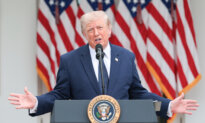
Against this backdrop, U.S. President Donald Trump issued an unusually explicit warning. He said publicly that if Iranian security forces violently killed peaceful demonstrators, the United States would come to their rescue. There have been reports that an attack by the United States was imminent on Jan. 15, but was delayed at the last minute.
Strategy in the Real World
Operations such as Absolute Resolve do not erupt from midnight tweets or spur-of-the-moment decisions. They are the culmination of layered preparation: intelligence networks cultivated over years; legal groundwork, including older indictments kept alive; interagency synchronization; and extensive contingency planning.
The same logic applies—differently—to warnings such as Trump’s message to Iran. Explicitly binding a regime’s internal brutality to the possibility of external intervention is not casual rhetoric. Once spoken, such words narrow maneuvering room, heighten stakes, and create expectations that are difficult to reverse. History has shown the costs when U.S. presidents draw red lines and fail to enforce them.
Recognizing that these moves are not impulsive does not require believing that everything is centrally scripted. Real-world strategy lives between chaos and conspiracy. Governments, and even “the deep state,” cannot control everything. What they can do is build optionality in line with strategic goals: tools that lie in wait until opportunities arise, whether through economic collapse, political unrest, or sudden shifts in alignment. Decisions crystallize at that intersection: where long preparation meets an opportunity that may not come again.
A Shift in How the Board Is Read
For years, Washington treated global hot spots as isolated fires—contain one here, monitor another there. However, when the United States’ attention fixates on those fires, the Chinese Communist Party (CCP) repeatedly advances, often without provoking unified backlash and often supporting those fires from behind the scenes. I’ve written about this before. This does not require Beijing to orchestrate every crisis. Proxies need not be puppets; opportunistic alignments are sometimes enough.
These created unresolved crises that absorb diplomatic energy, strain alliances, and delay decisive focus. As long as that clutter persisted, the central competition—between the free world and the CCP—remained on the back burner.
Venezuela under Maduro became a textbook example. Over the past decade, the regime was propped up by tens of billions of dollars in Chinese oil-backed loans and sent hundreds of thousands of barrels per day to the mainland in 2025. It has become an advanced base of operations for most on the list of official U.S. adversaries.
Iran mirrors this pattern. A long-term strategic pact renewed in 2025 deepened energy flows and military cooperation, helping Tehran evade sanctions while anchoring U.S. attention in Middle Eastern volatility.
The 2025 National Security Strategy no longer treats regions as silos. It frames them as parts of a single contest of great-power competition, with China identified as the pacing threat. Russia is treated as secondary, freeing strategic bandwidth for Asia, while the Western Hemisphere is explicitly prioritized against “non-hemispheric competitors” through migration controls, drug interdiction, and infrastructure posture.
This resembles a modernized revival of hemispheric enforcement logic—less tolerance for foreign footholds in the Americas that can translate commercial presence into strategic leverage.
Rolling Up the Board
Here is a possible hypothesis to connect the dots. Rather than confronting Beijing head-on today, the United States may be pursuing sequenced isolation: a patient effort to prune the periphery, stripping away buffers, distractions, and indirect advantages before addressing the center of gravity—working to remove just enough of those nodes to change the strategic equation, while at the same time bringing industry and supply chains back home, or to friends.
Venezuela illustrates the logic. Maduro’s regime was not self-contained. Cuban intelligence and security services allegedly helped sustain internal control in exchange for subsidized oil, supporting Havana’s economy amid embargoes. Chinese loans and energy arrangements provided financial oxygen. Alongside other foreign support networks, this created redundancy and resilience.
Remove Maduro, and the effects cascade. Havana loses a critical lifeline. A sanctions-bypassing oil channel tightens. Foreign footprints scatter. One node comes off the board, and others weaken automatically.
If protests in Iran—combined with explicit U.S. warnings—accelerate fractures in Tehran, the ripple effects extend beyond Iran itself: A major energy conduit narrows, a regional proxy hub strains, another persistent distraction engine becomes less reliable, and there are fewer drones for Russia to use in the Ukraine war.
At the tactical level, U.S. pressure increasingly targets individuals and networks rather than abstractions. Extraditions, asset seizures, and intelligence exposure replace broad condemnations. Trump’s Iran rhetoric fits this pattern: It ties street-level repression directly to geopolitical consequences, erasing the old firewall that allowed domestic brutality to remain diplomatically compartmentalized. The common thread would be ecosystem thinning—fewer places for Beijing to outsource pressure or harvest gains while attention remains elsewhere.
Meanwhile, U.S.–China dialogues continue, trade negotiations meander, and summits yield platitudes—not from renewed trust, but as a tactical delay, buying time while the surrounding environment is reordered.
It is important to note here that the CCP has proven, in both cases, as well as in the Iran–Israel war over the summer, that it does not stand by its allies and proxies when push comes to shove. This sends a powerful message to all other leaders who have signed “forever partnerships” with China. To be historically honest, the United States has also abandoned allies more than once or twice in the past. But it seems that at least this administration is very clear about what it wants from allies for them to remain that way.
The Risks When Clearing the Board
Even if this roll-up strategy is real, it is no panacea. It may trade diffuse headaches for concentrated danger.
Forcing a resolution can compress pressure rather than release it. Chronic crises sometimes act as safety valves; removing them risks escalation, which can migrate upward toward major powers. At the same time, not all allies share Washington’s threat hierarchy. European and Latin American partners wary of unilateralism may resist sharper confrontations, fracturing coalitions and raising costs.
Adversaries will adapt. Beijing is unlikely to watch passively as its distraction nodes weaken. Cyberoperations, economic coercion, and new pressure points may accelerate. The assumption that China’s capacity to generate distraction is finite may prove false. Washington cannot expect to always control the momentum and initiative.
Domestic durability also matters. A strategy such as this requires sustained follow-through. Applied unevenly, pressure can harden regimes rather than fracture them. Political cycles such as the 2026 midterms could interrupt execution, producing outcomes worse than the status quo.
Finally, personalization reduces ambiguity. Crossing unseen thresholds can quickly collapse de-escalation space, as regimes respond to existential pressure with unpredictable moves.
What Would Make This Real?
Strategic pivots reveal themselves through patterns, not speeches. If this hypothesis is correct, several indicators should emerge.
First, sequencing: Pressure appears in an order, targeting additional nodes that function as distraction engines or indirect leverage points.
Second, personalization: Abstractions fade as leaders, financiers, and enablers face individualized pressure—indictments, seizures, or worse.
Third, time-buying: U.S.–China engagement continues without resolution. Concessions without corresponding reductions in peripheral leverage would signal accommodation, not strategy.
Fourth, declining tolerance for instability: Where action is deemed necessary, clarity is prioritized over calm; where it is not, American pressure would mount on allies and foes for rapid de-escalation rather than indefinite conflict. And as a corollary to that, what does not happen: fewer new sideshows, less appetite for opening fresh theaters, and a narrowing of focus.
This has been an attempt to understand the logic that could explain recent actions—and the risks this strategy carries. It is not an argument for or against those actions. The coming weeks and months may prove very interesting indeed.
Views expressed in this article are the opinions of the author and do not necessarily reflect the views of The Epoch Times.
 Friends Read Free
Copy
Facebook
Tweet
Friends Read Free
Copy
Facebook
Tweet