
Commentary
The peace negotiations led by JD Vance have ended after 21 hours without agreement. That outcome clarifies the moment. The question is no longer how a settlement might be structured, but whether the United States will execute its strategy with the same discipline it has long articulated.
For four decades, American planners have rehearsed this conflict. They have war-gamed escalation pathways, stress-tested force posture, and refined options across administrations. Their conclusion has been consistent. A full-scale invasion of Iran would be costly, prolonged, and strategically unnecessary. That remains true today. The objective has not changed. It is not regime change or occupation. It is the reduction of Iran’s ability to coerce the region through asymmetric means.
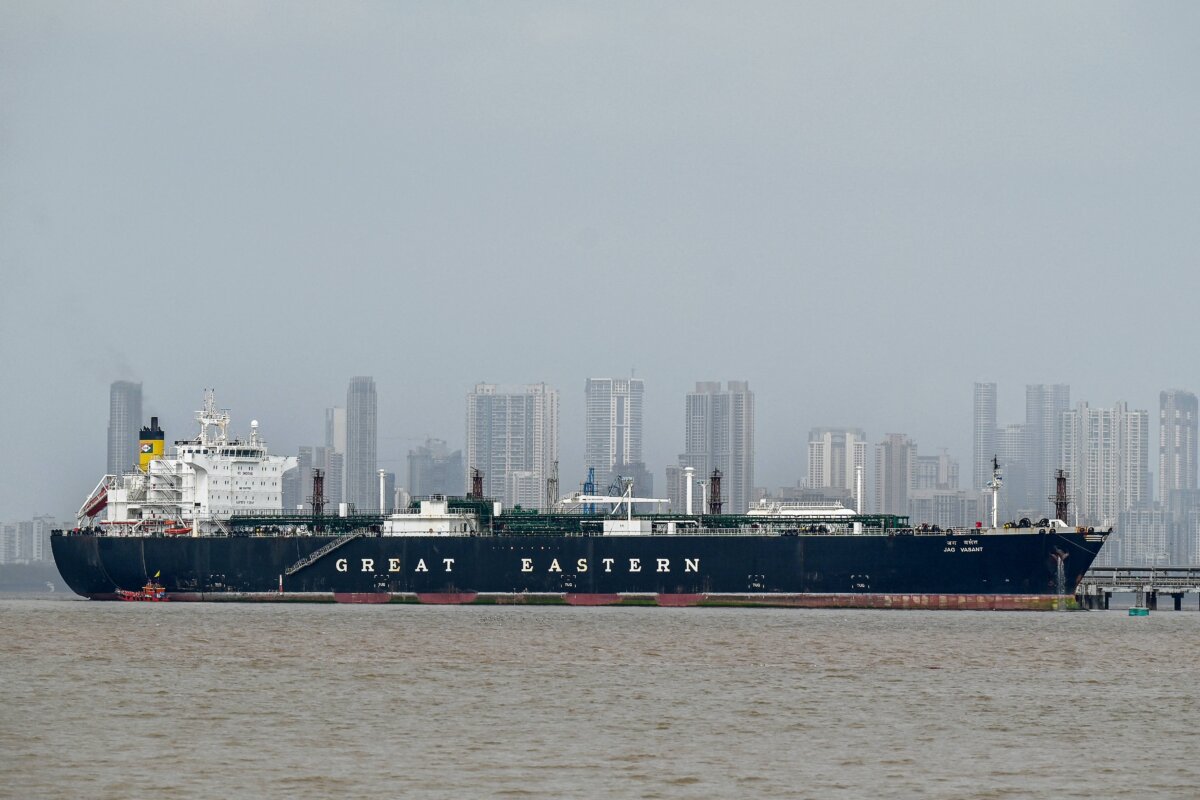
What has changed is the transition from negotiation to enforcement. With talks now unsuccessful, Washington has signaled a limited blockade of the Strait of Hormuz. This is not an act of maximalism. It is a targeted escalation designed to impose immediate and tangible constraints on Iran’s most critical leverage point. That leverage is not conventional military strength. It is the ability to disrupt global energy flows through missiles, drones, naval mines, and proxy forces.
The Strait of Hormuz is the physical expression of that strategy. Control over it allows Tehran to exert disproportionate influence on global markets and regional stability. A limited blockade directly challenges that model. It signals that Iran will no longer be able to threaten maritime commerce without consequence. At the same time, the qualifier matters. Limited means controlled, reversible, and bounded. It is designed to coerce, not to trigger a broader regional war. This aligns with the established American approach.
The first priority remains dominance from range. Suppression of air defenses, degradation of command and control, and disruption of targeting systems continue to underpin the operational campaign. These are not symbolic strikes. They are aimed at dismantling the architecture that enables Iranian coercion.
The second priority now moves to the forefront. Securing maritime commerce is no longer a diplomatic objective. It is an operational one. A blockade, if executed with precision, begins to reassert control over a global economic artery that cannot be left vulnerable to intermittent disruption.
The third priority remains systematic degradation. The measure of success will not be headlines or single strikes, but the steady erosion of Iran’s capacity to launch, sustain, and regenerate its asymmetric capabilities. Time becomes a critical variable. The longer recovery takes, the more durable the outcome.
The fourth priority, and perhaps the most complex, is escalation management. A blockade introduces risk. Iran’s response may extend through proxies across the region. Maintaining pressure while preventing horizontal escalation will test the coherence of American command and coalition coordination.
This is where the absence of a negotiated framework becomes most consequential. The role once envisioned for diplomacy was to translate military pressure into a stable political end state. That pathway is now narrower, but not closed. Military action must now create the conditions for a future settlement, rather than formalize one already in reach.
Victory, therefore, remains what it has always been in this scenario. Not regime change. Not occupation. Not a prolonged ground war. It is a restored freedom of navigation through the Strait of Hormuz, a materially degraded Iranian strike capability, and a constrained or neutralized nuclear trajectory. What is different is the path to get there. With negotiations exhausted, the United States must now demonstrate that limited objectives can be enforced through controlled application of power. That is a more demanding test than negotiation.
There is a persistent tendency to equate escalation with strategic clarity. That is a mistake. The real discipline lies in applying force precisely enough to achieve defined outcomes without expanding the conflict beyond its strategic purpose. The United States has learned this lesson over decades of conflict in the region. The purpose of military power is not to demonstrate capacity, but to achieve a political objective at acceptable cost. That is now the test. Not whether the United States can win, but whether it can enforce a narrow definition of victory under pressure, resist mission creep, and stop once that objective is achieved.
Views expressed in this article are the opinions of the author and do not necessarily reflect the views of The Epoch Times.
 Friends Read Free
Copy
Facebook
Tweet
Friends Read Free
Copy
Facebook
Tweet