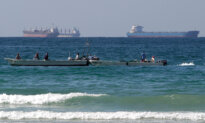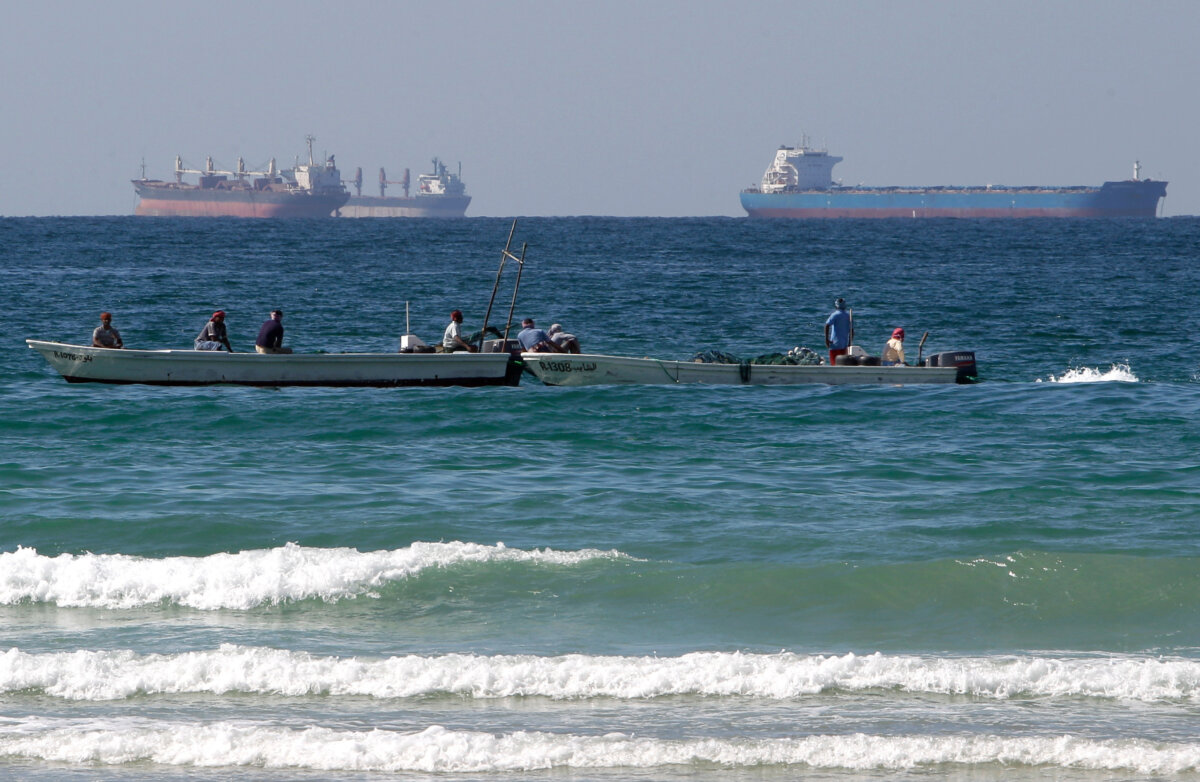

Traffic through the Strait of Hormuz has been minimal in the hours after the U.S. Navy began blockading the crucial waterway to ships coming to or from Iranian ports.
MarineTraffic said in a post on X that the Ostria, a 575-foot tanker flying the flag of Botswana, reversed course after approaching the strait from the Persian Gulf.
Martin Kelly, a shipping expert and head of advisory at EOS Risk Group, said in a post on X that Hong Kong-flagged LPG tanker TRIMMU 3 approached Larak Island from the east but then turned around and remains in the Gulf of Oman.
The U.S. Navy’s blockade came into force at 10 a.m. ET on April 13, after peace talks with Iran, which took place in Pakistan over the weekend, ended without a deal.
Kelly said 14 ships went through the strait from April 13 until 4 a.m. ET on April 14, six of which were inbound. He said four of those 14 were on sanctioned lists, several others were listed by Lloyd’s List as being from Iran’s so-called shadow fleet, and two were en route from Iranian ports.
Traffic through the strait is still significantly down from the 138 ships traversing it each day in the weeks before the United States launched Operation Epic Fury on Feb. 28.
“The US’ blockade will not take place INSIDE the Gulf. Rather, ships carrying Iranian cargo will likely be intercepted in the Arabian Sea, at range from Iran anti-ship missiles,” Kelly added in a separate post on X.
Lloyd’s List said in an April 14 update that Malawi-flagged ship Rich Starry turned back after entering the strait, but then made a second attempt and exited the strait into the Gulf of Oman on the morning of April 14.
Rich Starry is owned by Shanghai Xuanrun Shipping Co. Ltd, which was sanctioned by the U.S. government’s Office of Foreign Assets Control (OFAC) for trading with Iran.
The Murlikishan, an unladen tanker, also passed through the strait en route to Iraq to load fuel oil. It was formerly known as MKA, has transported Russian and Iranian oil, and was sanctioned by the United States in December 2025.
The Panama-flagged Peace Gulf—which usually transports naphtha, a petrochemical feedstock, from Iran—is heading to the port of Hamriyah in the United Arab Emirates.
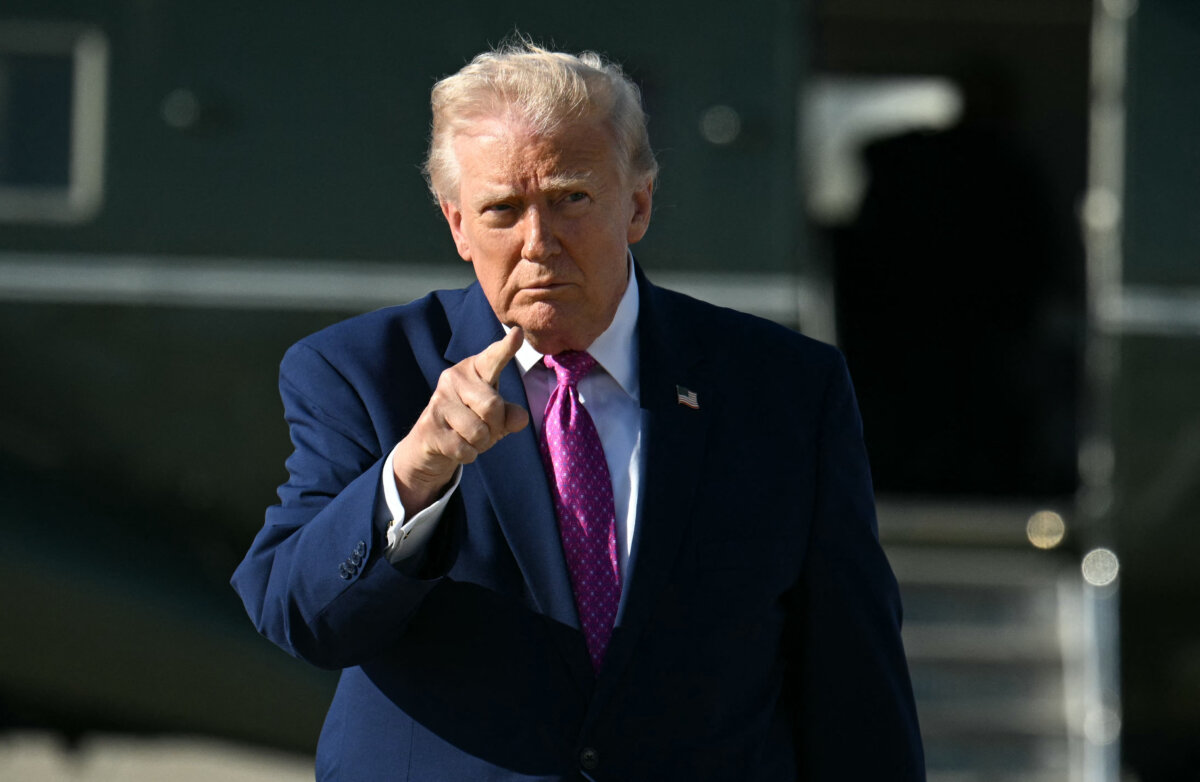
In an April 13 post on Truth Social, U.S. President Donald Trump wrote, “34 Ships went through the Strait of Hormuz yesterday, which is by far the highest number since this foolish closure began.”
TankerTrackers said in an April 13 post on X, “Today, we spotted a tanker on satellite imagery which departed Kharg Island [in Iran] while spoofing over AIS [Automatic Identification System] to show that she departed Saudi Arabia.”
In September 2025, The Epoch Times reported a significant increase in GPS spoofing and jamming incidents that interfere with global navigation satellite system (GNSS) data, which is standard on all international shipping.
Trump announced the blockade in an April 12 post on Truth Social.
“Effective immediately, the United States Navy, the Finest in the World, will begin the process of blockading any and all Ships trying to enter, or leave, the Strait of Hormuz,” Trump said.
U.S. Central Command has clarified that the blockade would apply specifically to vessels entering or exiting Iranian ports, not to broader commercial traffic moving through the strait.
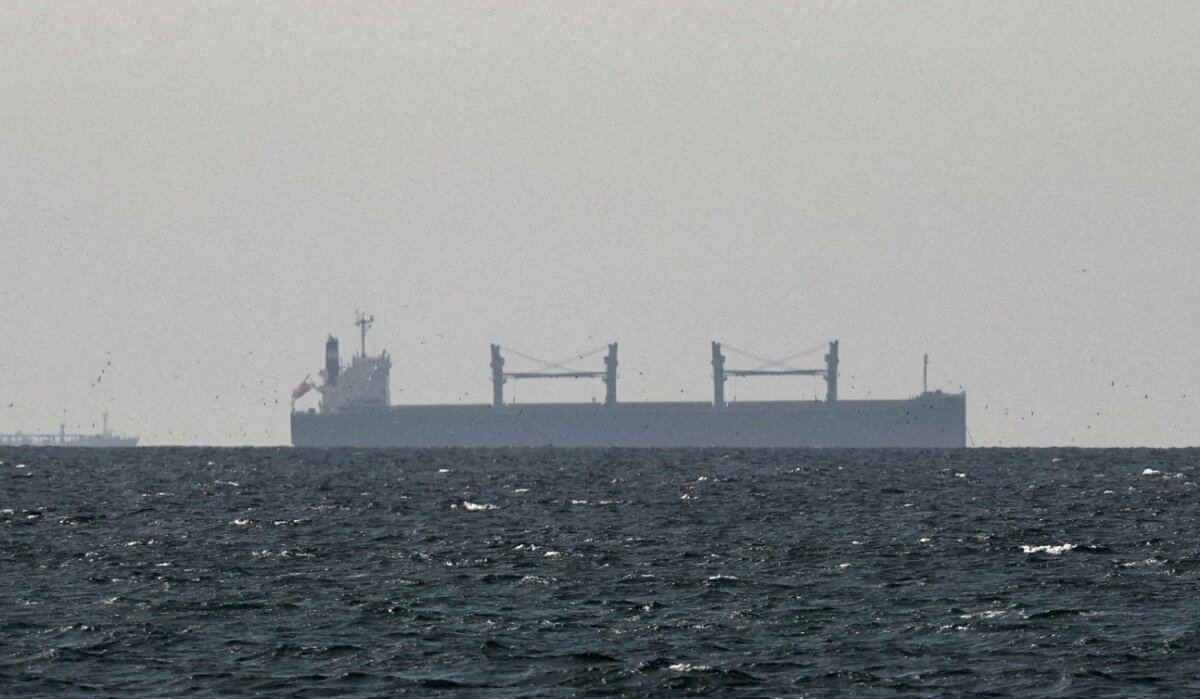
In response to the U.S. blockade, the Iranian military warned on April 13 that no port in the Persian Gulf, or the Gulf of Oman, would remain secure if the United States proceeded with a naval blockade of Iran’s ports.
Four ships, including two large oil tankers owned by China, passed through the Strait of Hormuz on April 11, according to Lloyd’s List Intelligence, before the United States Navy’s blockade came into effect.
Cospearl Lake and Yuan Hua Hu, both operated by China Cosco Shipping Corp., headed toward the Indian Ocean, according to vessel-tracking data used by Lloyd’s List Intelligence.
Lloyd’s List reported that Cospearl Lake was carrying Iraqi crude oil, and that Yuan Hua Hu was laden with oil from Saudi Arabia.
On April 13, French President Emmanuel Macron and British Prime Minister Keir Starmer said they were organizing a conference later this week to set up a “strictly defensive” mission to reopen the Strait of Hormuz to civilian shipping, free of tolls.
Starmer said in an April 13 post on X that the ongoing restrictions on the Strait of Hormuz are “deeply damaging.”
“Getting global shipping moving is vital to ease cost of living pressures,” Starmer said. “The UK has convened more than 40 nations who share our aim to restore freedom of navigation.”
Macron said in an April 13 post on X that the plan was for a peaceful multinational mission aimed at “restoring freedom of navigation in the strait.”
The Chinese foreign ministry said on April 14 that the U.S. blockade of Iranian ports was “dangerous and irresponsible.”
Reuters contributed to this report.
 Friends Read Free
Copy
Facebook
Tweet
Friends Read Free
Copy
Facebook
Tweet