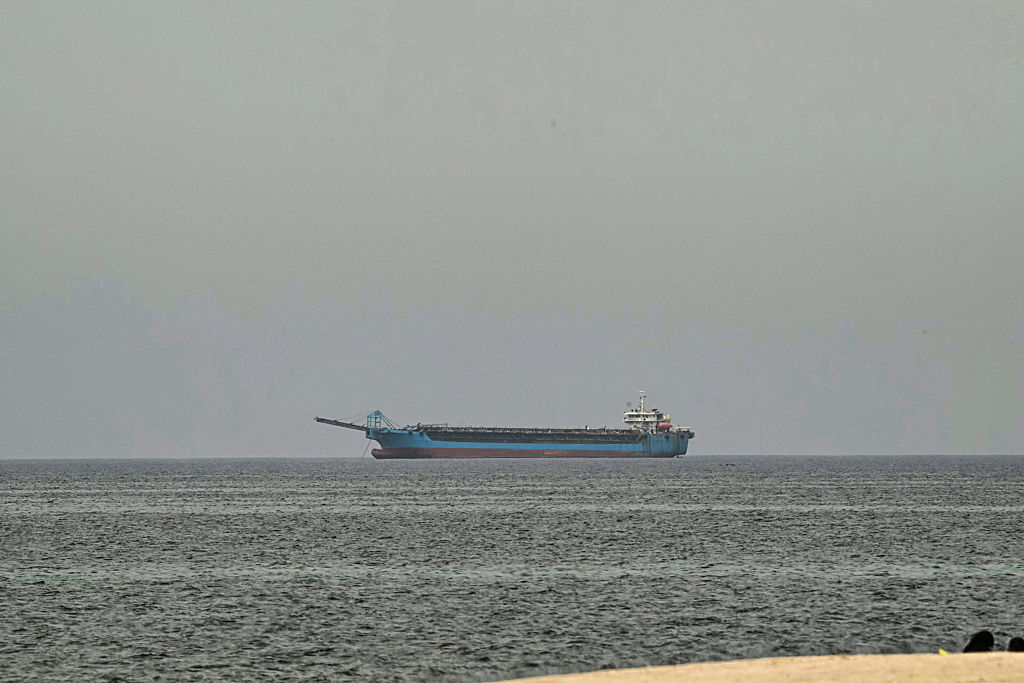

Four ships, including two large oil tankers owned by China, passed through the Strait of Hormuz on April 11, according to Lloyd’s List Intelligence, before the United States Navy’s blockade came into effect at 10 a.m. ET on April 13.
Cospearl Lake and Yuan Hua Hu, both operated by China Cosco Shipping Corp., headed toward the Indian Ocean, according to vessel-tracking data used by Lloyd’s List Intelligence.
Lloyd’s List reported that Cospearl Lake was carrying Iraqi crude oil, and that Yuan Hua Hu was laden with oil from Saudi Arabia.
The UK Maritime Trade Operations (UKMTO) agency said four ships in total transited the strait on April 11, compared with a daily average of 138 per day before the start of the war on Feb. 28.
Two oil tankers linked to Iran also exited the Gulf via the Strait of Hormuz on April 13 ahead of the planned U.S. blockade, according to shipping data from Kpler and LSEG.
The tanker Auroura is laden with Iranian oil products, while the New Future tanker is carrying diesel loaded from the Hamriyah port in the United Arab Emirates, Kpler data showed.
The U.S. Navy’s blockade is now in force after peace talks with Iran, which took place in Pakistan over the weekend, ended without a deal.
Only Iranian Ports Blockaded
U.S. President Donald Trump announced the blockade in an April 12 post on Truth Social.
“Effective immediately, the United States Navy, the Finest in the World, will begin the process of blockading any and all Ships trying to enter, or leave, the Strait of Hormuz,” Trump said.
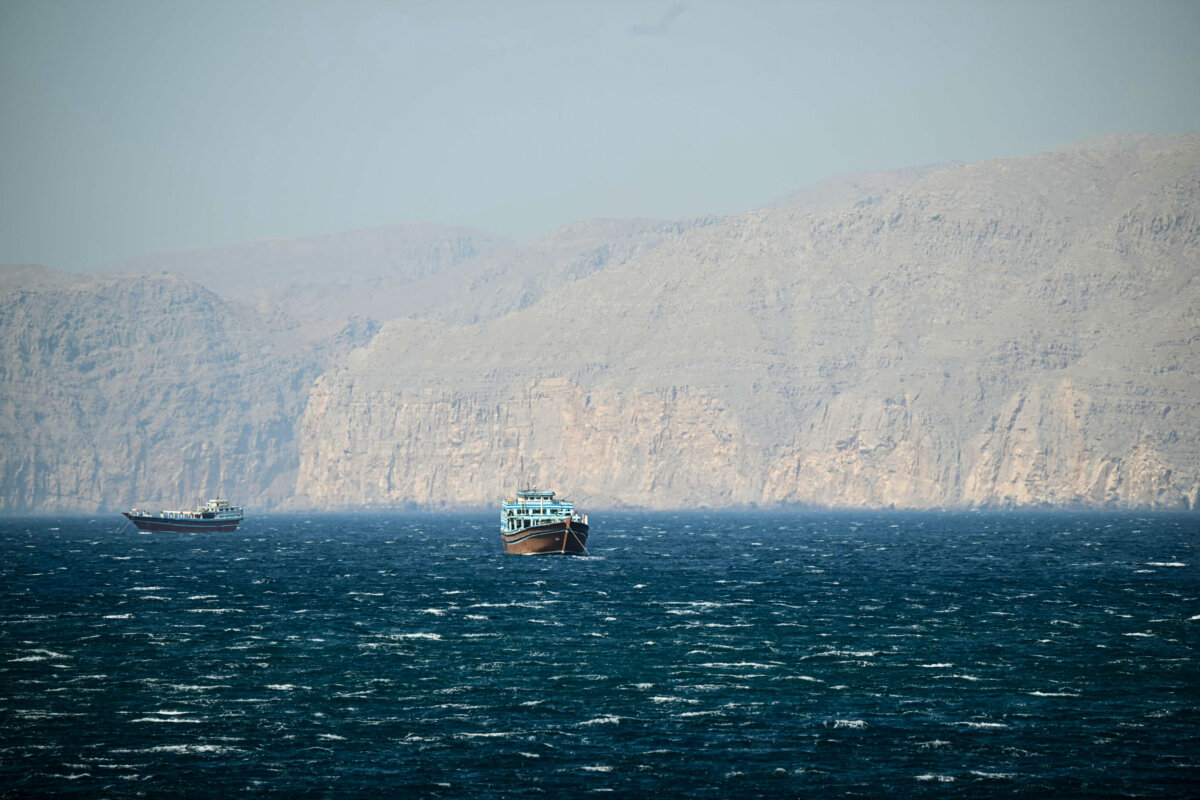
U.S. Central Command later clarified that the blockade would apply specifically to vessels entering or exiting Iranian ports, not to broader commercial traffic moving through the strait.
In an April 13 post on X, the Qatari Foreign Ministry said Iranian Foreign Minister Seyed Abbas Aragchi called Qatari Prime Minister Mohammed bin Abdulrahman bin Jassim Al-Thani.
The prime minister “emphasized the need for all parties to respond positively to ongoing mediation efforts,” the ministry said. “He also underlined the importance of keeping maritime routes open and ensuring freedom of navigation, warning against using them as a bargaining chip.”
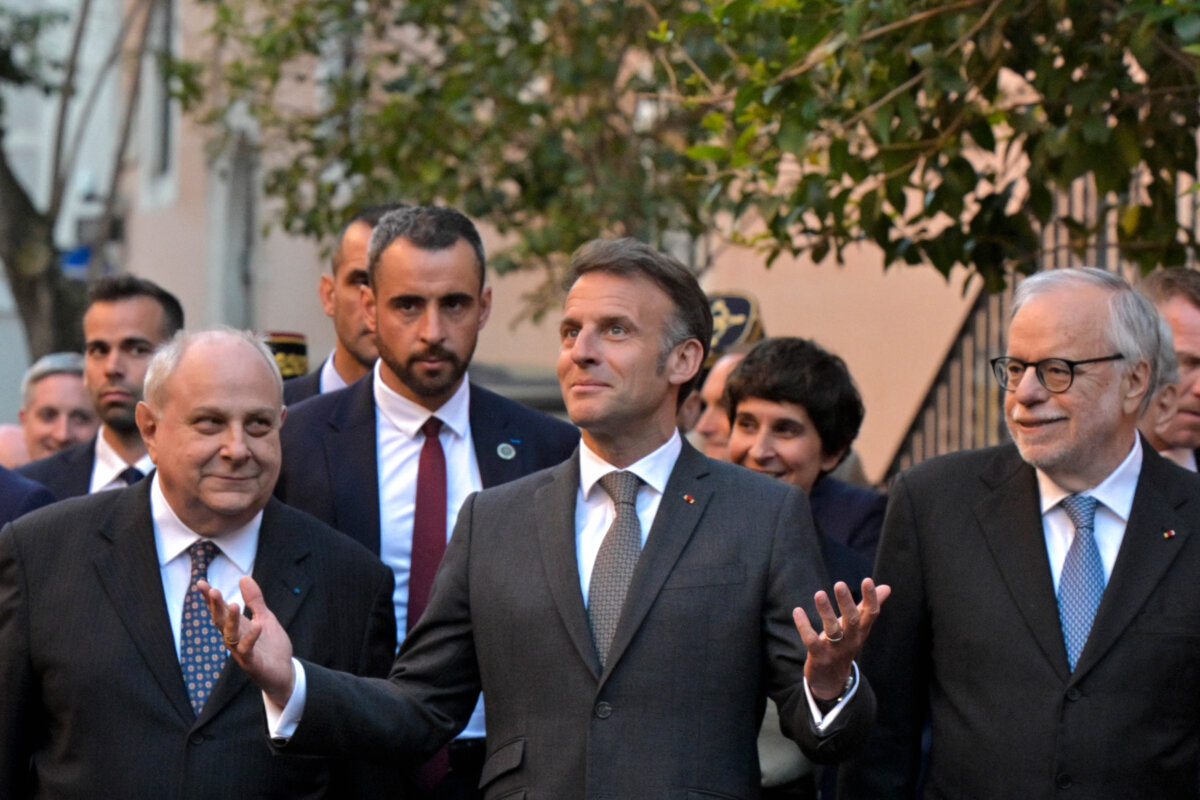
Earlier, French President Emmanuel Macron and British Prime Minister Keir Starmer said they were organizing a conference later this week to set up a “strictly defensive” mission to reopen the Strait of Hormuz to civilian shipping, free of tolls.
Starmer said in an April 13 post on X that the ongoing restrictions on the Strait of Hormuz are “deeply damaging.”
“Getting global shipping moving is vital to ease cost of living pressures,” Starmer said. “The UK has convened more than 40 nations who share our aim to restore freedom of navigation.”
In a post on X on April 13, Macron said the plan was for a peaceful multinational mission aimed at “restoring freedom of navigation in the strait.”
“This strictly defensive mission, separate from the warring parties to the conflict, is intended to be deployed as soon as circumstances permit,” Macron added.
The United Arab Emirates’ industry minister, Sultan al-Jaber, said in an April 12 post on X that the Strait of Hormuz “has never been Iran’s to close or restrict.”
“Any attempt to do so is not a regional issue; it is the disruption of a global economic lifeline and a direct threat to the energy, food and health security of every nation,” he wrote. “Setting such a precedent is illegal, dangerous, and unacceptable. The world simply cannot afford it and must not allow it.”
In response to the U.S. blockade, the Iranian military warned on April 13 that no port in the Persian Gulf, or the Gulf of Oman, would remain secure if the United States proceeds with a naval blockade of Iran’s ports.
 Friends Read Free
Copy
Facebook
Tweet
Friends Read Free
Copy
Facebook
Tweet