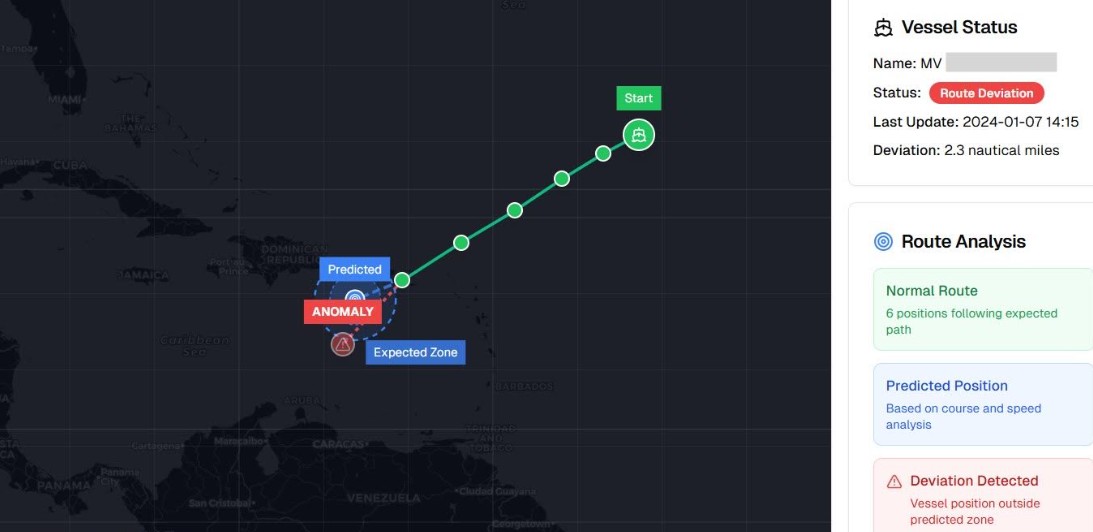

There has been a big increase in the number of GPS spoofing and jamming attacks aimed at interfering with Global Navigation Satellite System (GNSS) data, which is standard on all international shipping.
Jeroen Pijpker, lecturer at NHL Stenden University of Applied Sciences in the Netherlands, told The Epoch Times that the university has recorded 400 GPS spoofing and jamming incidents in its database, with 25 percent of them related to actual vessels. He said he believes that these cases are just the “tip of the iceberg.”
Nir Ayalon, founder and CEO of Cydome, a maritime cybersecurity firm based in Israel, told The Epoch Times that 95 percent of incidents caused by spoofing or jamming do not end up making the news.
He said Cydome has seen a 500 percent increase in GPS spoofing and jamming this year, with a 2,000 percent rise in the number of maritime blackspot areas.
GPS jamming was blamed for a collision in the Gulf of Oman in June 2025 between the Liberia-flagged tanker Front Eagle and the Adalynn, which has been identified by shipping industry resource Lloyd’s List as a “dark fleet” vessel.
Ayalon said GPS spoofing is sometimes carried out by ship operators in order to disguise their location or identity, but that it is also perpetrated as a hostile act.
He said this is believed to have been the case with the MSC Antonia, which ran aground in May in the Red Sea, close to the southern end of the Suez Canal, en route to Malta from the Saudi Arabian port of Jeddah.
‘Manipulation of the Data’
Ayalon said GPS spoofing or jamming can be carried out in two ways: by intercepting GNSS messages from the antenna to the ship’s transceiver or by manipulating the Automatic Identification System (AIS) data, which all ships use.
According to Ayalon, it is easier for attackers to manipulate AIS data because they are online.
“It does not require any encryption or any authentication, so you can basically add any information that you want there,” he said.
“It’s very easy to get into AIS data.”
Ayalon said GPS spoofing could, in effect, render ships invisible—in other words, they would show up on the map in a certain location, but in reality, they would not be there.
Referring to the MSC Antonia incident, he said: “Basically, [its] location was manipulated and the ship autopilot tried to fix the path to the path that it thought was the right one … so the ship grounded.
“If you would look at the place where the AIS is telling you that the ship is … there’s no ship there.”
Sometimes, spoofing is carried out by bad actors who are trying to damage a specific vessel, according to Ayalon.
According to some reports, Russian oligarchs used spoofing to hide the location of their megayachts in 2022, when sanctions against Russia kicked in.
“There was a case in Dutch waters, near Den Helder,” Pijpker said. “There was a Russian oligarch with his superyacht, and there was a lot of spoofing around the superyacht.”
Jamming and Spoofing
Ayalon said that in order to carry out GPS jamming or spoofing, a bad actor needs only a relatively small high-frequency antenna, which would usually need to be sited on a tall building, a cliff, or another high place, close to a port or a shipping lane.
“They will need an antenna,” he said, noting that it is not always something that can be seen.
“It can be quite a small device.”
The Norwegian shipping insurance company Gard published an article recently about GPS jamming that said navigation in the shipping lanes of the Middle East has been affected by GPS interference.
“Recent instances where GPS interference served as a defensive measure against drone and missile threats targeting critical infrastructure include the Israeli coast and the Red Sea during the [Israel–Hamas] conflict as well as the Persian Gulf and Arabian Gulf,” the article stated.
Ayalon said there are a number of GPS spoofing blackspots around the world where mariners know that they have to be especially alert.
These areas include the Black Sea, the Red Sea, the South China Sea, the Persian Gulf, the eastern end of the Mediterranean Sea, the Barents Sea, and the seas around North Korea.
There is also a small blackspot near Pensacola, Florida, which may be linked to a U.S. naval air station.
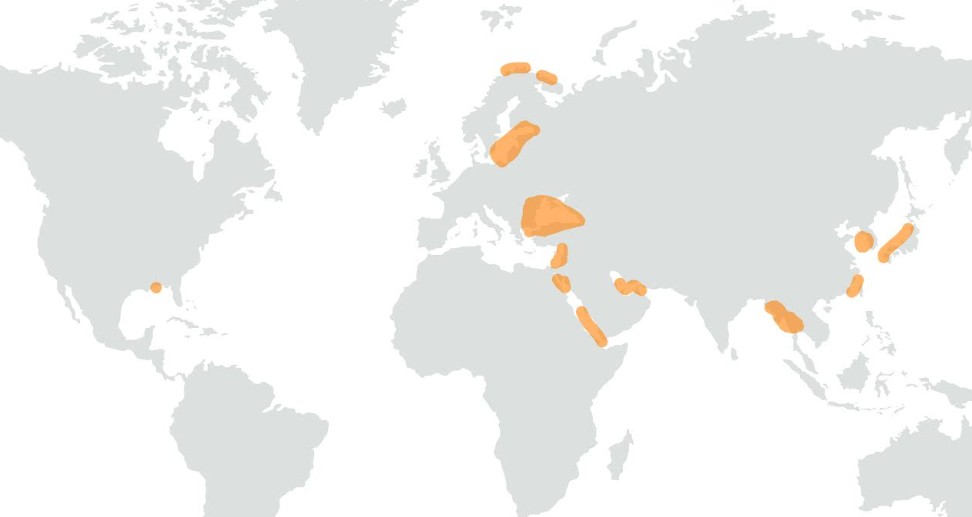
Ayalon said a lot of the satellite data for shipping around China is also not accurate because of spoofing.
Pijpker pointed to a case in 2019, when a UK ship, the Stena Impero, drifted into Iranian waters in the Persian Gulf after apparently having its GPS spoofed.
He said the Iranians allegedly used GPS spoofing to get the ship to unintentionally enter their national waters, and then seized it. It left Iranian waters later that year.
Ship ‘Honeynet’ Created
Pijpker said GPS spoofing remains an “under-researched topic.” His own university has created a ship “honeynet” in an attempt to understand the “malicious traffic,” he said, referring to a network setup created with intentional vulnerabilities to attract hackers.
He said it is a “virtual ship” linked to the internet by a Starlink device and a decoy server. It is designed “to see what kind of people are attacking ships,” Pijpker told The Epoch Times.
According to Ayalon, the increase in Low Earth Orbit satellites such as Starlink has introduced a lot of new maritime technology.
He said a lot of crew members trust what the computer and other semi-autonomous systems display.
“This means that we see more and more events like the MSC Antonia [incident],” Ayalon said.
According to him, there are a lot of tools with which crews can check the integrity of their GNSS.
Crews will need to start using these types of systems “in order to make sure that they’re in the right place,” Ayalon said.
 Friends Read Free
Copy
Facebook
Tweet
Friends Read Free
Copy
Facebook
Tweet