Commentary
Can America become a leader in helping infertile couples?
More and more couples are struggling with infertility, unable to conceive. According to the World Health Organization, about one in six people are affected by infertility. In the United States, 19 percent of childless married women ages 49 and younger are unable to get pregnant after trying to for a year, according to the Centers for Disease Control and Prevention.
Many turn to in vitro fertilization (IVF), a medical process that involves fusing the sperm and egg into an embryo in a lab setting and then implanting one or more of the created embryos into the mother.
But what if there was a different way?
Sens. Cindy Hyde-Smith (R-Miss.) and James Lankford (R-Okla.) introduced on May 22 the Reproductive Empowerment and Support Through Optimal Restoration (RESTORE) Act.
“The holistic fertility policy promoted through the RESTORE Act aims to treat the root causes of infertility, many of which stem from chronic conditions and environmental factors that are the focus of President [Donald] Trump’s MAHA movement,” Hyde-Smith said in a statement.
Many couples, if certain conditions were treated, might be able to conceive naturally and not require IVF to have a child. But our current medical system isn’t ideal for couples looking to treat root causes rather than start IVF.
Take the story of Marie and Joseph Meaney, who struggled with infertility for nine years before having their daughter, Therese.
“Early in our marriage, we realized that babies weren’t arriving as we had hoped, and we were devastated. The thought of a life without children stretching out in front of us seemed like one unending heartbreak,” wrote the Meaneys in “Treating Infertility: The New Frontier of Reproductive Medicine,” a March Heritage Foundation report.
Ultimately, the Meaneys, who had moral objections to IVF, decided to pursue treatment using Natural Procreative Technology (generally dubbed “NaProTECHNOLOGY”). The couple traveled from their home in Virginia to Omaha, Nebraska, where NaPro founder Dr. Thomas Hilgers practices.
“Dr. Hilgers’s various treatments have proved far more successful than IVF (ranging from 81.9 percent in case of [ovulation not occurring], 56.7 percent in case of endometriosis, to 38.4 percent in case of [blocked fallopian tubes]), yet the average gynecologist remains completely ignorant of this option for couples suffering from infertility,” the Meaneys wrote.
The NaPro treatment is not a simple fix necessarily. The Meaneys described a variety of treatments that they experienced—from surgery to extensive tracking of Marie’s menstrual cycle and symptoms, to specialized massages designed to treat endometriosis tissue.
But shouldn’t Americans such as the Meaneys who wish to avoid IVF, whether because of moral or financial concerns, have a way to get such treatment without flying to another state?
The RESTORE Act would provide resources and training for medical professionals interested in learning more about treating reproductive health conditions and infertility. It would also direct the Department of Health and Human Services to study how much access Americans have to restorative reproductive medicine, or medicine that seeks to treat infertility by identifying and healing the root causes.
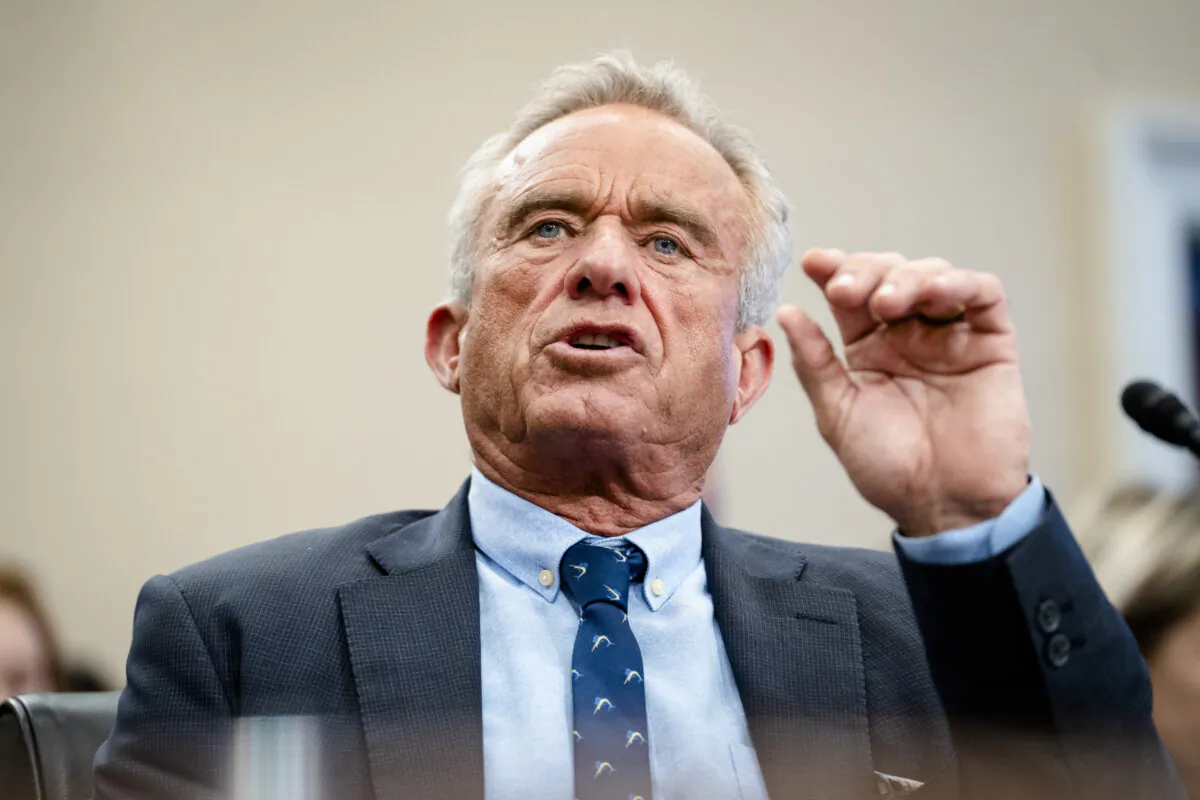
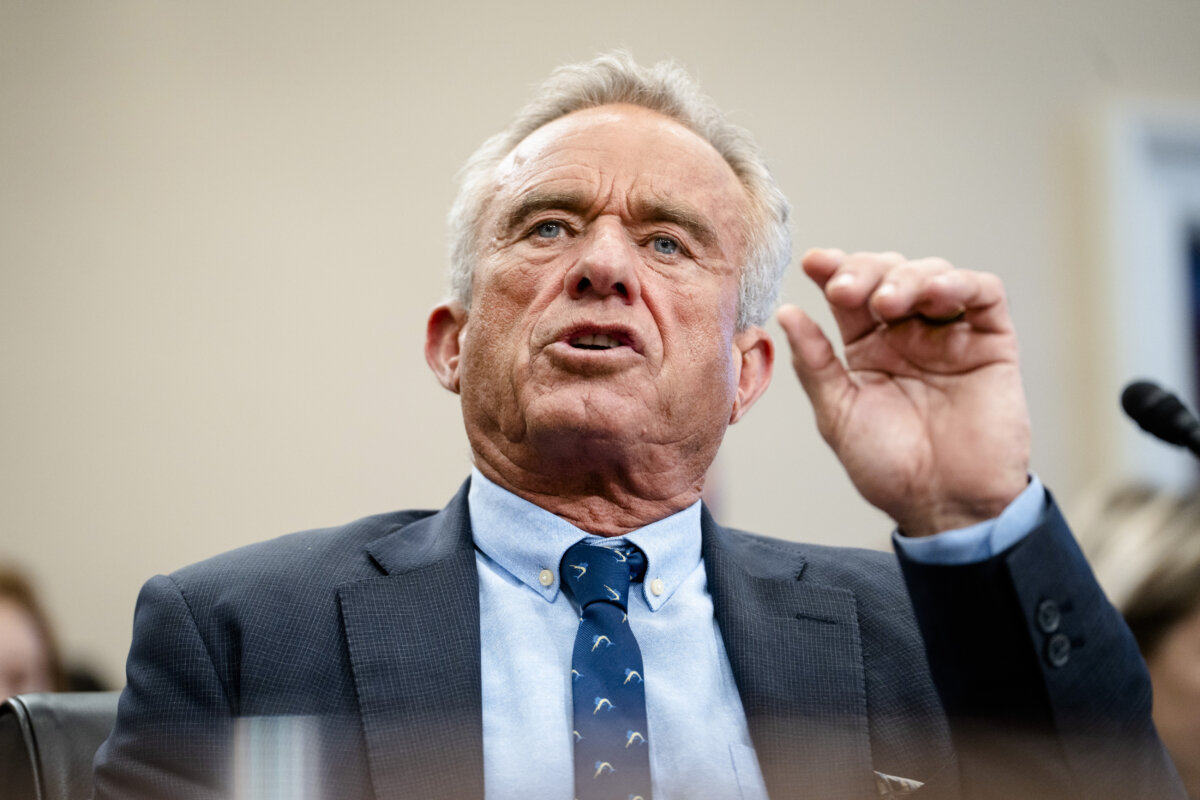
In 2024, Health Secretary Robert F. Kennedy Jr. signaled his support for exploring why so many are struggling with infertility.
“We are going to investigate the alarming decline in fertility,” Kennedy posted on social media platform X in September 2024. “We will evaluate research implicating chemicals like glyphosate, BPA, heavy metals, xenoestrogens, endocrine-disrupting chemicals, and so on. We will look into nutritional factors too.
“Why are sperm counts declining year after year? Why are girls reaching puberty so early? Why are so many couples infertile? The American people deserve answers, and we will provide them.”
Dr. Casey Means, Trump’s nominee for surgeon general, has also raised questions about how we’re handling the infertility crisis.
In her book “Good Energy,” written with her brother Calley Means, she notes that polycystic ovary syndrome often causes female infertility, but that the focus is often not on treating the syndrome. Instead, medical professionals push patients to use IVF.
“[Very] few of the women who elect for these invasive procedures [called assisted reproductive technology] are told by their doctor the root causes of their infertility, or how to reverse them,” she writes.
Casey Means also notes that men are suffering a fertility crisis, too—and obesity, which is correlated with a higher chance of having a zero sperm count, might be part of the reason.
“Assessing the data holistically, it appears that modern diet and lifestyle are sterilizing the human population in part through Bad Energy,” she concludes.
Right now, many American couples who desire children can’t have them. That’s not just a personal crisis, especially not in an era where our birth rate is falling below replacement rates. Clearly, the status quo isn’t working for too many couples. Let’s give the Make America Healthy Again movement the chance to give couples some promising new options.
Reprinted by permission from The Daily Signal, a publication of The Heritage Foundation.
Views expressed in this article are the opinions of the author and do not necessarily reflect the views of The Epoch Times.
 Friends Read Free
Copy
Facebook
Tweet
Friends Read Free
Copy
Facebook
Tweet