
Commentary
Shortly after meeting with Chinese Communist Party (CCP) leader Xi Jinping in late October 2025, U.S. President Donald Trump said China would never attack Taiwan while he is president because Chinese officials “know the consequences.” While support from the United States is welcome news for Taiwan, Trump’s words raise a real question: Does Xi actually know the cost of invading Taiwan?
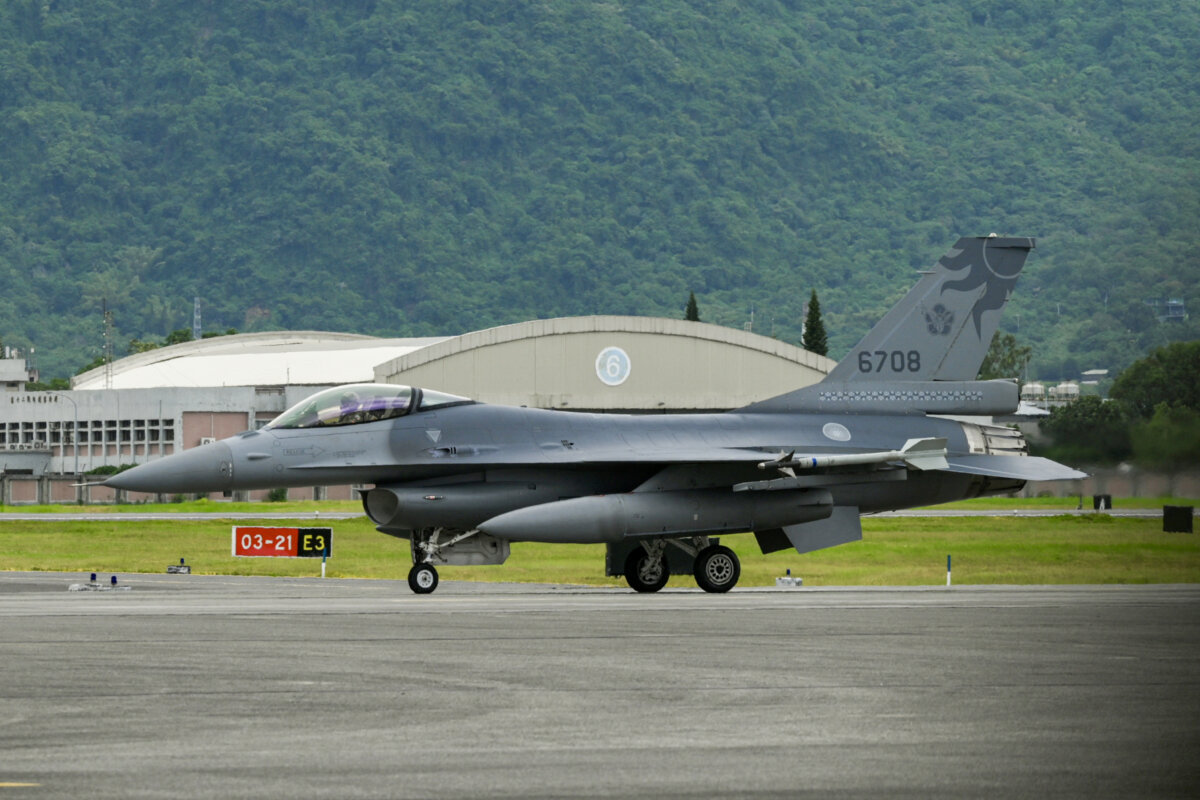
Much of the analysis of a potential Beijing attempt to seize Taiwan by force has centered on the Chinese military’s capabilities and Taiwan’s defenses, especially if supported by the United States. Many assessments conclude that the People’s Liberation Army (PLA) is not currently capable of defeating the U.S. military in a direct conflict.
However, analysts still warn of a worst-case scenario in which Xi, seeking to cement his legacy, launches a premature strike. He has tied his legitimacy to the “China Dream” of national rejuvenation by 2049 and has framed unifying Taiwan with the mainland as essential to achieving that goal.
The recent wave of purges, particularly of senior leaders such as former Central Military Commission (CMC) Vice Chairman Gen. Zhang Youxia, has intensified speculation. With most of the commission allegedly removed and the CMC now effectively consisting of Xi and loyalist Vice Chairman Zhang Shengmin, some analysts argue that Xi has eliminated voices that could have dissuaded him from attacking Taiwan. Even if that was not his intent, the practical result may be similar. With little meaningful pushback inside the system, Xi could face fewer internal constraints if he chooses to act.
The German Marshall Fund and the Rhodium Group recently published “If China Attacks Taiwan,” a report examining the potential costs to Beijing of a prolonged war. The authors noted that they were not asked to adopt Xi’s personal perspective and acknowledged that Chinese authorities could misjudge the likely consequences.
Even when costs are high, national leaders sometimes proceed if the perceived benefits or political pressures outweigh the risks. Xi could conclude that failing to act—particularly if he believes that Taipei is moving toward permanent separation with U.S. backing—would damage his authority more than launching a risky military operation.
The study examines how a conflict would affect China’s economy, military capabilities, social stability, and international position. It warns that war could produce massive economic disruption, catastrophic military losses, serious social unrest, and severe sanctions. This brings the analysis back to three critical questions: What would the price of a Taiwan invasion be? Is Xi fully aware of that price? And does he care? The latter two only he can answer, but the first is measurable, and the potential impact on the CCP would be staggering.
In the report’s major war scenario, an invasion lasts several months and draws in the United States and its allies. The conflict begins with an amphibious assault and missile strikes on Taiwan, as well as on U.S. forces in Japan and Guam. Although Chinese forces land on Taiwan, sustained Taiwanese and U.S. strikes disrupt resupply across the Taiwan Strait. After months of heavy fighting, the PLA withdraws to the mainland, having lost roughly 100,000 personnel. Taiwan suffers approximately 50,000 military and 50,000 civilian casualties. The United States loses 5,000 military personnel and 1,000 civilians, Japan loses 1,000 military personnel and 500 civilians, and the PLA retains control only of Kinmen and Matsu.
The report states that a failed Chinese attack would impose severe economic, military, social, and international costs and that it would be a mistake to assume that Beijing would necessarily prevail. Even a limited military engagement could result in trillions of dollars in losses.
A 2022 Rhodium study estimates economic damage of at least $2 trillion to $3 trillion under conservative assumptions, while Bloomberg analysts projected costs to be closer to $10 trillion. In a prolonged war ending with Chinese withdrawal, the economic impact would extend beyond market disruption to systemic breakdown.
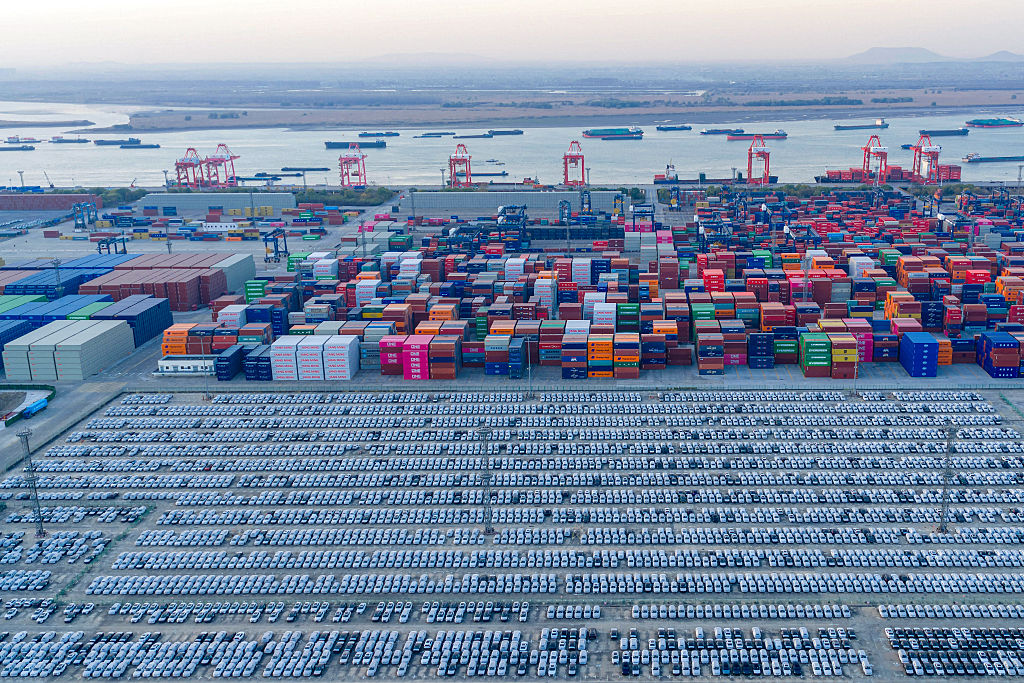
China is uniquely exposed because roughly 20 percent of its gross domestic product (GDP) and about 13 percent of its employment depend on exports, double the U.S. share. A major conflict would likely trigger a near-total embargo by G7 nations. After years of doubling down on high-tech manufacturing such as electric vehicles, semiconductors, and green technology instead of strengthening domestic consumption, China would have few alternative markets for its surplus output. Without export demand, large portions of its industrial base would idle, leading to a contraction in GDP potentially worse than during the COVID-19 pandemic period.
Financial decoupling would compound the shock. The report anticipates the freezing of China’s roughly $3.39 trillion in foreign exchange reserves and places its $3.6 trillion in foreign direct investment at risk. Even if Beijing achieved military objectives, the global financial system could treat China as permanently uninvestable, effectively ending its role as a global financial hub. Hong Kong would likely lose its status as the primary gateway for international capital into the mainland.
Energy and food security would add further strain. A months-long war could allow the United States and its allies to impose a distant blockade, cutting off 70 percent to 90 percent of the oil and roughly 40 percent of the natural gas that China imports by sea. Severe energy and food rationing could follow, increasing the risk of domestic unrest. With domestic demand already weakening, sanctions or a blockade would strike at one of China’s remaining growth engines.
The CCP’s legitimacy depends heavily on economic stability. A failed war that produces mass unemployment, shortages, a financial crisis, and long-term technological isolation could fracture the global economy into rival blocs, leaving China isolated for decades. Although the PLA has grown stronger, its economic vulnerabilities mean that the cost of a failed invasion could pose an existential challenge to the CCP itself.
Views expressed in this article are the opinions of the author and do not necessarily reflect the views of The Epoch Times.
 Friends Read Free
Copy
Facebook
Tweet
Friends Read Free
Copy
Facebook
Tweet