
This is a lightly edited transcript of a May 11 segment of the Victor Davis Hanson: In His Own Words podcast.
I’m speaking on the 71st day of the Iran war, but of course, it hasn’t been 71 days. The last real date of bombing, intense bombing—not a tit for tat here and there, but the actual day of kinetic activity—was April 8, the actual last day.
So, we’ve had about 31 days of negotiation. The actual war was only 40 days long so far. So, all the anti-war opposition was about something that happened more than a month ago.
So, what’s going on in these negotiations? They’ve been in Pakistan, they’ve been through social media connections, there have been special envoys and neutral mediators.
What is going on? There have been two different strategies over this 31-day period. We know what the Iranian strategy is. It feels that although it’s been debanked and it has no foreign currency outlets, and it can’t sell oil, and it’s economically squeezed with a blockade, and it’s losing $500 million per day in input, that hurts the citizens more than it does the regime, and it can keep going and keep going because it feels that the United States is going to buckle.
And they hold out one thing we don’t talk about, and that is the fact that they do have missiles and drones that are in subterranean caverns they can bring out and use, not against Israel. They think that Israel has been disowned by the American people, so if they hit Israel, it won’t pressure U.S. President Donald Trump.
It might pressure Israel to strike back, but they’re not as worried about that. They want to hit the Gulf Cooperation Council states—Saudi Arabia, Oman, the United Arab Emirates, Kuwait, Qatar. They want to hit them and destroy their ability to refine oil, to pump oil, or their water supplies, to put them out. And they hold that threat over the United States, and that causes tension.
On the one side, Israel says, “Let’s get going and finish the war.” The UAE says, “Let’s get going, finish the war.” Trump says, “I’m negotiating.” The UAE says, “Well, don’t negotiate your way home and leave us hanging.”
So, there are all these tensions that Iran has created. And on top of that, there are four competing entities that we have to talk to.
We have to talk to, apparently, the Islamic Revolutionary Guard Corps, these thugs that have hijacked the government; the regular army that has, essentially, the real power in the country; and these figurehead elected officials in parliament that talk a tough game, but have no power.
And then we don’t know the status of the theocracy, the Khamenei family. We know that the supreme leader’s dead, but we don’t know the status of his son, and we don’t know the status of other ayatollahs.
So, that’s their strategy: If you try to press action, they will send maybe 500, 600 missiles and drones and hit the Persian Gulf. And we don’t know if they have that ability.
Our strategy is that we have to squeeze them very quickly economically and not allow them to hit the Gulf. And the way that we have leverage over Iran is that we can destroy them as a modern nation if we choose to hit dual targets. And we’ve done that in the past in every single war that I know of: World War II, Korea, Vietnam, the first Gulf War, especially under President George H.W. Bush. They hit everything in Iraq. And President Bill Clinton in 1999, as I said, took out the whole power grid of Belgrade, Serbia, and every Yugoslav bridge on the Danube.
President Barack Obama said, “Let’s be careful about that in Libya.” And then he hit cargo ships, he hit port facilities, hit communication centers. He hit a lot of civilian targets. We haven’t done that. And we can do that, and we’re not doing it because we feel that there’s an Iranian resistance on the eve of assuming power and removing the regime, and they’ll need that infrastructure.
The other restraints on Trump are, of course, the economy and the midterms, and they’re intertwined. I kept saying to you that we have seven months, eight months. We have less than six months now from the midterm date of Nov. 3, 2026.
And the $64,000 question, of course, is what will be the status of the economy then? And this is a little tricky because all of the economic gurus, and even The Wall Street Journal in particular, had said that we were going to be in a near-recession due to the price of energy.
I never quite understood that because they had told us for years that energy was playing a smaller and smaller role in our more and more diversified economy.
But nonetheless, it hasn’t yet. If you look at the indicators, the stock market is now at a record high right in the middle of these negotiations.
The gross domestic product is constant at 2 percent—not great, but … it’s going to grow. The level of foreign investment is already starting to show itself. There was a record small number of people filing for unemployment. The jobs report … was more than 110,000.
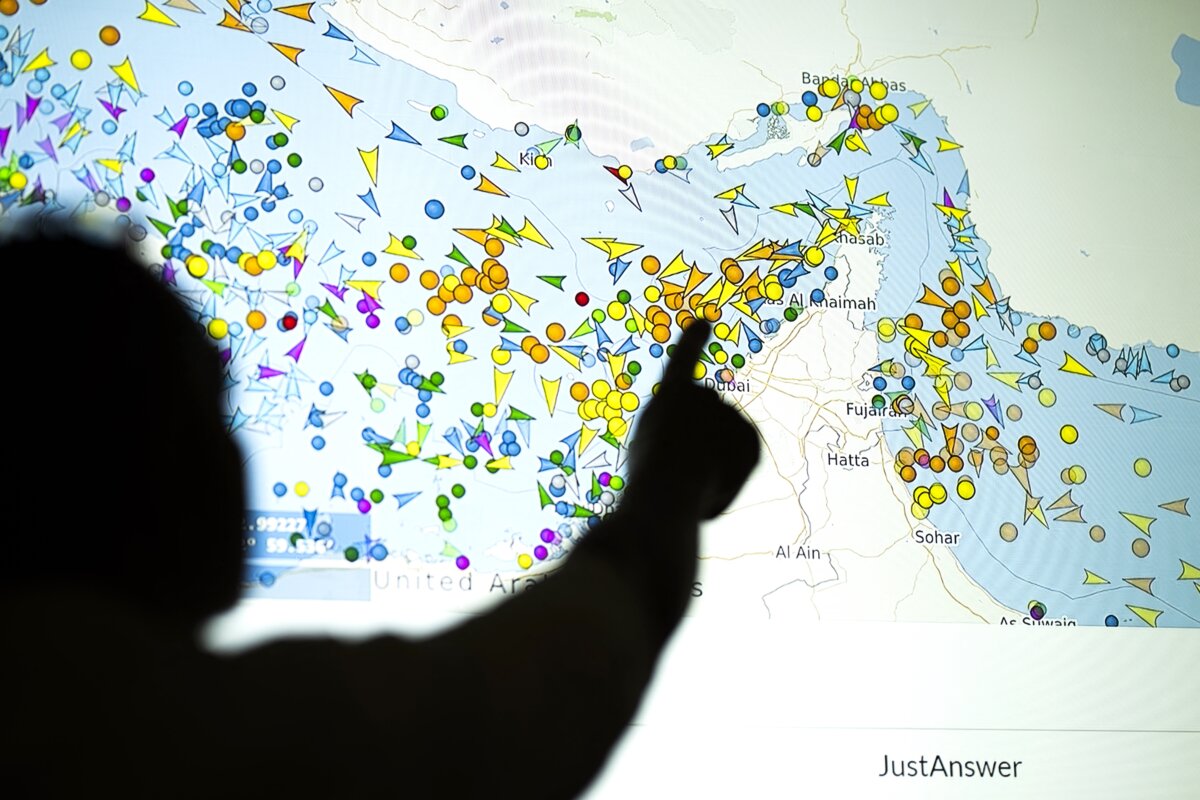
People had said it was only going to be $50. The price of oil, we were told, was going to go to $150. As I’m speaking today, it’s $95. You’ve got to remember that when Trump entered office on Jan. 21, 2025, the price was $80. So, despite the attempt of the Iranians to stop traffic coming into the Strait of Hormuz, it’s only $15 more today than it was.
And it’s not going to calibrate that there’s going to be more and more oil on the market—not just Russian oil that’s being released, but Venezuelan oil—and that we’re going to increase pumping.
So, this muddies the waters, and now Trump is starting to think: “Well, as time goes by and I have less and less time to jump-start the economy before the midterm elections, in which they’ll blame me for inflation, for example, I’ve got to get this war concluded, but I can’t conclude it with a bomb. Otherwise, they’re saying that I’m just like an Obama.”
So, he has to determine: “Can I force them to give up their enrichment? Can I open the [Strait of Hormuz] for everybody and destroy their patrol torpedo boats and their ability to do anything with their rockets to hit ships? And can I do that in time for the economy to absorb that kinetic action and win the midterms?”
And the answer is no one knows, because if the economy is this strong with all of these worries, and if Trump were to hit very quickly some infrastructure in Iran and maybe seal the uranium in these mountains with heavy bombing or disable the ability to unload or load oil on Kharg Island, he might be able to do one of two things: force them into submission or prompt a resistance movement to take power, or do so much damage that many people say, “Well, they can’t make war now for 20 years.”
If they have uranium, it’s deep down inside a mountain, as far as we know, and they don’t have any leadership. They have no navy, they have no air force, and they probably can’t make any drones. And we can still, if we feel like it, blockade them, since there will be no agreement.
And that means that he might have longer than he thinks that he does. And instead of having less than six months, he might say, “The economy’s pretty strong right now in the middle of the whole mess, and it might get even stronger as more oil gets on the market, and the chances that I can force them to cede to my demands, or I can inflict a level of punishment on them that they won’t … It won’t matter.
“They won’t be able to do what they want to do, and that will even help me in the midterms.”
So, we’re in an era, a time, a nexus of indecision and known unknowns. But the idea that both these countries are up against time constraints has been somewhat modified because the Iranians feel that they can keep alive, and they don’t care what the status of the people is.
They can put them down, and they have missiles and drones to threaten and maybe get a longer negotiation.
And we were told that, and we all thought that the midterms were the ultimate brake on Trump’s range of options. And maybe it’s not yet, because the economy has been rebounding in ways that no one had forecast.
Reprinted by permission from The Daily Signal, a publication of The Heritage Foundation.
Views expressed in this article are the opinions of the author and do not necessarily reflect the views of The Epoch Times.
 Friends Read Free
Copy
Facebook
Tweet
Friends Read Free
Copy
Facebook
Tweet