
Commentary
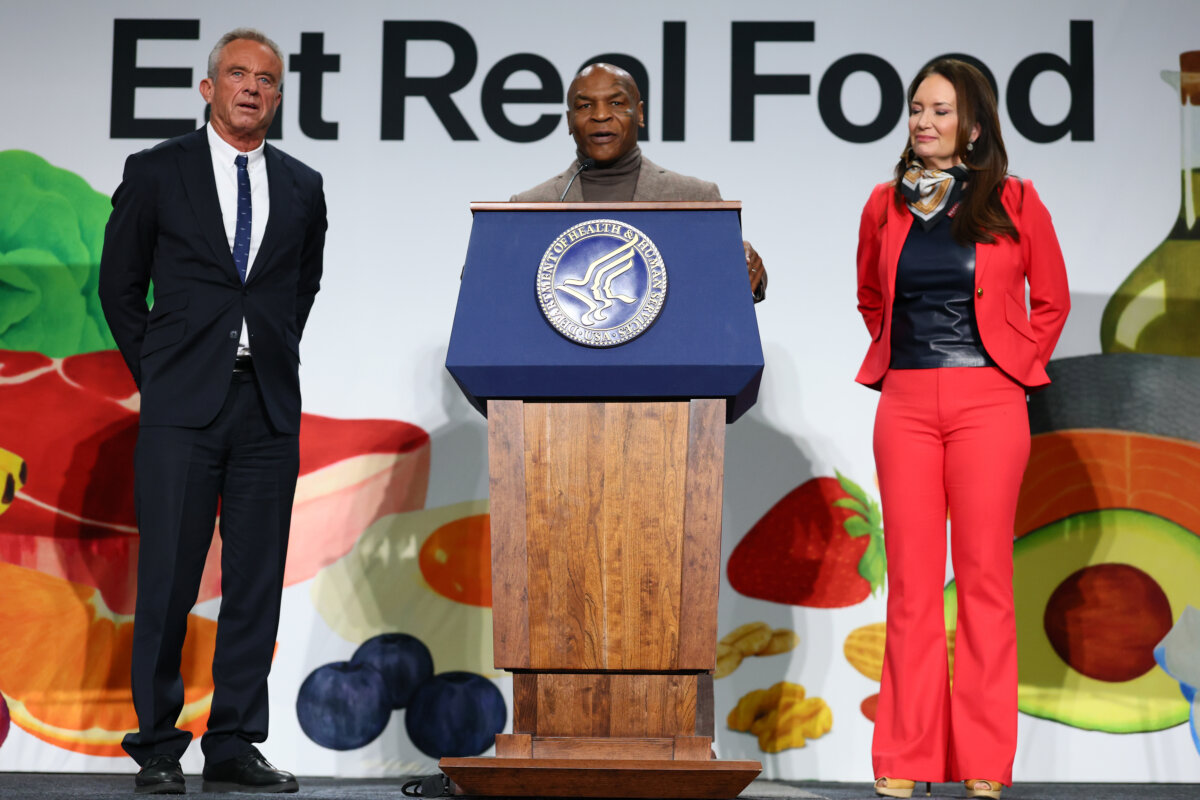
During this year’s Super Bowl, Mike Tyson appeared in a straightforward advertisement with a straightforward message: Eat real food.
He spoke about his sister dying at 25 from a heart attack. He acknowledged his own struggle with food addiction—wanting to eat a pint of ice cream every hour and feeling ashamed of it. Then he urged Americans to choose real, whole food.
The ad was funded by the MAHA Foundation, a private organization focused on metabolic health—not taxpayer dollars, as some initially assumed.
Yet the backlash was immediate.
Hundreds of dietitians and public health communicators took to TikTok, Instagram, and X to criticize the ad. Some framed it as “fat shaming.” Others said it stigmatized people in larger bodies. Some dismissed the message because of Tyson’s personal history. Others rejected it because of its association with a broader political movement.
But none of those objections change the core statement: Eat real food.
Many professionals have pushed back against what is often labeled the “MAHA agenda.” In recent years, much of the commentary has focused on critiquing messaging connected to that movement, including Tyson’s appearance.
Yet scroll back through their earlier posts—before MAHA became politically charged—and the tone is strikingly familiar.
They reflect on discovering whole foods after being raised on more processed options and on how cooking real meals improved their lives.
In many ways, those posts would fit comfortably within what today is criticized as “MAHA” messaging.
For decades, dietitians have encouraged fruits, vegetables, legumes, whole grains, and limiting ultra-processed foods. That has been foundational guidance within mainstream nutrition.
Which raises a reasonable question: If the core recommendation remains the same—prioritize minimally processed, nutrient-dense food—why is it controversial when delivered by certain voices?
The answer may have less to do with nutrition and more to do with tribalism.
If one political tribe becomes associated with a message, the other tribe reflexively resists it. We evaluate the messenger before we evaluate the idea.
But biology does not recognize tribes.
According to the Centers for Disease Control and Prevention, approximately 42 percent of U.S. adults are classified as obese. Nearly 74 percent are overweight or obese. More than 38 million Americans have diabetes, with 90 percent to 95 percent of cases being Type 2—a condition strongly associated with diet and metabolic dysfunction.
The War Department has reported that only about 23 percent of Americans aged 17 to 24 qualify for military service without a waiver, with obesity being a leading disqualifier.
These are not partisan statistics. They are public health realities.
We have normalized dysfunction to such a degree that health sounds extreme. When Tyson said Americans are “pudgy,” many interpreted that as shaming.
But the truth is not shaming.
And health is not extreme.
Metabolic stability is not radical. Stable blood sugar is not ideological. Wanting children who can run, think clearly, and grow into strong adults is not oppressive.
What is extreme is the scale of ultra-processed food consumption. Research published in the American Journal of Clinical Nutrition estimates that nearly 60 percent of calories consumed by U.S. adults come from ultra-processed foods—industrial formulations high in added sugars, refined starches, and industrial oils.
Ultra-processed food has become entertainment. It is engineered for hyper-palatability—optimized combinations of salt, sugar, and fat designed to override natural satiety cues. We do not merely eat it; we experience it.
Consider the broader advertising landscape during that same Super Bowl.
Approximately six pharmaceutical or health-oriented advertisers ran national spots, including companies promoting GLP-1 weight-loss medications and other medical interventions. At the same time, legacy beer brands aired multiple commercials, and more than 20 food and beverage spots—including chips, soda, and other ultra-processed snack products—appeared throughout the broadcast.
Those advertisements did not provoke widespread professional outrage.
There were no viral denunciations of soda marketing. No coordinated backlash against beer commercials. No widespread condemnation of snack brands promoting calorie-dense, highly processed products.
Yet the simple message to eat real food generated a storm of criticism.
If public health is truly the concern, outrage should be proportional to harm.
Instead, the strongest backlash appears directed at the most basic recommendation: Return to food in its recognizable form. Food your great-grandparents would recognize. Food that does not require a laboratory to stabilize, color, and flavor it.
Recently, I spoke to a university soil science class. Many students drank soda and energy drinks during the lecture. When I said excess sugar contributes to obesity and metabolic disease, several laughed.
One student said, “It’s too late for me.”
He was barely 20.
That is how deeply dysfunction has been normalized. Young adults already assume metabolic decline is inevitable.
It is not.
Dietary change in early adulthood can significantly reduce long-term risk for Type 2 diabetes and cardiovascular disease. The body retains a remarkable capacity to recover when supported with nutrient-dense food, movement, and sleep.
Encouraging real food is not cruelty. It is not moral judgment. It is not partisan.
It is foundational public health.
My hope is that Americans can separate a message from its political associations. That we can acknowledge a metabolic crisis without framing basic nutritional guidance as ideological warfare.
Because a nation that cannot confront its own physical decline cannot reverse it.
And if we cannot agree that whole, minimally processed food is preferable to industrially engineered substitutes, we will struggle to agree on much else.
Views expressed in this article are the opinions of the author and do not necessarily reflect the views of The Epoch Times.
 Friends Read Free
Copy
Facebook
Tweet
Friends Read Free
Copy
Facebook
Tweet