
Commentary
The year 2025 marked the expiration of the global order designed by the victorious Western Allies after World War II—built on geopolitical stability anchored by U.S. leadership, industrial progress, and globalization. The global trading system as we have known it is dead. The World Trade Organization (WTO) has effectively ceased to function, proving itself unable to negotiate, monitor, or enforce member commitments and governing rules.
Militarily, the North Atlantic Treaty Organization (NATO) is long past its Cold War mandate. It is hemorrhaging credibility as Washington signals it will no longer underwrite European defense on its own terms. Transatlantic alliances once thought permanent have been ruptured, and the U.S.-led order has become less and less acceptable to the world it once governed.
Furthermore, the security guarantees Washington maintained across the Asia-Pacific since 1945 are gone. It’s also clear that into that vacuum, a new and dangerously uncertain world is emerging.
For years, Beijing watched this unraveling with barely disguised satisfaction. China has repeatedly positioned itself as the best alternative to the United States’ declining global power status, portraying itself as stable, patient, long-term in its thinking, generous in its lending, and decisive in its partnerships.
The Chinese Communist Party’s message was simple: The United States is unreliable. China is the future.
But that message is no longer selling.
Where China Was Winning
For the two decades, China’s external wins have been real, but now they’re fraying at the edges.
The Belt and Road Initiative (BRI) was supposed to be the crown jewel of Chinese leader Xi Jinping’s global vision of delivering much-needed infrastructure investment to the “Global South” and other overlooked nations. The Belt and Road was a main vehicle through which Beijing would extend and expand its geopolitical influence. And it worked—for a while, at least.
Those days are over, too. Today, the Belt and Road has become a cautionary tale. The program and its participating partners are now mired in a mounting debt crisis, with infrastructure projects across Southeast Asia and Africa struggling to meet even interest payments and China’s outstanding overseas debt surpassing $1 trillion.
The International Monetary Fund has repeatedly warned of unsustainable debt levels, predatory lending, and a lack of project transparency. Eight Belt and Road recipient countries, including Djibouti, Laos, Pakistan, and Tajikistan, face a high risk of debt distress due to BRI loans.
The China-led BRICS currency system was meant to be the financial counterweight to dollar dominance—but it isn’t. While intra-BRICS transactions in yuan and rupees have risen, these currencies account for less than 4 percent of global forex reserves. India’s insistence on holding $600 billion in dollar reserves highlights the bloc’s lingering dependency.
What’s more, China’s Belt and Road loans are often dollar-denominated, reinforcing the very system BRICS claims that it wants to escape. Trust among BRICS members is limited, the financial muscle of BRICS institutions is modest, and beyond payment infrastructure, there is little evidence of serious integration.
China’s so-called strategic partners are also getting nervous. The U.S. seizure of effective control over Venezuelan oil, the military campaign against Iran’s nuclear program, and the steady militarization of Panama’s canal zone have rattled every nation that was counting on Beijing to shield them from U.S. power. China watched all three events unfold—and did nothing actionable. For countries that had aligned with Beijing, expecting protection, that silence was deafening.
A United States That No Longer Plays Defense
As for the United States under the Trump administration, it has turned a page in its diplomatic program. Washington is no longer the cautious steward of the status quo. Canadian Prime Minister Mark Carney said the quiet part out loud: The global rules-based order was collapsing.
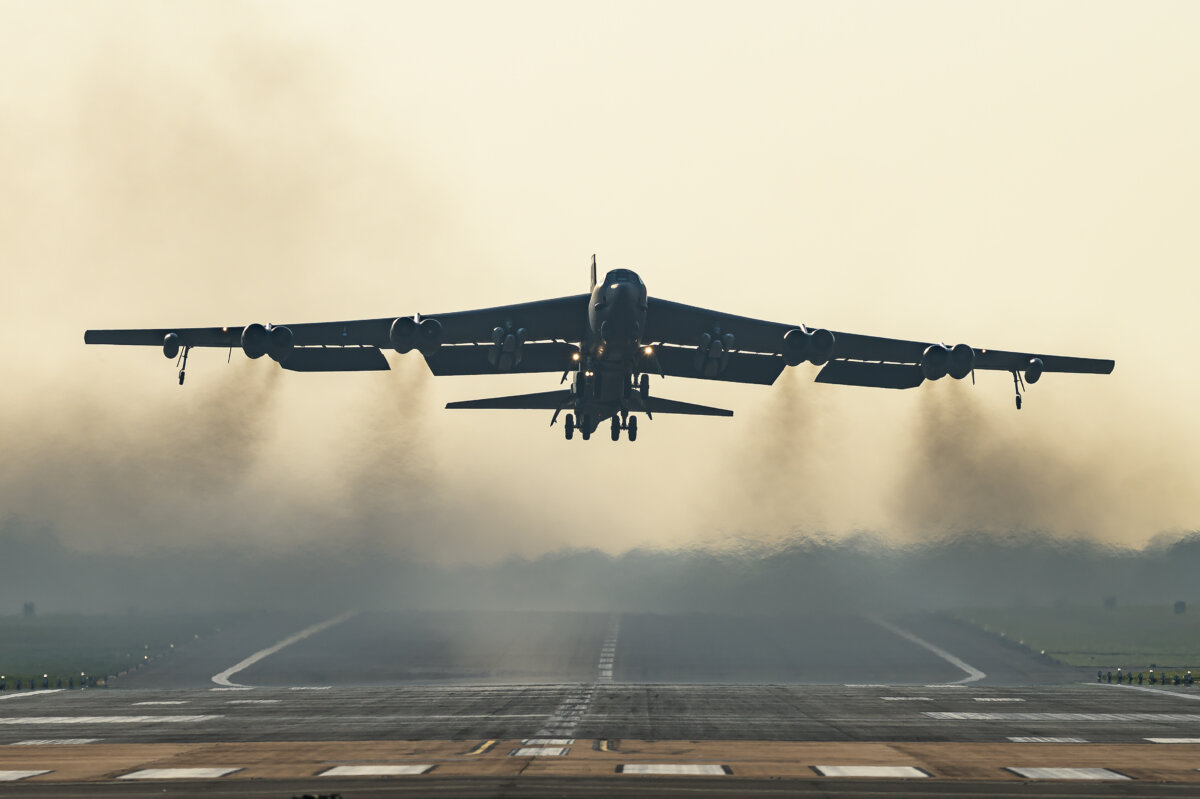
This is a Washington that is decoupling from Chinese rare-earth dependencies, choking off advanced semiconductor exports to Beijing, enabling Japan’s fastest military buildup since World War II, and systematically taking control of the energy assets in Venezuela and Iran that China depends upon.
As the Trump administration’s own trade representative declared, the current global order is “untenable and unsustainable,” and the biggest winner of the old system was China—a state whose subsidies, state-owned enterprises, and intellectual property theft made it incompatible with rules-based trade from the beginning.
That calculation is now being corrected—aggressively, deliberately, and at China’s direct expense.
The Rot Within the Middle Kingdom
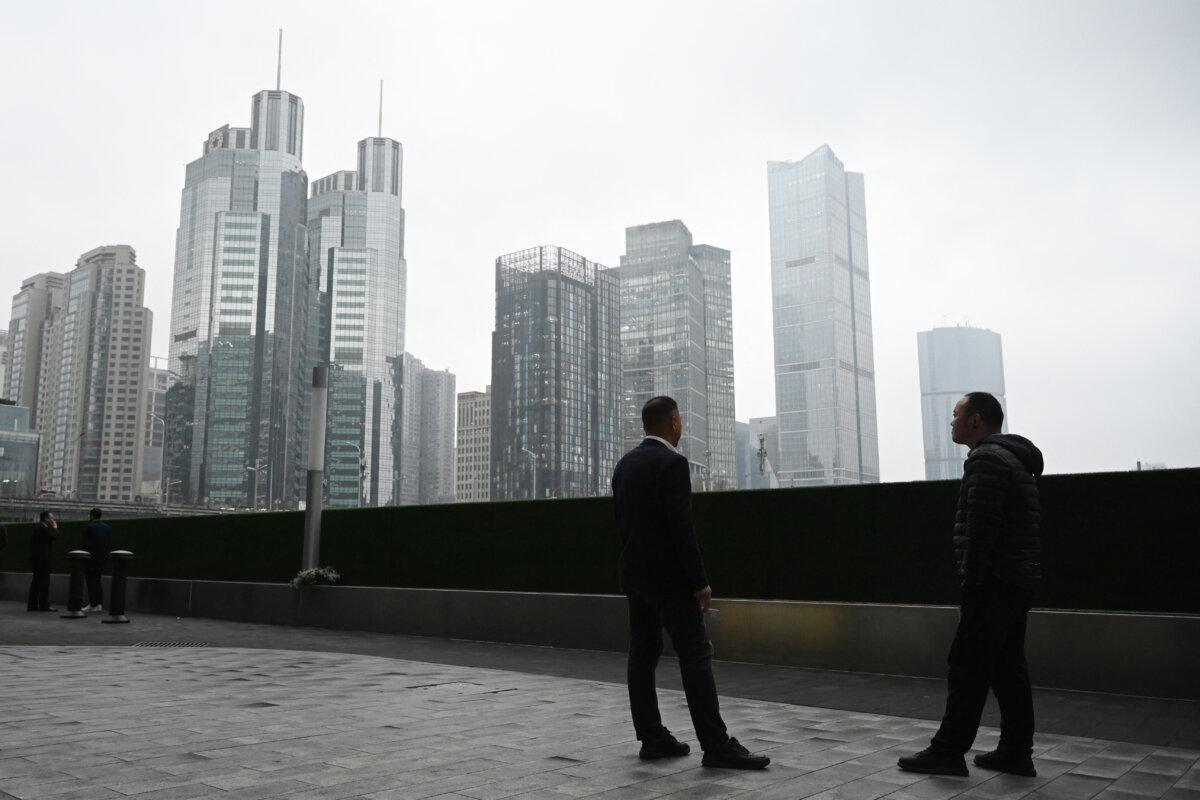
If China’s external problems are severe, its internal condition is alarming. The economy that was supposed to validate the Chinese Communist Party (CCP) is buckling under the weight of its own structural failures.
China’s property sector, which once accounted for about 30 percent of its economy, has seen property sales fall to just 7 percent of gross domestic product as of 2025 from approximately 18 percent in 2021. New construction of residential properties fell by 70 percent, while sales declined by more than 52 percent.
The word of the year in China, as one senior analyst put it after visiting the country, is “neijuan,” which means “involution.” There is mindless production for which there is no demand, with built-up inventories. Consumption is down everywhere, from the north to the south, with the housing market on life support.
Demographically, China faces an unavoidable crisis. The generation that was supposed to carry the country’s future has literally opted out. China’s youth unemployment rate stood at a sobering 16.5 percent at the end of 2025, having peaked at a historic 18.9 percent in August 2025. Youth joblessness stood at about 10 percent in 2018 and has nearly doubled since.
The “lying flat” movement—a passive withdrawal from the competitive frenzy and an embrace of a minimalist existence—has taken deep root. The so-called Five Nos youth embody it: no house, no car, no unnecessary purchases, no marriage, no children.
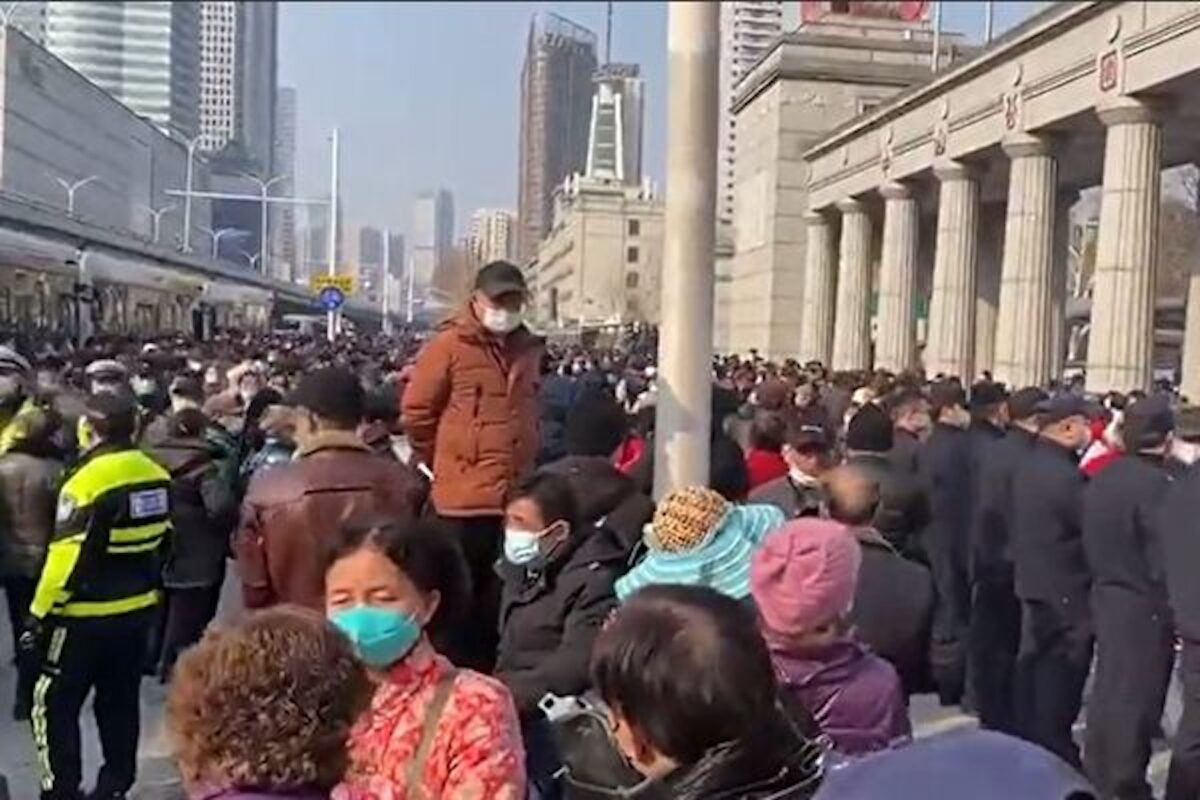
Beijing’s response has been to censor the discussion rather than to fix the underlying conditions.
Then there is the succession crisis. As political scientists have written in Foreign Affairs, for any authoritarian regime, political succession is a moment of peril, and the CCP is no exception. The drama created by a struggle over the succession is unlikely to stay inside China’s borders.
As of this writing, Xi has no visible successor, and treachery marks the top echelons of power in the CCP. The Central Military Commission has been rocked by purges, two ministers of defense have been removed, and Zhang Youxia, Xi’s longtime ally at the top of the military, has fallen.
Without a clear heir, uncertainty is rising among the party elite, increasing the risk of political maneuvering and factional struggles as different groups position themselves and fight for control in the post-Xi era.
That Most Dangerous Word: Uncertainty
The big picture is that of a rising power that has stalled on almost every front that matters. Beijing is being outmaneuvered externally while facing internal fragility and economic decline and is governed by a leadership with no exit plan for its most powerful figure.
These political, economic, social, and external challenges facing Xi and the CCP are likely to further worsen through 2026. The CCP may increasingly become preoccupied with purges and maintaining domestic stability, rendering it unprepared to capitalize on the geopolitical opportunities it imagined just a few years ago.
That is a dangerous place for a nuclear-armed power to find itself. Some cornered regimes have historically not responded to rising uncertainty with patience and restraint. They respond by overreaction and escalation–at home through repression and abroad through aggression.
With the possible exceptions of robotics and certain AI technologies, China is winning nowhere and losing ground in several places at once. The question is not whether Beijing will react to the mounting pressure. It’s whether, when it does, the reaction will be measured or reckless.
Unfortunately, it will likely be the latter, which the world is certainly under-prepared to deal with.
In short, history suggests that empires on the defensive do not go quietly.
Views expressed in this article are the opinions of the author and do not necessarily reflect the views of The Epoch Times.
 Friends Read Free
Copy
Facebook
Tweet
Friends Read Free
Copy
Facebook
Tweet