
Commentary
America has proclaimed early November 2025 as Anti-Communism Week. Part 1 of this two-part commentary on a vital documentary ponders how communism seeped into America.
Violence isn’t new to Utah. What’s new is the particular, painful tone that connection has now acquired. Utah witnessed the assassination of Charlie Kirk. A Utah resident is charged with assassinating him. And a Utah resident, writer-producer Julie Behling, through her documentary based on her book, warns of how violent thoughts and words eventually trigger violent action. Case in point? Communism in contemporary America.
Prophetically, Behling’s film, “Beneath Sheep’s Clothing,” opens with Charlie’s review: “Everyone must see this powerful film. It will open your eyes.” It describes how the West’s culture-making institutions—education, church, family—are under attack from communism’s divisiveness. And why this camouflaged coercion must be repulsed before its deceptive quietness rings out like a gunshot. It’s communism’s deception that the film’s title alludes to.
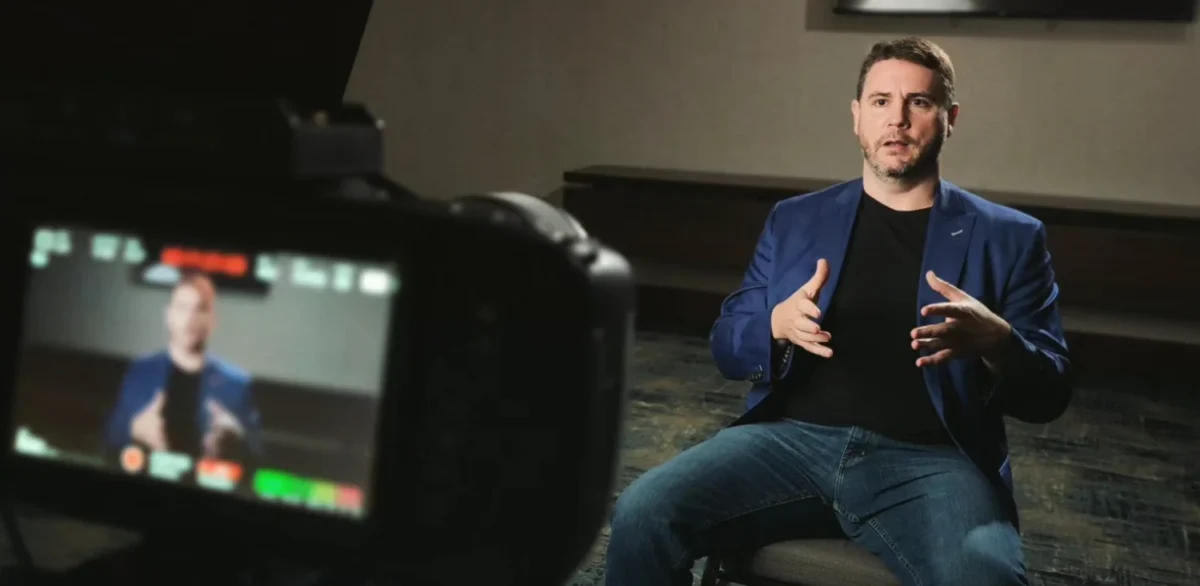
Behling, who narrates the film, draws on her experiences in late 20th-century Russia, adding nuance through anti-communist commentators. These include critical race theory critic James Lindsay and journalist Alex Newman. Others include Lisa Logan, a critic of “transformative” social and emotional learning in schools, and child protection advocate Seak Smith.
The film’s opening doubles as a crash course on communism; for a fuller treatment, read historian Sean McMeekin’s brilliant book, “To Overthrow the World.” Reassuringly, the film fills the book’s gaps.
First, the film spotlights communism’s prime target: religion. Second, it explains that communism doesn’t need imploding power structures to reign. It does so, albeit stealthily, through softer institutions far removed from the spectacle of politics or armies, including through democratic vote. Third, it studies, rather than skims through, how communists embed themselves in contemporary societies.
In the film, former Soviet citizen Milana Perepyolkina speaks of the horrors that her parents and grandparents had to endure in the name of collectivism or enforced sameness. They were forced from their houses and robbed of their belongings, and their children were pushed into begging, living off tree leaves and donated vegetable peels.
Behling explains that Soviet schools functioned more as indoctrination centers for atheism and Marxist-Leninist thought. Teachers reveled in proving to their wards that there’s no god. Children or youth who joined communist organizations were expected to be avowed atheists. Dissident Christians were sometimes forcibly interred in psychiatric hospitals and treated with psychotropic drugs to “cure” them of their faith. Some children were removed from Christian parents and moved into state-run boarding schools or orphanages, to be indoctrinated and “liberated” from their “abusive” parents who were teaching them to read the Bible.
Crucially, this film hints that communism sprouts differently in different geographies to keep its beliefs and behaviors alive. Its expressions in contemporary America, going far beyond mere class struggle, aren’t the same as in 20th-century Europe. Now, it’s not just capitalism. Ideologues in America portray nearly everything as “oppression”: the hard-won prosperity of private enterprise, whites in particular, and the West more broadly, and masculinity. They perversely privilege the collective over the individual, imposing LGBTQ culture on public life. They privilege perverse individualism too, portraying radical feminism as equality, and abortion and euthanasia as human rights.
Behling’s master’s thesis was on clandestine Christians in Soviet Russia. Understandably, Christianity is her film’s starting point and an abiding theme. Here, former Soviet Christian Timothy Chmykhalov spoke of how communist propaganda portrayed Christian upbringing as child abuse; parents, of course, were painted as villains. Lindsay calls Marxism an “inversion of Christianity,” adept at conning Christians into complicity.
Socialism Is Not Benign
It’s fashionable to frame “socialism” as benign, even if reluctantly admitting that “communism” isn’t. As Lindsay clarifies elsewhere, that’s sophistry. Vladimir Lenin was clear enough: “The goal of socialism is communism.”
Ayn Rand likened such pedantry to splitting hairs between enabling death by murder and enabling it by suicide. Soviet mathematician Igor Shafarevich once said that socialism of any shade leads to the destruction of the human spirit, a leveling of mankind into death.
Antonio Gramsci, credited with the worldwide spread of socialism, said: “Socialism is precisely the religion that must overwhelm Christianity. … In the new order, Socialism will triumph by first capturing the culture via infiltration of schools, universities, churches, and the media by transforming the consciousness of society.”
So, Lindsay explains, Gramsci figured five institutions must be destroyed: religion, family, education, media, and law.
Many believe communism infiltrated America. Newman and Lindsay clarify that America’s modern-day Left-inclined institutions were co-designed, if not designed, by socialist-communist pioneers. Some of them, from as far back as the 18th century, rode in through the Trojan horse of Christianity to corrode the institutions Gramsci had singled out.
Robert Owen ran experimental utopian communities to try to do away with private property, religion, and marriage.
Orestes Brownson, who was called “an American Marxist before Marx” before he converted to Catholicism, framed Christianity as the villain behind inequality and injustice.
Horace Mann privileged coercive state power over parental influence in mentoring children. Walter Rauschenbusch’s seemingly innocuous social gospel only made way for its radicalization by the Rev. Harry F. Ward.
Joseph Fletcher tried to devise a new morality—twisted rather than sophisticated, neither new nor moral, vice dressed up as virtue; this is exactly the sort of relativism and moral tinkering that C.S. Lewis warned about. It’s Fletcher who laid the ground for modern-day assisted suicide, eugenics, and Planned Parenthood. John Dewey pretended to be anti-communist. Harry Emerson Fosdick didn’t pretend to be anti-Christian. He was.
The point is that these ideologues were influential in their circles. They helped get like-minded legislators elected, designing insidious policy before it became practice. They pretended to be championing seemingly noble causes, including human rights, minority rights, and broader social justice, while cementing for themselves influence, money, and respectability.
The battleground was theological first.
Liberation From Theology
Newman explains that Ward, a Methodist, taught for 25 years at Union Theological Seminary, influencing generations of seminarians who, in turn, influenced thousands of others. He co-founded the American Civil Liberties Union and resigned when communists were barred from office. He helped found New America, dedicated to making America socialist.
The film explains that The World Council of Churches, which most 20th-century Americans belonged to or were affiliated with, was headed by the Russian Orthodox Church. This was, for decades, in many ways a playground for the KGB and communist propaganda. Not for nothing was Archbishop Helder Pessoa Camara called the “Red Bishop.” Here, commentators highlight how the World Economic Forum’s Klaus Schwab credited the “Great Reset” to Camara’s mentorship.
One commentator here goes too far in calling liberation theology a KGB invention. But it’s not inaccurate to make a connection. Socialist-communist ideologues amplified already incendiary “liberal” Christian voices, first in Latin American regions, then worldwide.
What do liberation theologians proclaim? Christianity is about liberation not from sin alone but from every oppression. As if there’s some oppression somewhere that isn’t first sinful. But it is these theologians (and sundry activists), not Christ, who get to define what counts as oppression, and who’s being oppressed by whom. Reassuringly, both Pope John Paul II and Pope Benedict XVI denounced liberation theology as false, a mistake.
Behling’s film warns that communism claims to have nothing to do with religion. That’s a lie. It’s religion, above all, that communism seeks to silence and destroy. It’s religion, above all, that must speak up and confront communism, leading, rather than following, other institutions.
You can read Part 2 of this two-part commentary here and watch the documentary here.
Views expressed in this article are the opinions of the author and do not necessarily reflect the views of The Epoch Times.
 Friends Read Free
Copy
Facebook
Tweet
Friends Read Free
Copy
Facebook
Tweet