
Commentary
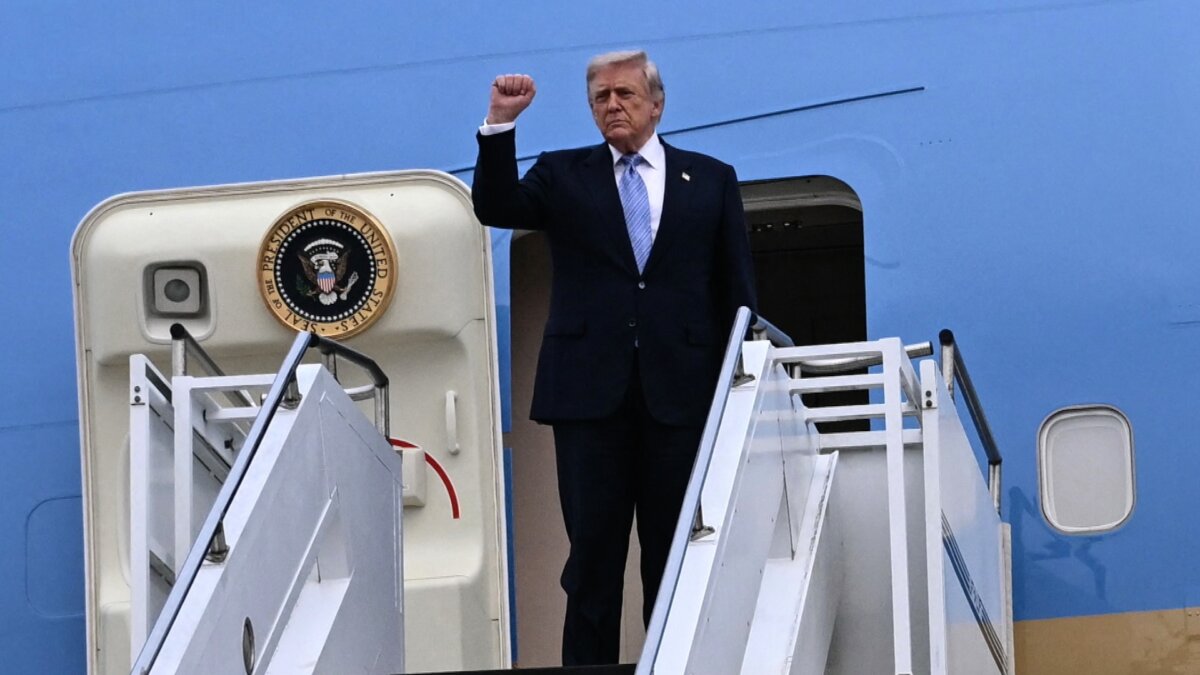
On May 14, during U.S. President Donald Trump’s visit to China, Chinese leader Xi Jinping, in his opening remarks at the summit in Beijing, said: “The world has reached a new crossroads. Whether China and the U.S. can overcome the ‘Thucydides Trap’ is a question of history, a question of the world, and a question of the people.”
This was the first time Xi publicly and directly addressed the U.S. president at a summit, a level significantly different from previous closed-door meetings or general speeches.
This statement contrasts sharply with Xi’s 2015 Seattle speech, in which he denied that the Thucydides Trap existed. Previously, both Chinese officials and academia generally opposed such a metaphor; however, now they actively embrace it, even using it to warn the United States against misjudging China’s strength.
Why has the Chinese Communist Party (CCP) undergone this shift in attitude? What are the underlying motivations?
Why did the CCP’s overestimation of its economic and military strength ultimately lead to strategic misjudgment and failure?
The Thucydides Trap originates from the ancient Greek historian Thucydides’s analysis in “History of the Peloponnesian War” of the fears in Sparta caused by the rise of Athens: “The real cause that made war inevitable was the growth of Athenian power and the fear that this growth aroused in Sparta.” Harvard scholar Graham Allison systematized this concept in his 2017 book “Destined for War,” analyzing 16 cases of emerging powers challenging existing hegemons over the past 500 years, 12 of which ended in war.
In the new context of U.S.–China confrontation, the United States is likened to Sparta (the hegemon), while China is seen as Athens (the emerging power). Allison emphasized that conflict between the United States and China is not inevitable, but that structural pressures such as fear, honor, and interests can easily cause U.S.–China relations to spiral out of control because of triggers such as Taiwan and the South China Sea.
The CCP initially rejected this theoretical framework, arguing that it ignored factors such as globalization, nuclear deterrence, and the interdependence of the U.S. and Chinese economies. However, the CCP now embraces this theory, demonstrating its confidence that it can “overcome” the United States or force it to accept this new paradigm shift.
Between 2013 and 2017, the CCP officially downplayed or denied the Thucydides Trap. In a 2015 speech in Seattle, Xi explicitly stated that “there is no such thing as a Thucydides Trap,” emphasizing that strategic miscalculations lead to “creating one’s own trap.”
Former Chinese ambassadors to the United States, such as Cui Tiankai and Qin Gang, have also stated that China is not Athens and the United States is not Sparta, advocating for a “new type of great power relations” that replaces zero-sum games with win-win outcomes.
Chinese academics criticize this as a new version of the Western “China threat theory,” arguing that it violates China’s cultural tradition of “harmony without uniformity” and ignores the intertwined interests in a globalized world.
The fundamental reason for the CCP’s views a decade ago lay in its perception of China’s strength at the time: In 1980, China’s gross domestic product was only 10 percent of the United States’ (purchasing power parity); by 2026, although China would have become the world’s largest manufacturing country, it would still be in a “catching-up” stage militarily, lagging behind the United States in aircraft carriers, nuclear submarines, and missile numbers.
At that time, embracing the Thucydides Trap metaphor would have solidified the “China threat” theory, hindering the CCP’s “peaceful rise” and Belt and Road Initiative diplomatic strategies, as well as provoking stronger U.S. containment. Therefore, the CCP’s rejection of the metaphor back then was merely a low-strategy posture under pressure, aimed at “keeping a low profile” and securing a window of opportunity for development.
Now, the CCP has begun to embrace the Thucydides Trap metaphor, and its public mention at the 2026 Trump–Xi meeting marks the completion of this shift. The fundamental driving force behind this shift and the CCP’s increased confidence seems to stem from two perceptions within and outside the CCP.
First, economic strength is approaching that of the United States: China’s manufacturing output is already twice that of the United States (in exchange-rate terms), its gross domestic product at purchasing power parity is the world’s largest, and its domestic circulation and supply-chain resilience have significantly improved. The CCP believes that it has the material foundation for a “rising East and declining West” scenario and no longer needs to deny its rise.
Second, new advantages in the military field: The expansion of China’s naval and air forces, especially drones and artificial intelligence, could become game-changing asymmetric tools. China has already made progress in drone swarms (such as the Atlas system in 2026), and the CCP also hopes to use AI to leverage its data scale and “military-civilian integration” strategy to rapidly apply them to military command, control, communications, simulation, and autonomous combat capabilities.
The predicament of the United States in the Iran war, along with Iran’s unexpected resilience and even an effective counterattack, has also greatly boosted the CCP’s confidence. CCP authorities clearly believe that they have seized a historical opportunity in the “once-in-a-century transformation.” Therefore, they have begun to actively use the metaphor of a “trap” to confine and belittle the United States: If the United States does not accept China’s rise, it may “create its own trap.”
Thus, the CCP has shifted from a low-strategy posture of weakness to a high-strategy posture of strength, intending to compel the United States to exercise strategic restraint.
However, can drones and AI truly become China’s military advantage?
The answer is no. China’s embrace of the Thucydides Trap is based on technological confidence, but a realistic analysis shows that the CCP is actually overconfident.
Regarding drones, China indeed leads in both quantity and low-cost swarms, as demonstrated by its first-person view unmanned combat aerial vehicles in the Ukrainian theater. However, drone technology is not particularly advanced; it can be modified using commercially available parts. The U.S. military has accelerated its countermeasures: Directed energy weapons, electronic warfare systems, and AI-assisted anti-drone networks are already in the deployment phase. The U.S. Navy is vigorously developing its domestic drone swarms (unmanned surface vehicles/unmanned surface vehicle swarms), and the decoupling of its supply chain from China is proceeding simultaneously.
Once the U.S. military-industrial complex fully shifts its focus, its technological research and development and high-end manufacturing capabilities can quickly catch up. More importantly, the United States holds an absolute lead in the development of anti-drone systems (such as laser weapons, high-power microwaves, electronic jamming, and hard-kill swarms).
China’s production capacity advantage will face diminishing marginal returns in the face of precision defense technologies. China’s “advantage” is a temporary quantitative advantage, not an insurmountable technological barrier; once the United States achieves large-scale production, its countermeasure capabilities will quickly surpass China’s.
In the realm of AI, it is the key battlefield that will determine the nature of future military confrontations. AI will reshape command, reconnaissance, strike, and logistics, compressing the “OODA loop” (Observe-Orient-Decide-Act) time to the second level. In this field, the United States holds a significant advantage:
• Cutting-Edge Computing Power and Models: U.S. export controls limit China’s advanced AI chip production to only 3 percent of the global total, while top-tier U.S. chips are five times more powerful than Chinese ones. U.S. hyperscalers’ AI capital expenditure in 2026 is projected to reach $650 billion, far exceeding that of comparable Chinese companies. Cutting-edge models from OpenAI, Anthropic, and others remain several months to a year ahead of China’s.
• Innovation Ecosystem: The United States’ open private sector, university, and military collaboration (DARPA, JADC2 projects) far surpasses China’s data advantage. Although its “national system” appears massive, its innovation capabilities are limited.
• Global Alliances: The United States has the Five Eyes alliance, AUKUS, and QUAD to share AI military applications, while China is relatively isolated.
Although China leads in AI industrial deployment and data scale, the “proliferation speed” of military AI cannot bridge the gap at the forefront. The CCP mistakenly believes that “quantitative change” can quickly lead to “qualitative change,” ignoring the structural advantages of the United States in semiconductors, talent, and an open ecosystem, thus making an overly optimistic assessment.
In short, Beijing’s shift from rejecting to embracing the Thucydides Trap is essentially a result of a change in its perception of power from “weak and low-key” to “strong and confident.” However, this shift is based on an overestimation of the short-term advantages of drones and the long-term potential of AI. Drones are easily countered, and the United States still firmly holds the dominant position in the AI race. The CCP has miscalculated: In the contest between Sparta (the United States) and Athens (China), Athens will not win this time.
Historically, Athens ultimately lost to Sparta; if the United States and China both fall into the trap today, the United States will still be the one to escape. With its technological, institutional, and allied advantages, the United States is more likely to force China to strategically restrain itself or pay a higher price.
Beijing should return to its earlier pragmatic approach of “avoiding strategic miscalculations,” rather than using the metaphor of a “trap” to mask its internal challenges, including loss of legitimacy, an aging population, human rights disasters, mounting debt, economic collapse, and technological blockade. Although it’s possible for China and the United States to transcend zero-sum thinking and perhaps “cross” the trap, the inevitable demise of global communism remains a persistent nightmare for the CCP rulers.
Views expressed in this article are the opinions of the author and do not necessarily reflect the views of The Epoch Times.
 Friends Read Free
Copy
Facebook
Tweet
Friends Read Free
Copy
Facebook
Tweet