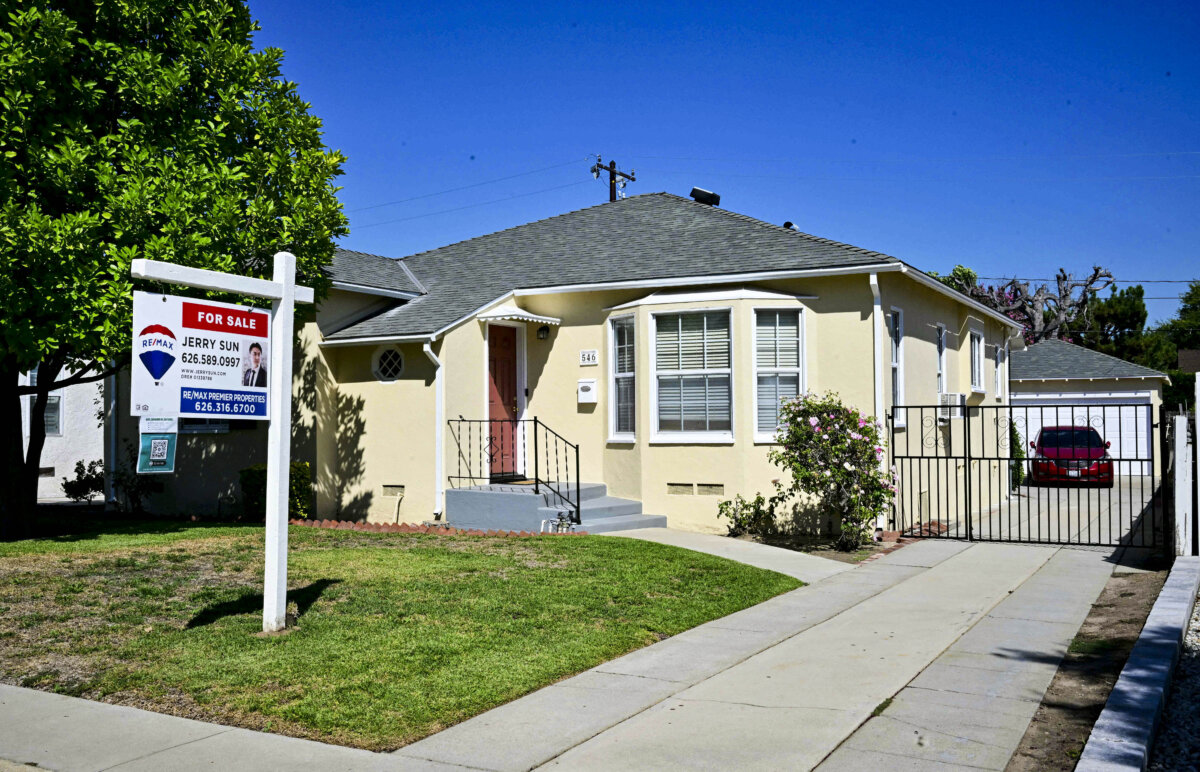

Sales of previously owned homes edged higher in September but remained below levels from a year earlier, as rising mortgage rates continued to weigh on the housing market.
Existing-home sales increased 1.5 percent from August but fell 2.2 percent from September last year to a seasonally adjusted annual rate of 3.99 million, the National Association of Realtors (NAR) said on Oct. 13.
Despite the monthly improvement, August and September were the two slowest months for home sales this year.
Regionally, sales increased in the South and West, held steady in the Midwest, and declined in the Northeast. All four regions recorded fewer sales than in the previous year.
September’s sales numbers reflect completed transactions, meaning they largely capture buying decisions made before the latest jumps in borrowing costs. Many of those purchases were negotiated during the summer, when mortgage rates were still in the mid-6 percent range.
Borrowing has since become substantially more expensive. The average rate on a 30-year fixed mortgage started at around 6.7 percent in September and climbed past 7 percent by Sept. 24, before reaching 7.28 percent in early October, according to Freddie Mac.
As of Oct. 8, the average rate on a 30-year fixed mortgage reached 7.4 percent.
That was the highest since November 2023, as inflation concerns fueled by the war with Iran and higher energy prices pushed Treasury yields higher. Mortgage rates generally track the yield on the 10-year Treasury.
“Further increases in mortgage rates in recent weeks mean fewer buyers can qualify to purchase a home,” NAR chief economist Lawrence Yun said in a statement.
In a separate report released Oct. 12, real estate brokerage Redfin said pending home sales fell 4 percent in September from August on a seasonally adjusted basis, the largest monthly decline in more than three years.
Pending sales, which track homes going under contract rather than completed purchases, dropped to their lowest level since spring 2014, excluding the pandemic shutdown in April 2020.
Home prices continued to rise despite the subdued sales pace.
According to NAR, the national median existing-home price increased 1.3 percent from a year earlier to $417,500, a record for September and the 39th consecutive month of annual price gains.
The Northeast recorded the strongest annual price growth, with its median rising 4.7 percent to $523,600. The Midwest followed with a 3.1 percent increase to $329,600, while the South’s median edged up 0.2 percent to $361,000.
The West was the only region where prices declined, with the median slipping 0.3 percent to $613,600.
Buyers nevertheless had more homes to choose from. Inventory reached 1.60 million units at the end of September, up 1.9 percent from August and 4.6 percent from a year earlier.
At the current sales pace, that represented a 4.8-month supply, unchanged from August but up from 4.5 months in September 2025.
Homes typically spent 33 days on the market, compared with 31 days in August and 33 days a year earlier. First-time buyers accounted for 31 percent of purchases, up from 30 percent a year earlier, according to NAR.
The larger selection and longer selling times were giving buyers more negotiating power, Yun said, while sellers may need to consider lowering their asking prices or offering other concessions.
“Home sellers need to be realistic about local market conditions, which could require price discounts and other incentives to attract buyers,” he said.
 Friends Read Free
Copy
Facebook
Tweet