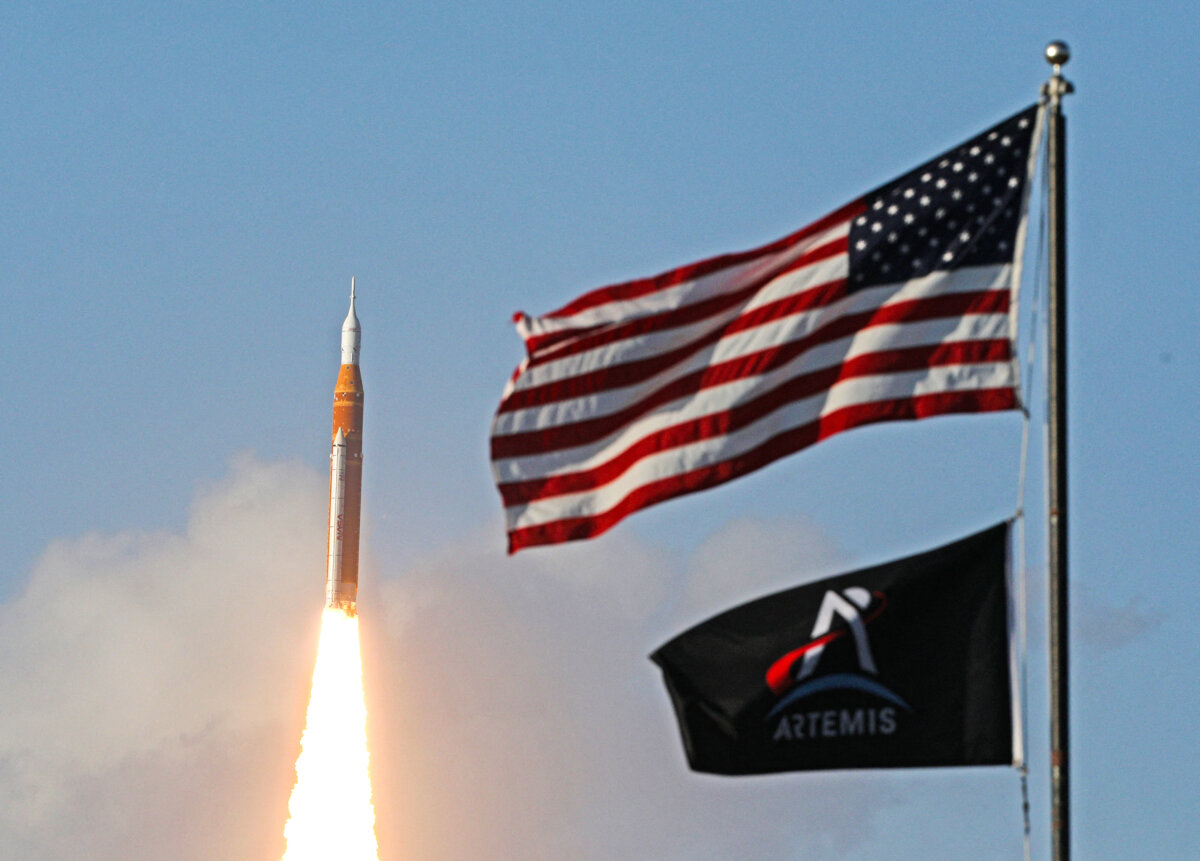

HOUSTON—As NASA sends humanity back to the moon for the first time in more than 50 years, the White House requested that the federal government add $906 million of funding for the space program’s lunar ambitions in fiscal year 2027.
This is the only program to receive a funding increase. The proposed budget is $5.6 billion lower than the year before, with funding cuts for programs including the International Space Station and the development of a robotic Mars Sample Return mission.
The White House said its requested changes will prioritize human missions to the Moon and Mars and cut wasteful spending.
Released on April 3, the Trump administration’s proposed budget for the coming year sought to give NASA $8.5 billion toward the flagship Artemis program’s goal of landing American astronauts on the moon by the end of 2028.
The sum would be a $731 million increase from 2026. The White House said it would fully fund the necessary equipment already in development—lunar landing craft, new space suits for moon walks, and transportation systems deemed “necessary to safely and cost-effectively expand America’s presence on the surface of the moon.”
The White House also repeated its endorsement of NASA Administrator Jared Isaacman’s recent overhaul of the Artemis program.
“The budget supports NASA’s efforts to keep the mission on schedule by eliminating unnecessary requirements and simplifying complex operational procedures to take a more direct path to the moon,” the proposal states.
On top of this increase, the White House seeks to provide a new $175 million allotment to fund the establishment of a moon base.
Isaacman previously announced his agency would end a significant number of robotic missions to a site near the lunar south pole to begin construction of a base in early 2027.
The White House specified that the new allocation was an investment in those robotic missions tasked with deploying the initial elements of a permanent base.
It also allowed NASA to work with Congress to repurpose funding already provided for the now-paused Gateway lunar space station toward surface base development.
“The base camp would establish U.S. dominance on the Moon, enable more intensive use of lunar resources by NASA and U.S. companies, and also serve as a proving ground for technologies and systems that would be used for future Moon activities and a mission to Mars,” the proposal states.
There appeared to be no requested net change to the funding for NASA’s moon rocket, the Space Launch System, and the Orion spacecraft. However, the White House stressed the need to eventually replace them with more cost-effective systems.
Meanwhile, the White House requested cutting more than $1 billion from International Space Station funding. Recognizing that the station is nearing the end of its life, the proposal seeks to optimize spending on maintenance, transportation, and other operations, prioritizing the transition to commercial space stations by 2030.
The White House also seeks to cut funding for what it called “the expansive bureaucracy that has grown unchecked over time,” as well as “duplicative facilities spread across multiple NASA centers.”
NASA’s Science Program was hit the hardest with a cut of $3.4 billion. More than 40 low-priority missions would be terminated, including the Mars Sample Return mission, which the White House said would cost $8 billion to $11 billion and would achieve goals that could be accomplished by a human mission.
Nearly $300 million was cut from Space Technology to optimize funding for projects driven by user needs and practical application, and more than $140 million was cut from the Office of STEM Engagement.
“NASA will inspire the next generation of explorers through exciting, ambitious space missions, not through subsidizing woke STEM programming and research that prioritizes some groups of students over others and has had minimal impact on the student outcomes,” the White House stated.
 Friends Read Free
Copy
Facebook
Tweet
Friends Read Free
Copy
Facebook
Tweet