BRI, also known as OneBelt, OneRoad, is a massive global investment strategy started by the CCP in 2013 aimed at bolstering its economic and political influence across Asia, Europe, Africa, and South America.
Andrew’s federal counterpart, Opposition Labor leader Anthony Albanese has backed the federal government’s position on the Foreign Relations Bill, saying that the Belt and Road deal was not something his party would support.
The BRI has been described as a "dangerous debt diplomacy" effort that has the potential to generate debt sustainability problems in developing countries, the Lowy Institute noted in a report on Monday.
Andrews also signed up Victoria to Beijing’s Belt and Road Initiative (BRI). The federal government assessed the BRI as a dangerous, concerted effort by the Chinese Communist Party (CCP) to increase its geo-strategic power in Australia.
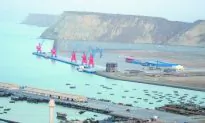
At the time, the billionaire owner of Landbridge, Ye Cheng, boasted that acquiring the Port would assist with Beijing’s Belt and Road Initiative (BRI).
News Analysis
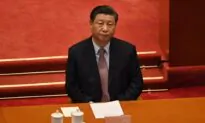
Xi Jinping, leader of the Chinese Communist Party (CCP), delivered a speech at the Bo'ao Forum for Asia (BFA) 2021 via video on April 20, promoting the CCP’s Belt & Road Initiative (BRI)—also known as “OneBelt, OneRoad” (OBOR)—and the
With its Belt and Road Initiative (BRI, also known as "OneBelt, OneRoad"), China has become South America’s largest source of infrastructure investment and second-largest trading partner, increasing trade from $18 billion in 2002 to $450 billion in
It appears that Beijing is taking a page out of its Belt and Road Initiative (BRI) debt-trap strategy and applying it to countries victimized by the CCP virus (novel coronavirus).
It's viral pandemic diplomacy at its finest.
Another Debt Trap?
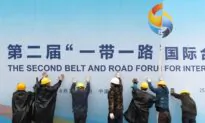
China pledged an eight-point infrastructure scheme as part of its next five-year Belt and Road Initiative (BRI) goal in a recent international forum in Beijing.
In 2018, the World Bank warned countries participating in China's Belt and Road Initiative (BRI) that the project has been known to cause debt risks, social risks, corruption, and stalled or frozen infrastructure projects.
Undermining Governance
Kliman also said the regime's infrastructure investment project, the Belt and Road Initiative (BRI), has played a role in undermining governance in partner countries, especially in developing countries, which may then make it harder
Siu also expressed concerns for the African expansions of the Belt and Road Initiative, an infrastructure investment project which Beijing rolled out in 2013 to build a trade network across Southeast Asia, Africa, and Europe.
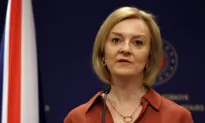
“She believes trade and investment has a key role to play in stopping the growing Chinese influence, where Beijing has used investment as a part of its ‘Belt and Road Initiative,’" the spokesperson said, adding that Truss will "maximise all opportunities
"That fits in perfectly with China’s consistent policy of preying on vulnerable and deeply distressed nations, mainly, but not exclusively, through entrapment in a vicious cycle of debt and steep repayment of debt via the BRI.
Using its global development program, the Belt and Road Initiative (BRI), China has showered Africa for more than a decade with multibillion-dollar infrastructure projects, which have also left many nations heavily indebted to Beijing.
Suspicious of Chinese President Xi Jinping's Belt and Road Initiative to link Europe to Asia via infrastructure in a bid for greater influence, the EU set out a formal path for an ambitious "connectivity" plan starting in 2022.
China’s Role in International Finance
In recent years, as part of its Belt and Road Initiative (BRI), Beijing has served as a substantial lender to many poor countries, such as Ghana and Sri Lanka.
Of the 54 countries in Africa, 45 have already signed up for the Beijing regime's Belt and Road Initiative (BRI). In early 2021, Congo became the 45th African member of the BRI.
The announcement follows the return of U.S. military ships to the region, as well as recent warnings from the State Department that the debt traps linked to Beijing's Belt and Road Initiative could be repeated in the region.
Almost a year after Italy became the first G-7 country to sign on to the Chinese regime's flagship foreign policy project, the Belt and Road Initiative (BRI, also known as OneBelt, OneRoad)—drawing criticism from its Western allies—the country's initial
Both countries have also signed on to Beijing's notorious Belt and Road Initiative which Australia considers a vehicle for China's global military ambitions.
In 2013 or so, China embarked on its signature foreign policy initiative. It was called Belt and Road. Sometimes it's called OneBeltOneRoad. Sometimes called BRI, whatever. It's got many names.
The Belt and Road Initiative (BRI) is a massive infrastructure investment project launched by Beijing to connect Europe, Asia, Africa, and the Middle East through a network of rail, sea, and road linkages.
Beijing is seeking to corner the market on 5G, the next generation of communications technology, and also expand its global dominance through initiatives like Belt and Road, “a Trojan horse of Chinese expansionism,” Gertz said.
China’s controversial Belt and Road Initiative (BRI), a massive global infrastructure project across much of Asia and Europe, envisions an Arctic component—the Polar Silk Road—which Wang Hong from China’s State Oceanic Administration said can improve
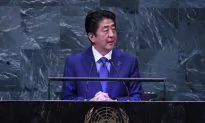
While Abe didn't mention China by name while speaking about the Japan-led Indo-Pacific strategy at the UN, it's widely recognized that FOIP is an alternative to China’s “OneBelt, OneRoad” initiative (OBOR, also known as OBOR).