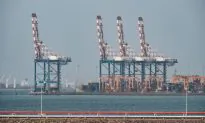
Russia plans to connect its sea shipping lane between the Atlantic Ocean and the Pacific Ocean along the Russian coast (Northern Sea Route) with China’s Maritime Silk Road, the maritime component of China’s OneBelt, OneRoad (OBOR).

And it interweaves with the Belt and Road development projects that we hear about around the world, sort of debt trap diplomacy, corruptive development projects, often in not wealthy countries where Beijing wants influence.
In March 2020, Binance formed Binance China Blockchain Institute (BCBI) in Shanghai, a research arm, to become a high-level United Nations partner promoting China’s Belt and Road Initiative (BRI).
According to the Observer Research Foundation, 49 of 54 African nations, as well as the African Union, have signed up to Beijing's geopolitical centrepiece Belt and Road Initiative (BRI).
Countries involved in cooperation projects and organizations led by the CCP’s investment-oriented Belt and Road Initiative (also known as OneBelt, OneRoad), Shanghai Cooperation Organization, and the BRICS have had serious conflicts and disagreements
The first summit for "OneBelt, OneRoad" (OBOR, also known as Belt and Road), which envisions rebuilding the old Silk Road to connect China with Asia, Europe and beyond with massive infrastructure spending, was held in 2017 and attended by Matt Pottinger
In 2019, Peru signed into Beijing’s Belt and Road Initiative (BRI), according to China’s foreign ministry. In 2020, bilateral trade between China and Peru exceeded $23 billion.
China has three export credit agencies that it uses to promote its national interest abroad including its ambitious development program, Belt and Road Initiative (BRI).
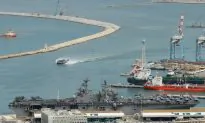
The regime sees it as one of the key pivot ports on the Mediterranean coast for its Belt and Road Initiative, and has invested $1.7 billion in the project.
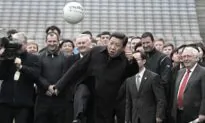
Meanwhile, China’s authoritarian leader Xi Jinping’s ambition to use the big-money game as “soccer diplomacy” to promote China’s Belt and Road Initiative (BRI) has bankrupted.
That’s partially in response to China’s OneBeltOneRoad initiative, which has given the Beijing regime influence in the Pacific, South Asia, and Africa.
China's rulers openly proclaim and insist on a new set of rules to which other nations must conform, such as their efforts to dominate the East and South China Seas and the so-called "Belt and Road Initiative" with its debt-trap diplomacy, designed to
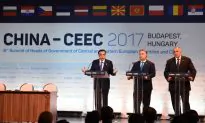
The platform eventually became a model for Central and Eastern Europe in Beijing’s next ambitious development project, announced in 2013: the “OneBelt, OneRoad” (OBOR, also known as Belt and Road) initiative.
That's partially in response to China’s OneBeltOneRoad initiative, which has given the Beijing regime influence in the Pacific, South Asia, and Africa.
He perceives China’s ‘OneBelt, OneRoad’ infrastructure development system as building blocks for world domination, very similar to the “British Empire of old.”
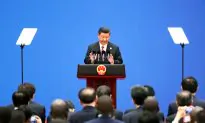
Chinese leader Xi Jinping in 2017 referred to the "OneBelt, OneRoad" (OBOR, also known as Belt and Road) as the “project of the century” that will create the world’s largest web of ports, railways, energy pipelines, highways and streamlined border crossings
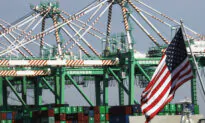
Huawei is the digital portion of China's Belt and Road Initiative. What we're seeing is they go in and load up these countries with debt and build new ports or new railroad systems. When the debt comes due, it can't be paid.
Li, a member of the CCP, said during an interview by China’s state-run media in April that UNIDO had strengthened its cooperation with the CCP and organized activities for the "OneBelt, OneRoad" project (OBOR, also known as Belt and Road).
“OneBelt, OneRoad” (OBOR), also known as the Belt and Road Initiative, has been a cornerstone of Chinese leader Xi Jinping’s foreign policy since he became the head of the Communist Party in 2013.
The SGR is part of China’s OneBelt, OneRoad (OBOR, also known as Belt and Road), Beijing’s massive investment initiative with countries throughout Asia, Europe, Africa, and Latin America.
So when the Chinese Communist Party goes to different countries, of course it has the OneBelt, OneRoad initiative, they're trying to sell it in the U.S., they're trying to sell ... to Europe overall. But that's just part of the picture.
He has embraced Xi’s signature Belt & Road Initiative (BRI, also known as OneBelt, OneRoad), the backbone of China’s road map to global hegemony. Hungary signed a BRI memorandum with China in 2015, the first European country to do so.