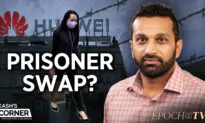
And Huawei is technology that the Chinese government, maybe they fund indirectly or directly, but it's hosted in China. And what they're doing is they're taking that technology and putting it around the world, all over the world.
Repressive regimes worldwide that seek to replicate a "China model" and import the regime's "digital authoritarianism" are using Chinese technology companies such as Huawei and ZTE to implement and deploy such technology, according to the report.
Czech President Milos Zeman has long pushed for closer ties with Beijing and firmly supported Chinese technology giant Huawei as it came under global scrutiny amid allegations that its equipment could be used by Beijing to spy on customers.
Huawei is at the forefront of developing 5G technology—the next generation of lightning-speed wireless communications, and has been aggressively expanding its 5G business, boasting contracts with 30 countries as of late February.
Europe's mobile industry would face higher costs and delays to faster networks if authorities imposed a blanket ban on Huawei equipment, particularly the radio technology deployed on mobile towers, Read said.
An intelligence agency decision in November that rejected participation by Chinese technology giant Huawei in New Zealand's 5G network has left politicians and foreign policy analysts worried about relations with one of New Zealand's key trading partners
Despite the U.S. administration recently enacting an export ban prohibiting U.S. companies from providing technology and equipment to Chinese telecom giant Huawei, company founder Ren Zhengfei boasted that he's confident the company would still thrive
Prosecutors accused Huawei of stealing technology called “Tappy,” which mimicked human fingers and was used to test smartphones.
By Rob Gillies. From the Associated Press. The Epoch Times contributed to this report.
Huawei and ZTE, Chinese tech giants with military ties, will supply their 5G and AI technology to more than 200 global cities, according to Chinese state-run media.
Huawei was then charged in 2020 for conspiring to steal trade secrets from numerous U.S. technology firms and was ultimately declared a national security threat by the Federal Communications Commission in 2020.
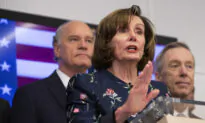
“While some people say that its cheaper to do Huawei—well yeah—it’s a People’s Liberation Army initiative using reversed engineering from Western technology," Pelosi, the senior Democratic lawmaker, told reporters in Brussels.
The dangers of Huawei exporting smart city technology abroad were explained by the U.S. think tank Jamestown Foundation, in an article published in June 2018.
“I’m sure [Huawei has] got very fine technology,” he adds, “but if in fact their ultimate masters are in Beijing, and if Beijing wants to know something about somebody or something, Huawei will be obliged to provide it.”
In the fall of 2022, the department followed up on the Trump administration's Huawei controls by imposing the strictest-ever export controls on chip technologies in coordination with Taiwan, Japan, and the Netherlands.
Huawei, which is playing a leading role as the telecoms world gears up for next generation wireless technology, has repeatedly denied spying for the Chinese state.
“All of Canada’s Five Eyes allies have either banned or severely restricted the use of Huawei in their 5G infrastructure due to concerns that such technology could be used for espionage purposes and undermine our broader security and economic interests
Another target was Ericsson, which has been racing against China's HuaweiTechnologies to build infrastructure for 5G networks expected to underpin future hyper-connected societies.
Also, Richard Li, a chief internet scientist at Huawei, is the chairman of an ITU focus group that examines how emerging technologies can integrate with 5G.
Department of Commerce offered new regulations requiring that any chip produced using U.S. technology and equipment first be approved by the United States before it can be sold to Huawei.
Huawei Brings ‘Serious Danger’
The Chinese and Italian foreign ministers were expected to discuss the roll-out of new generation 5G technology in Italy and the potential involvement of Chinese telecom giant Huawei.
It's a way to support China’s ambitions of growing an independent domestic technology sector, which was severely crippled by the Trump administration’s sanctions on firms such as Huawei.