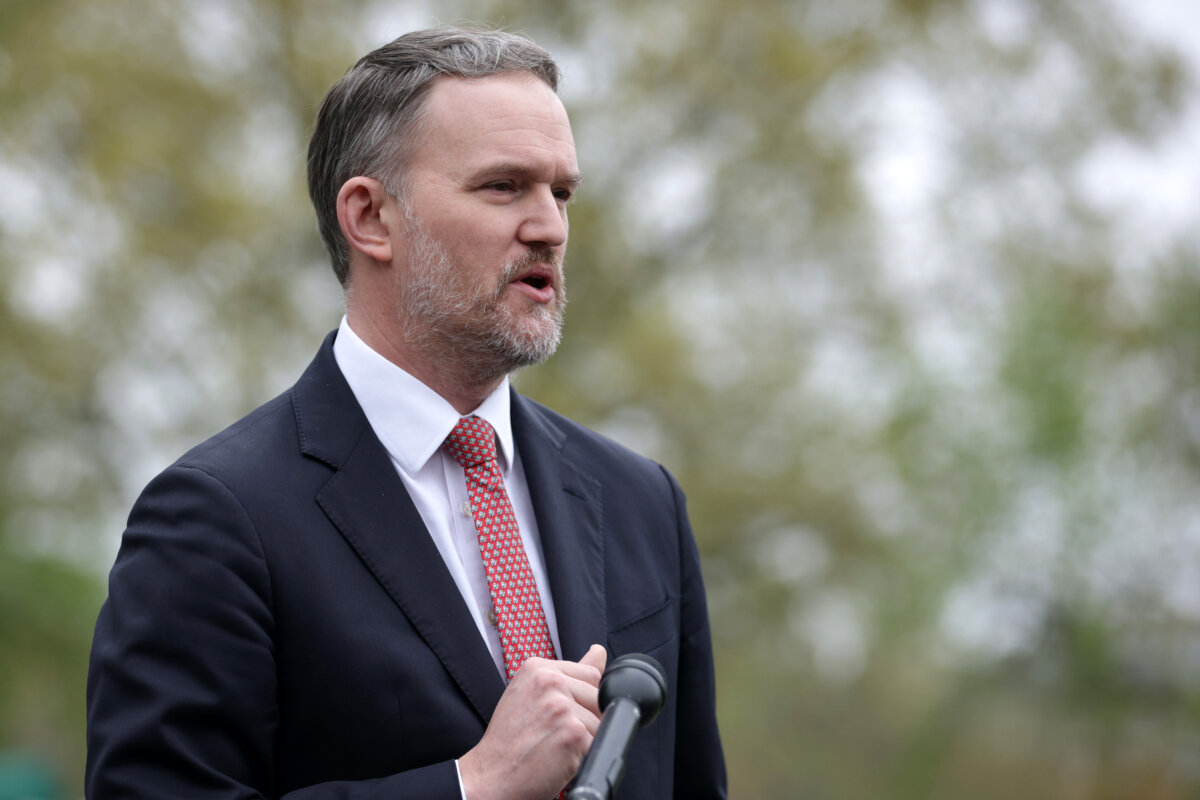

U.S. Trade Representative Jamieson Greer told the Senate Finance Committee on Wednesday that he wants interim trade arrangements with Canada and Mexico decided upon before the calendar turns, as rewriting the U.S.–Mexico–Canada Agreement (USMCA) extends into next year.
“I would love to have by the end of the year at least some arrangements—one with Canada, one with Mexico,” Greer said.
The statement represented the clearest signal yet that a clean renewal of the six-year-old pact is unlikely to happen in 2026. Greer underscored that issues such as tighter rules of origin for automobiles and stronger labor and environmental rules would require more time, “including with Congress in the following year.”
He said the administration was “moving with all due speed” and that he hoped to place options before President Donald Trump, Mexican President Claudia Sheinbaum, and Canadian Prime Minister Mark Carney by December.
“I’m hopeful that before the end of the year, we can have at least options for President Trump and the leaders of Canada and, or Mexico to consider potential interim arrangements, or things that Canada can do on the one hand and Mexico can do on the other hand to strengthen enforcement, to improve their commitments toward us, and to make sure that we’re managing all of the trade issues,” Greer told lawmakers.
The statements came hours ahead of Greer’s trip to Mexico City for a third round of bilateral talks with Mexican officials. Canada has not been invited into those formal sessions.
The impasse stems from a July 1 decision by the Trump administration not to renew the USMCA in its current form, keeping the agreement in force through 2036 under annual reviews rather than agreeing to a 16-year extension. Officials have said the pact failed to decrease trade deficits the president wanted to control and left problems in dairy, autos, and certain industrial goods markets.
Last year, Trump layered 25 percent Section 232 national-security tariffs on automobiles and 50 percent tariffs on steel and aluminum from both neighbors. Mexico and Canada have pushed for relief from those duties as a starting point for any interim agreement.
Greer clarified that any deal with Mexico will go beyond trade questions.
“The president is going to have a hard time agreeing to renewal or even revisions if Mexico isn’t playing ball in all areas, and the water treaty is one of them,” he said, referring to long-running disputes over Rio Grande water deliveries to Texas farmers and border security.
Trump announced this week 50 percent tariffs on approximately $20 billion worth of Canadian goods, including beer, dairy products, and hockey sticks, after Ottawa and several provinces took steps the White House perceived as retaliation. Economists say the tariffs are likely to impact consumer and manufactured goods.
Greer told senators he had spoken with his Canadian counterpart the day before the hearing.
“I talked with my Canadian counterpart yesterday. They did not say they’re going to retaliate,” he said.
The original USMCA and its NAFTA predecessor have formed the basis of nearly $1.6 trillion in regional trade. Businesses on both sides of the borders have been living with uncertainty since the July 1 non-renewal decision.
Greer offered no insight on what might be in the interim arrangements, with negotiations regarding auto content rules, labor standards, environmental enforcement, and tariff relief not set to take place until next year.
Reuters contributed to this report
 Friends Read Free
Copy
Facebook
Tweet
Friends Read Free
Copy
Facebook
Tweet