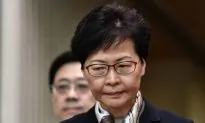
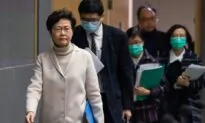
At a closed-door meeting, Hong Kong's Chief Executive Carrie Lam expresses deep regrets about her push to pass the extraditionbill, according to an audio recording reviewed by @Reuters.
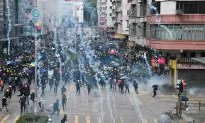
The police siege on the Hong Kong college campus in November 2019, which lasted for about two weeks, was one of the most violent episodes during the anti-extraditionbill movement that started in June last year.
Yellow Versus Blue
A growing number of Hongkongers in the current protest movement—ignited over a now-withdrawn extraditionbill that many saw as an impending threat by the Chinese regime to the city’s autonomy—see the dominance of Chinese capital and
Yet now, millions of Hong Kongers have flooded the streets over the past few weeks to protest an extraditionbill that would allow the Chinese regime to wantonly extradite Hong Kongers—including dissidents and activists—and sentence them in a Chinese
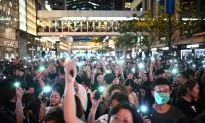
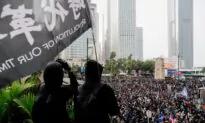
What started as demonstrations against a now-withdrawn bill allowing extradition from Hong Kong to mainland China has morphed into calls for greater democratic freedoms, resulting in more than six months of protests in Hong Kong.
Opponents of the bill say it would allow critics of the Chinese regime to be extradited to the mainland on trumped-up charges, eroding the city's autonomy and undermining its status as a financial hub.
(Courtesy of Parkie Li)
A series of massive protests erupted in Hong Kong between 2019 and 2020, with up to 2 million residents taking to the streets at one point to protest the government's introduction of a bill related to its extradition law.
The move comes as differences between the pro-Beijing and pro-democracy camps in Hong Kong were sharpened during months-long protests last year that were sparked by an attempt to pass a bill that would have allowed suspects to be extradited to mainland
If passed, the bill would effectively prevent California from extraditing individuals charged for breaking another state's law related to putting a minor into medical gender transition.
And it was against the extraditionbill that would have allowed Hong Kongers to be sent to the mainland to face so-called justice in the Chinese courts.
The revised bill would allow Hong Kong criminal suspects to be extradited to mainland China for trial. Opponents worried that extraditions to the mainland could lead to unfair trials due to distrust of mainland China’s judicial system.
In 2019, Beijing introduced a bill aimed at extraditing citizens and even foreigners in Hong Kong to mainland China, which led to outbreaks of massive protests.
(Tat Hui/The Epoch Times)
Background on the Anti-Extradition Law Movement
Three years ago in 2019, the Hong Kong Special Administrative Region (SAR) government submitted a bill to the Legislative Council for the transfer of suspects to jurisdictions
The semi-autonomous Chinese city has seen unwavering fierce protests since June, which erupted to oppose a bill that would allow the extradition of persons passing through Hong Kong to mainland China.
Stephanie Klick said that out-of-state medical providers who perform abortions could be subject to an extradition process, according to the Dallas News.
Sparked by anger against a now-formally withdrawn controversial extraditionbill, protests spread through many of Hong Kong's 18 districts, putting the city's freedom-loving populace on a collision course with the local government, and China's Communist
In February 2019, the Hong Kong government proposed the “Amendment Bill to the Fugitive Offenders Ordinance," allowing Hong Kong criminal suspects to be extradited to the mainland for trial.
She has been open about the crippling financial toll the legal battle has taken on her family, who estimate their legal bills amount to about half a million dollars.
Hong Kong has witnessed historical protests since June in opposition to a Beijing-backed extradition measure, which would allow any country, including mainland China, to seek extradition of suspects.
Protests escalated in June over a since-withdrawn bill which would have allowed extraditions to mainland China, where courts are controlled by the Communist Party. They have since broadened to several demands, including universal suffrage.
The law is many times more draconian than the proposed extraditionbill that brought a quarter of Hong Kong’s entire population to the streets last year.
The protests were sparked by opposition to a bill allowing extradition to mainland China, but have since evolved into broader calls for democracy. None of the protesters' five demands is secession or independence.
The protests, which began more than two months ago in opposition to a bill allowing extradition to the mainland, has thrown the city into its most serious crisis in decades as its residents bristle against Beijing’s growing encroachment.
Last year around this time, the Hong Kong government introduced and passed this highly controversial extraditionbill that is fundamentally going to change the system of Hong Kong that allows criminals [to be] sent to China for trial and that has been