The Belt and Road Initiative (BRI)—also known as OneBelt, OneRoad or OBOR—is a plan for the Chinese regime to invest trillions of dollars to build critical infrastructures, such as bridges, railroads, ports, and energy facilities, in dozens of countries
Political Power Over Profit
Politically, the BRI, also known as OneBelt, OneRoad, is a cornerstone of the global strategy of the Chinese Communist Party (CCP).
Africa is central to the regime's "OneBelt, OneRoad" (OBOR, also known as Belt and Road) initiative in expanding geopolitical influence, which includes access to Africa’s oil, natural resources, and strategic location.
There is growing international concern about China’s ties with Cambodia, one of the earliest supporters of the OneBelt, OneRoad initiative (OBOR, also known as Belt and Road).
In 2018, Portugal became the first European country to sign up to Beijing's infrastructure investment plan, the Belt and Road Initiative (BRI, also known as OneBelt, OneRoad).
He said that through China's sizeable loans and investments, Latin American countries will likely favor them in situations requiring votes on policies, such as those with the U.N.
One of these investments is the Belt and Road Initiative (BRI).
Belt and Road Initiative
Situated along the historic Silk Road, which was the busiest trading route spanning Eurasia for thousands of years and connecting ancient China with Europe, Kyrgyzstan also joined China’s modern equivalent called the Belt and
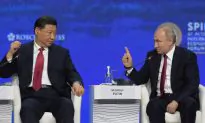
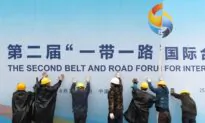
On Nov. 16, Chinese leader Xi Jinping will showcase China's OneBelt, OneRoad (OBOR, also known as Belt and Road) to Pacific leaders, several of whom are expected to sign up to the infrastructure initiative.
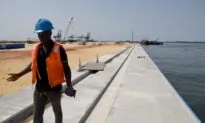
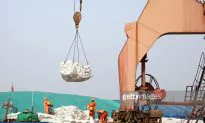
Laborers walk through the Gwadar Port in Pakistan, a multi-billion-dollar infrastructure project that China has invested in as part of its Belt and Road Initiative, on Oct. 4, 2017.
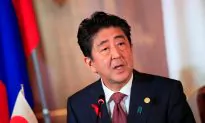
China hopes Abe will support its OneBelt, OneRoad initiative (OBOR, also known as Belt and Road), a vehicle to fund and build global transport and trade links in more than 60 countries.
China’s "OneBelt, OneRoad" plan, for example, is a bad copy of the New Deal that is doomed to fail in terms of generating real, sustainable growth. But it will certainly add to China's debt.
The lack of development has opened opportunities for China’s debt-trap diplomacy, with most Latin American nations signing on to Beijing's Belt and Road Initiative and rescinding their recognition of Taiwan.
Bank runs throughout China reflect the poor state of the Chinese financial system, which is kept afloat on bad debt and by exporting excess industrial capacity to countries participating in the "OneBelt, OneRoad" (also known as Belt and Road) initiative
The Indian Ocean island chain has been caught in a battle for influence between India and China, which invested millions of dollars during Yameen's rule as part of its OneBelt, OneRoad (OBOR) initiative, designed to improve Beijing's global trade reach
With Russia financially constrained, Central Asia has become a key recipient of developing market funding from China’s "OneBelt, OneRoad" (OBOR, also known as Belt and Road) initiative.
The Belt and Road Initiative (BRI, also known as "OneBelt, OneRoad") adopted by the CCP in 2013 is the most recent and blatant example of how Beijing develops a long-term plan, then rolls short- and medium-term milestones into it.
The debts are in connection with loans that the Beijing regime has offered to countries under its foreign policy project, the Belt and Road Initiative (BRI, also known as OneBelt, OneRoad).
China already is using its growing commercial strength, and debt-trap strategies such as its "OneBelt, OneRoad" initiative, to gather a global network of bases to enable its military maritime projection.
Observers warn that the growing Chinese presence in Africa—which overlaps closely with the Belt and Road Initiative (BRI) bankrolled by the Chinese Communist Party (CCP)—furthers the trend of debt entrapment, resource exploitation, and environmental damage
Much of the infrastructure investment, especially the port facilities, comes through the CCP’s Belt and Road Initiative, while Huawei Technologies operates the country’s 4G networks.
the "OneBelt, OneRoad" (OBOR, also known as Belt and Road) initiative are undermining the sovereignty and financial stability of the countries involved.
A Vanuatu base would allow the regime to break its apparent containment by U.S. and allied forces, according to the report, while one in Pakistan would further cement the regime’s expansion of the Belt and Road Initiative into the Middle East and allow
The Belt and Road scheme has been criticized as a project to bury developing countries in debt, having them forced to give to the Chinese regime vital parts of their natural resources or strategic infrastructure, such as ports, as a payment for the debt
“These countries’ dependence on Chinese debt leaves their sovereignty eroded and with no choice but to hew to the party’s line on UN votes and … other issues," said O’Brien.
By Tim Hepher
The news came at the heels of the opening of the Laos-China railway on Dec. 3, a $6 billion project under Beijing’s Belt and Road Initiative, aimed at flowing trade and travel into a country plagued by debt amid the COVID-19 pandemic.
To shore up the yuan, authorities have been repatriating earnings from overseas projects such as Belt and Road investments and urging Chinese companies to bring foreign capital home.