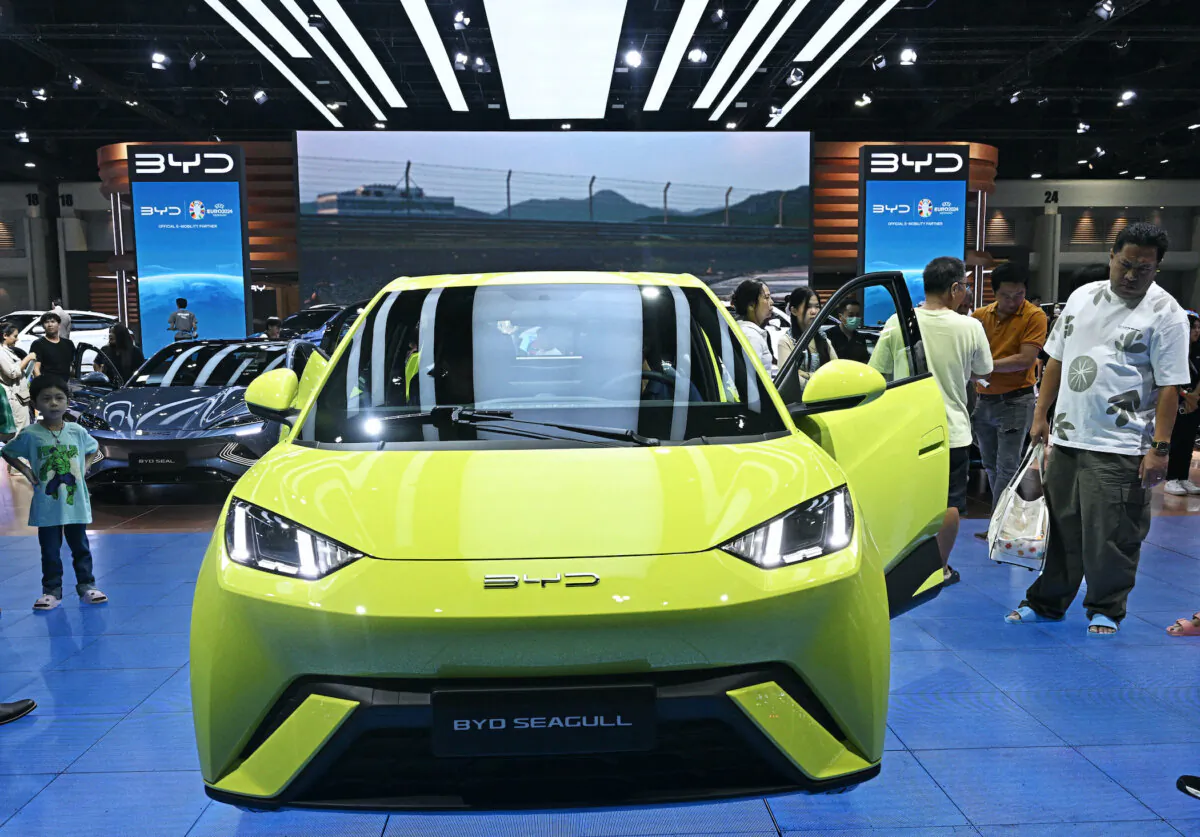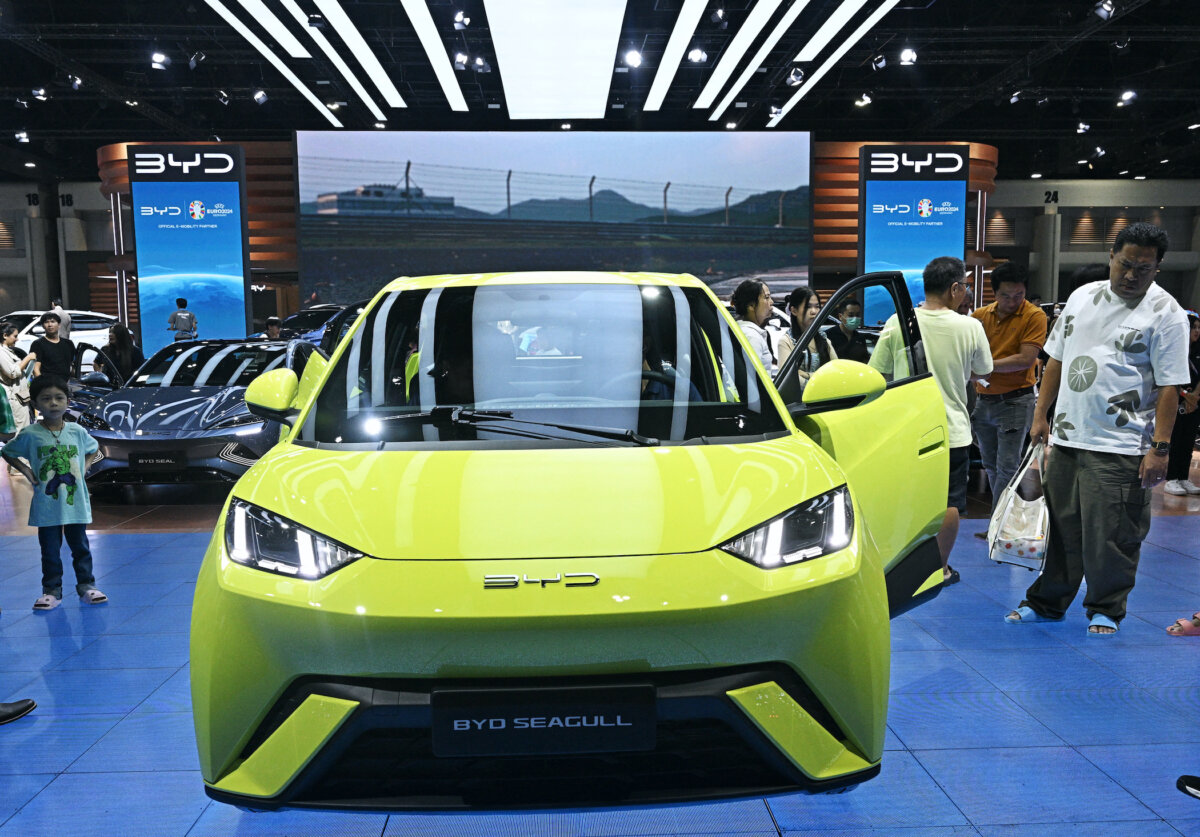

The U.S. Senate Commerce Committee unanimously advanced legislation to ban China-linked smart vehicles in America on July 22.
The bipartisan legislation, called the Connected Vehicle Security Act of 2026, for which an identical version is being considered in the House, would codify into law a Biden-era executive order that effectively banned all Chinese and Russian automakers from selling passenger vehicles in the United States.
The rule targeted “connected vehicles” that contain software or hardware linked to China or Russia, citing national security risks over vulnerabilities that could allow a U.S. adversary to access driver information or gain control of a vehicle. Almost all new vehicles come equipped with connectivity devices.
Lawmakers said they are pursuing similar legislation in Congress to close loopholes in the federal rule. Sponsored by Sens. Bernie Moreno (R-Ohio) and Elissa Slotkin (D-Mich.), the legislation now removes light-vehicle weight limits and extends the ban on China and Russia to include Iran and North Korea.
Additionally, it now encompasses not only entities fully “owned by, controlled by, or subject to the jurisdiction or direction” of U.S. adversaries but also those partially exposed, with a 15 percent threshold for vehicle manufacturers and a 25 percent threshold for software developers and hardware manufacturers.
The bill outlines a minimum civil penalty of $1.5 million or five times the transaction value per violation. It would come into effect in two phases, with limits on internet-connected vehicles and related software taking effect in 2027, followed by hardware-related restrictions around 2030.
The proposed law also targets communist China’s rapid expansion of its automotive manufacturing capacity, which has seen nearly 8 million Chinese-made vehicles flood the global market annually, hurting American manufacturers.
“The Chinese Communist Party’s playbook of heavily subsidizing their product and underselling the competition puts Michigan’s auto industry and millions of American workers at risk,” Slotkin said.
“We’re preventing an absolute, total, and complete destruction of our industrial base,” Moreno added.
According to Slotkin’s office, the legislation “closes the door on Chinese-origin vehicles, software, and key components at every stage, from production, importation, to sale, so that data gathered on U.S. roads can’t be funneled back to the Chinese government.”
Unions and automakers have expressed their support for Congress’s efforts to protect America’s manufacturing capacity.
During the hearing, while expressing his support for the legislation, committee chair Sen. Ted Cruz (R-Texas) said the 15 percent threshold for car manufacturers would impact companies such as Mercedes-Benz because of its nearly 20 percent passive Chinese investment. He said he would push for that provision to be changed.
Moreno replied, saying Mercedes-Benz would have until 2030 to comply and could get waivers if necessary from the ownership requirement. He noted General Motors’ plans to shift production of its Chinese-made Buick Envision to the United States for the 2028 model year and said Ford has agreed to move Chinese-made Lincolns to the United States.
He also said Google’s self-driving unit Waymo, which had been talking with Chinese automaker Geely about platforms coming from China, “has committed to looking at a Detroit-based manufacturer for their future platforms.”
Cruz said General Motors had been pushing for the provision in order to get Mercedes-Benz out of the market and make its Cadillac brand more competitive. He said “we would never consider” banning Mercedes-Benz sales in the United States.
GM, in response, said the legislation isn’t about any individual automaker and added that the automaker “supports policies that protect and strengthen American manufacturing and the global competitiveness of U.S. automakers.”
Last month, electric-vehicle maker Polestar said the Trump administration was forcing it to stop selling vehicles in the United States beginning in the 2027 model year. The Sweden-based company is majority-owned by China’s Geely Holding.
Polestar’s sister brand and co-founder, Volvo Cars, said in May it received authorization to keep selling vehicles in the United States, though it said it still must meet the rule’s requirements.
Bluetooth, Wi-Fi, cellular connectivity, and some satellite communications technologies are covered under the rules based on national security concerns.
 Friends Read Free
Copy
Facebook
Tweet
Friends Read Free
Copy
Facebook
Tweet