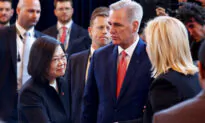
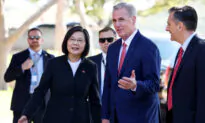
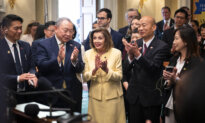
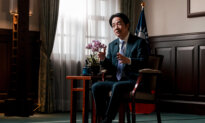
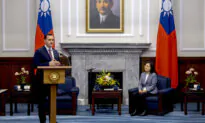
Taiwanese President TsaiIng-wen meets U.S. Speaker of the House Kevin McCarthy (R-Calif.) at the Ronald Reagan Presidential Library in Los Angeles at 1:00 p.m. ET on April 5.
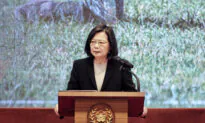
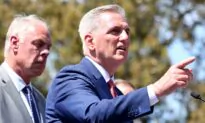
Taiwanese President TsaiIng-wen and Speaker of the House Kevin McCarthy (R-Calif.) deliver statements to the media after their meeting at 3:00 p.m. ET on April 5.
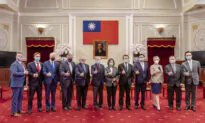
The group included then-Senate Foreign Relations Committee Chairman Bob Menendez (D-N.J.), and they met with then-Taiwanese President TsaiIng-wen and senior security officials.
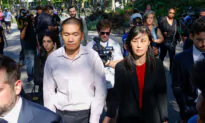
Zhu participated in protests against then-Taiwanese President TsaiIng-Wen in 2019 on her visit to New York. Photos of the protest show him standing beside Linda Sun, a onetime aide to New York Govs. Andrew Cuomo and Kathy Hochul.

Previous Taiwanese leaders, including TsaiIng-wen, also used June 4 anniversaries to call for greater openness about the events of 1989.
Lai, who took office in 2024, has said Taiwan’s future can only be decided by its people.
On Dec. 2, 2016, Lai’s predecessor, President TsaiIng-wen, called then-President-elect Trump to congratulate him on his election win. Trump was not yet in office, so the call was one between a head of state and a private citizen.
Still, in December 2016, Trump, then the president-elect, held a rare phone call with Lai’s predecessor, TsaiIng-wen.
Trump told reporters on May 20 that he would speak to Lai before he made a decision on an arms deal with the nation.
In April 2023, the convicted Chinese agent also spied on then-President of Taiwan, TsaiIng-Wen, during her visit to Southern California, according to the release.
The last time a Taiwanese president visited Eswatini, formerly known as Swaziland and home to around 1.3 million people, was in 2023, when TsaiIng-wen made the journey.
By Ben Blanchard and Yimou Lee
In April 2023, the convicted Chinese agent also spied on then-President of Taiwan, TsaiIng-Wen, during her visit to Southern California, according to the release.
In contrast, the regime views the ruling Democratic Progressive Party (DPP) as separatists and has refused to deal with the administrations of TsaiIng-wen, and, now, President Lai Ching-te.
China’s communist regime has intensified diplomatic, economic, and military pressure on Taiwan since the Democratic Progressive Party came to power in 2016 with the election of TsaiIng-wen, who served two four-year terms.
The Democratic Progressive Party (DPP) has been in power since 2016, during which time the CCP has refused to deal with its administration, labeling both President Lai Ching-te and his predecessor, TsaiIng-wen, as “separatists” because of their outspoken
When asked about Sullivan’s remarks, Lai pointed to the economic achievements of the past 10 years under DPP governments led by himself and his predecessor, TsaiIng-wen.
Another group of U.S. lawmakers visit Taiwan with a message, sharing it during a meeting with Taiwanese President TsaiIng-wen.
For the first time, the Netherlands is publicly condemning China's cyber espionage.
Huang also recruited a former political adviser at Lai’s office—during Lai’s tenure as vice president under the previous administration of TsaiIng-wen—through Chiu Shih-yuan.
Since 2016, the Chinese regime has refused to deal with the DPP-led government, branding both President Lai Ching-te and his predecessor, TsaiIng-wen, as “separatists” for their vocal advocacy of Taiwan’s sovereignty.
After TsaiIng-wen became president in 2016, her government formally barred Chinese capital from entering Taiwan’s integrated circuit sector, a policy that remains unchanged today.