
U.S. websites 4chan and Kiwi Farms filed a lawsuit in the United States on Aug. 27 against the United Kingdom’s media regulator, Ofcom, claiming that enforcement of the country’s Online Safety Act (OSA) violates Americans’ right to free speech.
Hailed by the UK government as the world’s first online safety law, the OSA became law in October 2023, but measures related to regulating so-called illegal content took effect in March 2025. It requires online platforms to implement measures to protect people in the UK from criminal activity, with far-reaching implications for internet governance.
The OSA required all user-interactive sites, including forums, to complete an illegal-harm risk assessment by March 16 and file it with Ofcom by March 31.
The lawsuit, filed in the U.S. District Court for the District of Columbia, states that Ofcom ordered the popular imageboard 4chan and web forum Kiwifarms, both U.S.-based platforms with no UK presence, to comply with its rules.
“This lawsuit seeks to restrain Ofcom’s conduct and its continuing egregious violations of Americans’ civil rights, including, without limitation, to the right of freedom of speech,” the companies said in the joint legal filing.
They said Ofcom sent “threatening communications” to U.S.-based companies that “interfere with their constitutional rights and business operation.”
They added that both sites are controversial but operate “fully in compliance with the laws of the United States.”
The companies also said that Ofcom threatened to impose a fine of 20,000 pounds (about $27,000) as well as daily fines of 100 pounds (about $135) on 4chan for up to a maximum of 60 days.
“Ofcom’s ambitions are to regulate internet communications for the entire world, regardless of where these websites are based or whether they have any connection to the UK,” the companies said in the filing.
U.S. lawyer Preston Byrne, who is representing the plaintiffs, said in an Aug. 27 post on X: “If someone in the UK calls me on the telephone, I am not suddenly teleported to England and subject to its rules. When someone in the UK navigates to a US webserver, that server isn’t teleported to England either.”
There are “literally a zillion ways that the UK could achieve the stated aims of the Online Safety Act without censoring the global web,” he added.
He said that the law is easily circumvented by virtual private networks (VPNs) and makes “running a UK-res webforum cost-prohibitive, driving investment out, wrecking the UK’s global reputation.”
Ofcom has said that noncompliance could result in enforcement action, such as fines of 18 million pounds (about $24 million) or 10 percent of a company’s annual revenue, or court orders to block access in the UK.
The law has already affected dozens of smaller UK websites, from forums for cyclists to those supporting divorced fathers.
The regulatory pressure and the many rules have caused some of them to shut down, despite that some have operated for decades.
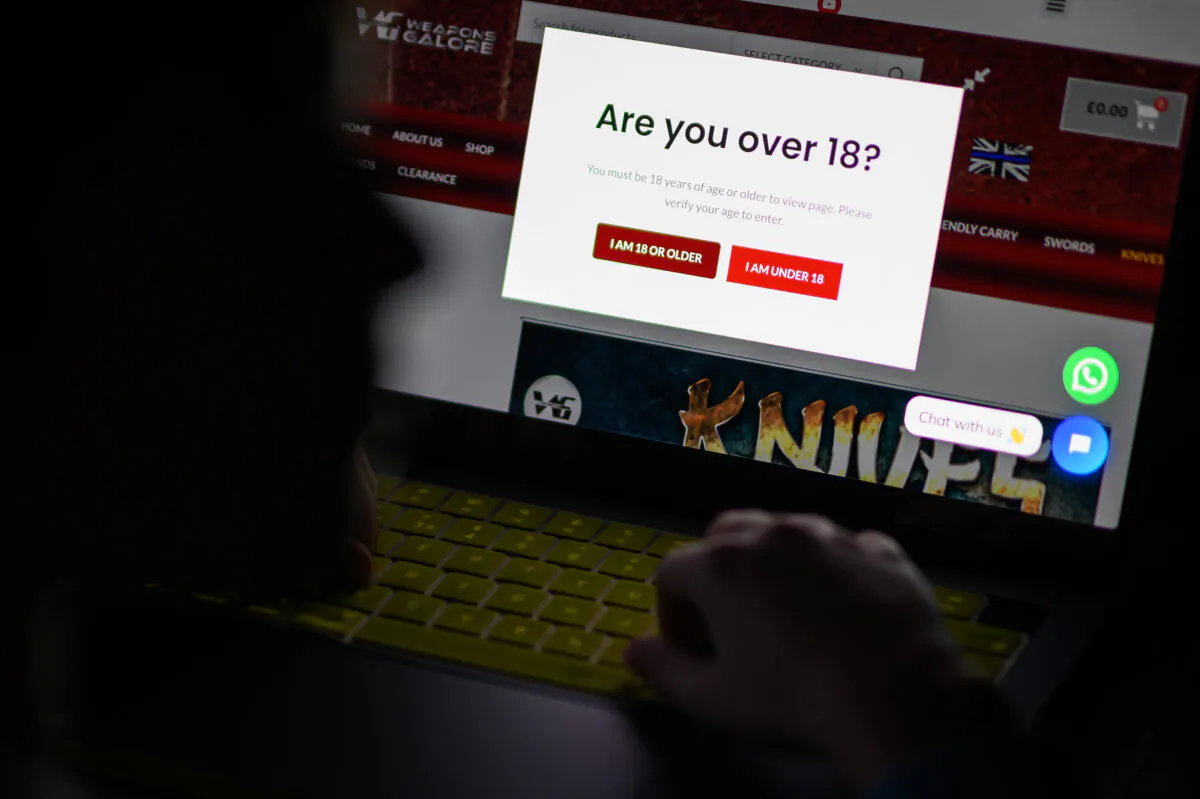
Recent OSA rules also require online platforms to implement strict age checks to shield children from content deemed harmful, including bullying, pornography, self-harm, and hateful content.
They effectively mean that all adult internet users in the UK must prove that they are not children to access certain websites.
Downloads of VPN apps have surged in the UK as users look for ways to bypass OSA age verification rules introduced last month.
VPNs allow users to establish a secure and encrypted connection over the internet. They effectively mask IP addresses and anonymize online presences, making it more difficult for websites, advertisers, and government agencies to track a user’s activities.
A spokesperson from Ofcom told The Epoch Times by email that it was aware of the lawsuit.
“Under the Online Safety Act, any service that has links with the UK now has duties to protect UK users, no matter where in the world it is based,” a spokesperson said. “The act does not, however, require them to protect users based anywhere else in the world.”
The operator of Wikipedia on Aug. 11 lost a high court challenge to the OSA rules that could require it to verify the identities of its contributors.
The Wikimedia Foundation said that if the platform were subject to the OSA’s Category 1 duties, it would have to drastically reduce the number of UK users who can access the site.
 Friends Read Free
Copy
Facebook
Tweet
Friends Read Free
Copy
Facebook
Tweet