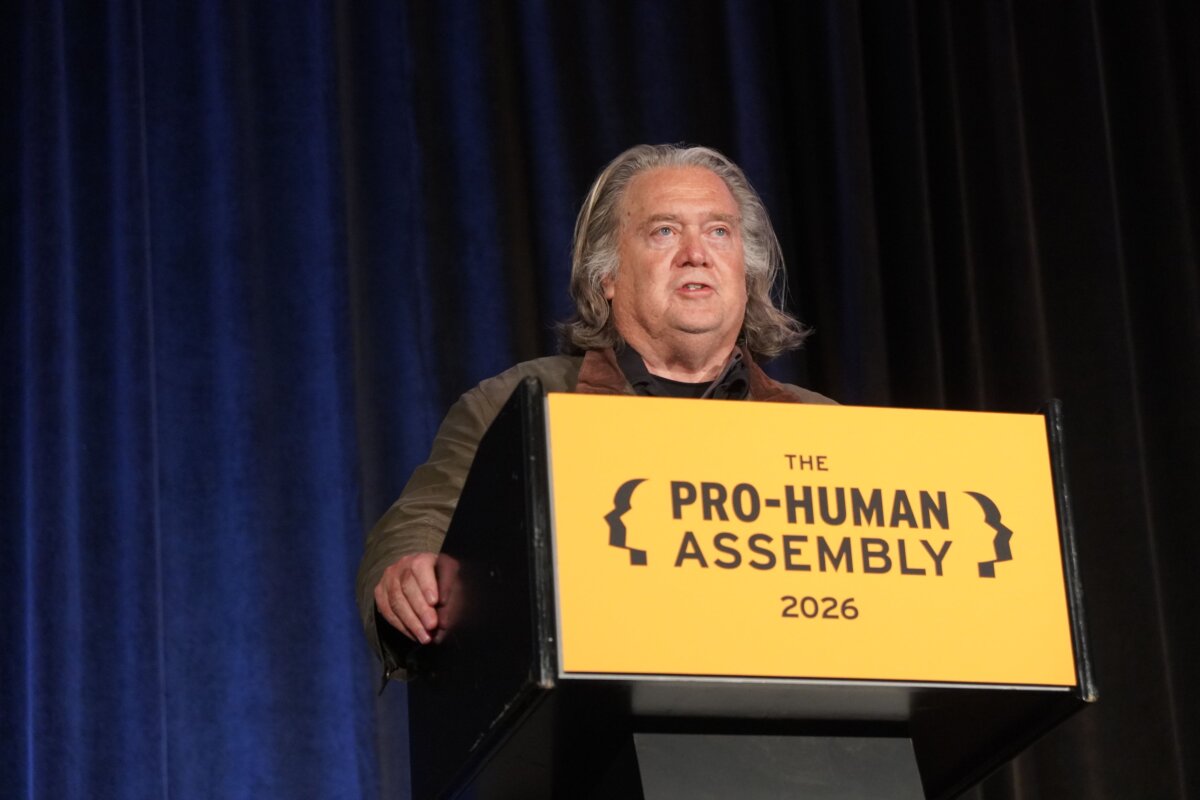

WASHINGTON—It was a populist crossover: Sen. Bernie Sanders (I-Vt.) and commentator Steve Bannon spoke Tuesday at the same conference, the Pro-Human Assembly, to address what they see as the risks of artificial intelligence (AI).
The head-to-head speeches were meant to underscore the alignment of at least some on both the left and right on frontier AI, now under scrutiny after Anthropic CEO Dario Amodei, xAI CEO Elon Musk, and other AI leaders called for a slowdown on the technology.
Others, including President Donald Trump, have advocated continued advancement of frontier AI.
For all the cross-partisan agreement at the Pro-Human Assembly, Sanders and Bannon outlined radically different approaches to the nation’s top competitor in AI research—China. While Sanders advocated immediate steps toward cooperation on AI, Bannon said the United States must detach further from the Chinese Communist Party (CCP).
Ahead of Trump’s meeting with Chinese leader Xi Jinping next week, Sanders called on China and the United States to “come together in a civil way to bring forth a ban on AI superintelligence.”
AI superintelligence, or ASI, is a hypothetical future form of artificial intelligence that could best the brightest humans across all fields.
Sanders likened a potential agreement to the Intermediate-Range Nuclear Forces Treaty signed by the United States and the Soviet Union at the tail end of the Cold War despite their mutual distrust.
“With the survival of humanity at stake, they found a way to sign that treaty,” he said.
“We have got to stop this globally, and in a couple of weeks, we have the opportunity to make a major step forward with that treaty,” added the independent senator from Vermont, who is a democratic socialist.
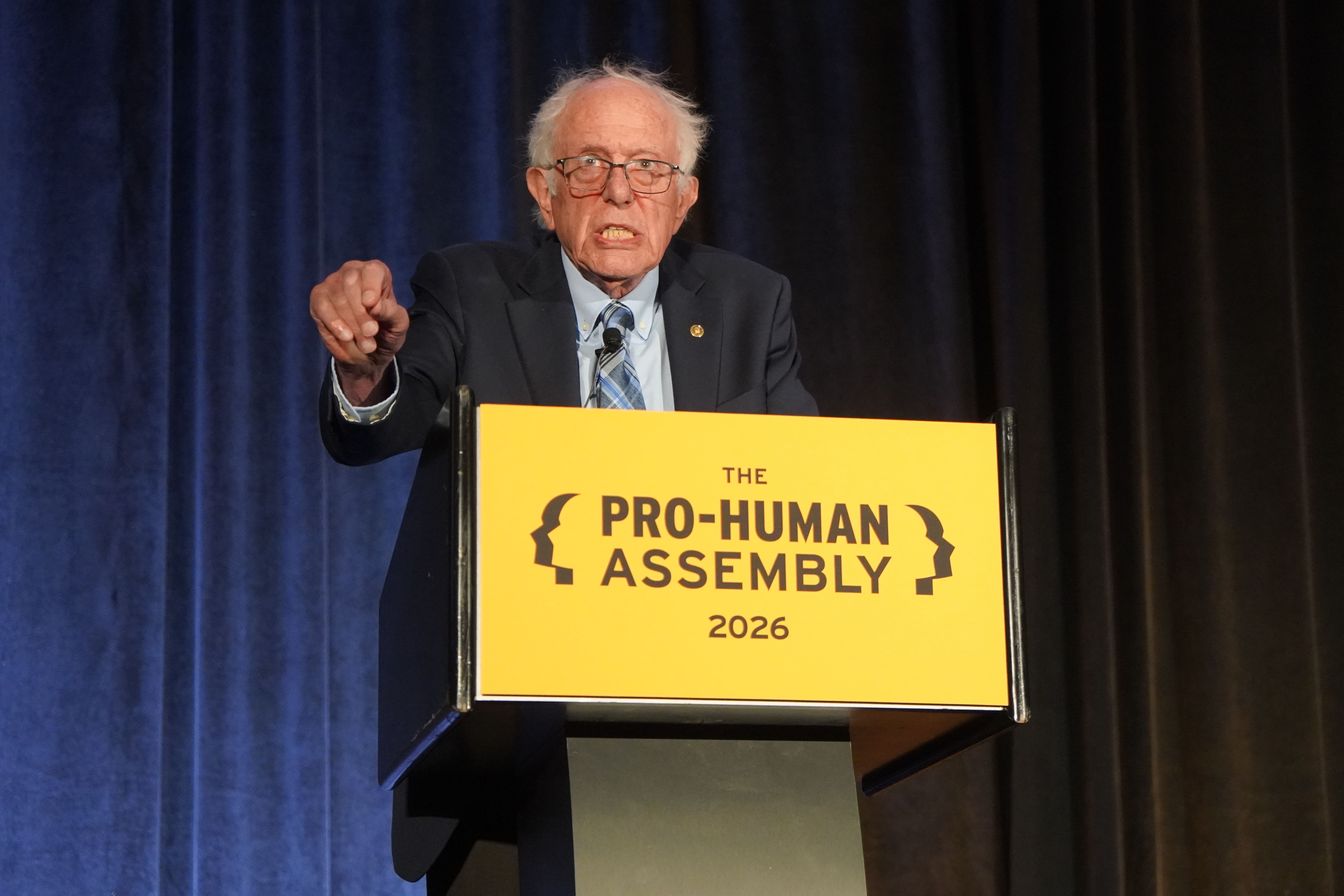 “We have got to stop this globally,” Sen. Bernie Sanders told the Pro-Human Assembly in Washington on Sept. 15, 2026. (Nathan Worcester/The Epoch Times).
Guo Jiakun, the spokesperson for China’s foreign ministry, said the recent calls to pace frontier AI from American tech leaders amount to “malicious competition.”
Bannon voiced skepticism about the CCP’s buy-in to a potential agreement, saying they would not adhere to its terms and that it “doesn’t matter”—“it’ll take forever to negotiate.”
The former Trump adviser objected to arguments that efforts to slow frontier AI would facilitate Chinese dominance of AI. He laid out a more sweeping proposal for how to contest China.
“We should quarantine now every aspect of the ecosystem of artificial intelligence away from the Chinese Communist Party,” Bannon said.
He added that the United States “should take all Chinese nationals and get them out of the labs and get them back to mainland China.”
That could amount to a sizable number of employees. A 2025 analysis from MacroPolo found that more than one-third of the researchers at frontier AI labs in the United States earned their undergraduate degrees in China.
Bannon said that a thorough separation between the United States and the CCP would give Americans time and space to work out the details of regulation.
“What is a regulatory apparatus that does not choke down the creativity, the drive, the urgency? What does it look like?” he added.
The Pro-Human Assembly, organized by the Future of Life Institute, brought together other AI critics from differing parties and ideologies.
The speakers included Reps. Chip Roy (R-Texas) and Greg Casar (D-Texas)—one a stalwart conservative, the other a staunch progressive.
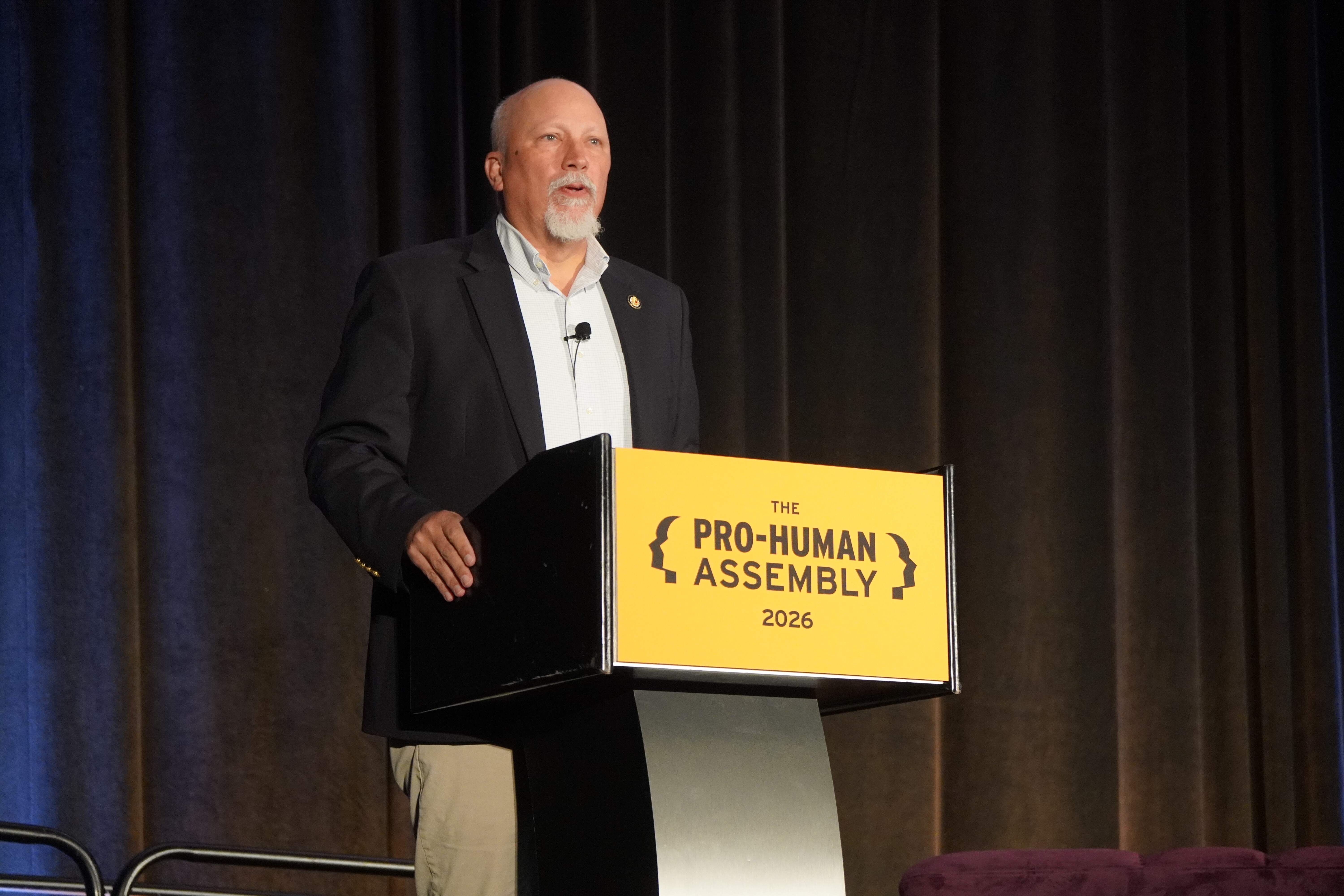 Rep. Chip Roy (R-Texas) speaks at the Pro-Human Assembly. (Nathan Worcester/The Epoch Times)
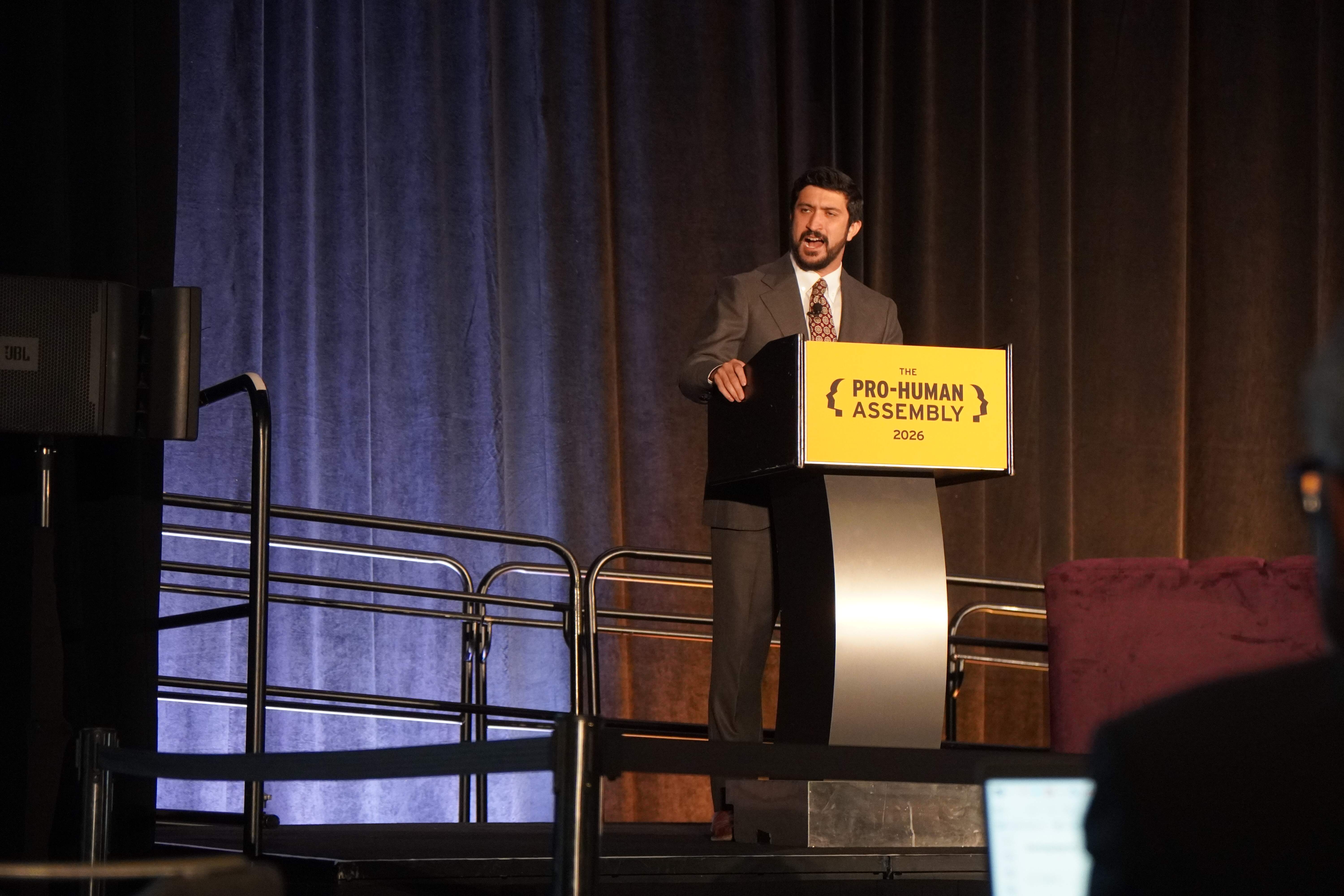 Rep. Greg Casar (D-Texas) speaks at the Pro-Human Assembly. (Nathan Worcester/The Epoch Times)
Max Tegmark, a cofounder of the Future of Life Institute, sounded more like Sanders than Bannon when it came to China and AI.
The Swedish-American physicist told The Epoch Times he believes “people are too pessimistic, actually, about international cooperation.”
He said the CCP and American leaders have a shared incentive to avoid having their respective governments overthrown by superintelligent AI.
 Friends Read Free
Copy
Facebook
Tweet
Friends Read Free
Copy
Facebook
Tweet