



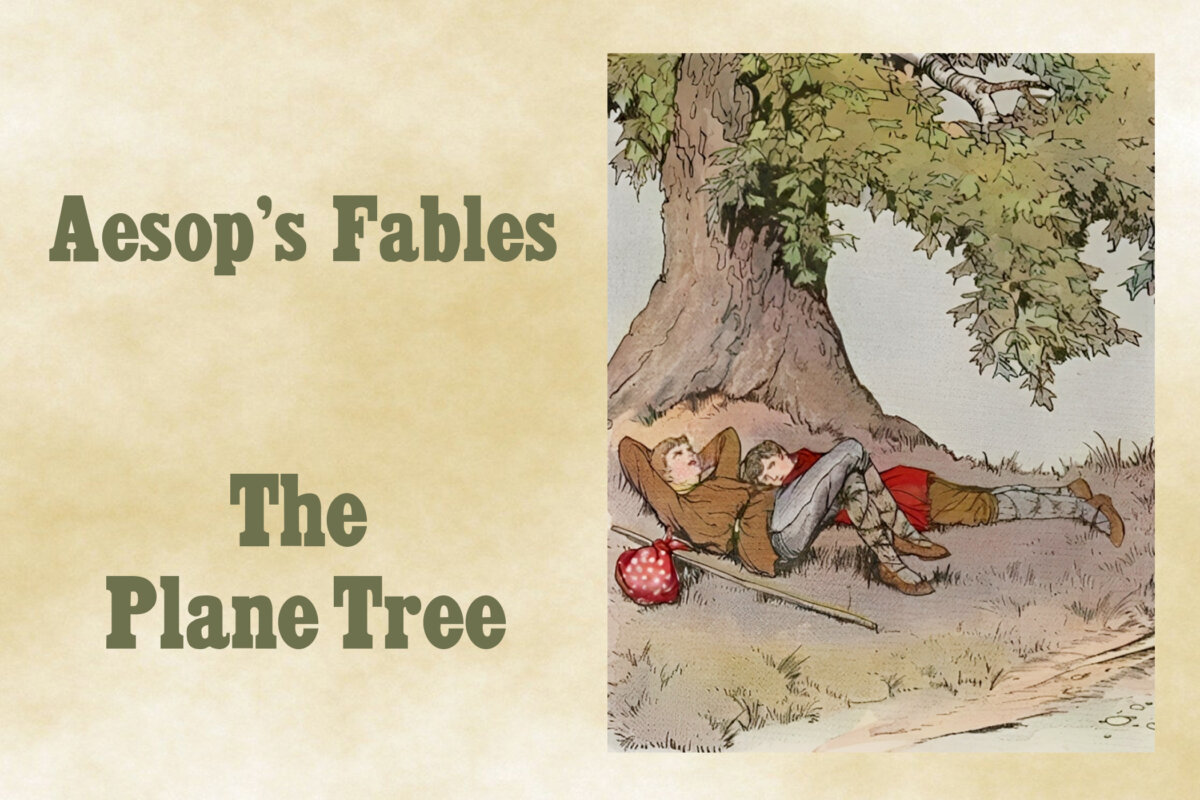
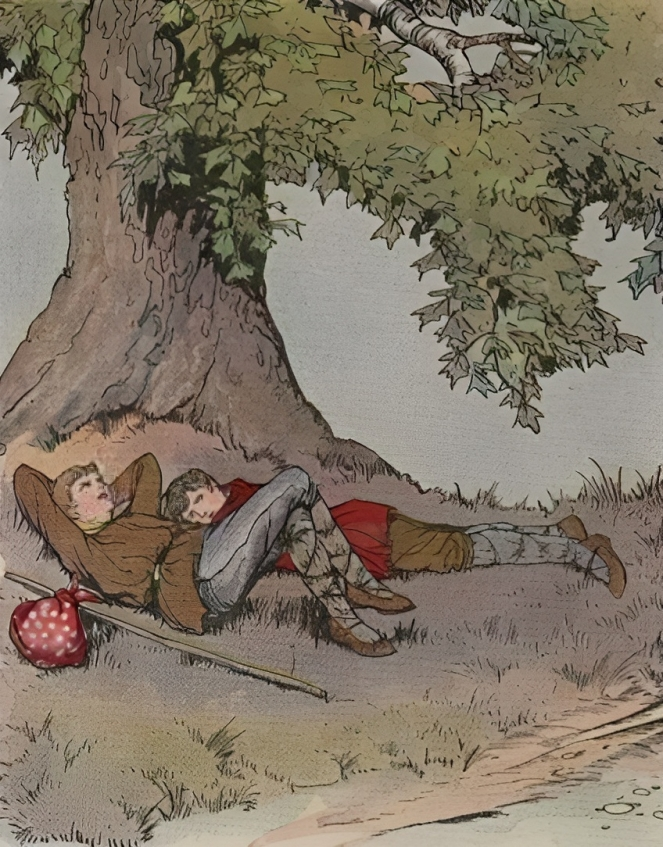
Two Travelers, walking in the noonday sun, sought the shade of a widespreading tree to rest. As they lay looking up among the pleasant leaves, they saw that it was a Plane Tree.
“How useless is the Plane!” said one of them. “It bears no fruit whatever, and only serves to litter the ground with leaves.”
“Ungrateful creatures!” said a voice from the Plane Tree. “You lie here in my cooling shade, and yet you say I am useless! Thus ungratefully, O Jupiter, do men receive their blessings!”
Our best blessings are often the least appreciated.
This fable is reproduced from “The Aesop for Children” (1919).
Aesop (c. 620–564 B.C.) was a Greek storyteller credited with a number of fables now collectively known as “Aesop’s Fables.” His tales, with their moral value, have long influenced our culture and civilization, contributing not only to the education and moral character building of children, but also, with their universal appeal, to the self-reflection of adults alike who have chosen to embrace the virtues or heed the warnings within.
Share your stories with us at emg.inspired@epochtimes.nyc, and continue to get your daily dose of inspiration by signing up for the Inspired newsletter at TheEpochTimes.com/newsletter
