It has become a common struggle: buying a dream home in the current economy is beginning to look like just that—a dream. A decade ago, Ontarian Cameron Ringland, then working as an educator overseas in continental Europe and Southeast Asia, was flirting with that all-too-familiar cycle. He watched as runaway inflation transformed the real estate market back home into a lifelong trap.
“My wife and I both knew we wanted to return to Canada eventually,” Ringland, 58, told The Epoch Times, speaking from his cozy apartment near Budapest. “But I explicitly remember telling her: we are not going back just to spend five years working our butts off to throw money into a traditional rent pit.”
For Ringland, a former commercial tree planter who spent 20 years driving more than a million saplings into Canadian soil, the answer was not to find a better job within the machine. It was to step off the treadmill completely.
On New Year’s Day in 2019, while drinking coffee in Da Nang, Vietnam, he found his exit hatch online: an unserviced, fully forested 3.7-acre parcel of land in Cape Breton, Nova Scotia. He purchased it sight-unseen through an owner-financed contract requiring only a 10 percent deposit, bypassing traditional banking entities entirely.
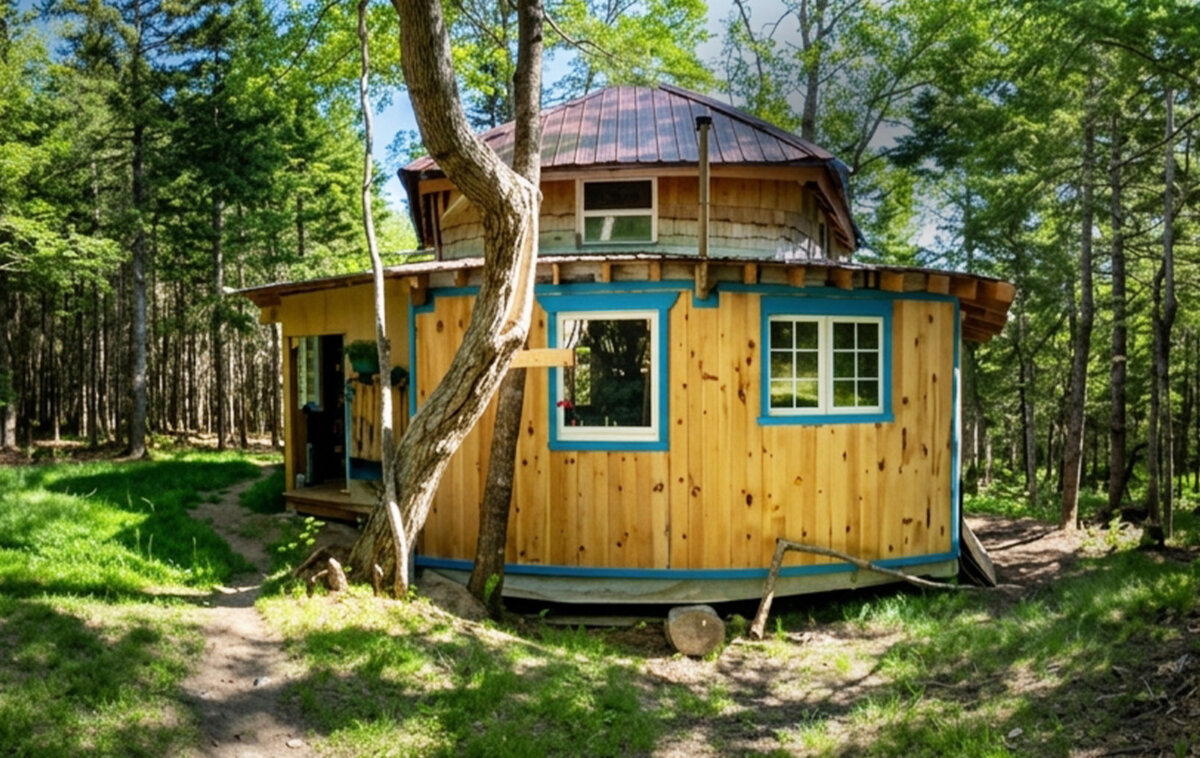
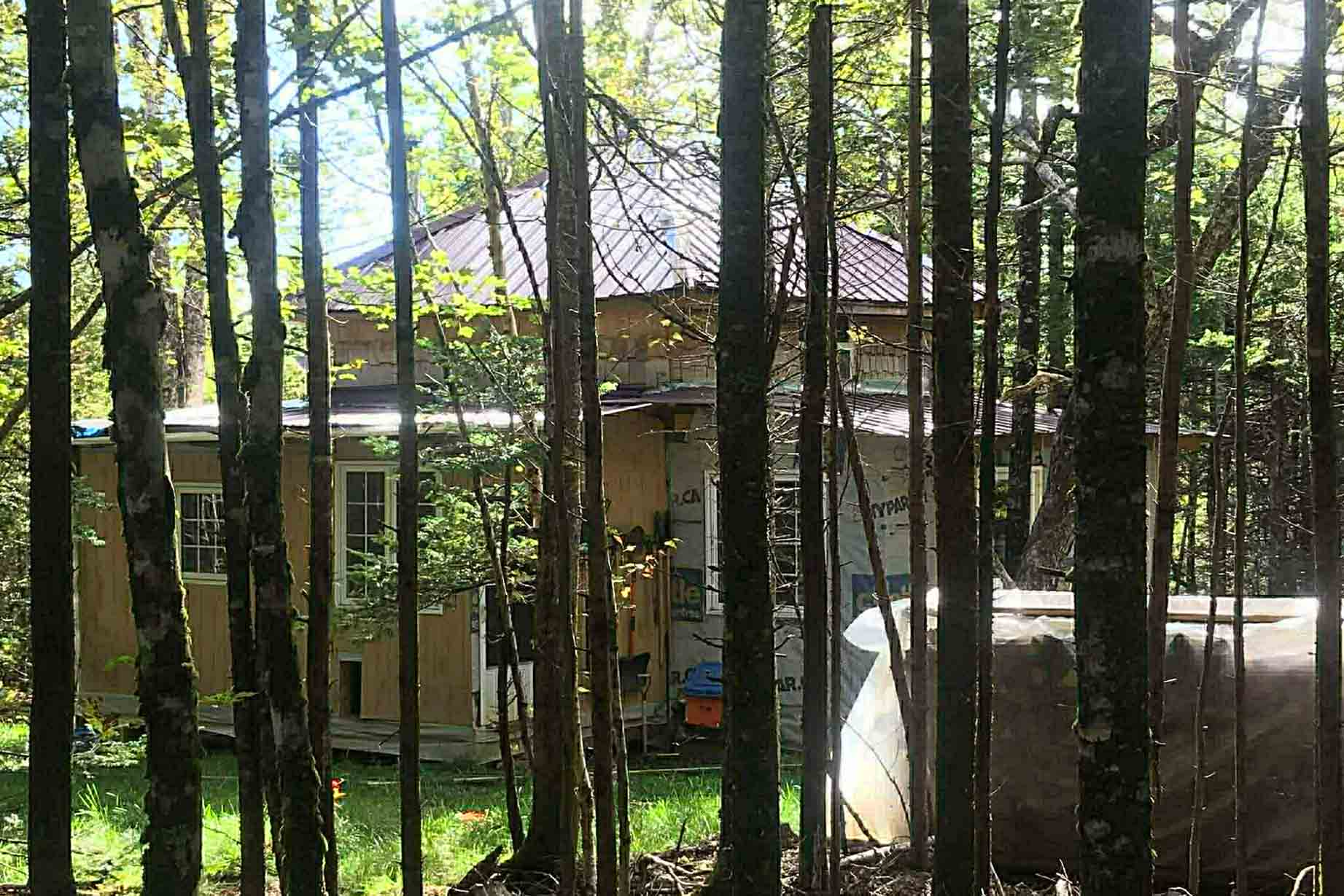 Cameron Ringland’s homestead in the backwoods of Cape Breton, Nova Scotia. (Courtesy of Cameron Ringland)
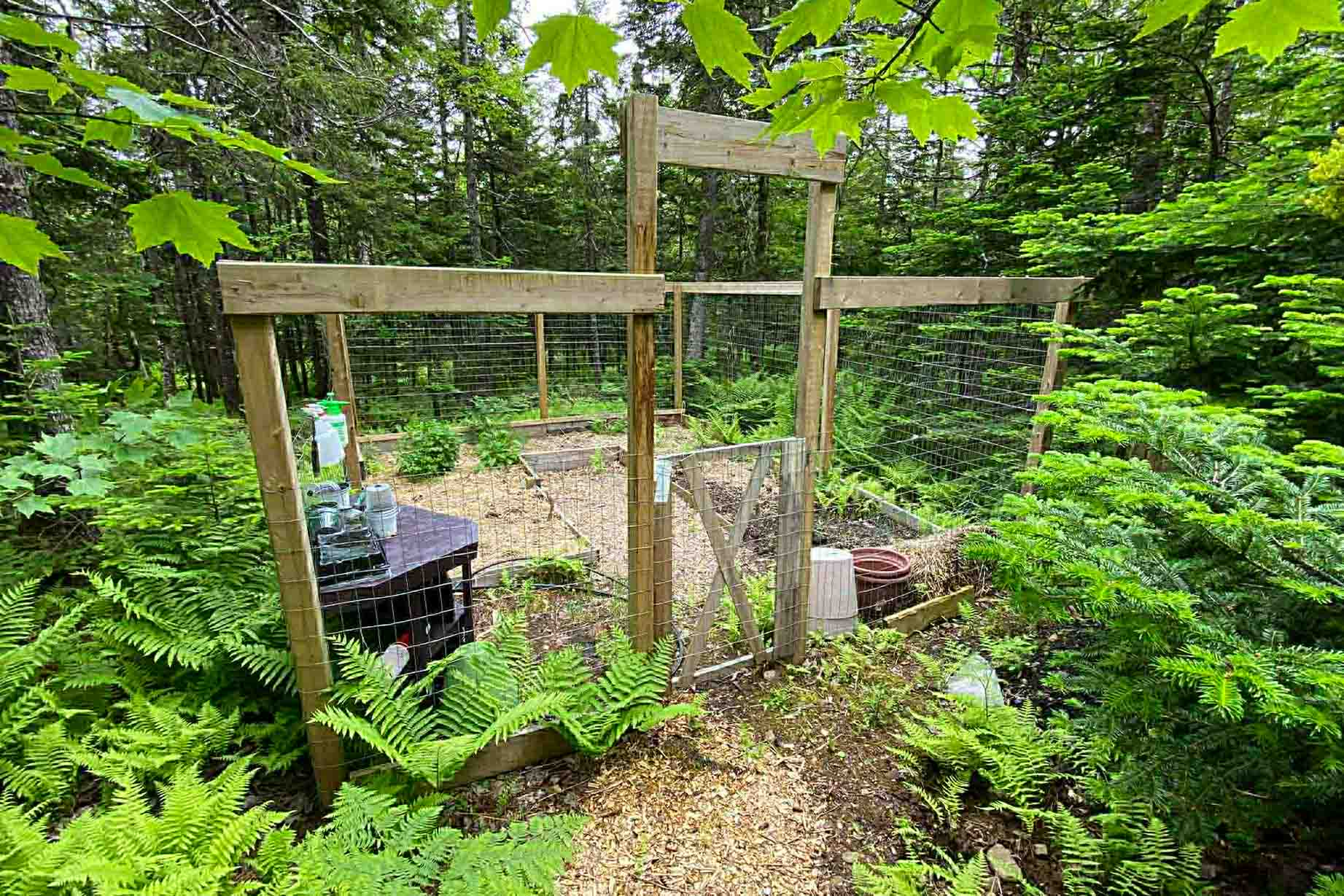 The homestead garden. (Courtesy of Cameron Ringland)
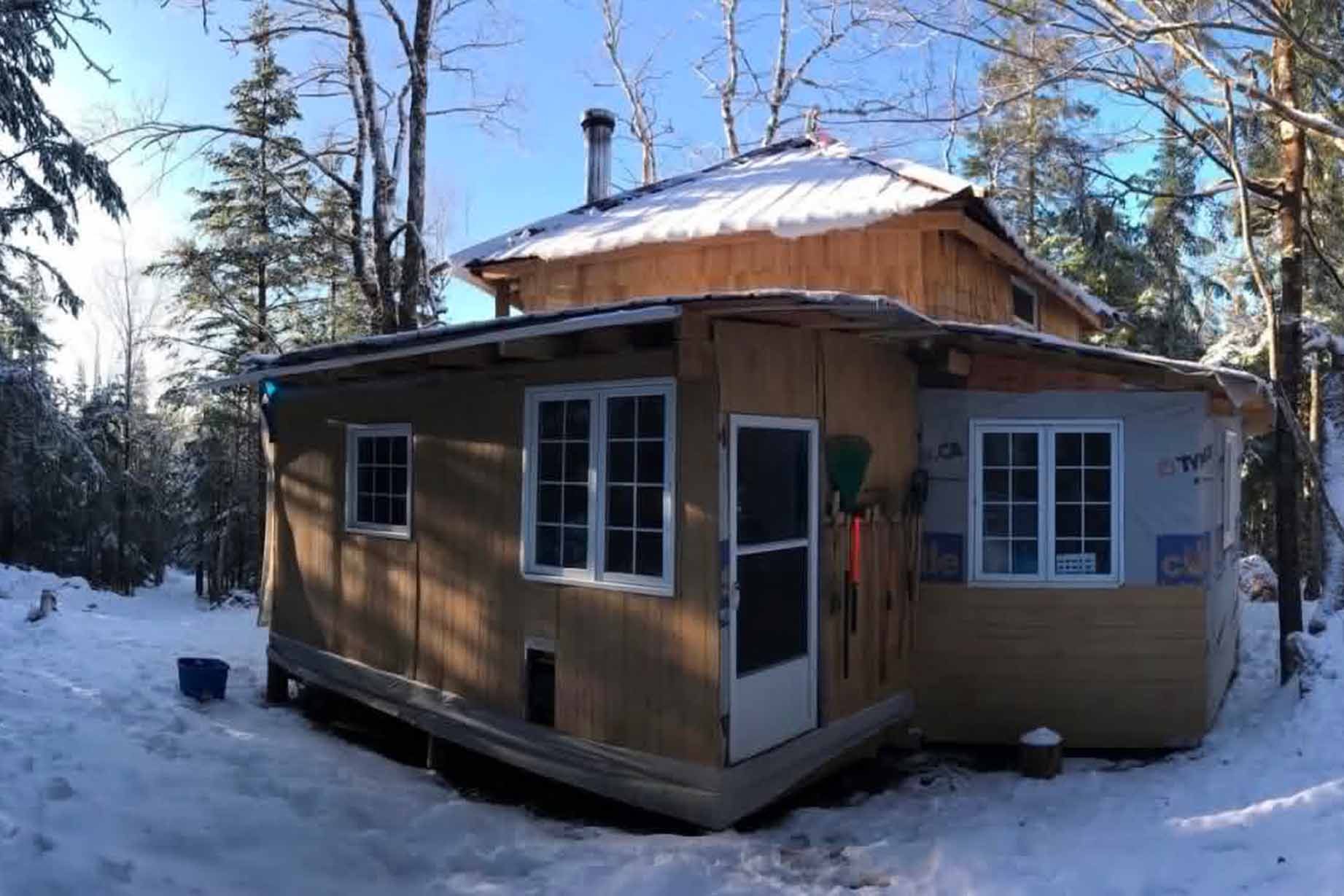 The Ringland homestead during the heavy winter of Nova Scotia. (Courtesy of Cameron Ringland)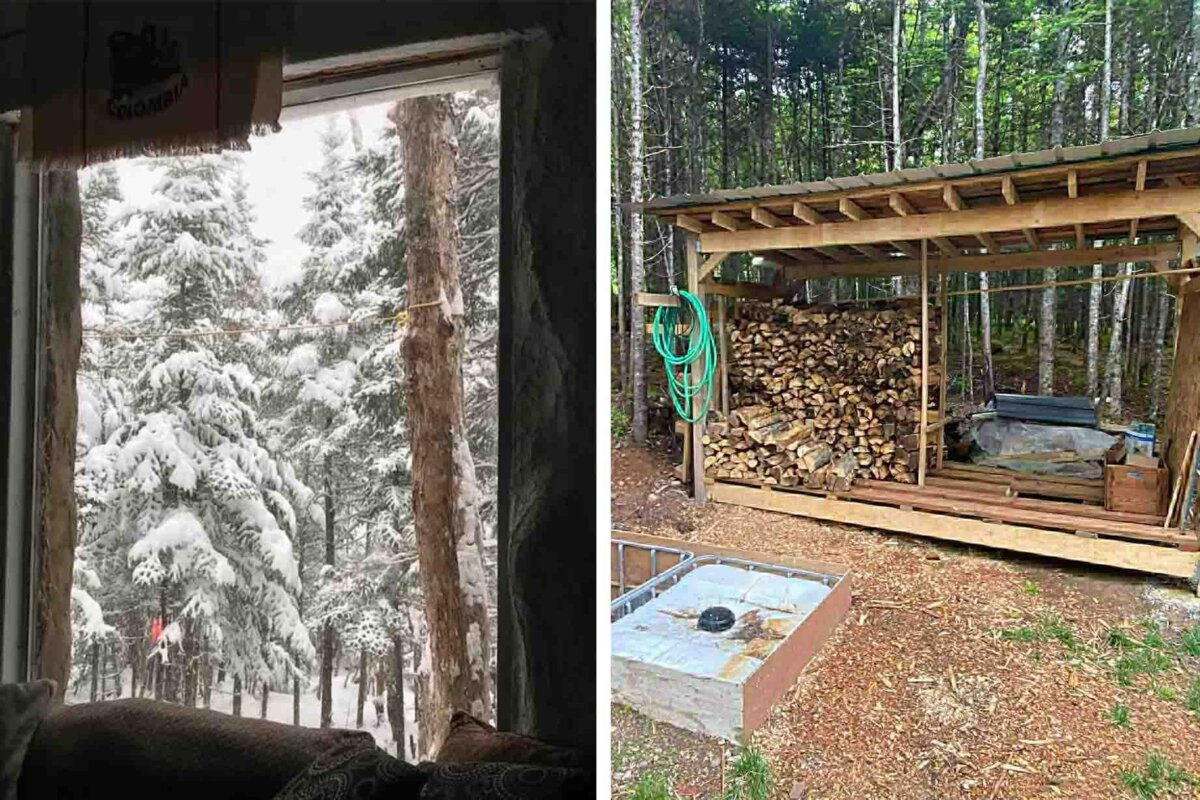
“When you live on the grid, you are living in a bubble of illusion,” said Ringland, originally from rural Ontario. “You don’t really realize the bubble even exists until it pops.”
By 2020, as the COVID-19 pandemic ground global economies to a halt and trapped urban populations indoors, Ringland and his wife were deep in the woods, executing a radical alternative blueprint. When carpooling safety mandates abruptly cancelled the regional tree-planting season, he systematically redirected his extended seasonal unemployment benefits into full-time construction capital.
The primary obstacle wasn’t the elements, but the rigid local bureaucracy. Municipal building authorities in Richmond County twice rejected his alternative layout, deeply skeptical of an off-grid homestead insulated entirely with straw bales and framed with logs harvested straight from the lot.
“The local inspector thought I was from Mars,” Ringland said.
To break the gridlock, he engineered a tactical compromise. He purchased $60 digital architectural layouts from a designer in Bangladesh, hired a local structural engineer to satisfy municipal safety codes, and listed a certified local contractor as an adviser to get his third application approved. Finally.
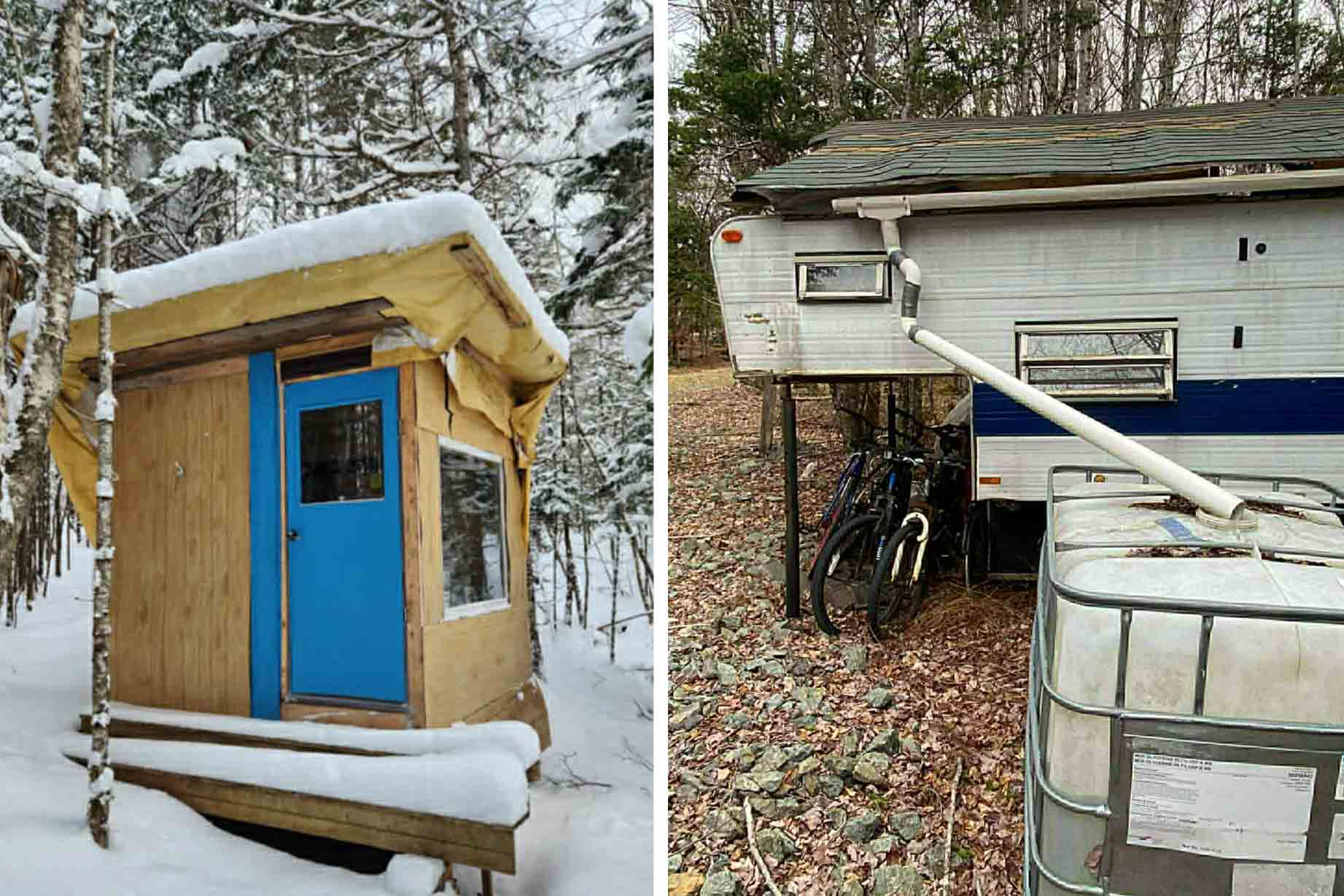
Working side-by-side through a grueling four-month sprint, the couple raised a 620-square-foot homestead on six heavy-duty, carbonized steel screw piles driven deep past the regional frost line. To avoid a prohibitive $30,000 well-drilling bill, Ringland leveraged the property’s natural 6 percent grade to run a pump-free, gravity-fed water line from a 1,000-liter rainwater harvesting tote directly to his indoor traps.
 (Courtesy of Cameron Ringland)
 (Courtesy of Cameron Ringland)
 (Courtesy of Cameron Ringland)
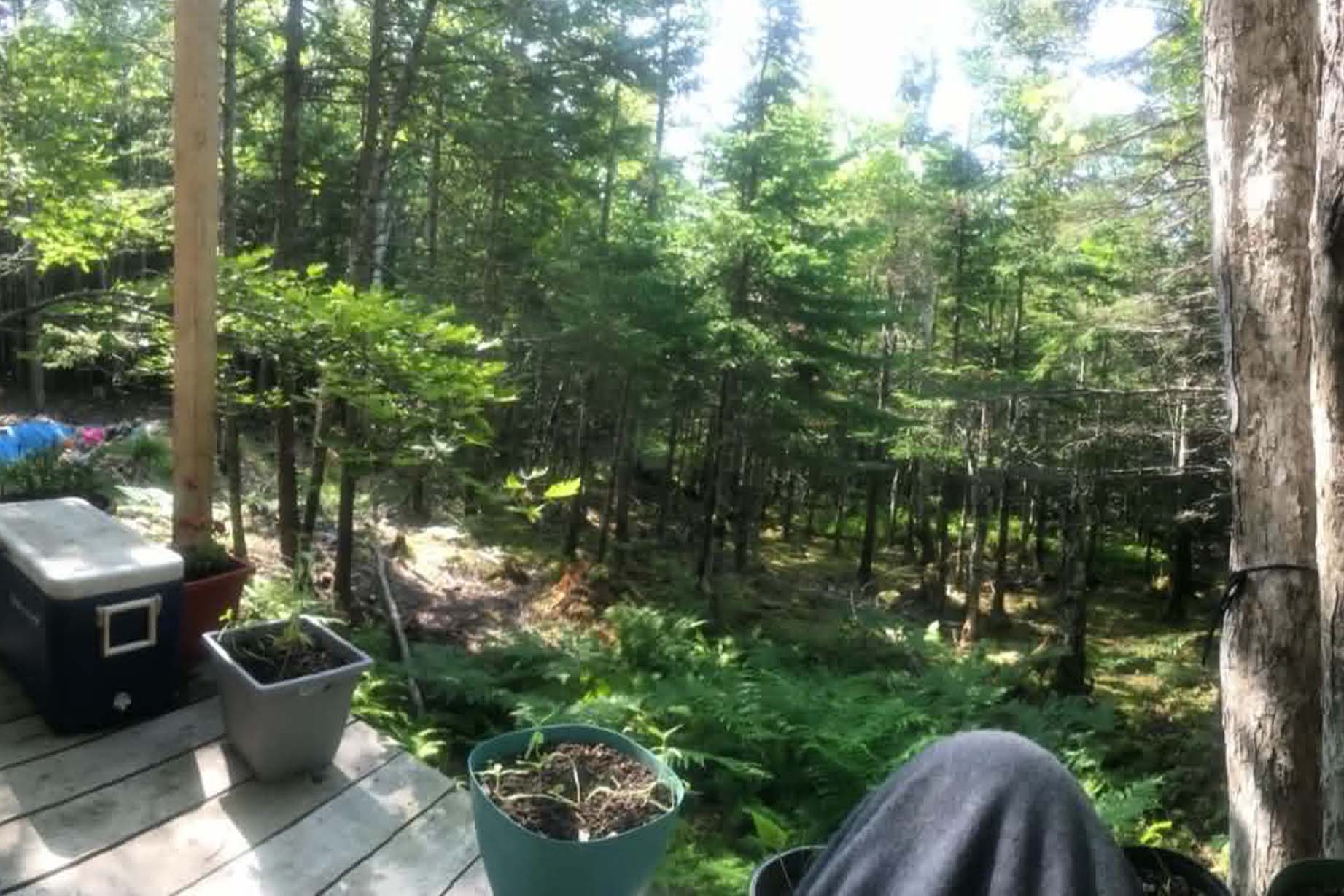 (Courtesy of Cameron Ringland)
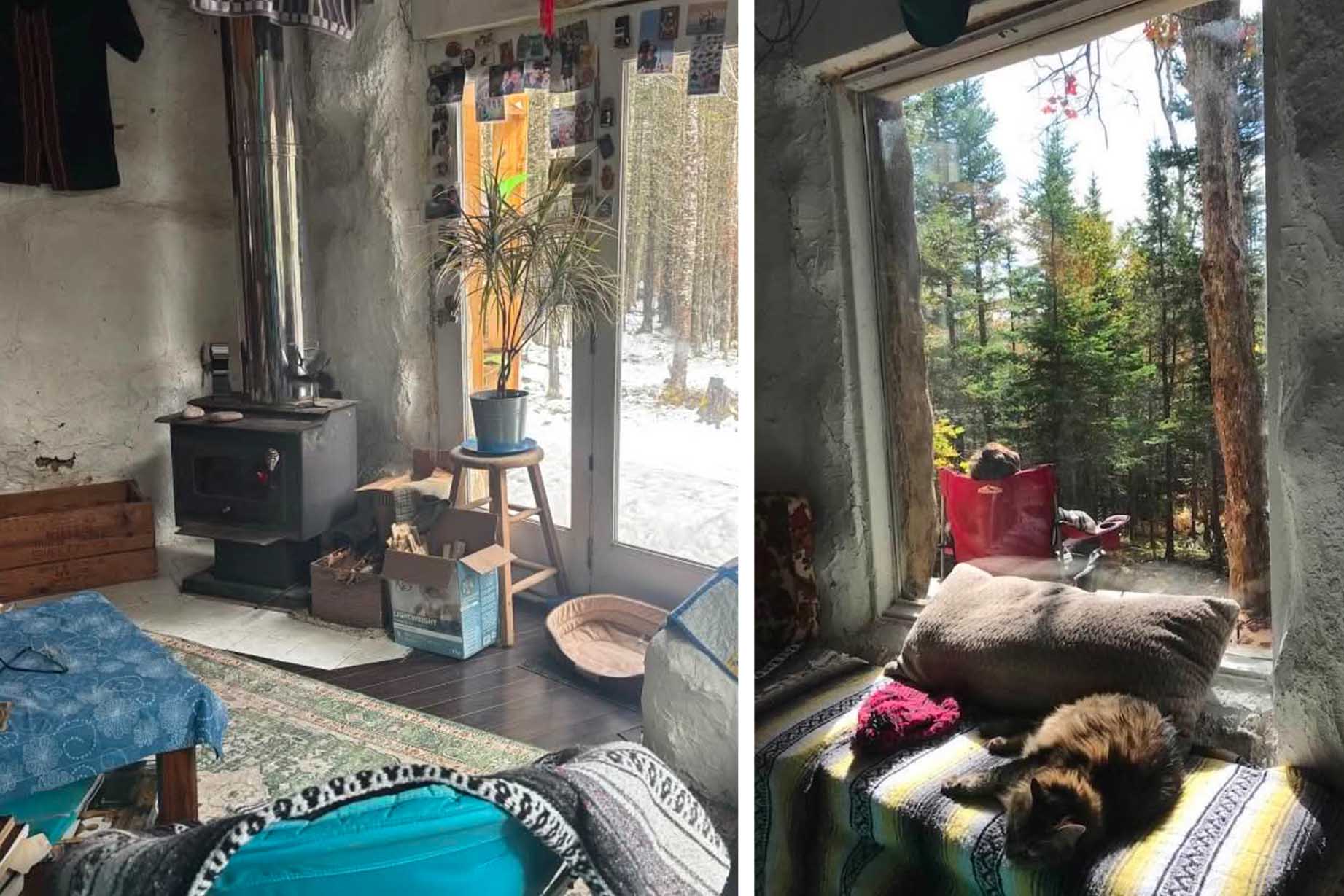
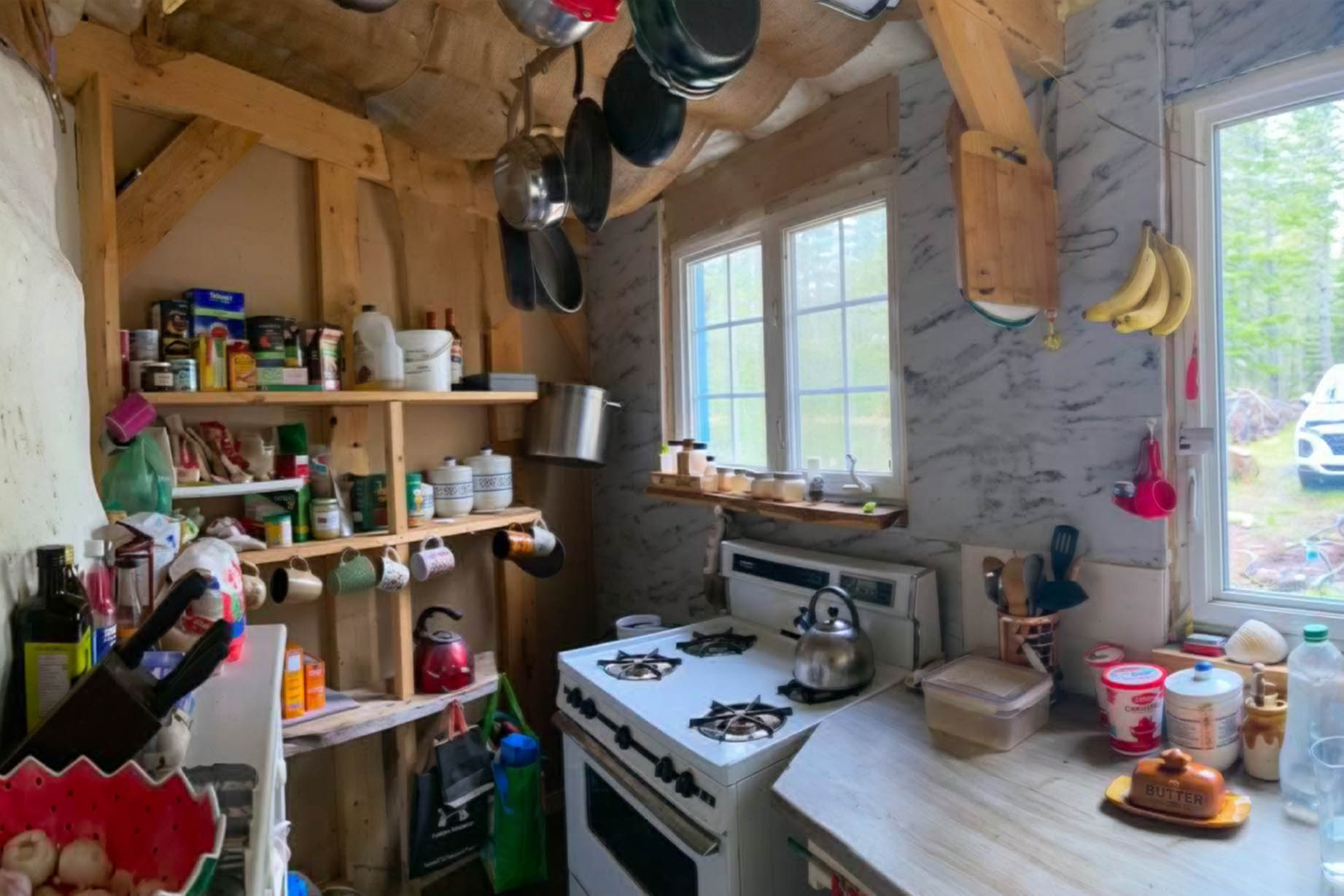
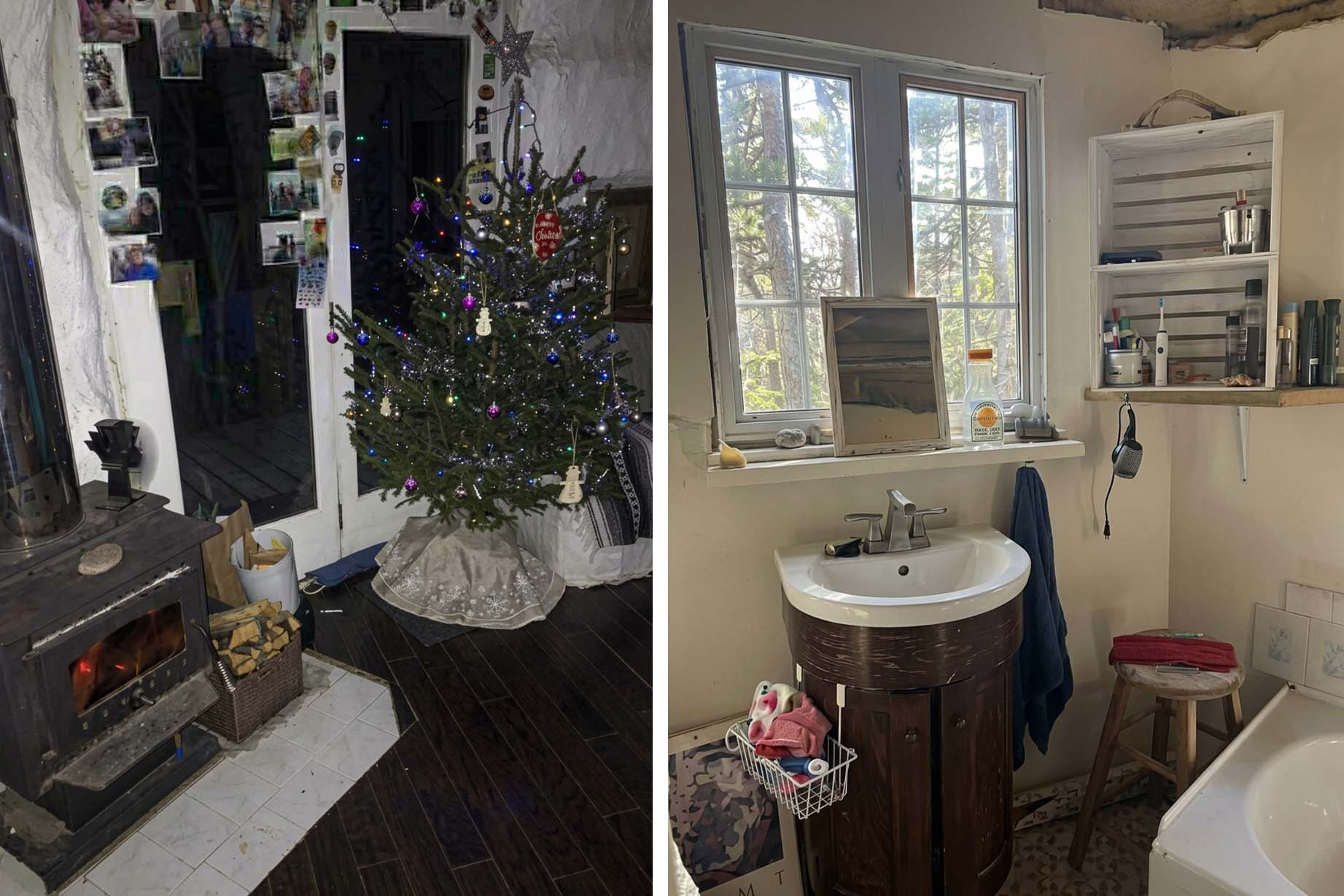 The interior of Ringland’s homestead in the woods of Cape Breton, Nova Scotia. (Courtesy of Cameron Ringland)
They powered the operation with a vertical 400-watt solar panel array, which was angled to shed winter debris, and was heated via a complex mixed-fuel system, including an airtight wood stove, kerosene units, and an automated diesel heater. This totally eliminated recurring utility bills, dropping their fixed housing overhead to a mere $650 in annual property taxes.
For a brief window it looked like a total triumph over the economic system. Done. But freedom, Ringland soon learned, bears a steep physical and psychological cost.
On Cedar Drive, the unserviced road where they built, 17 properties had been sold, but the Ringlands were the sole occupants who actually constructed a shelter. And as the initial romanticism faded, the crushing reality of managing multiple heating systems—through relentless sub-zero blizzards that regularly lingered into late April—began to take a toll. The labor was unrelenting, with endless cycles of hauling eight-foot logs, cutting them down to size, then manually swinging an axe to split rounds just to keep the stoves fed. The daylight hours were consumed by exhausting work.
And then there was the intense cultural isolation; the aging, insular rural demographic viewed the Ringlands with quiet skepticism, labelling them “CFAs,” or Come From Aways.
By the winter of 2025, the weight of loneliness fractured the dream. Seeking physical relief and an escape from local social tension, they packed their bags, accepting a temporary consultancy near Budapest, Hungary. The couple listed their creation on the traditional real estate market for $144,500, and it read like a bittersweet cautionary tale: the wilderness had won; the modern machine proved impossible to escape permanently without losing human community.
So in mid-May of this year, Ringland flew back to Cape Breton alone, his plan being to clear out the home and prep the property for final liquidation. But as he stepped across the threshold and looked at his pristine, hand-built sanctuary resting quietly under the spring sky, a radical transformation occurred.
“The epiphany hit me over the last two weeks,” he said. “Realizing how much sweat equity went into this place, I knew that if I fully walked away and sold it, I would completely regret it for the rest of my life. The dream didn’t fail. It just lacked people.”
Instead of surrendering to absolute liquidation or returning to isolated self-reliance, Ringland launched a creative restructuring of his off-grid model. He pulled the property off the market. He then began cutting a new access road down to the lower portions of the lot to divide the acreage into three distinct shared-ownership tiers.
Working alongside specialized cohabitation legal consultants to draft legally binding contracts, the homesteader is now transitioning from lonely survivalist to community cartel organizer, offering fractional buy-ins to kindred spirits for $50,000—exactly one-third of the property’s total evaluated value. Under this new model, incoming partners receive an equitable deed to the land and a naturally cleared building site to construct their own off-grid havens. They even get temporary access to the couple’s original slide-in truck camper during their build.
The fractional strategy elegantly addresses two realities. The initial down payments will provide the capital the Ringlands require to secure a secondary home deposit on the coast of Sicily, where shifting demographics have left historic houses vacant and available for less than $85,000. Meanwhile, it establishes a localized micro-commune back in Canada; when they return each spring, the heavy physical overhead of off-grid life will be distributed among a trusted network of neighbors.
For Ringland, now sitting comfortably back in his apartment near Budapest while his wife fulfills a teaching contract, the calculation is no longer merely financial. It’s personal.
“Everything is just there,” he said, reflecting on the profound peace of a mortgage-free existence. “There’s something very manageable about living off-grid. It really takes the edge off that whole money, monetary, bill-paying frenzy that people these days find themselves in.
“To me, it’s just a very valuable way to live.”