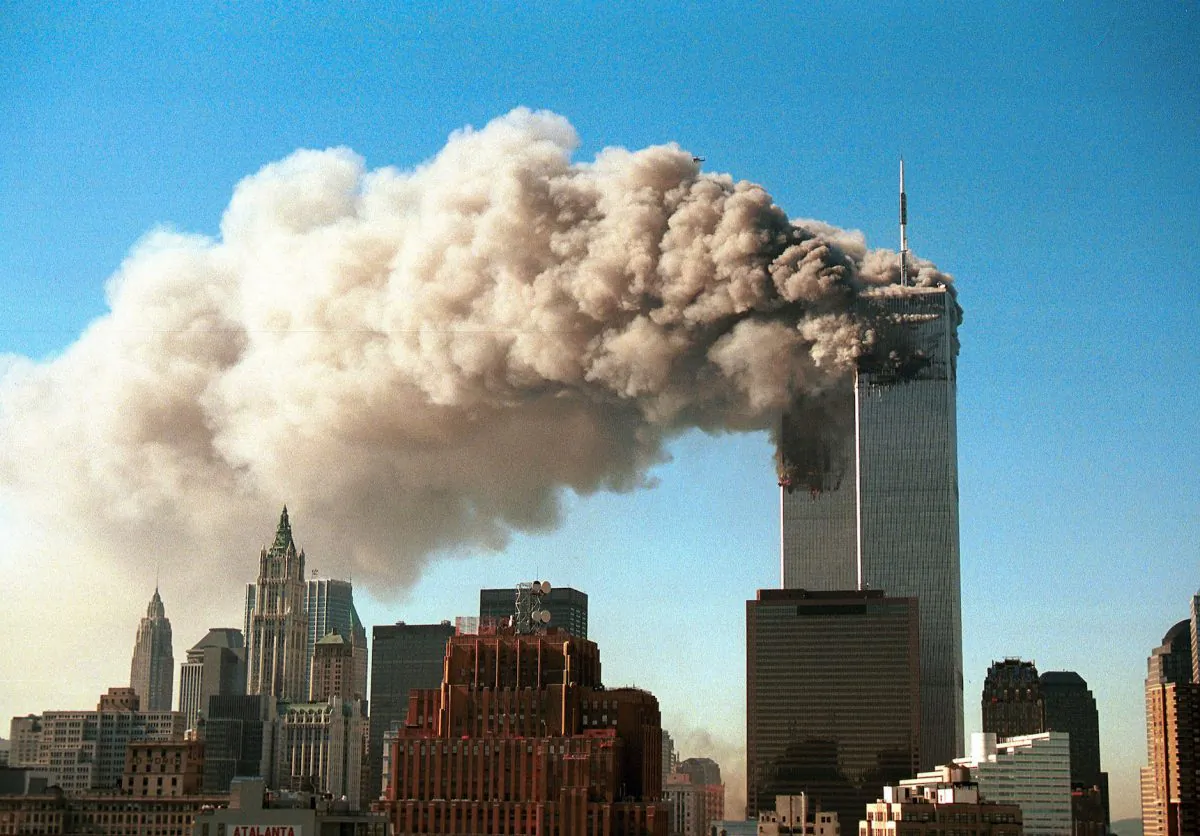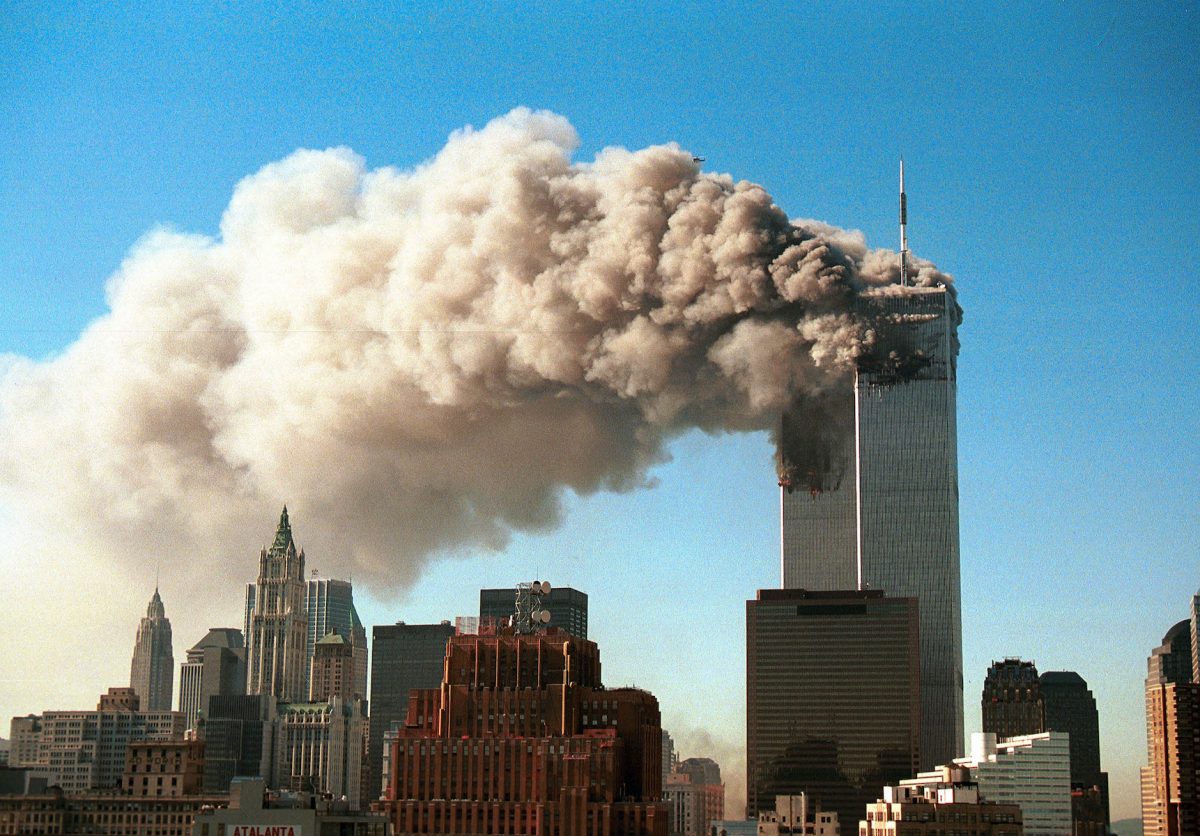

The terror attacks 25 years ago this week had enduring costs for America’s commercial aviation sector.
Today’s domestic fliers are on balance worse off for it, with higher costs, fewer choices, and more delays.
That’s because, on Sept. 11, 2001, men who were part of the al Qaeda Islamist terror network bought tickets and boarded four passenger planes out of Boston, northern Virginia, and Newark, New Jersey.
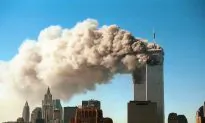
Once airborne, the 19 terrorists hijacked those planes and managed to fly two of them into the World Trade Center towers and one into the Pentagon.
The remaining plane, United Airlines Flight 93 from Newark to San Francisco, was brought down by a revolt of passengers and crew who had pieced together what was happening with the other planes.
The Boeing 757 crashed into a field in Shanksville, Pennsylvania, instead of its intended target, which the National Park Service identified as the U.S. Capitol.
At the World Trade Center, more than 2,700 people died that day.
When Flight 93 went down in Pennsylvania, all 44 people, including seven crew members and 33 passengers, including the four hijackers, died on impact.
At the Pentagon, where American Airlines Flight 77 from Washington Dulles Airport to Los Angeles crashed, 189 people died, including 125 people in the building, six airline crew members, 53 passengers, plus the five hijackers.
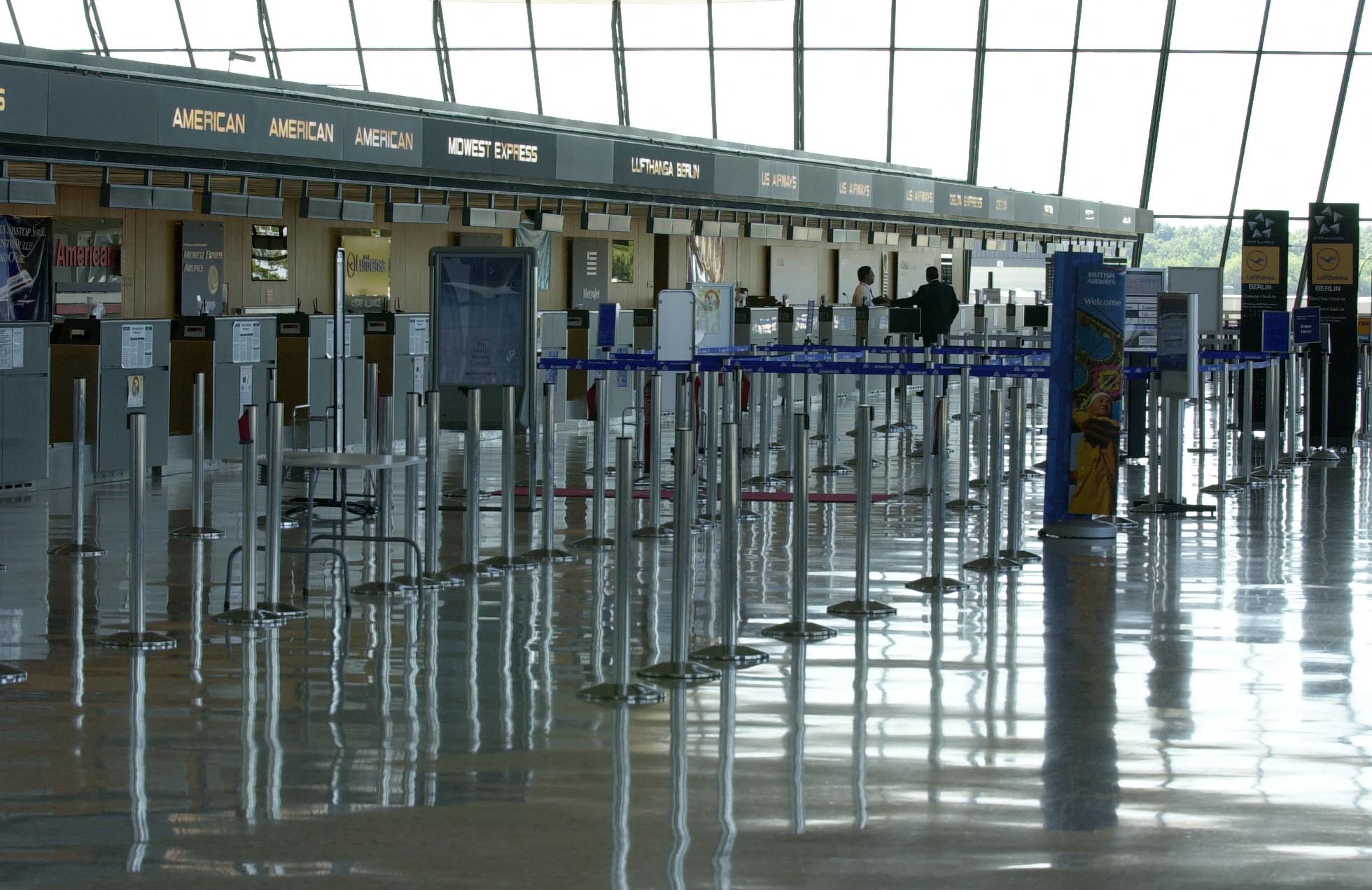 Deserted airline counters at Dulles International Airport in Chantilly, Va., on Sept. 11, 2001. (Joshua Roberts/AFP via Getty Images)
Airlines in the Red
For the airlines, the financial impact was awful and bordered on existential.
The Federal Aviation Administration (FAA) grounded all flights for several days. Once the planes were cleared for takeoff, many would-be passengers were jittery about being airborne. After all, they had just watched domestic planes slam into skyscrapers on their television sets, over and over.
These planes had long been seen as mechanical marvels that shortened long trips and brought the world closer together. The al Qaeda hijackings turned them instead into visible instruments of previously unimaginable destruction on U.S. soil.
Looking back at that day, the International Air Transport Association did not sugarcoat it.
“On September 11, 2001, the world changed forever,” Willie Walsh, former director general of the air travel trade group, said in a fact sheet for the 20th anniversary of the day.
“Those of us old enough to understand what was happening at the time still remember where we were when we heard the horrific news. Indeed, for many, it probably still feels like yesterday.”
The attacks were not only “assaults on the United States of America,” as far as the world of aviation was concerned. Those weaponized planes were also aimed straight at the “global air transportation system – a facilitator of peace and freedom,” he said.
Financial fallout from the attacks was swift and severe. Revenues and profits nosedived.
U.S. passenger airlines had posted profits of $2.2 billion in 2000. They lost $8 billion in 2001, and revenues did not climb back to 2000 levels until 2004.
Those losses contributed to the bankruptcies of several air carriers, most notably US Airways and United Airlines in 2002. United stayed aloft, but US Airways eventually was absorbed by American Airlines.
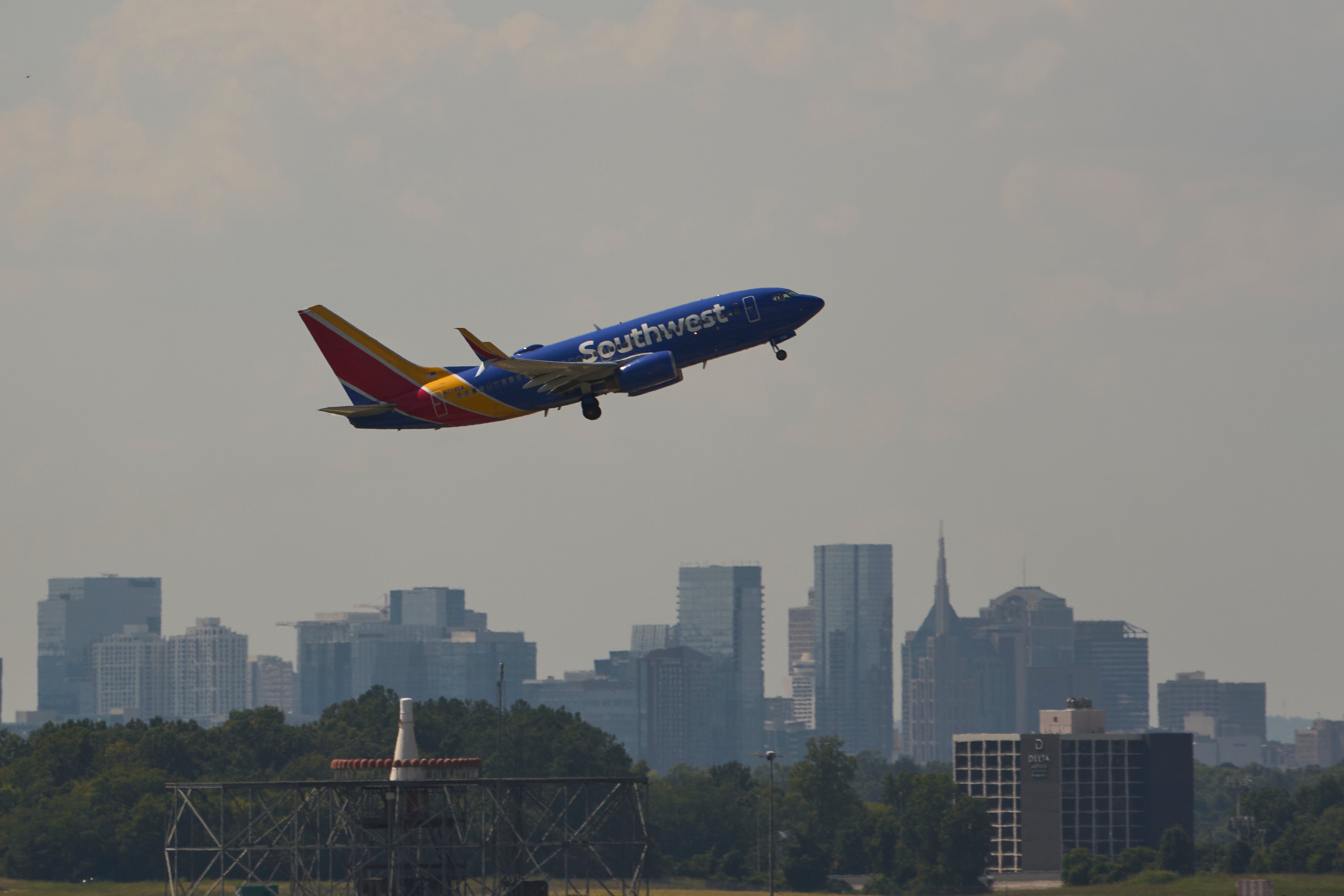 A Southwest jet takes off from the Nashville International Airport in Nashville, Tenn., on Aug. 28, 2026. (AP Photo/George Walker IV)
Airport Security Costs
An act of Congress created the Transportation Security Administration, popularly known as the TSA, in November 2001 to help address security concerns. The TSA took over screening at most airports.
The Aviation and Transportation Security Act also greatly expanded a previously existing air marshals program to put many more armed, hidden officers on flights to thwart future would-be hijackers.
Costs for U.S. fliers grew higher, in part to pay for the new, slower airport security. U.S. taxpayers are paying for it as well. The amount spent on the TSA has varied from year to year. At present, the yearly price tag is in the $11 billion range.
Gary Leff, proprietor of the popular View from the Wing website, is not happy about that.
“It’s not clear what we’ve gotten spending over $10 billion annually,” he told The Epoch Times.
TSA oversaw the formalization of what some critics have called security theater, with belts and shoes off, liquids limited in size, passengers subjected to various scanning devices, and lots and lots of plastic tubs.
Bill McGee, a senior fellow for aviation at the American Economic Liberties Project, says he still believes that TSA security beats the alternative.
“It’s really easy to beat up on the TSA, and I’ve done it quite often myself. In fact, there’s an entire chapter on TSA criticism in my book ‘Attention All Passengers,’” he told The Epoch Times.
At the same time, he said, it’s important to remember “what airline and airport security was like prior to 9/11,” when “security was the responsibility of the airlines, and it was often non-existent.”
“I think we can all agree that the airlines’ efforts in outsourcing airport security on 9/11 was a spectacular failure,” McGee said, adding that TSA’s existence indicates “that aviation security is taken seriously enough that it’s the responsibility of the federal government.”
He said he would not want to have such a “vital function that is so intrinsic to national security be outsourced to the lowest bidders again.”
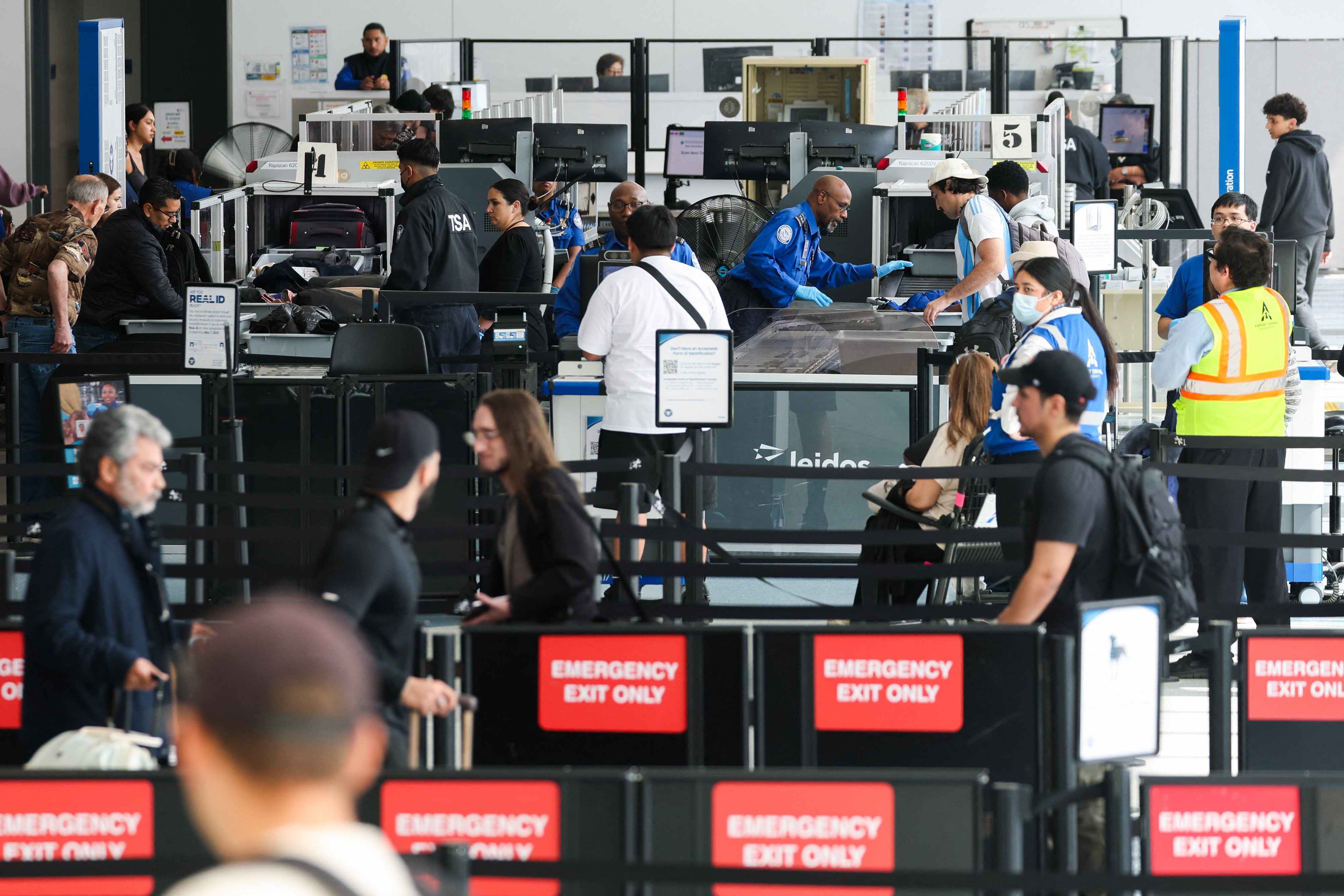 TSA agents screen passengers as travelers wait for passenger screening at a Transportation Security Administration checkpoint at Los Angeles International Airport in Los Angeles on March 23, 2026. (Patrick T. Fallon/AFP via Getty Images)
Where TSA Can Improve
Yet there are downsides to having the TSA as it is currently organized. Instead of scrapping the agency, however, McGee suggested, “Let’s think instead about how Congress can fix the TSA for all of us.”
The federal government funds the TSA. When government shutdowns happen, as they do periodically, this creates problems for airport screening. TSA still functions during government shutdowns but not well.
Agents go unpaid, sometimes for long stretches. They have a statutory guarantee of back pay once the government is funded again. Yet overtime is discouraged, and absenteeism rises. This leads to longer screening times and missed flights.
That is what happened during the 76-day partial government shutdown of agencies under the Department of Homeland Security earlier this year.
Ha Nguyen McNeill, acting TSA administrator, testified in late March that the “cost of coming to work [was] becoming more untenable for the workforce.” The agency’s daily call-out rates had increased from 4 percent to 11 percent and at some airports were greater than 50 percent.
This reduced screening capacity was hiking wait times to “over four and a half hours at certain airports, raising major security risks and missed flights for passengers,” McNeill said in prepared remarks.
In contrast, a handful of airports participate in the Screening Partnership Program. This allows private contractors to do the screening, under TSA regulations and nominal supervision, with a different line of funding.
The largest airport in the program is San Francisco International Airport (SFO). At roughly the same time that McNeill was sounding the alarm before Congress, the airport was reassuring fliers that they could enjoy their spring break travels.
“While we’ve seen and heard about the long security checkpoint lines over the last few weeks at major airports around the country, SFO is NOT experiencing this issue,” the airport announced on social media.
During the partial government shutdown, the airport’s screener-contractors were “being paid without interruption,” and screening was “operating as usual.”
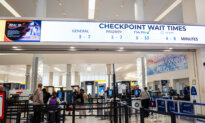
The San Francisco airport regularly posts its security checkpoint wait times. For Sept. 6, waits ran between one and nine minutes for general boarding and between zero and four minutes for fliers with TSA PreCheck authorization.
The San Francisco example illustrates the gap between what TSA might be and what it actually is, Leff said. “Instead of regulating security provided by others,” he said, the screening agency “largely regulates itself, which has led to a lack of accountability.”
For instance, border agencies frequently operate what are called red teams, whose job it is to try to get contraband through a checkpoint.
TSA ran red teams for years. They found that TSA screeners are very bad at catching items that have been flagged as dangerous.
“After a series of embarrassing disclosures about their failure rates detecting dangerous items at checkpoints [with] failure rates over 90 percent a decade ago, they simply stopped releasing information on their effectiveness publicly,” Leff said.
As the 25th anniversary of Sept. 11 approaches, Leff said that the response to the attacks has had bad effects for both fliers and would-be fliers.
“For travel, it’s meant that trips take longer. That means fewer trips by air than there’d otherwise be. It likely means more car trips, which are far less safe, and more loss of life as a result. But we never examine second- and third-order effects,” he said.
Last year, 64 people on commercial airlines died in the United States. All of the deaths came when an Army Black Hawk helicopter collided with a small commuter plane over the Potomac River near Reagan National Airport on Jan. 29. Three people in the helicopter also died.
Over that same period, 36,640 traffic fatalities were reported on American roads.
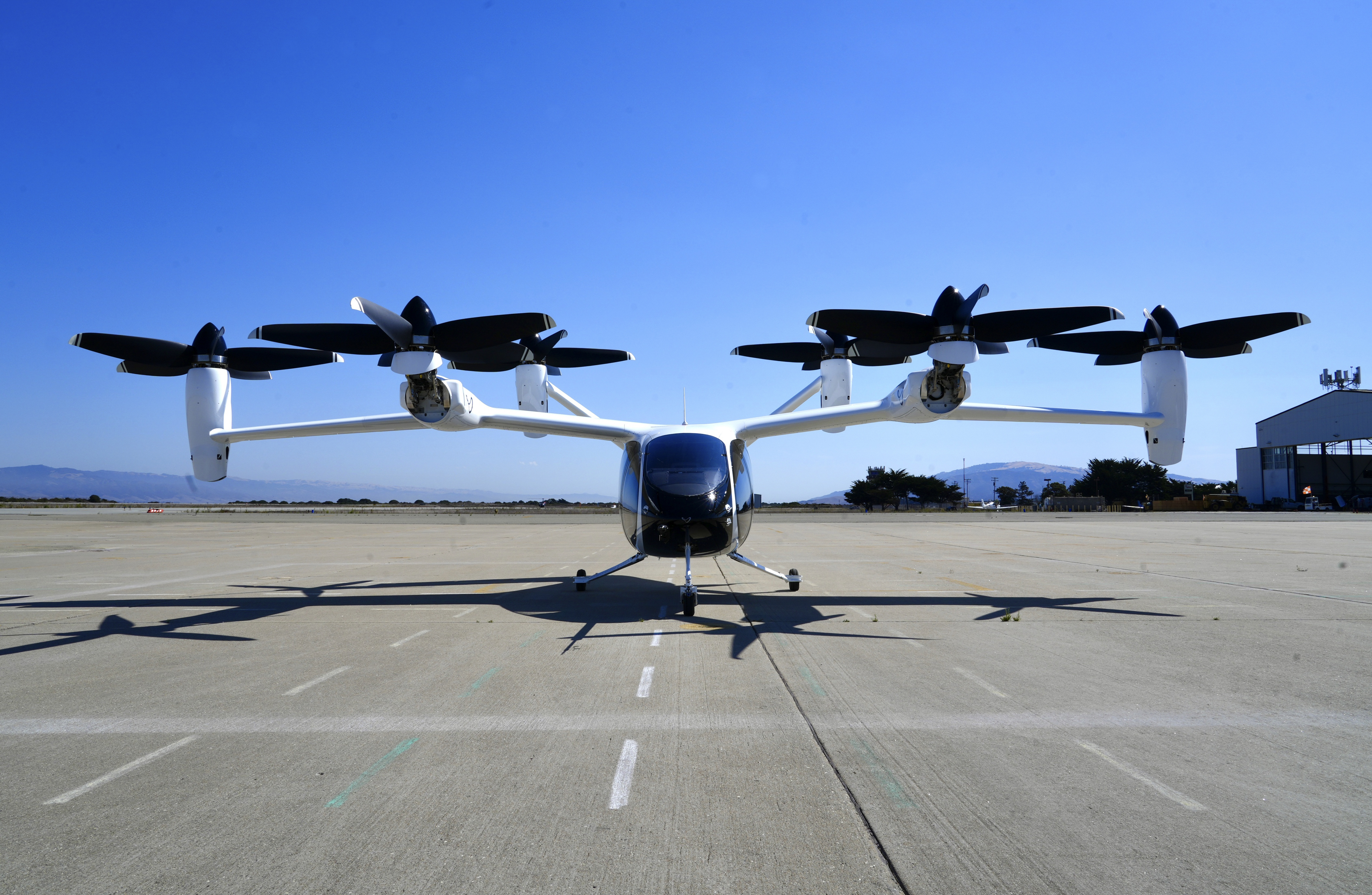 An “electric vertical take-off and landing” aircraft built by Joby Aviation is parked at an airfield in Marina, Calif. on Oct. 7, 2024. (Terry Chea/AP Photo)
Progress and Innovation
Former International Air Transport Association boss Walsh saw one bright spot at American airports in the first 20 years following Sept. 11.
He thought that TSA PreCheck, where frequent fliers trade more information about themselves and a small fee for expedited screening, was worth celebrating.
Walsh acknowledged that “extraordinary measures” were probably necessary to get things flying again, post Sept. 11, but he made the case that the need for many of these measures had long-since passed.
Future American airport security could “move beyond the one-size-fits-all, rules-based model that still … governs passenger security screening” and establish “firm deadlines” to sunset unnecessarily stringent rules, he said. These changes would make sure that “what we are doing is relevant.”
James Fallows is a journalist, a small craft pilot and the author of several books, including a few on aviation.
“Free Flight: From Airline Hell to a New Age of Travel,” was the original title of one of those books, published only months before Sept. 11, 2001.
Fallows saw the beginnings of something new taking shape. He observed smaller craft playing a bigger role in transportation and thought that would grow into a somewhat decentralized air-taxi system in the future.
The Epoch Times asked him about how the terror attacks had affected that development, and how he sized up its prospects today.
“So much has changed in the 25 years since the 9/11 attacks,” Fallows said. For several years, “dramatically tightened security rules limited private air travel of all sorts.”
However, that was not the whole story. “The increasing congestion of airlines, and the ongoing progress in aircraft and engine design, has led to steady growth in private jet travel—for those who can afford it.”
The next step is to bring that experience to more people. Many companies are working to create an “air taxi model” that people of modest means can afford to hail, Fallows said.
 Friends Read Free
Copy
Facebook
Tweet
Friends Read Free
Copy
Facebook
Tweet