



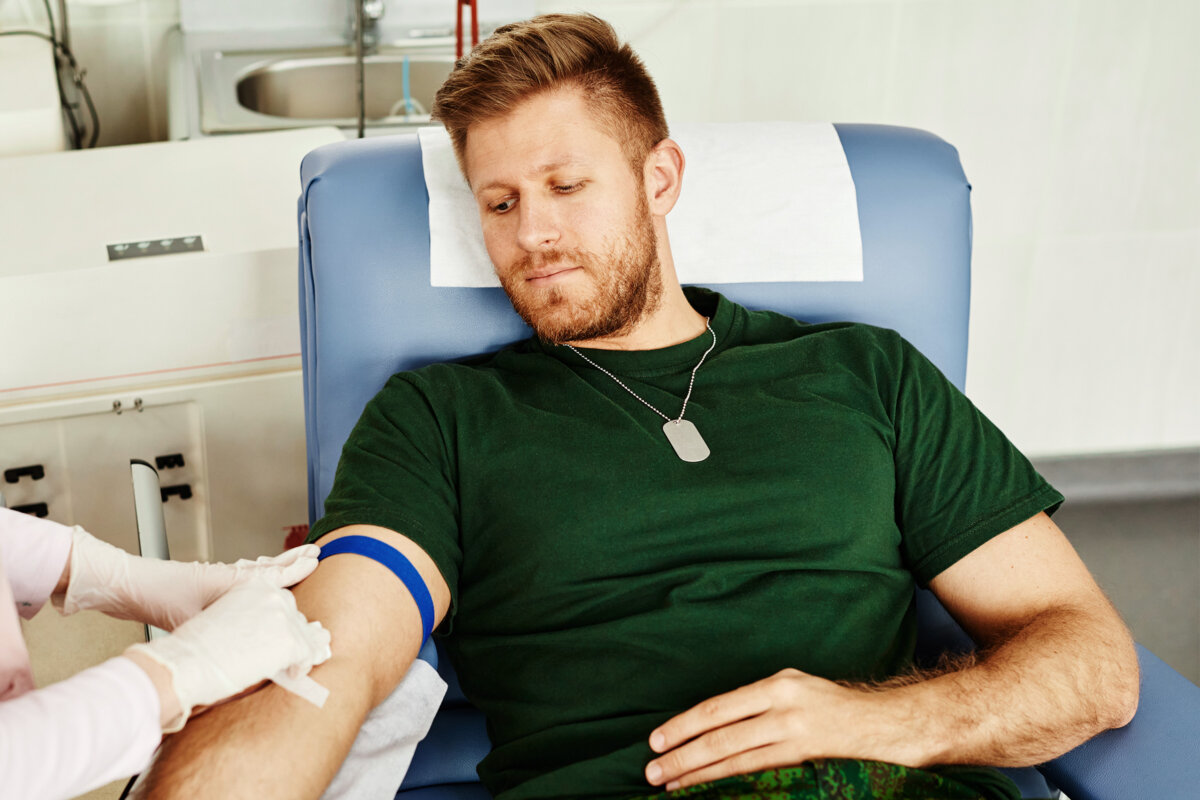
Dr. Mohit Khera recalled a service member who avoided having his testosterone checked because he feared a low result could complicate deployment and require a waiver. Instead, he used testosterone without medical monitoring.
“We just take the testosterone. This way we feel better. We don’t have to worry about it,” Khera recalled him saying. Khera, a professor of urology at Baylor College of Medicine, called the practice dangerous.
That concern is newly relevant after Defense Secretary Pete Hegseth signed a July 15 memorandum requiring testosterone screening for all active-duty and reserve component personnel age 30 and older as part of their annual health assessment. Service members under 30 may request screening.
He announced the directive in an official video captioned “The High-T Department of War,” promising to keep troops on the “leading edge of lethality.” The initiative is “not about artificial enhancement,” he said, but about “restoring and optimizing your natural capabilities.” He also said testosterone replacement therapy would be voluntary, if recommended.
The memorandum sets the screening requirement but leaves the program’s clinical and operational details to forthcoming guidance. That uncertainty has fueled speculation about what a low result could mean for service members, whether it includes women, and whether voluntary treatment will feel voluntary.
The day after Hegseth’s announcement, the Endocrine Society published a statement reiterating its position: No routine testosterone screening for the general male population. Some urologists counter that service members aren’t the general population. The Epoch Times requested an interview with the Endocrine Society, but the organization referred questions to its statement.
The American Urological Association guidelines do not take an explicit position on routine screening, but recommend considering testosterone testing in men with certain risk factors or conditions, even without symptoms or signs. The Epoch Times contacted the association, which connected the publication with Dr. Helen Bernie, a urologist and director of Male Sexual and Reproductive Medicine at Indiana University. Her comments appear below.
Is the Military a Unique Population?
The urologists who spoke with The Epoch Times believe testosterone is an important marker of men’s health that can reveal problems ranging from metabolic disease to loss of muscle mass. Those effects carry added significance for service members, whose roles can require sustained physical exertion, sleep deprivation, and exposure to high-stress conditions—factors that can affect physical performance, muscle recovery, and overall readiness.
“Testosterone is one of the best markers of a man’s current and future health,” Khera said. “If you want to know the health status of your military person, this is the best marker for a man’s overall health.”
The military has reasons to expect more cases of low testosterone, Khera told The Epoch Times. Sleep deprivation, chronic mental and physical stress, traumatic brain injuries, opioid medications prescribed for injuries, and exposures to burn pits have all been linked to lower testosterone levels, he said. Burn pits are open-air waste-burning sites used during many deployments. Their smoke contains fine particulate matter, which may disrupt testosterone production through oxidative stress and inflammation.
Hegseth’s memo calls for applying lessons learned from treating what’s known as Operator Syndrome, a cluster of health problems that could lower testosterone and was first documented in members of special operations forces after cycles of combat deployments.
However, the stressors that lower testosterone are not limited to elite operators. They can affect service members of all ages in different roles. “We have to remember that low testosterone is something that affects men in a variety of age groups,” Adm. Brian Christine, a urologist specializing in men’s health and assistant secretary for health at the Department of Health and Human Services, told The Epoch Times.
Christine worked with Hegseth’s team on the new policy and said that many men’s-health specialists have advocated for general population screening of American men beginning at age 30.
Dr. Michael Lincoff, a Cleveland Clinic cardiologist who co-led the TRAVERSE testosterone safety trial, questioned how common true symptomatic hypogonadism, defined as inadequate testosterone production, is across the military.
Body fat is the strongest correlate of low testosterone, he told The Epoch Times and noted that military personnel are generally healthier in that respect than similarly aged American men. He therefore suspects that symptomatic hypogonadism may be less common in the military population.
The controversy is not whether testosterone matters to health, but whether universal screening will improve health outcomes—and how a low result will be handled.
Bernie compared testosterone screening to routinely checking blood pressure or hemoglobin A1C rather than waiting until a patient develops symptoms. An abnormal result, she said, should prompt further evaluation, including confirmation with a second early-morning fasting test and a search for underlying causes before treatment is considered.
Consequences of Low Testosterone
Testosterone affects libido and muscle mass, but it affects far more than that. A man’s testosterone health can predict wellness, longevity, and health span, Christine said.
Low testosterone is associated with higher risks of cardiovascular issues, bone fractures, diabetes, obesity, metabolic syndrome, and mortality, Khera said.
Low testosterone can also affect mood, mental acuity, and reduce red blood cell production, potentially contributing to anemia, which can limit the blood’s ability to carry oxygen. In military terms, those functions can affect how a service member feels, trains, thinks, performs, and recovers.
There will be a significant percentage of men who have low testosterone who don’t have the classic symptoms, Christine said.
Khera agrees with the Endocrine Society that low testosterone should only be treated in symptomatic men, but he defines symptoms broadly, including increased fat deposition, muscle loss, and fatigue. Researchers have also identified erectile dysfunction, irritability, trouble concentrating, and excessive sleepiness as possible signs and symptoms of low testosterone.
These signs and symptoms can be subtle or variable. In a military culture that emphasizes toughness, readiness, and pushing through discomfort, some service members may be reluctant to acknowledge them.
Finding the Root Cause
The lack of guidance also raises the question of whether the program will identify and address potentially reversible causes of low testosterone or emphasize testosterone replacement therapy (TRT).
“Screening for testosterone deficiency does not equal treatment,” said Bernie, who participated as a clinical expert on an FDA panel on testosterone replacement therapy. A low testosterone result should prompt a patient evaluation and a search for potentially addressable causes before TRT is considered, she said.
Causes of low testosterone are often categorized as primary, secondary, or functional hypogonadism. In primary hypogonadism, the problem lies in the testes not producing enough of the hormone. In secondary hypogonadism, the hypothalamus or pituitary gland is not signaling to the testes to produce adequate testosterone. In functional hypogonadism, production is being suppressed by something that may be reversible: chronic illness, metabolic conditions, sleep disorders, malnutrition, excessive physical exertion, severe stress, and certain drugs, including opioids and anabolic steroids.
For example, obesity, diabetes, and metabolic syndrome can all lower natural testosterone production, and treating those underlying conditions can sometimes bring a man’s levels back up on their own, Khera said.
A man with a level below a numerical cutoff should not automatically be offered testosterone, just as a man with a result just above it should not be dismissed if he has significant symptoms, Christine said. Clinicians should consider the whole patient, including medical history, smoking, body weight, and other modifiable factors, he said.
The Risks of Testosterone Replacement Therapy
Under the new policy, service members found to have clinically low testosterone may be offered TRT. As with any medical treatment, TRT’s potential benefits should be weighed against its risks. Guidelines from the Endocrine Society and the American Urological Association recommend that low testosterone be confirmed with two separate early-morning tests before treatment is considered.
The urologists are in agreement that men who hope to have children may need alternatives to testosterone replacement therapy that support the body’s own testosterone production without compromising fertility. Taking testosterone can inhibit the body’s ability to produce its own testosterone and, in turn, reduce sperm production.
Christine cited clomiphene, an oral medication that stimulates the testes to produce testosterone, as one option.
Human chorionic gonadotropin and selective estrogen receptor modulators could be alternatives, Bernie said.
Christine and Bernie both emphasized the importance of a thorough informed consent discussion between a service member and a clinician.
Treatment should bring testosterone levels up to normal, not push them beyond what’s normal, Khera said. The specific formulation, dose, and dosing intervals are important to get right because they can produce different levels and fluctuations.
Short-acting injectable testosterone formulations, for example, can produce higher peaks and have been associated with a greater risk of erythrocytosis—an abnormal increase in red blood cells that can thicken the blood, potentially leading to blood clots.
The TRAVERSE trial studied middle-aged and older men with hypogonadism who had cardiovascular disease or an elevated risk of it. Over an average follow-up of 33 months, TRT did not increase the combined rate of cardiovascular death, heart attack, or stroke. However, atrial fibrillation, acute kidney injury, and pulmonary embolism occurred more often in the treated group, and longer-term safety remains uncertain.
Those findings apply to treatment intended to restore testosterone to a normal physiologic range, Lincoff said. There is little or no safety evidence, he said, for substantially higher levels that can result from unmonitored treatment.
The possibility that TRT could increase aggression has also raised concerns. A 2016 trial linked testosterone use to increased aggressive behavior in already dominant and aggressive men. However, a 2020 meta-analysis contradicts those findings.
Service members already undergo a behavioral health screen as part of their annual health evaluation, but the Department of War has not said whether aggressive behavior identified during the evaluation would factor into decisions about TRT.
Patients on TRT should be monitored with periodic blood tests and more frequent follow-up assessments than at annual physicals, Christine said. Monitoring testosterone levels, blood counts, and blood pressure can help clinicians identify adverse effects and adjust treatment as needed.
Dr. Steven Nissen, another Cleveland Clinic cardiologist, was asked for his thoughts on Hegseth’s announcement and strongly opposed the policy.
“No rational scientist thinks this is a good idea,” he told The Epoch Times. The military is “going to end up treating the wrong people, won’t monitor them properly, and some service members will end up with levels that are too high,” he said.
Whether the military will follow the aforementioned recommendations in its forthcoming policy and guidance remains unclear. Hegseth’s memorandum announcing the policy said there would be an update by Aug. 15 to address many questions about its implementation. As of publication, the memorandum has not been released, and a Pentagon spokesperson told The Epoch Times that the department had nothing further to release regarding the policy and could not provide a timeline.