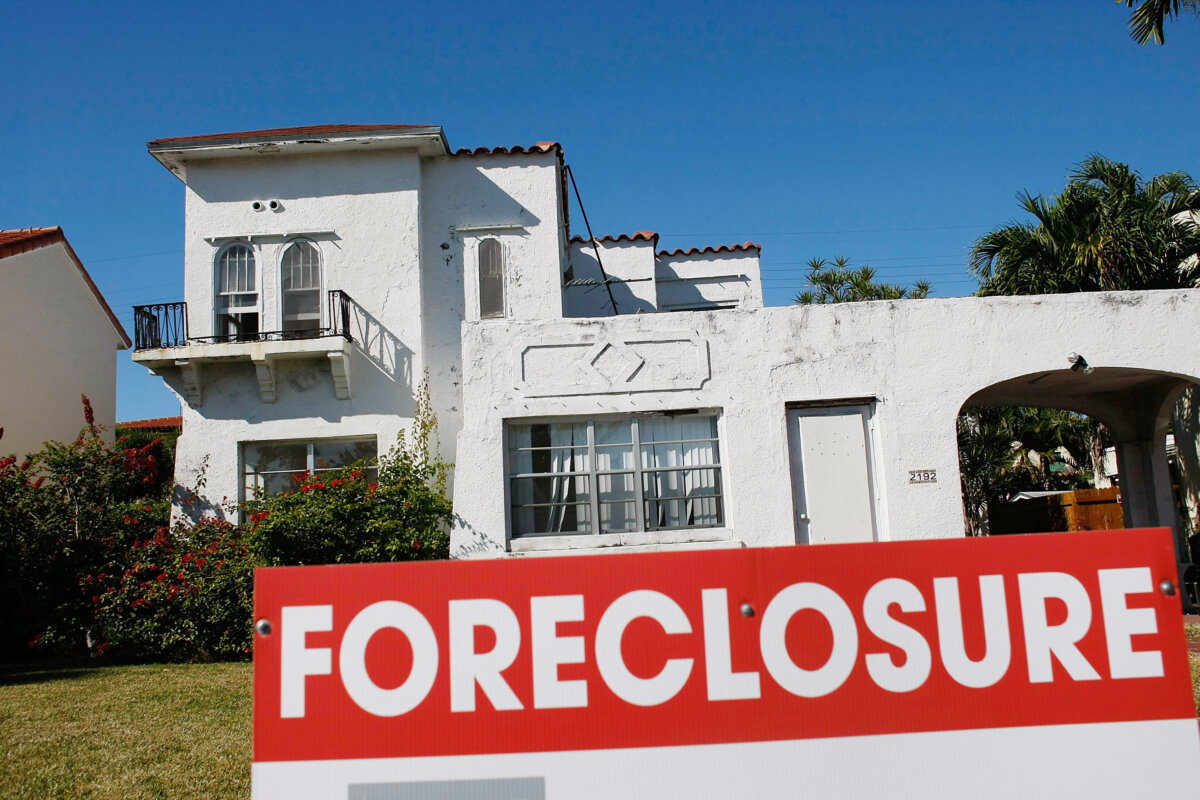

A total of 3.2 percent of all mortgaged U.S. residential properties in the second quarter had loan balances that exceeded their estimated market value by at least 25 percent.
The Q2 percentage of such “seriously underwater” properties is up from 2.7 percent during the same period last year, real estate analytics company ATTOM said in a Sept. 11 statement.
The share rose annually in 33 states, and the District of Columbia. Minnesota, Louisiana, Iowa, Mississippi, and Arkansas topped the list of states with the highest share of such properties.
In Minnesota, the percentage of seriously underwater properties was 12.1 percent in Q2, up from 2.6 percent last year. The most affected counties were Isanti, Mille Lacs, Todd, and Meeker. The spike comes as people in Minnesota face challenging housing conditions.
Home values in Minnesota are rising faster than incomes, according to advocacy group Minnesota Housing Partnership’s 2026 State Profile.
Out of the five jobs in the state with the highest demand—registered nurses, cashiers, fast food and counter workers, retail salespersons, and personal care and home health aides—none of them “pay enough for workers to afford homeownership,” the advocacy group said.
Moreover, the median age of a first-time homebuyer has reached a “historic high” of 40 years, which the group said reflects growing barriers to housing.
In Louisiana, the share of seriously underwater properties was 10.3 percent, down from 11.9 percent a year ago, ATTOM said in a recent statement. The counties most impacted are Jefferson Davis, De Soto, Webster, and Avoyelles.
Iowa’s percentage of such properties was 7.8 percent, Mississippi was 6.4 percent, and Arkansas was 6 percent.
The state with the lowest share of seriously underwater properties was Vermont, followed by Rhode Island, Massachusetts, New Hampshire, and New York, all of which saw rates of 1.5 percent or less.
Meanwhile, the share of mortgaged residential properties in the country that were equity-rich in the second quarter was 41.1 percent, according to an Aug. 20 ATTOM statement. Equity-rich means the loan balances were no more than half the estimated market value of the homes.
“These two measures of home equity strength, the rates of equity-rich and seriously underwater homes, remain healthier than they were prior to 2020,” Rob Barber, CEO of ATTOM, said in the statement.
“However, both have been moving in less favorable directions over the past year, suggesting a trend worth watching.”
People with underwater mortgages face several challenges, including difficulty selling properties, according to an April 25 report from Rocket Mortgage.
Homeowners typically use proceeds from the sale of the current property to make down payments on their next homes. However, in underwater conditions, the sale of property may not generate any such proceeds. This affects the homeowners’ ability to make down payments.
Homes with underwater mortgages also face a risk of foreclosure. If the owner stops making monthly mortgage payments for a certain period, the lender can foreclose on the property and recoup the loan amount.
There are several options for refinancing underwater mortgages. The first is to choose an FHA (Federal Housing Administration) streamline refinance. Compared to the traditional FHA refinance offering, the streamline option can allow borrowers to refinance their FHA underwater mortgages with less documentation and underwriting, according to a May 26 post published by financial services company LendingTree.
For rural properties, the owner can choose the streamlined or streamlined-assist refinance, which is backed by the U.S. Department of Agriculture (USDA). Both options have more relaxed underwriting and documentation requirements than traditional USDA refinancing, the post said.
 Friends Read Free
Copy
Facebook
Tweet
Friends Read Free
Copy
Facebook
Tweet