
Three Tampa Bay-area counties in Florida declared emergencies this week due to a sharp increase in dengue fever, a mosquito-borne viral infection.
Officials in Hillsborough, Pinellas, and Pasco counties issued emergency orders as Pinellas officials confirmed 179 cases across the three counties.
Most of the cases, 134 of them, are located in Hillsborough County, according to a the local emergency order issued by the country administrator, while seven cases have been confirmed in Pinellas County, officials said. Pasco county officials said two cases were confirmed there.
“Our crews are currently going door-to-door near our treatment areas offering to assist residents in finding potential mosquito breeding areas and treat them with the resident’s approval,” said a Pinellas County news release, issued on Sept. 24.
Uniformed Pinellas County staff members, who have ID badges, will “only enter with approval,” officials added. It advised residents to allow its staff to access their property to deal with any areas that need treatment.
Authorities in Pinellas County encouraged people to remove standing water around their properties, dress in light-colored and long-sleeved clothing with closed-toe shoes, and use insect repellent. Mosquitoes breed in stagnant or slow-moving water.
“Drain standing water around homes and businesses at least once a week, including flowerpots, buckets, birdbaths, pet water bowls, gutters, tarps, pool covers, and any containers that collect rainwater,” advised Pasco County in an August news release.
Meanwhile, Hillsborough officials said that its local emergency ordinance can only be in effect for seven days unless extended. Under the authorities of the order, the administration can “quickly take certain actions to ensure the health, safety, and welfare of the community, and provides a path for federal reimbursement of certain expenses.”
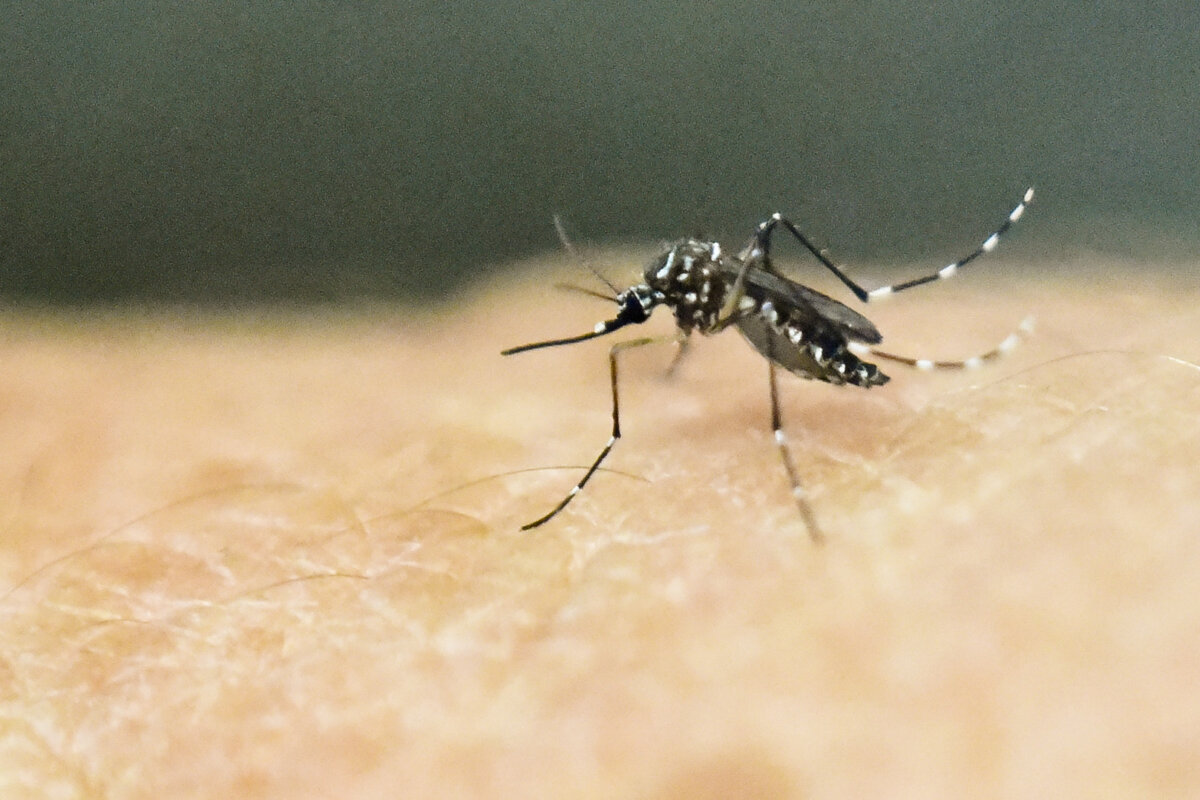
Also known as “break-bone fever” because it can be so painful, dengue is transmitted by the Aedes aegypti mosquito. Four different but related viruses cause the disease—dengue virus 1, 2, 3, and 4—according to the Centers for Disease Control and Prevention (CDC).
The World Health Organization says that about half the world’s population is at risk of getting the disease and that there are 100 million to 400 million infections every year. Symptoms can include fever, severe headaches, and pain in muscles and joints. There is no widely available medicine for treating dengue infections.
Some people can experience no signs or symptoms of a dengue infection. But when symptoms do occur, they can be mistaken for another illness such as influenza.
Symptoms usually start between four and 10 days after being bitten by a dengue-infected mosquito, according to the Mayo Clinic. The virus generally causes a high fever of 104 degrees Fahrenheit and can include several other symptoms.
These include muscle, bone, or joint pain; vomiting; nausea; pain behind the eyes; swollen glands; and a rash. In some cases, the symptoms can become life-threatening in what is known as “severe dengue,” dengue hemorrhagic fever, or dengue shock syndrome, the clinic says on its website.
The severe symptoms often can occur after the fever goes away and can include persistent vomiting, abdominal pain, fatigue, rapid breathing, bleeding gums or nose, blood in stool or vomit, restlessness, thirst, pale and cold skin, and weakness.
 Friends Read Free
Copy
Facebook
Tweet
Friends Read Free
Copy
Facebook
Tweet